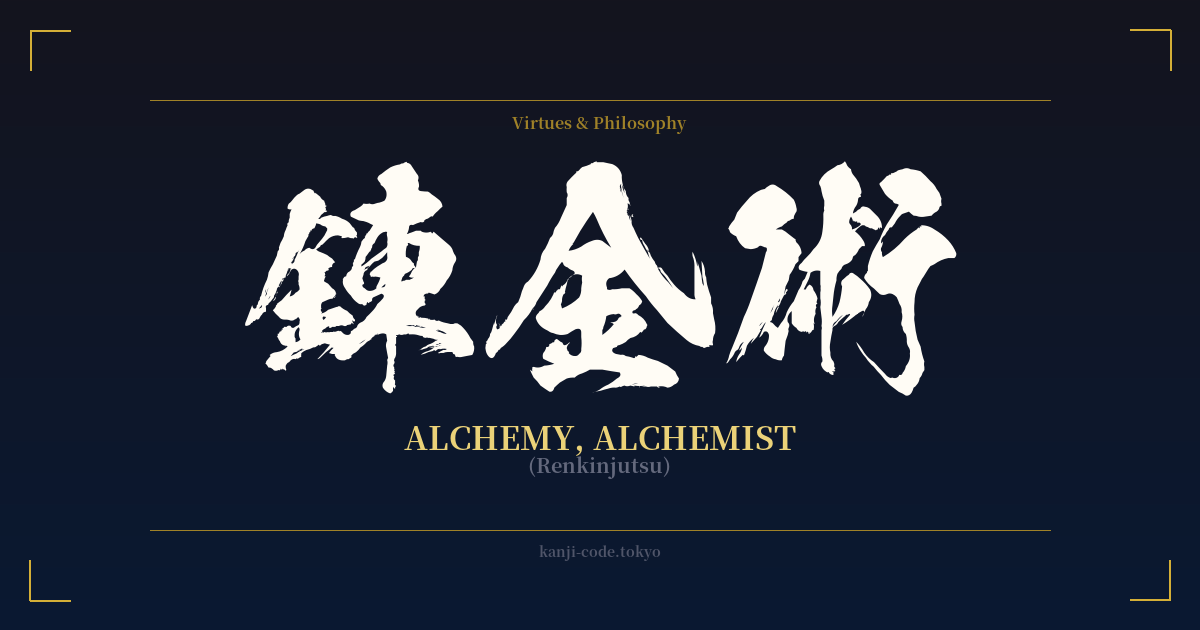
✍️ 錬金術 (Renkinjutsu) — Cultural Context
The Japanese word 錬金術 (Renkinjutsu) is a direct translation of the Western concept of alchemy. The kanji themselves break down into a beautifully literal description: the 'art' (術) of 'refining' (錬) 'metal' or 'gold' (金). This immediately evokes the classic image of an alchemist attempting to transmute base metals into gold.
Historically, alchemy was not a native Japanese practice. The ideas trickled into Japan from China, which had its own rich alchemical traditions (known as Waidan and Neidan) focused on creating elixirs of immortality. However, it never developed into the widespread philosophical and proto-scientific discipline that it became in Europe and the Arab world. In Japan, it remained a more obscure concept, often blending with metallurgy, herbal medicine, and esoteric Buddhist or Taoist beliefs.
Its true explosion into the Japanese cultural consciousness is a much more recent phenomenon, driven almost entirely by modern pop culture. The manga and anime series Fullmetal Alchemist (鋼の錬金術師, Hagane no Renkinjutsushi, literally 'Alchemist of Steel') single-handedly defined the term for an entire generation. The series introduced a complex system of rules, most famously the 'Law of Equivalent Exchange,' blending science, magic, and philosophy in a way that resonated globally.
Because of this massive cultural footprint, the word Renkinjutsu today is less connected to historical European alchemists and more to the heroes and concepts from this beloved story. It carries connotations of transformation, sacrifice, the quest for forbidden knowledge, and the unbreakable bond between siblings. The Ouroboros symbol, central to the series, is now frequently associated with the kanji itself in modern designs.
Beyond its fictional fame, 錬金術 still taps into the universal philosophical quest for perfection and transformation. The idea of turning something common (like lead) into something precious (like gold) serves as a powerful metaphor for personal growth, spiritual enlightenment, and the relentless human drive to improve and understand the world. It represents the bridge between the mundane and the magical, a discipline born from the desire to master the very building blocks of existence.
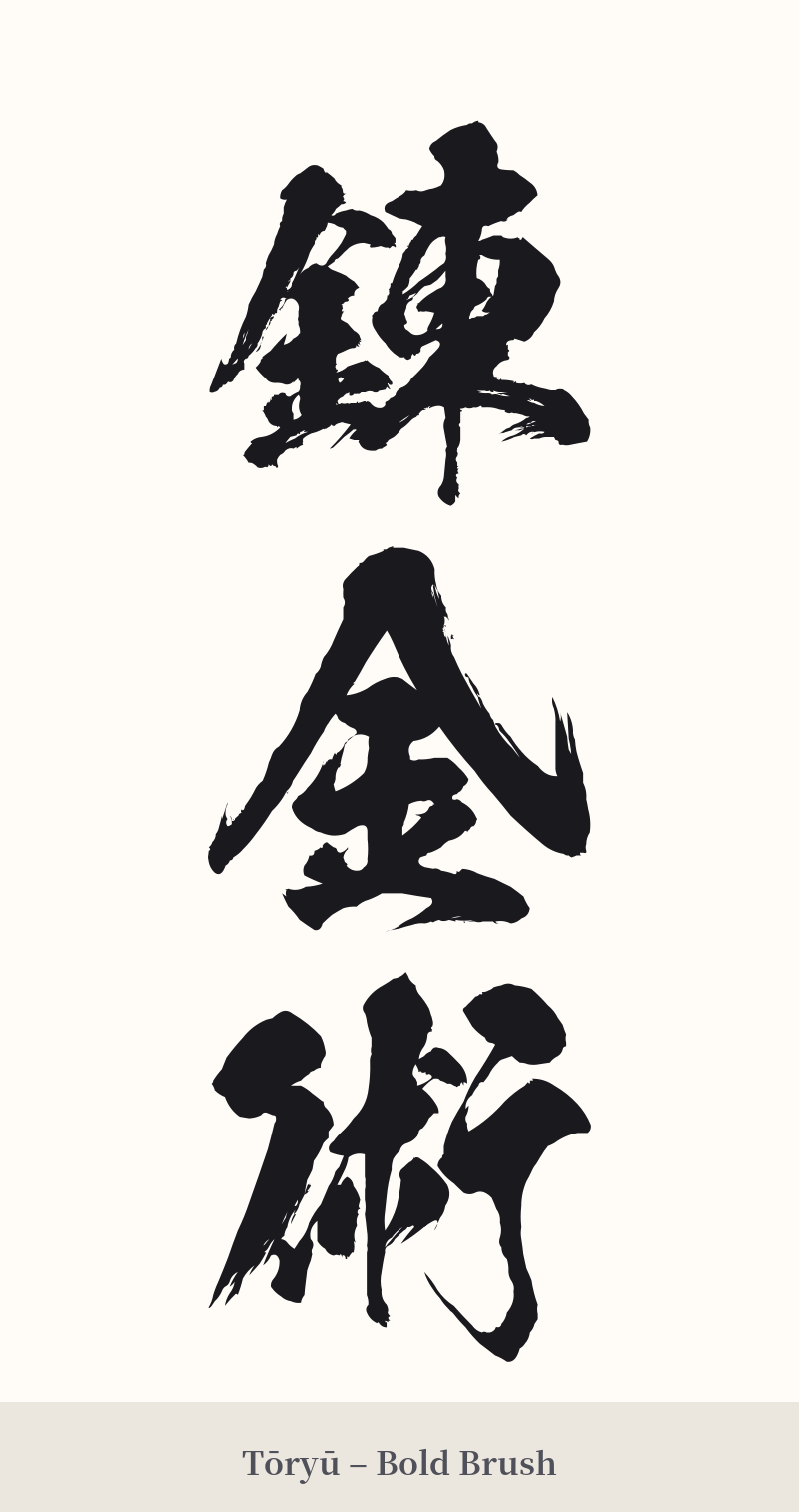
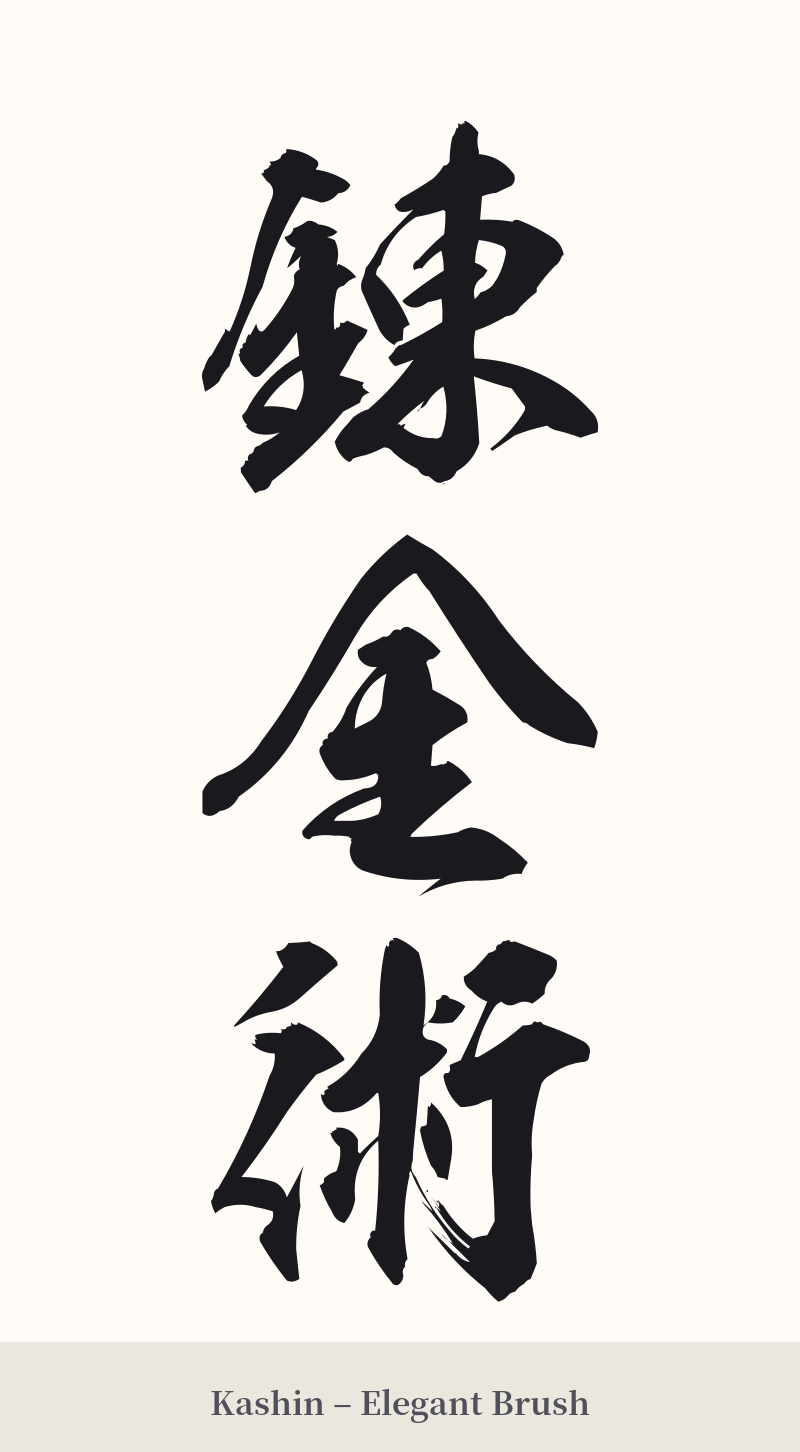
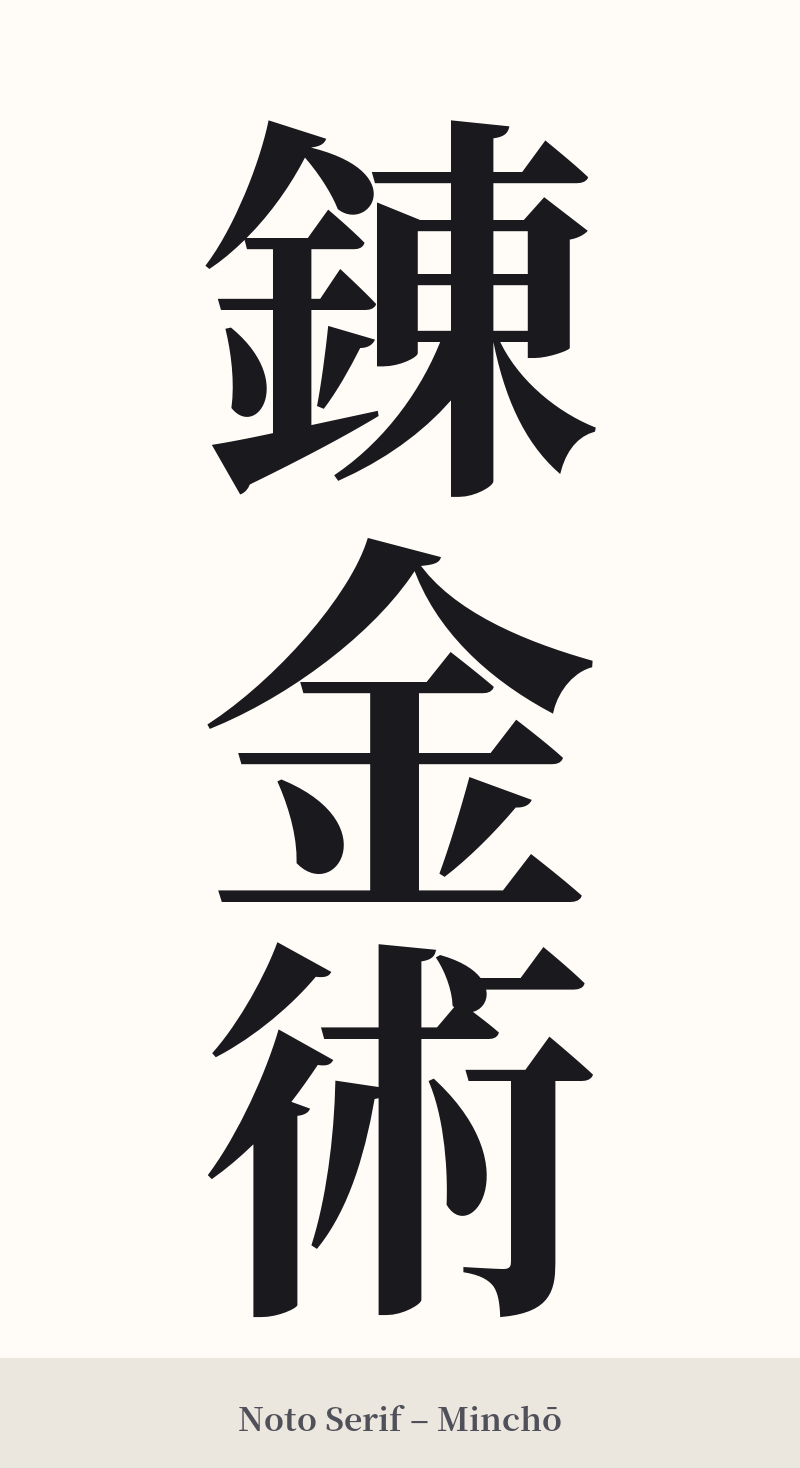
🖌️ Font Styles for 錬金術
The same kanji can look dramatically different depending on the calligraphy style. Choose a font that matches the mood you want for your tattoo or design.
🎨 Tattoo Suitability
📐 Tattoo Design Guide
A 錬金術 tattoo works best when its complexity is respected. Given the density of the characters, especially '錬', clarity is key.
– Placement: A vertical alignment is traditional and visually striking, making it ideal for the spine, forearm, or calf. A horizontal placement can also work well across the chest or upper back.
– Font Style: Opt for a clean, bold font. A standard Kaisho (block script) or a slightly more fluid Gyosho (semi-cursive script) will maintain legibility. Overly intricate or thin styles risk turning the dense characters into an illegible smudge over time.
– Visual Tips: Ensure your tattoo artist is experienced with complex kanji. This is not a design to be rushed or done on a very small scale. Consider incorporating related imagery, such as a transmutation circle or an Ouroboros, to lean into its modern pop culture significance.
Comments