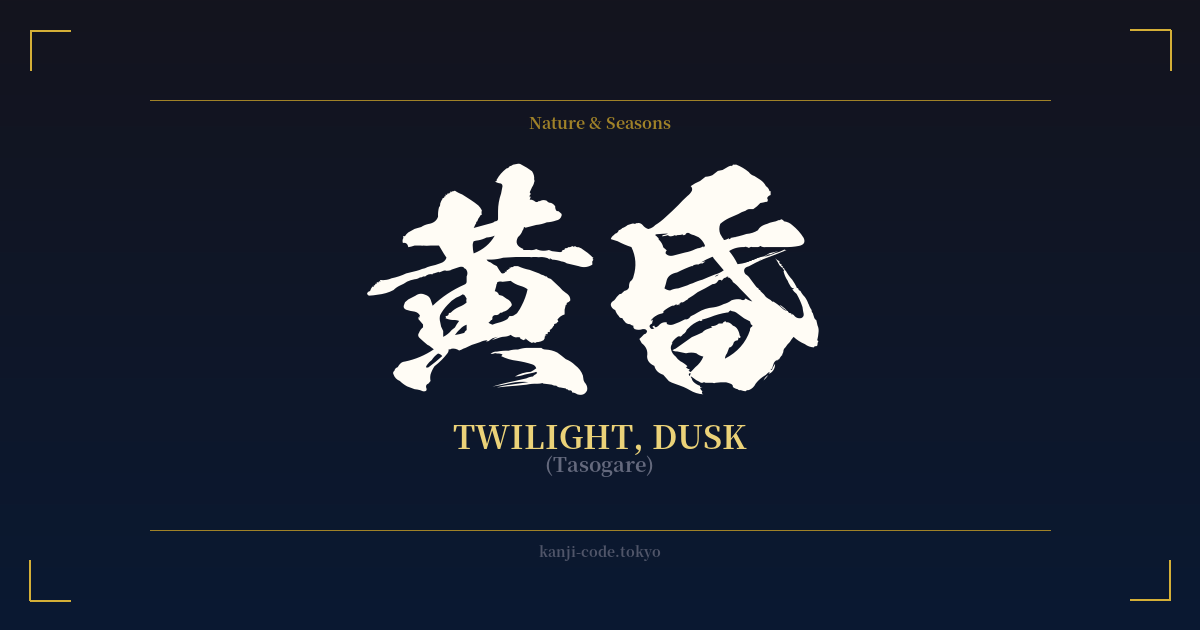
✍️ 黄昏 (Tasogare) — Cultural Context
黄昏 (tasogare) is one of the most beautiful and evocative words in the Japanese language. While it simply translates to 'twilight' or 'dusk,' its cultural and etymological roots reveal a much deeper, more poetic significance that captures a uniquely Japanese sensibility.
The word's origin is fascinating and provides the key to its nuance. It comes from an old phrase, 「誰そ彼」 (ta so kare), which literally means, "Who is that?" In ancient times, as the sun dipped below the horizon and the light faded, it became difficult to recognize the faces of people approaching from a distance. This moment of uncertainty, of peering into the gloom and asking "Who goes there?", gave birth to the word tasogare.
This origin story imbues the word with a sense of mystery, ambiguity, and the liminal. Twilight is not just the end of the day but a threshold between the known and the unknown, the world of light and the world of darkness. This is why this time is also known as 逢魔時 (oumagatoki), the "hour for meeting demons" or supernatural beings, when the veil between worlds is thought to be at its thinnest.
In Japanese literature and art, tasogare is a powerful and frequently used motif. It often appears in classical waka and haiku poetry as a kigo, or 'season word,' associated with autumn. It evokes feelings of mono no aware—a gentle sadness or pathos for the transience of things. The fading light of tasogare mirrors the fleeting nature of life, beauty, and moments of happiness. It's a time for quiet contemplation, nostalgia, and a bittersweet appreciation for the present moment before it disappears into night.
This feeling is distinct from its morning counterpart, 暁 (akatsuki), or dawn, which symbolizes hope, clarity, and new beginnings. Tasogare, in contrast, is introspective and layered with the emotions of a day coming to a close. It captures the serene beauty of the golden-hour sky but also the quiet melancholy of an ending.
Even in modern Japan, the word retains its poetic power. It's chosen in art, music, and film—most famously, a variation of it is a central plot device in the anime movie "Your Name" (Kimi no Na wa)—to signal a moment of magical or emotional significance, a time when ordinary reality feels suspended.
🖌️ Font Styles for 黄昏
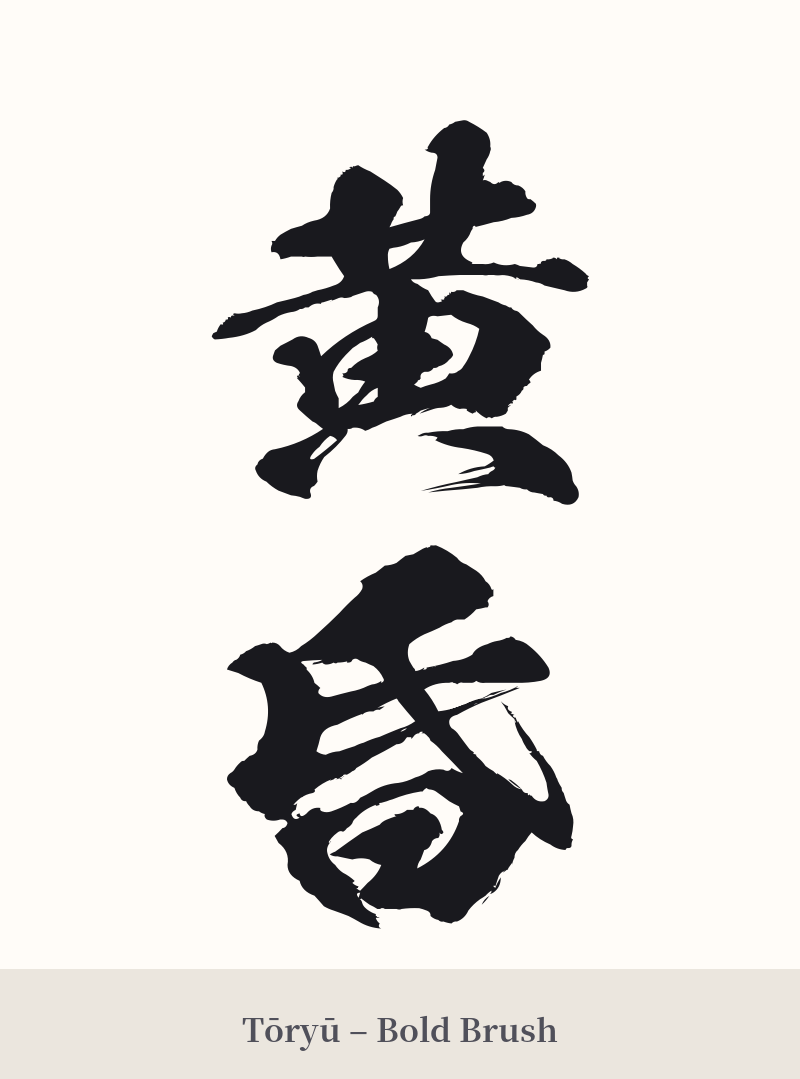
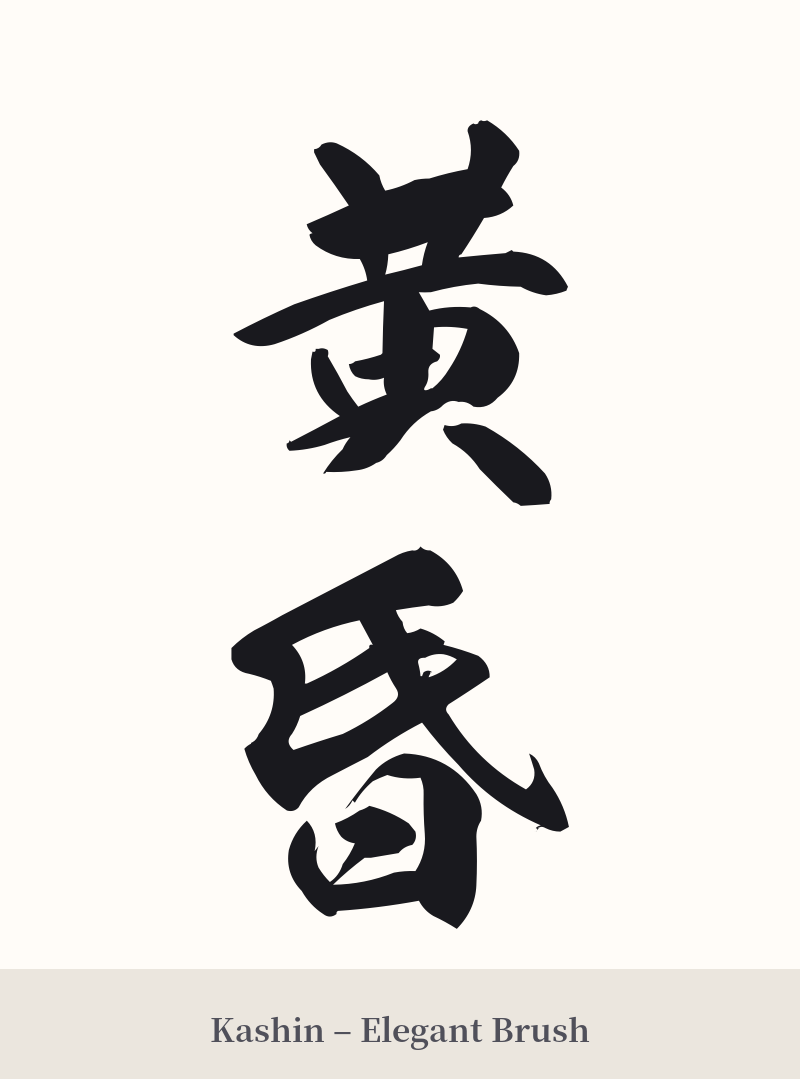
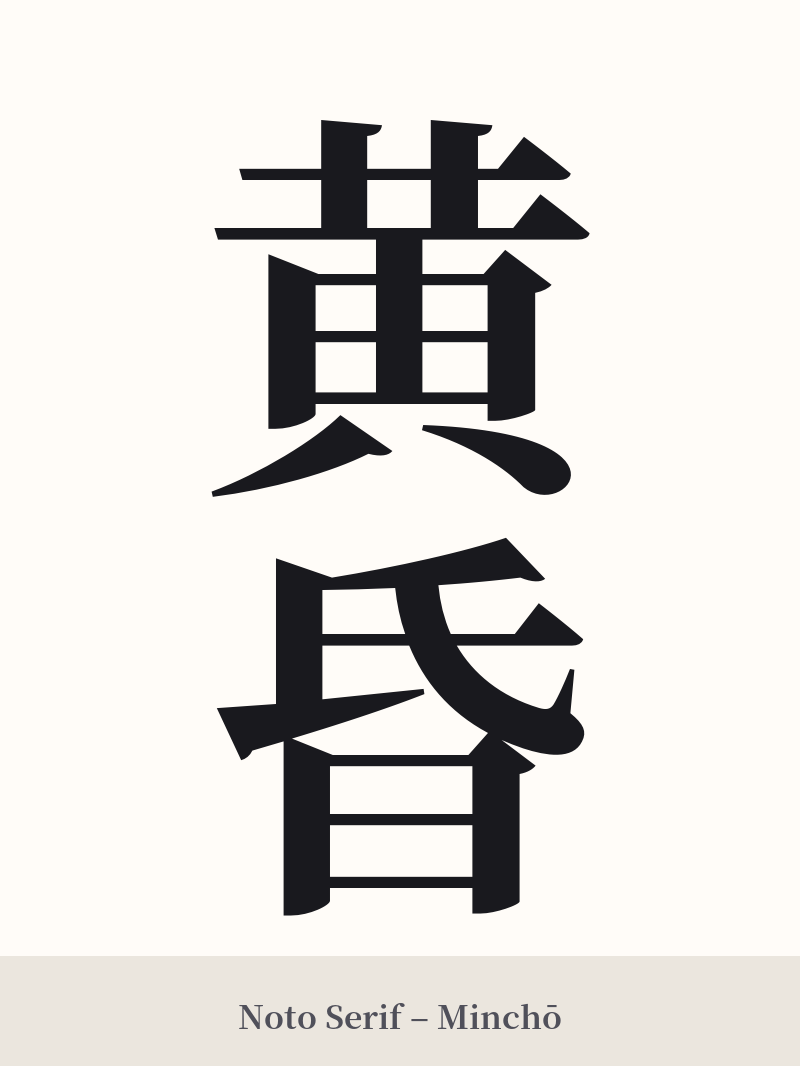
The same kanji can look dramatically different depending on the calligraphy style. Choose a font that matches the mood you want for your tattoo or design.
🎨 Tattoo Suitability
📐 Tattoo Design Guide
For a 黄昏 (tasogare) tattoo, the design should aim to capture its poetic and slightly melancholic essence.
– Placement: A vertical orientation works beautifully for these two characters. Consider placing it along the forearm, the spine, the side of the ribs, or the calf. For a horizontal design, the back of the neck, across the collarbone, or on the inner bicep are all strong choices.
– Font Style: A semi-cursive script (gyosho) is an excellent choice to convey the flowing, transitional feeling of twilight. For a more dramatic and artistic look, a full cursive style (sosho) can be very effective, though legibility might be reduced. A classic, elegant Mincho (serif) font will give the design a timeless, literary feel, like a passage from an old book.
– Visual Elements: While the kanji stands powerfully on its own, it can be paired with imagery that enhances its meaning. Consider incorporating a fading sun, long shadows, a silhouette of a lone figure, or autumnal elements like falling maple leaves (momiji) or a flight of crows. A simple Enso circle behind the kanji can also symbolize the cycle of day and night.
Comments