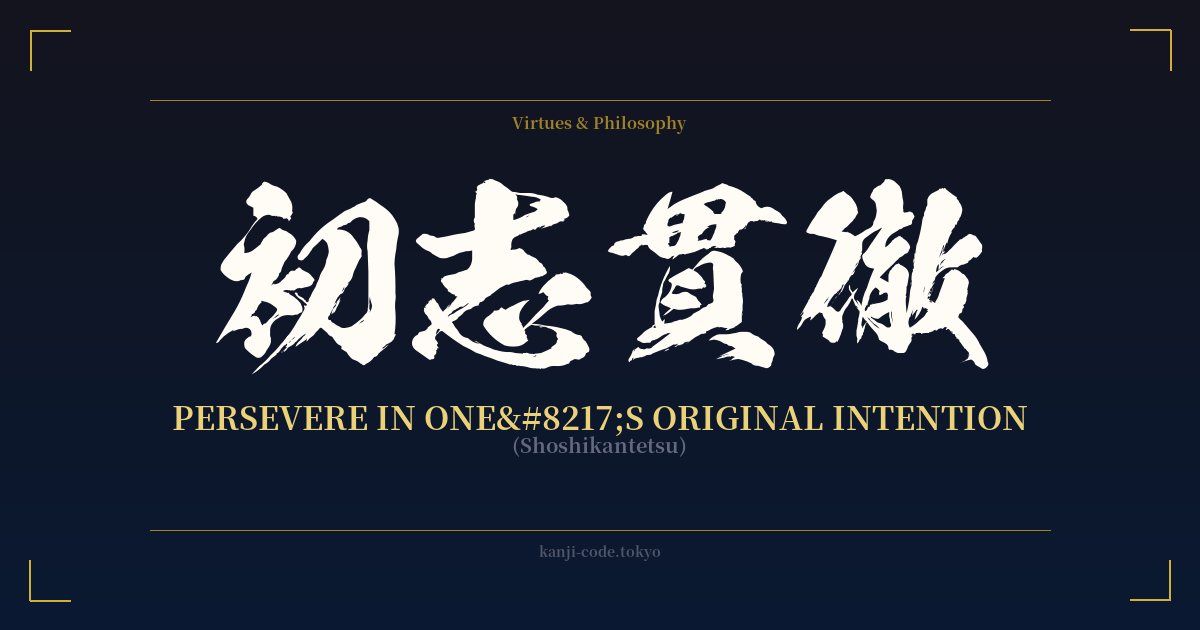
✍️ 初志貫徹 (Shoshikantetsu) — Cultural Context
初志貫徹 (Shoshikantetsu) is a four-character idiom, or yojijukugo, that encapsulates a core virtue in Japanese culture: the strength to see one's original goal through to the very end. It’s more than simple perseverance; it’s about unwavering loyalty to the initial, pure intention you started with, no matter the obstacles or temptations that arise along the way.
Imagine the spark of a new idea—a new business, a creative project, a personal transformation. That initial moment is filled with passion and a clear vision. Shoshikantetsu is the principle of honoring that purity. It’s about not letting your ambition get corrupted by ego, greed, or the desire for shortcuts as the journey progresses. It’s about finishing what you started with the same integrity with which you began.
This concept is deeply woven into the fabric of Japanese society. It's taught to children in school as a moral lesson and praised in adults, from the entrepreneur who sticks to their founding vision to the artisan who spends a lifetime perfecting their craft. It speaks to a quiet, internal form of strength, a promise you make to yourself. It is the antithesis of quitting when things get hard or changing your goals simply because it's convenient.
While related to the famous Japanese spirit of "ganbaru" (doing one's best), Shoshikantetsu has a more philosophical and long-term dimension. Ganbaru can be about enduring a temporary hardship, while Shoshikantetsu is about the entire arc of an ambition. It implies that the initial goal was worthy and that staying true to it is a mark of strong character and integrity.
In stories and real life, the hero who embodies Shoshikantetsu is one who faces immense pressure to compromise but refuses. They remember why they started and use that memory as a compass to guide them through the darkness. It’s a powerful reminder that the journey's end should reflect the nobility of its beginning.
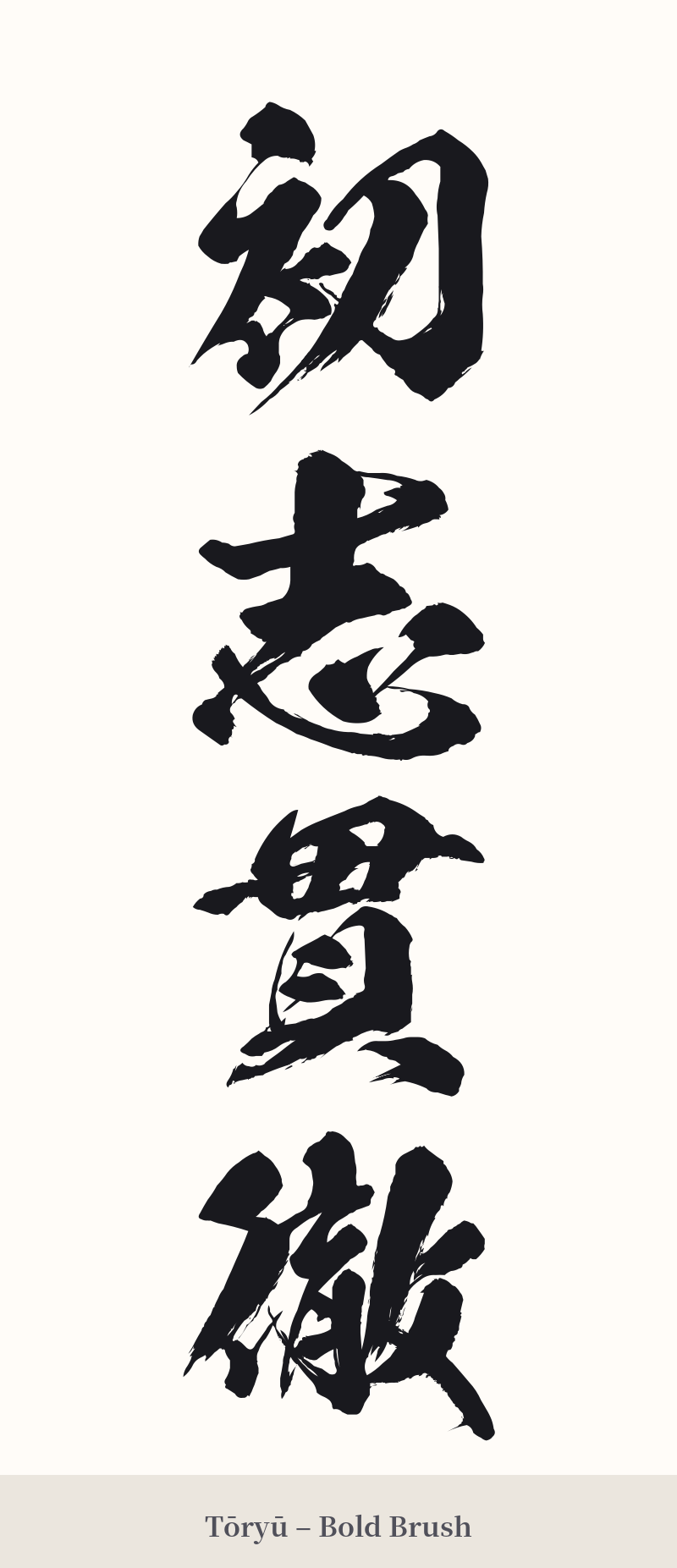
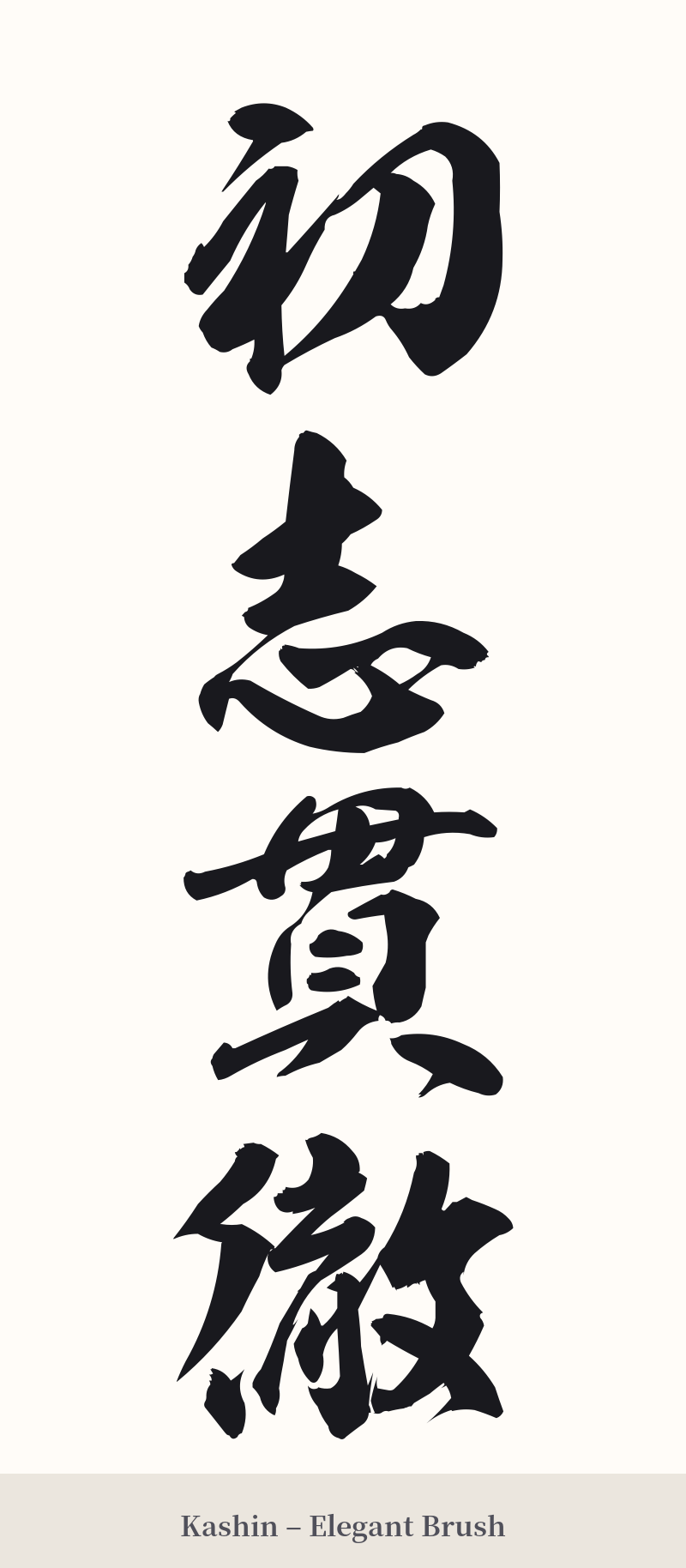
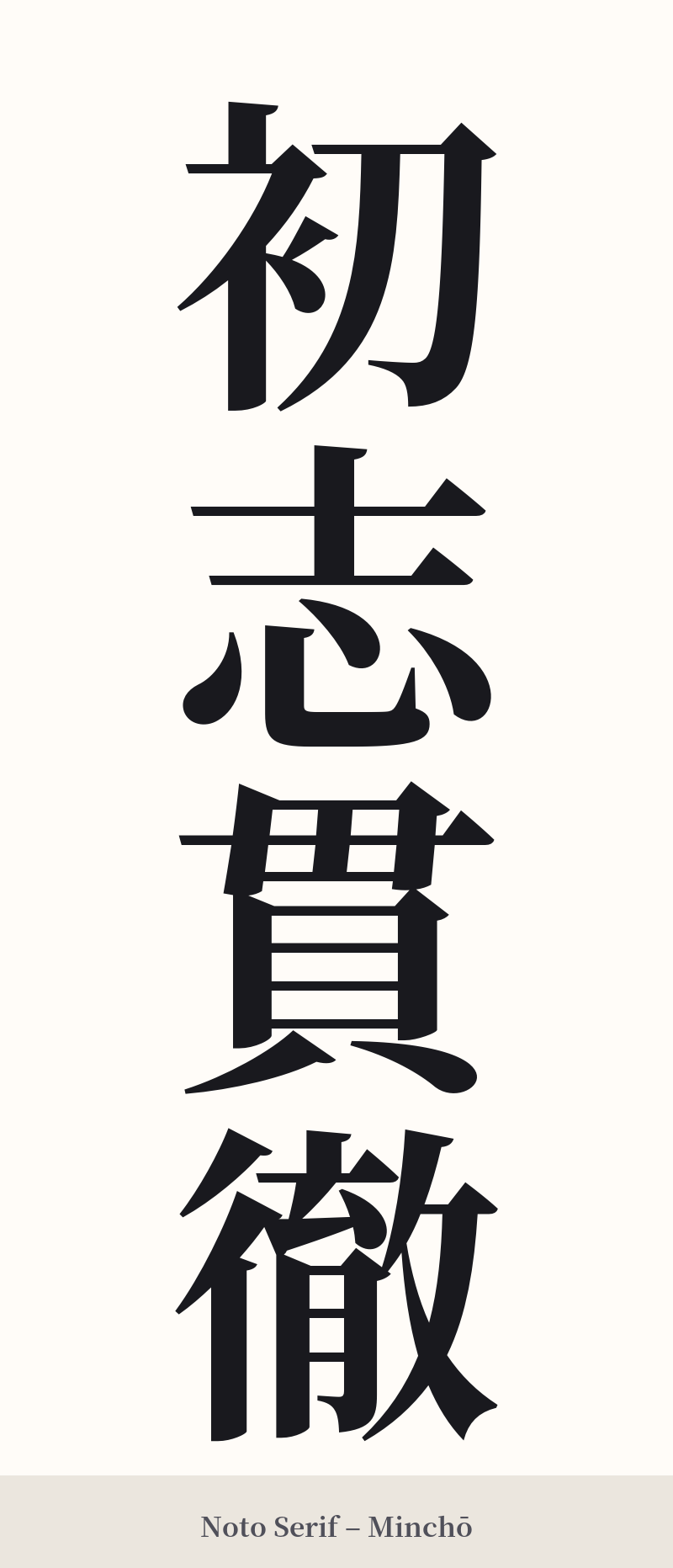
🖌️ Font Styles for 初志貫徹
The same kanji can look dramatically different depending on the calligraphy style. Choose a font that matches the mood you want for your tattoo or design.
🎨 Tattoo Suitability
📐 Tattoo Design Guide
A 初志貫徹 tattoo is a statement of profound personal commitment. Here’s how to approach its design:
– Placement: This idiom is traditionally written vertically. This makes it ideal for placements that accentuate length, such as down the spine, along the forearm, or on the calf. A horizontal placement across the chest or upper back can also be powerful.
– Font Style: The font choice dramatically affects the mood. A strong, dynamic calligraphy script (Gyoshotai or Sosho) can emphasize the passion and struggle inherent in the journey. For a more stoic and grounded feel, a crisp, formal block script (Kaishotai) is an excellent choice.
– Visual Elements: While the four characters are powerful enough to stand alone, they can be integrated with other symbols. Consider a backdrop of a mountain (symbolizing the obstacle-filled journey) or an enso circle (representing the completion and perfection of the goal). However, be careful not to overcrowd the design; the kanji should remain the focus.
Comments