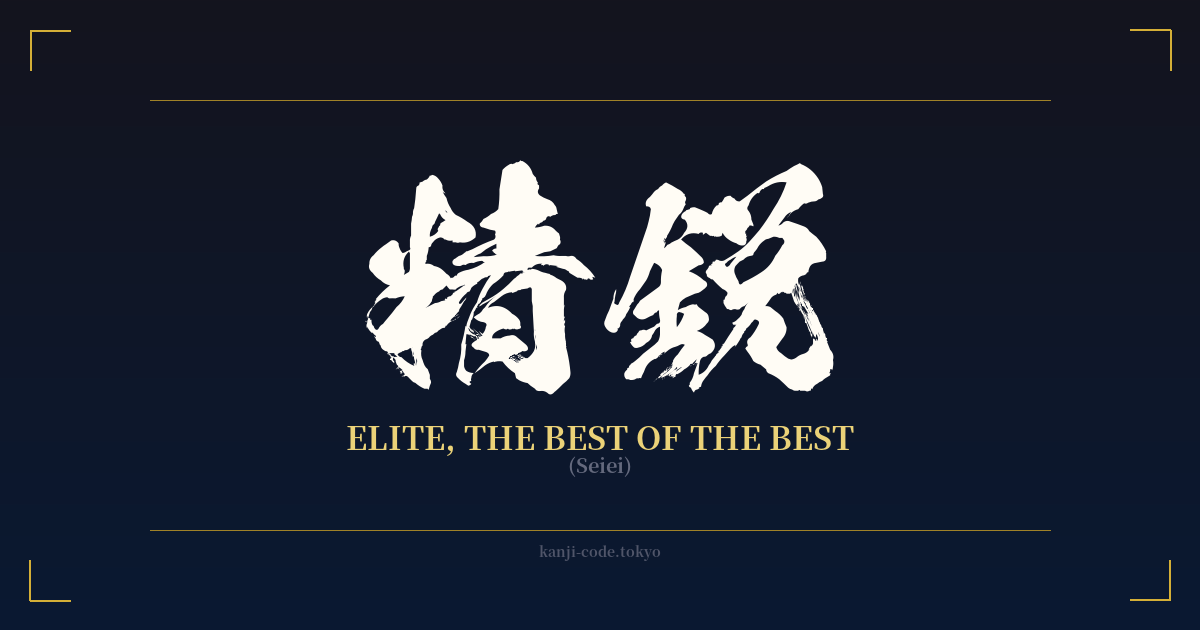
✍️ 精鋭 (Seiei) — Cultural Context
The Japanese word 精鋭 (Seiei) translates to 'elite,' 'crack troops,' or 'the best of the best.' It is a compound word that beautifully captures a concept deeply ingrained in Japanese culture: the pursuit of refined, focused excellence. The term is formed by two powerful kanji, 精 (sei) meaning 'essence' or 'refined spirit,' and 鋭 (ei) meaning 'sharp' or 'pointed.' Together, they create the image of a 'sharpened essence'—a force or individual honed to a razor's edge.
Historically and most commonly, 精鋭 is associated with a military context. The term 精鋭部隊 (seiei butai) means 'elite unit' or 'special forces.' It evokes images of warriors who are not just strong, but are the most skilled, disciplined, and effective members of a larger army. These are the individuals chosen through rigorous selection and forged in the crucible of intense training, embodying the pinnacle of martial prowess. This could be applied to historical samurai units as well as modern special operations forces.
However, the use of 精鋭 extends far beyond the battlefield. In modern Japan, it is frequently used to describe the top performers in any field. A sports team might be called a 精鋭チーム (seiei chīmu), signifying they are the best in their league. A company might assemble a team of its 精鋭社員 (seiei shain), or elite employees, to tackle a critical project. It speaks to a group that represents the highest level of quality, talent, and capability.
The concept resonates with the traditional Japanese ideal of the 'shokunin' (artisan) spirit, where one dedicates a lifetime to perfecting a craft. While a 'shokunin' achieves mastery through personal dedication, 'Seiei' often implies being selected from a group as the very best. It's not just about being good; it's about being the chosen few, the cream of the crop. This makes the word feel both prestigious and powerful, a testament to exceptional ability and the rigorous process required to achieve it. It represents quality over quantity, precision over brute force, and a level of skill that is both admired and respected.
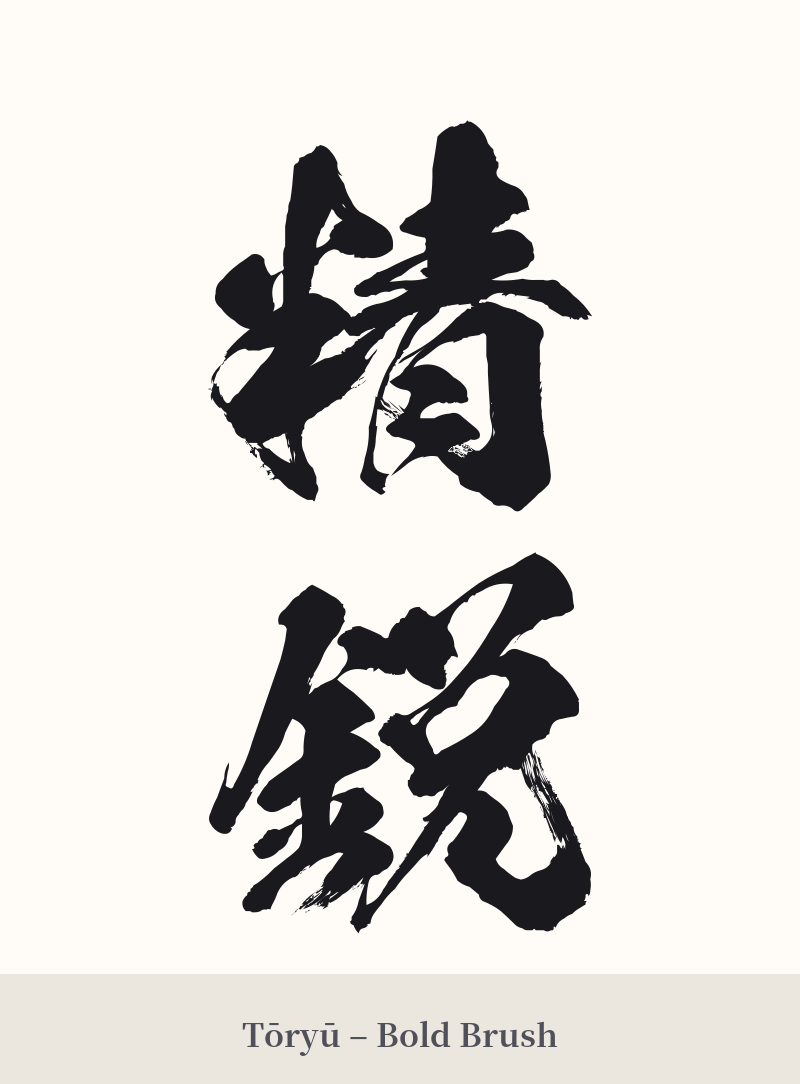
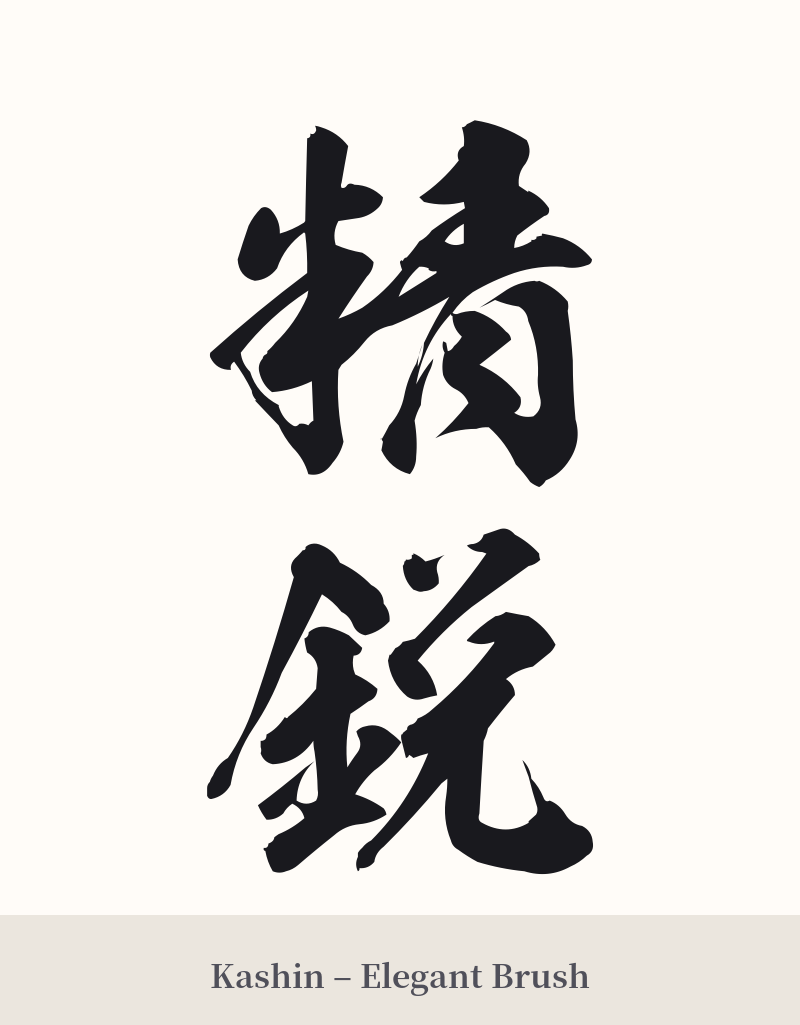
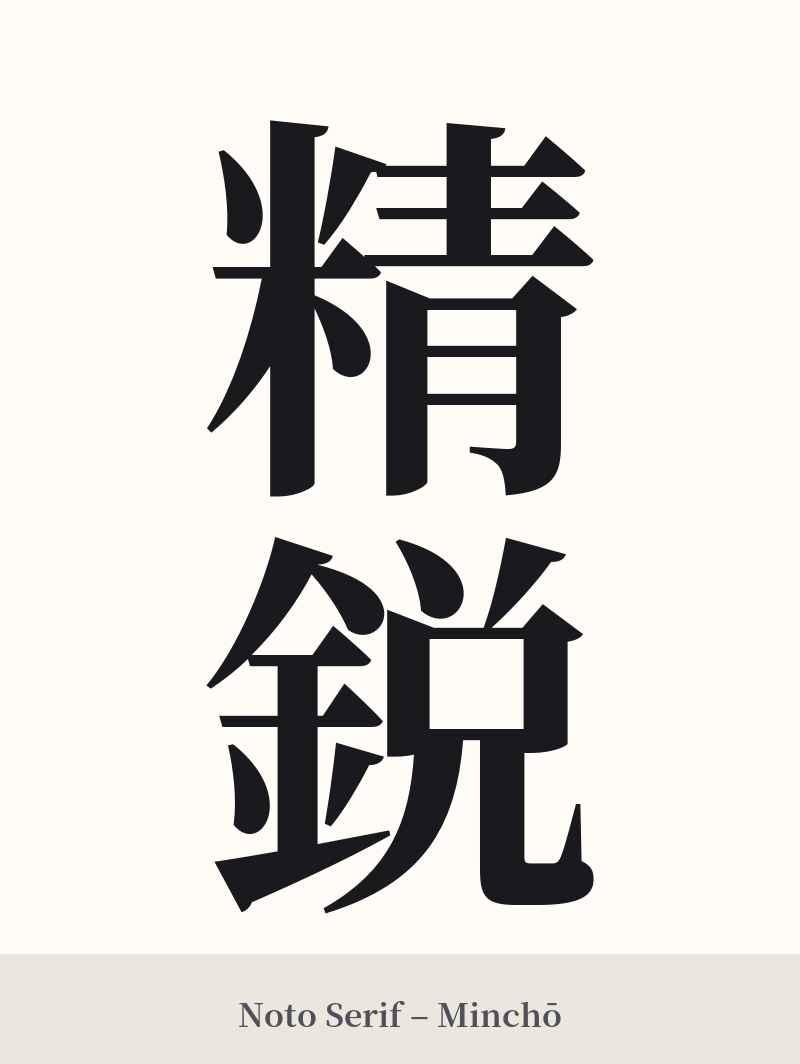
🖌️ Font Styles for 精鋭
The same kanji can look dramatically different depending on the calligraphy style. Choose a font that matches the mood you want for your tattoo or design.
🎨 Tattoo Suitability
📐 Tattoo Design Guide
For a 精鋭 tattoo, the complexity of the characters is a key consideration. A vertical alignment is highly recommended, as it complements the natural flow of kanji and works well on limbs like the forearm or calf, or along the spine.
– Placement: The forearm, bicep, calf, or back are ideal locations. These areas provide enough space to render the 29 strokes clearly, ensuring the design remains legible and impactful over time. Avoid small areas like the wrist or ankle.
– Font Style: A strong, clear script is best. A bold Kaisho (block script) will emphasize the structure and power of each character. For a more dynamic feel, a well-executed Gyosho (semi-cursive) or a powerful Shodo (calligraphy) style with strong brushstrokes can highlight the 'sharpness' inherent in the word.
– Visual Tips: The design is strong enough to stand alone. Adding extra elements is unnecessary and may clutter the piece. The focus should be on the clean execution of the kanji. Ask the artist to pay special attention to the negative space within the characters, particularly the 米 (rice) radical in 精 and the 金 (metal) radical in 鋭, to prevent them from becoming dark blobs as the tattoo ages.
Comments