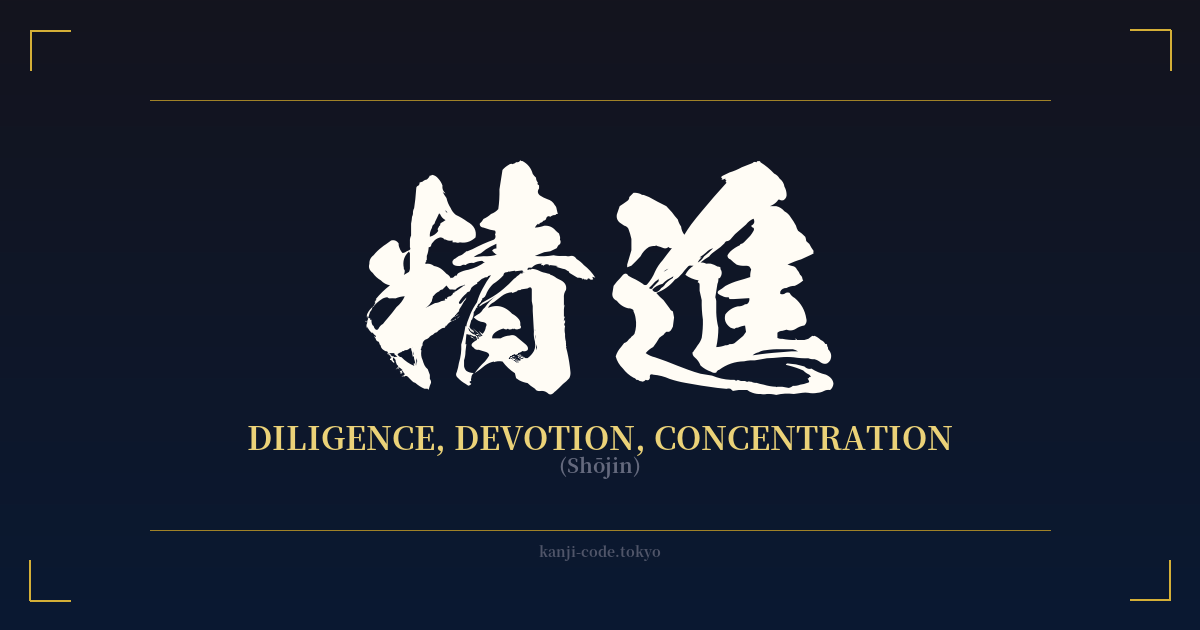
✍️ 精進 (Shōjin) — Cultural Context
The Japanese word 精進 (Shōjin) is a profound concept that transcends simple translation. While often rendered as 'diligence,' 'devotion,' or 'concentration,' its true essence lies in the idea of continuous, dedicated effort toward spiritual, moral, or personal refinement.
Originally a core tenet of Buddhism, Shōjin is the Japanese term for the Sanskrit word 'vīrya,' which means 'energy,' 'diligence,' or 'heroic effort.' In Mahayana Buddhism, it is one of the Six Perfections (Pāramitā) that a bodhisattva must cultivate on the path to enlightenment. It represents the unwavering perseverance required to overcome obstacles, purify the mind, and practice compassion without becoming discouraged.
This spiritual origin is most famously embodied in 'shōjin ryōri' (精進料理), the traditional vegetarian or vegan cuisine of Japanese Buddhist monks. This style of cooking is not merely about abstaining from meat; it is a mindful practice. It emphasizes simplicity, balance, and gratitude, using ingredients in their entirety to avoid waste and preparing food in a way that respects its natural flavors. Eating shōjin ryōri is considered a form of spiritual training—an act of Shōjin itself.
Over centuries, the concept of Shōjin seeped from the monastery into the fabric of secular Japanese culture. It became a guiding principle in martial arts (budō), where practitioners dedicate themselves to the endless pursuit of perfecting their form and spirit. The phrase 'hibi shōjin' (日々精進) is commonly used, meaning 'daily diligence' or 'making a continuous effort every day.' It reflects a cultural value placed on persistent, humble work toward a long-term goal, whether in one's craft, career, or personal development.
Today, Shōjin represents a powerful philosophy of life. It’s not about short bursts of intense work, but about the steady, focused application of energy over a lifetime. It is the quiet determination of the artisan honing their skill, the athlete pushing their limits daily, and the individual committed to becoming a better version of themselves. It is the conscious effort to advance, not for external reward, but for the sake of the journey itself.
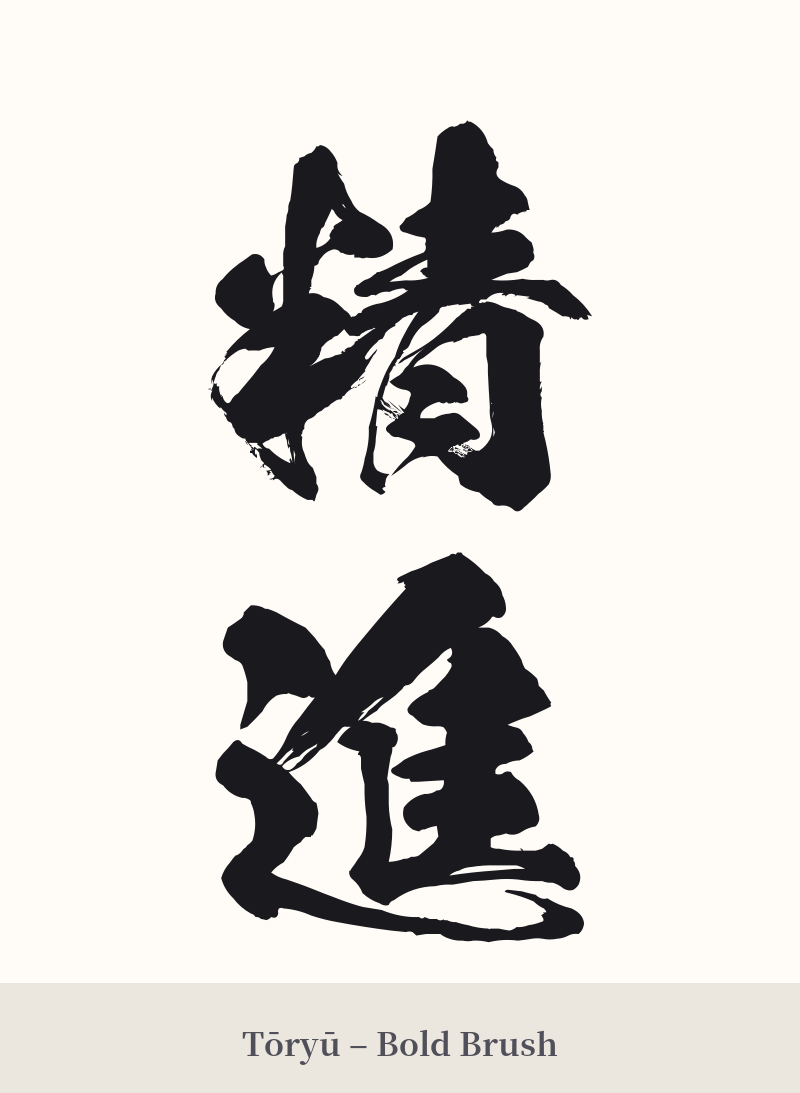
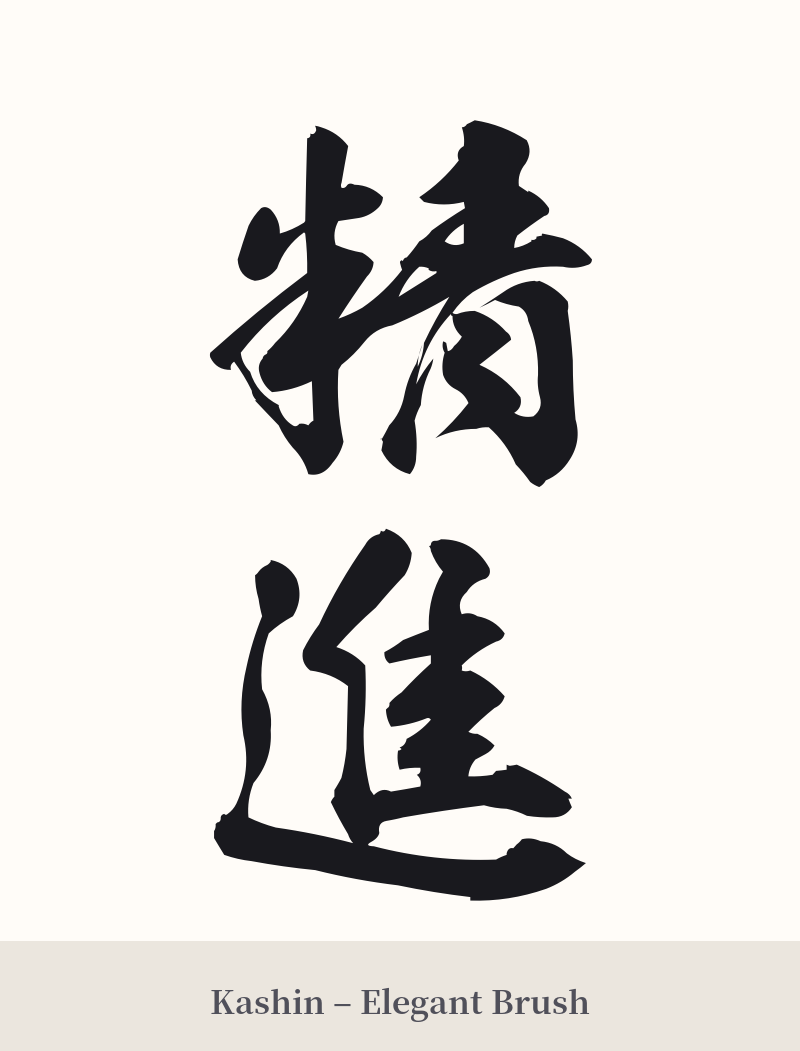
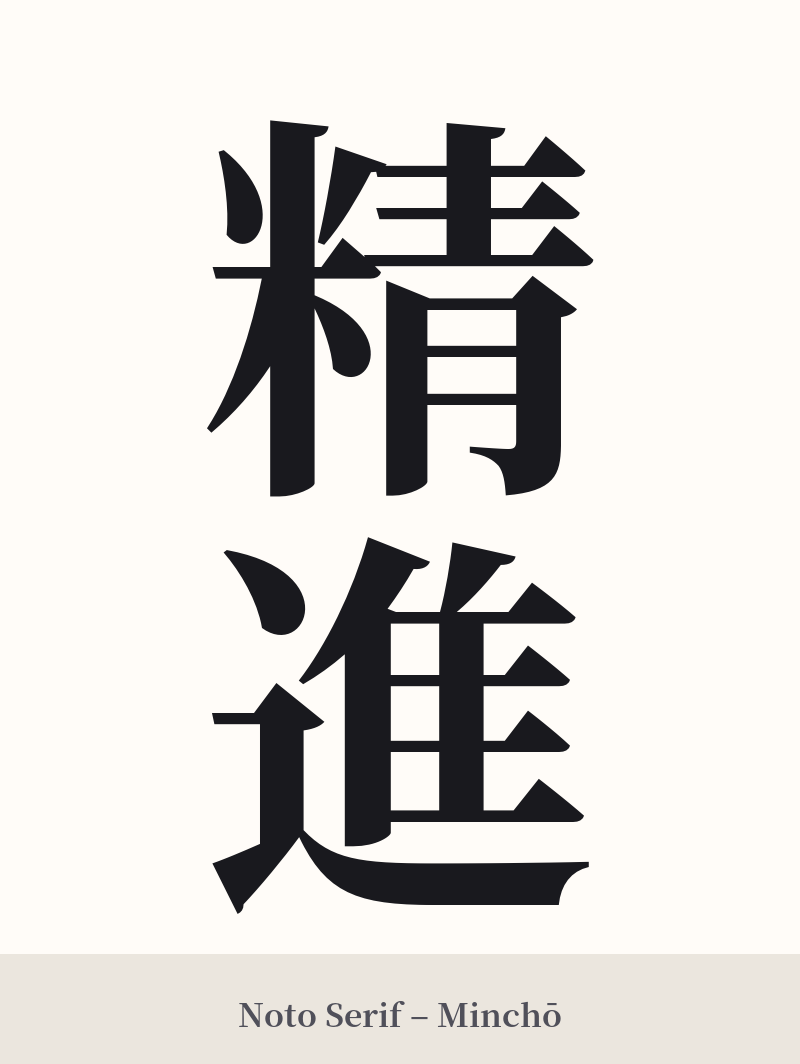
🖌️ Font Styles for 精進
The same kanji can look dramatically different depending on the calligraphy style. Choose a font that matches the mood you want for your tattoo or design.
🎨 Tattoo Suitability
📐 Tattoo Design Guide
For a 精進 (Shōjin) tattoo, the design should reflect the word's blend of discipline and fluid progress.
– Placement: Vertical alignment works beautifully for this two-character compound. Consider placing it along the forearm, the calf, or down the spine to emphasize the idea of an ongoing path. Horizontally, it fits well across the chest or upper back.
– Font Style: A traditional calligraphy script is highly recommended. A 'Gyosho' (semi-cursive) style can capture the dynamic sense of progress and effort, while a 'Kaisho' (block script) style will convey the discipline and stability inherent in the concept.
– Visual Tips: The characters are strong enough to stand on their own. Adding extra imagery can risk cluttering the design. If you wish to enhance the Buddhist undertones, a very subtle element like a single enso circle or a minimalist lotus blossom base could be integrated, but the kanji should remain the focus.
Comments