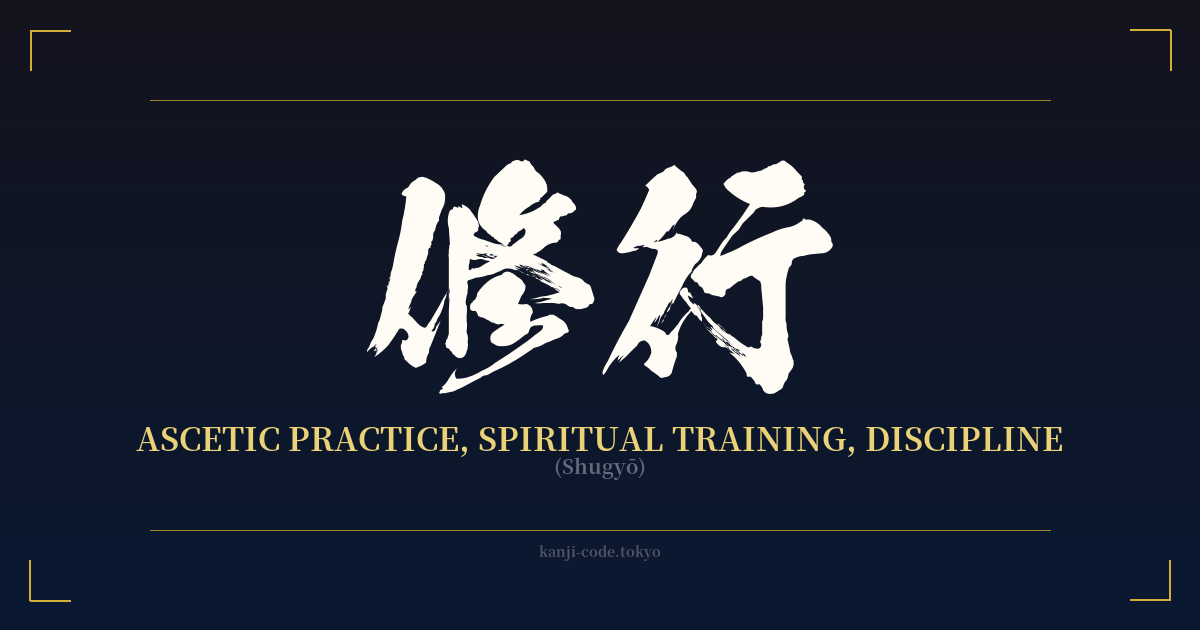
✍️ 修行 (Shugyō) — Cultural Context
修行 (Shugyō) is a Japanese term that transcends simple translation. While it can be rendered as 'training,' 'discipline,' or 'ascetic practice,' its true essence lies in the transformative process of forging one's spirit through rigorous, often arduous, effort. It is a journey of self-mastery that touches the very core of a person's character, mind, and soul.
The concept is deeply intertwined with Japanese Buddhism, particularly Zen. For a monk, Shugyō is the path to enlightenment. It encompasses not just meditation (zazen) but also daily labor (samu) and enduring physical and mental hardships. The famous 'marathon monks' of Mount Hiei in Kyoto embody the ultimate form of Shugyō, undertaking incredible feats of endurance over a seven-year period to achieve a higher state of being. Their journey is a literal and spiritual Shugyō.
Beyond the monastery, Shugyō is the lifeblood of Japanese martial arts (budō). In disciplines like Karate, Kendo, or Aikido, the training goes far beyond learning techniques. The repetitive practice, the strict etiquette of the dōjō, and the physical exertion are all forms of Shugyō designed to cultivate not just a skilled fighter, but a disciplined and resilient individual. The goal is to polish the spirit (精神, seishin) as much as it is to sharpen the sword or perfect a punch.
This idea of a warrior's spiritual journey is also captured in the historical practice of 武者修行 (musha shugyō). This was a warrior's pilgrimage, where a samurai would travel the land, dueling with other warriors and living an austere life to hone their skills and deepen their understanding of their art and themselves. It was a quest for perfection through real-world experience and hardship.
It's crucial to distinguish Shugyō from the more common word for practice, 練習 (renshū). Renshū is about repetition to acquire a skill, like practicing scales on a piano. Shugyō is about using that practice as a vehicle for profound personal transformation. A sushi chef who spends decades perfecting the art of making rice, an artisan dedicating their life to a single craft, or a calligrapher endlessly practicing a single stroke—they are all engaged in their own form of Shugyō. It is the pursuit of perfection with the understanding that the journey itself is the destination.
🖌️ Font Styles for 修行
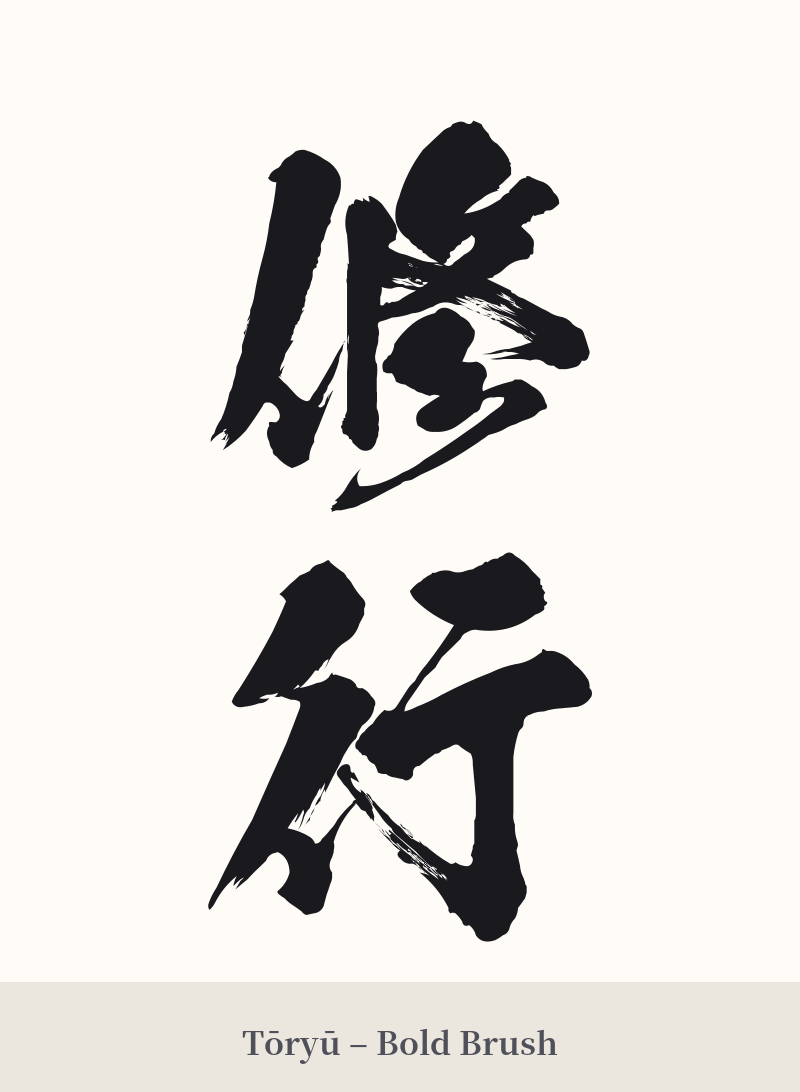
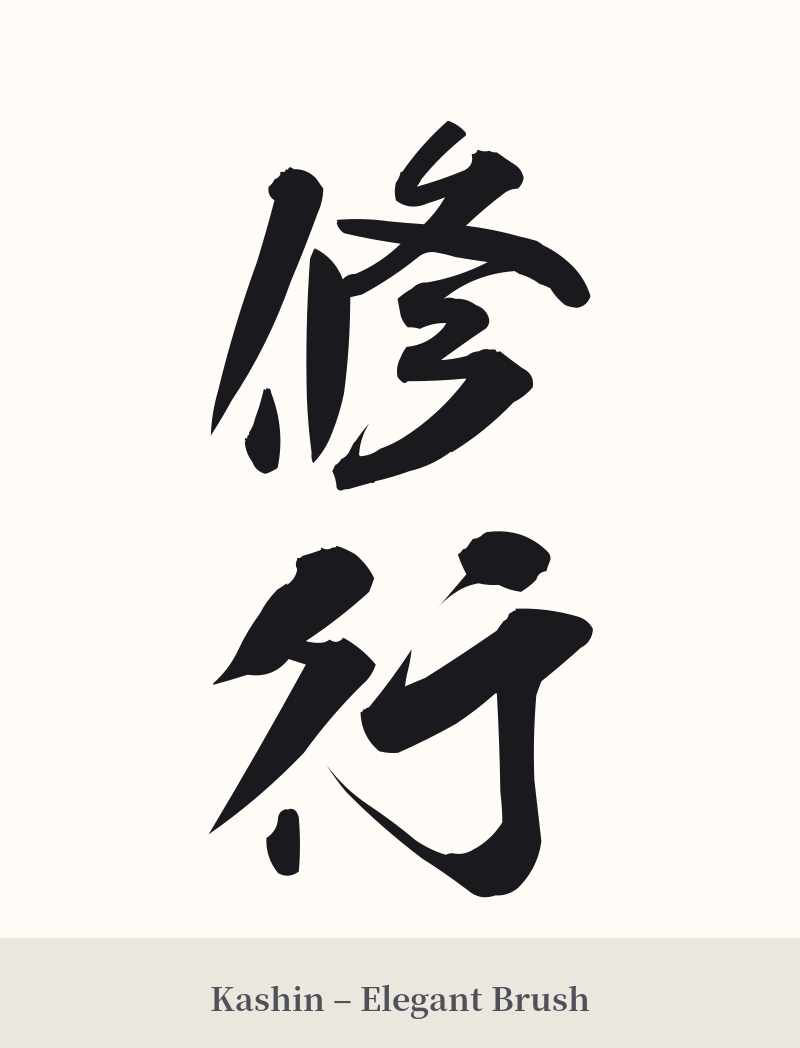
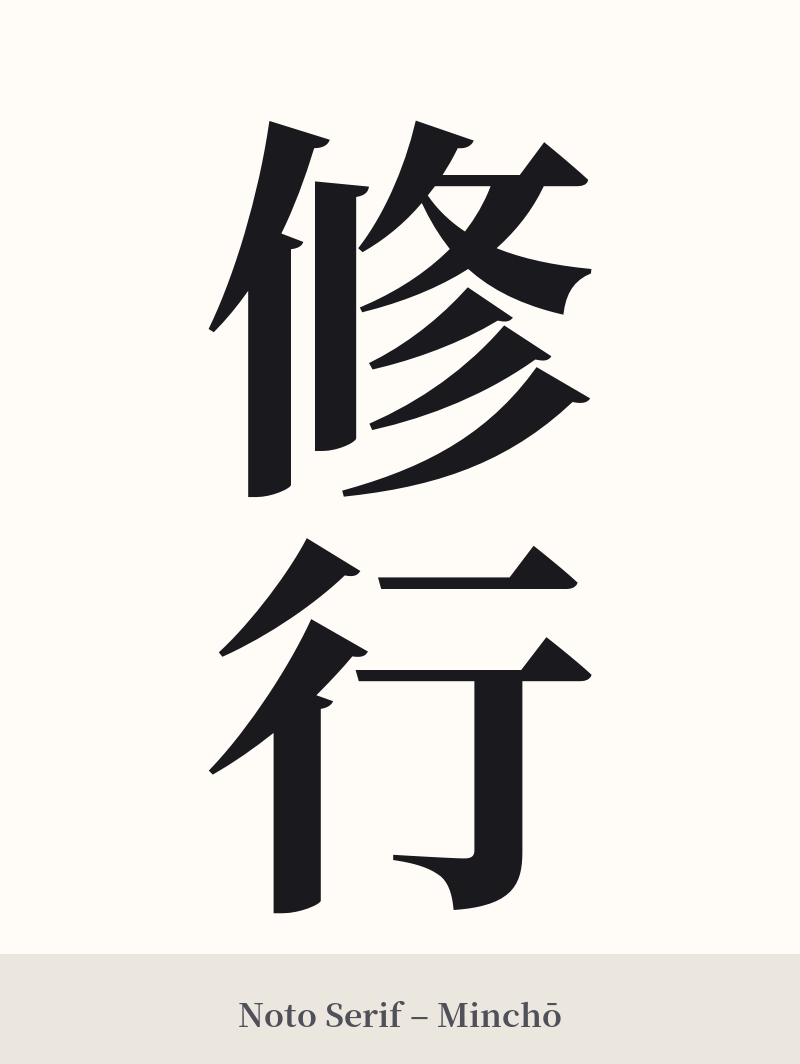
The same kanji can look dramatically different depending on the calligraphy style. Choose a font that matches the mood you want for your tattoo or design.
🎨 Tattoo Suitability
📐 Tattoo Design Guide
The word 修行 (Shugyō) lends itself well to designs that convey strength, discipline, and a sense of journey.
– Placement: A vertical alignment is highly recommended and looks powerful along the spine, forearm, or calf. This orientation mirrors traditional Japanese writing and enhances the sense of a path. A horizontal placement can also work well across the chest or upper back.
– Font Style: The choice of script can dramatically alter the feeling. A bold, semi-cursive brushstroke style (Gyōsho) can capture the dynamic energy of training. For a more stoic and formal look, a clean, angular block script (Kaisho) emphasizes discipline and structure. A highly expressive, cursive style (Sōsho) can represent the fluid, enlightened state achieved through practice.
– Visual Elements: Consider pairing the kanji with symbolic imagery. An Enso circle is a classic Zen pairing, representing enlightenment and the universe. A lotus flower can signify rising from the mud of hardship to achieve purity. Incorporating elements like a rocky path, a mountain, or a simple dōjō in the background can visually narrate the story of the ascetic journey.
Comments