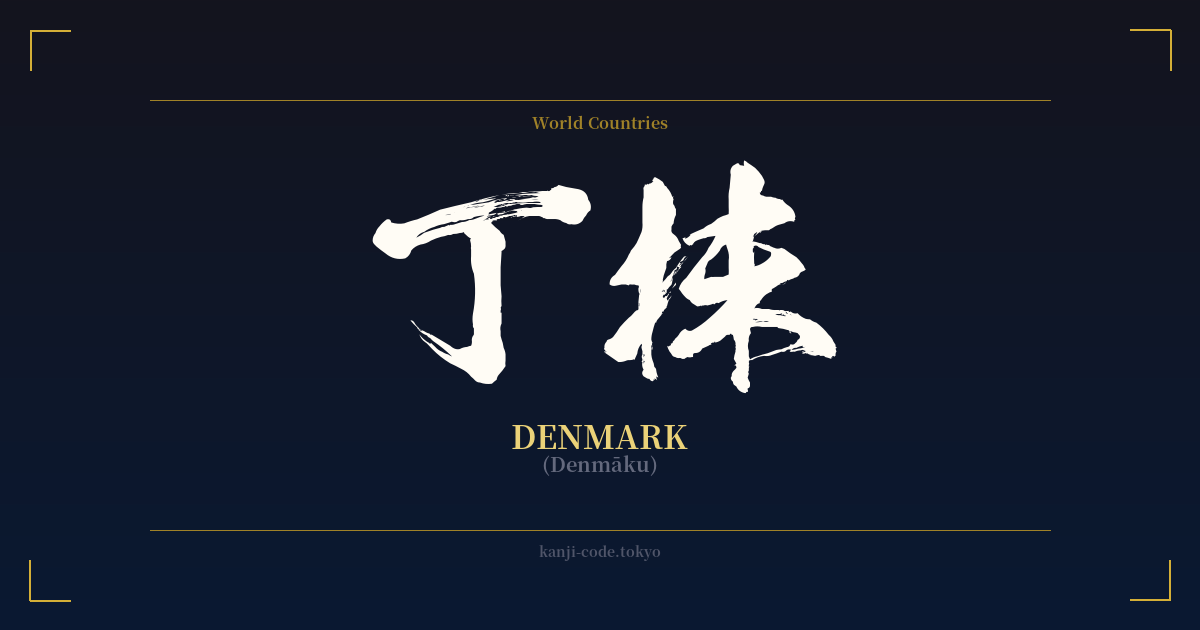
✍️ 丁抹 (Denmāku) — Cultural Context
The word 丁抹 (Denmāku) is a fascinating window into a specific period of Japanese history. It is an example of 'ateji' (当て字), a practice where kanji characters are used for their phonetic value to represent foreign words, completely disregarding their original meanings. This method was common during the Meiji Restoration (late 19th century) when Japan rapidly opened to the West and needed ways to write the names of unfamiliar countries, people, and concepts.
In this case, '丁' (chō/tei) and '抹' (matsu/ma) were chosen to phonetically approximate the sound of 'Denmark'. The actual meanings of the characters—'丁' referring to a street or a counter, and '抹' meaning to rub or erase—have absolutely no connection to the country itself. This purely phonetic usage is a key characteristic of ateji for foreign names.
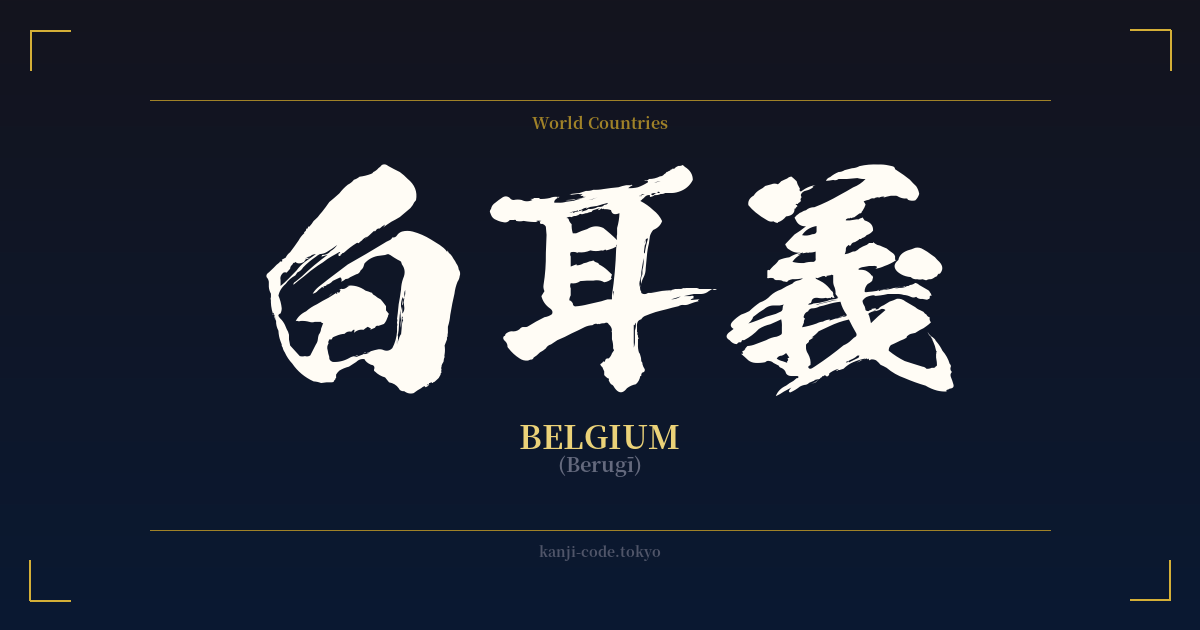
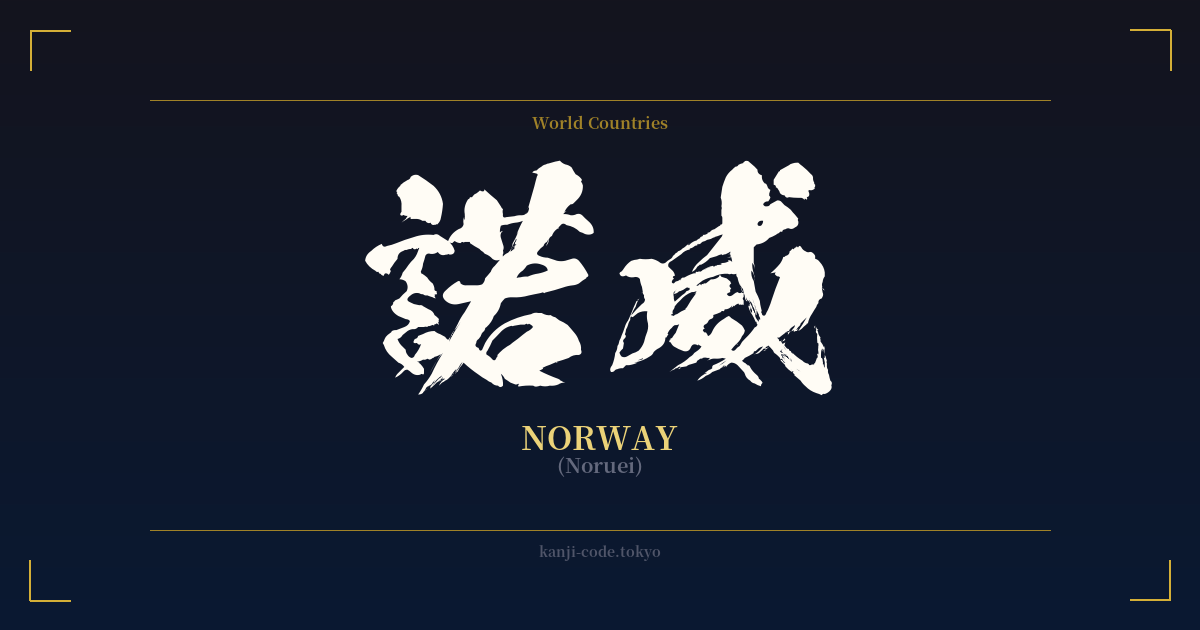
Many other countries received similar kanji spellings during this era. For example, America became '亜米利加' (Amerika), France became '仏蘭西' (Furansu), and England became '英吉利' (Igirisu). These names were once standard but have since been almost entirely replaced in everyday language.
Today, foreign names in Japanese are written using katakana, a syllabic script specifically designed for that purpose. The modern way to write Denmark is デンマーク (Denmāku). As a result, the kanji form 丁抹 is now considered archaic and is rarely seen outside of historical texts or specialized contexts. A modern Japanese person would likely not recognize 丁抹 as Denmark and would be puzzled by its meaning.
Despite its obscurity, 丁抹 tells a story of cultural exchange and linguistic adaptation. It represents Japan's effort to catalog and understand the outside world using its existing writing system before the widespread adoption of katakana for loanwords. It stands as a historical artifact, a testament to the flexibility and evolution of the Japanese language.
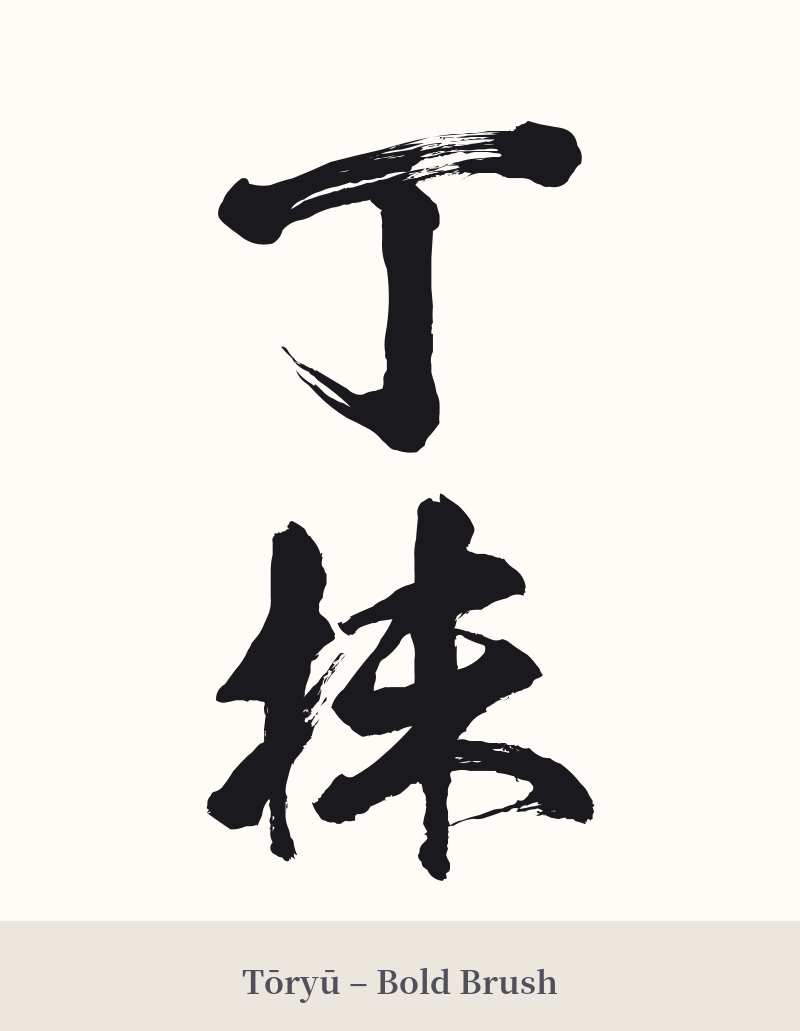
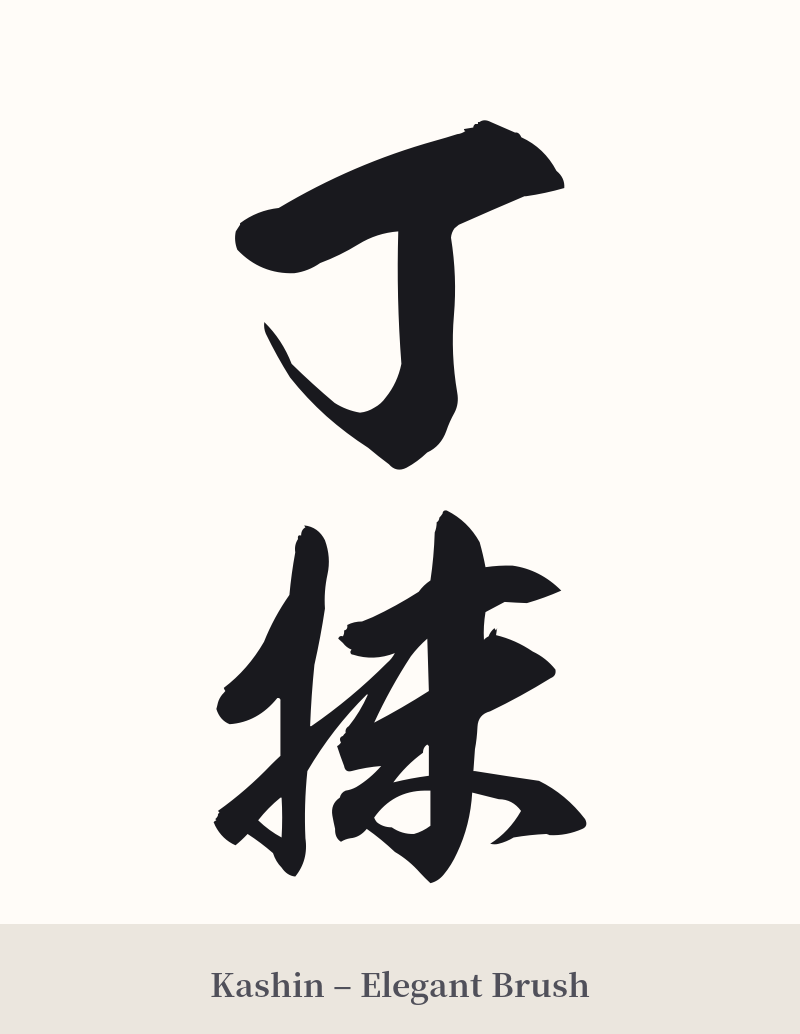
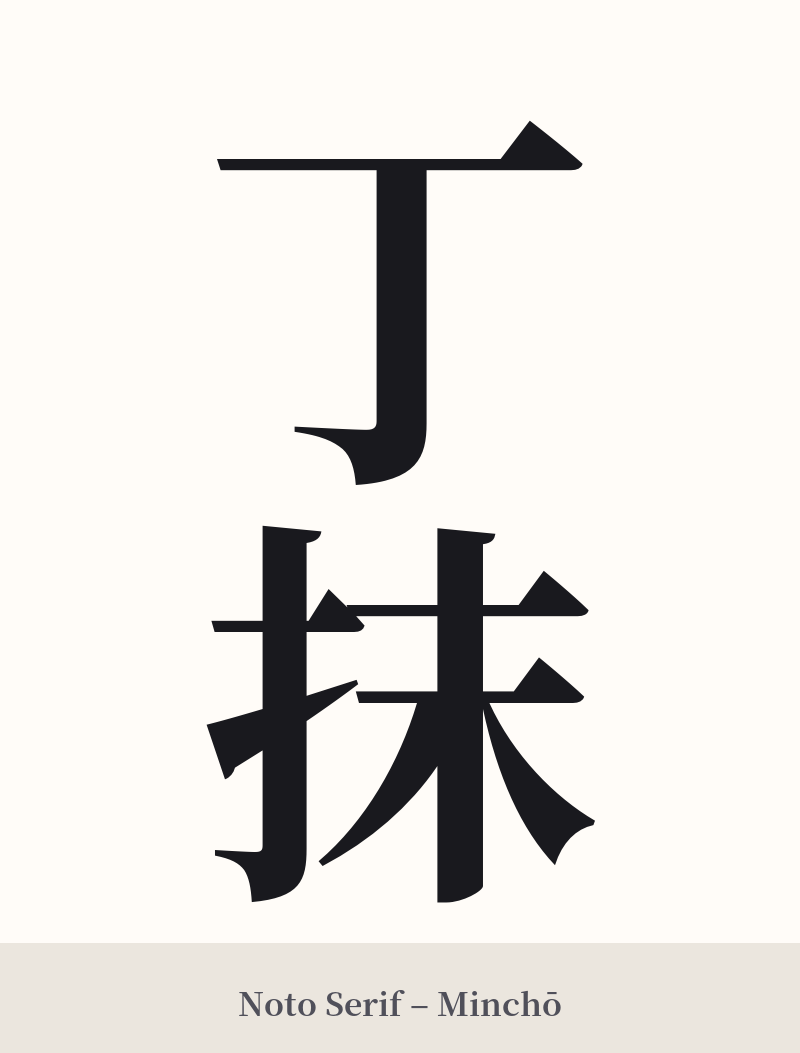
🖌️ Font Styles for 丁抹
The same kanji can look dramatically different depending on the calligraphy style. Choose a font that matches the mood you want for your tattoo or design.
🎨 Tattoo Suitability
📐 Tattoo Design Guide
If you choose to get a tattoo of 丁抹, embracing its historical and obscure nature is key. The design should reflect its archaic quality rather than trying to make it appear modern.
– Placement: A horizontal arrangement works well on the forearm, across the collarbone, or along the ribs. For a more traditional aesthetic, a vertical placement on the arm, leg, or spine can be very effective.
– Font Style: Avoid modern, geometric, or gothic fonts. Instead, opt for classic Japanese calligraphy styles. A formal 'Kaisho' (block script) would look clean and dignified, while a semi-cursive 'Gyosho' could add a touch of historical elegance. A traditional 'Mincho' font also complements its classic feel.
– Visual Tips: Because this is a phonetic word, adding imagery based on the literal kanji meanings (like a street sign or an eraser) would be confusing. Instead, consider it as a standalone piece. Its appeal lies in its subtlety and the story behind it, making it a conversation starter for those who know its origin.
Comments