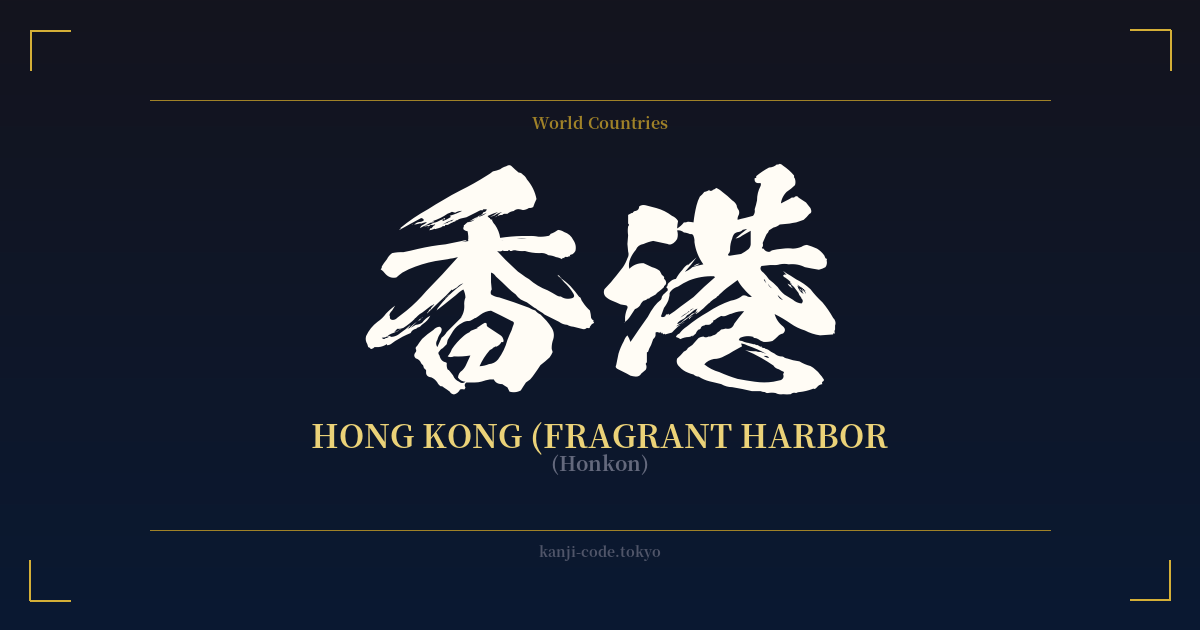
✍️ 香港 (Honkon) — Cultural Context
The kanji 香港 (Honkon) is the Japanese name for Hong Kong, a city that has long captured the world's imagination as a dazzling nexus of East and West. The name itself is beautifully poetic, translating literally to “Fragrant Harbor.” This isn't just a flight of fancy; it's rooted in the region's history. Centuries ago, the area was a crucial port for the trade of fragrant incense and agarwood, products derived from trees in the New Territories. The scent of this trade lingered, and the name “Fragrant Harbor” was born.
In Japan, 香港 is recognized immediately as the vibrant metropolis, a symbol of international finance, commerce, and culture. While the characters are identical to the Chinese Hanzi, the Japanese pronunciation “Honkon” is a distinct adaptation, reflecting the linguistic ties and historical interactions between the two cultures. For Japanese people, Hong Kong often evokes images of classic martial arts films, delicious cuisine like dim sum, and the iconic neon-lit cityscapes that have inspired countless stories.
The city's unique history as a British colony returned to China in 1997 adds layers of complexity to its identity. This duality is palpable in its culture—a blend of Cantonese traditions and Western influences. This hybridity has made Hong Kong a powerful symbol in art and media, from the atmospheric, rain-slicked streets in Wong Kar-wai's films like “Chungking Express” to its foundational role in the cyberpunk genre, which often depicts futuristic, high-density Asian megacities.
Therefore, the characters 香港 carry more than just a geographic designation. They represent a story of trade, colonialism, cultural fusion, and resilience. It is a name that speaks of a specific place but also embodies broader themes of globalization, identity, and the dynamic tension between tradition and modernity. It is a microcosm of history, condensed into two evocative characters.
🖌️ Font Styles for 香港
The same kanji can look dramatically different depending on the calligraphy style. Choose a font that matches the mood you want for your tattoo or design.
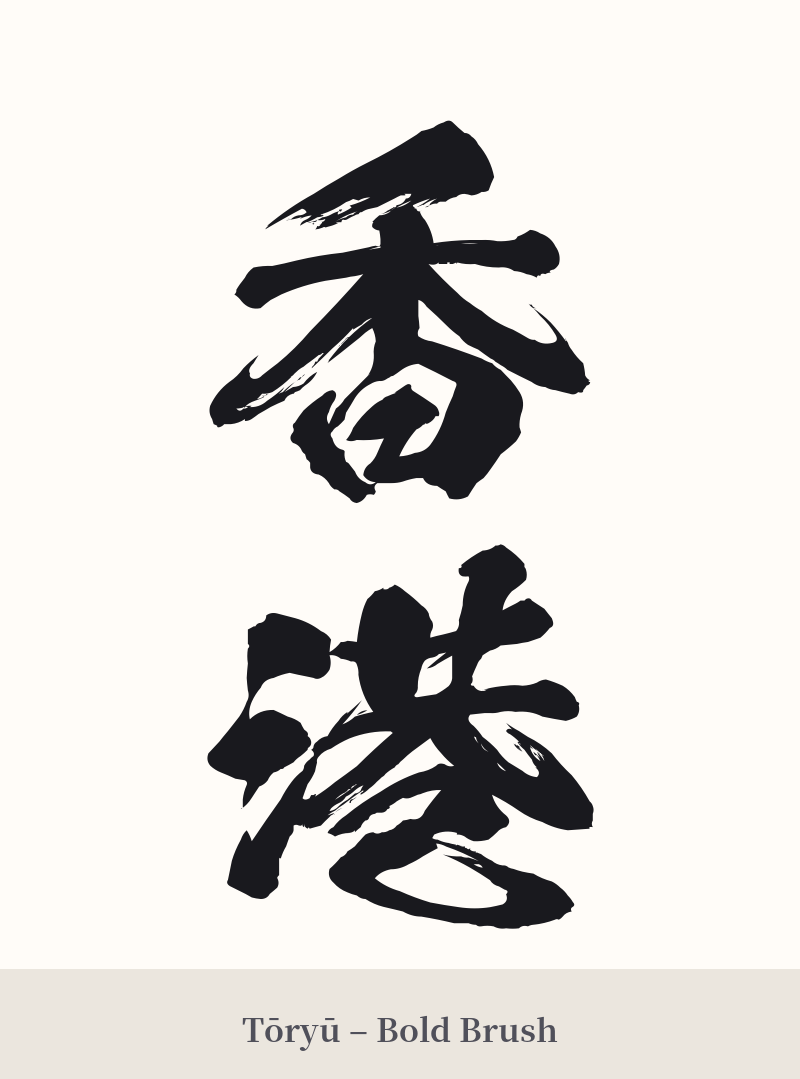
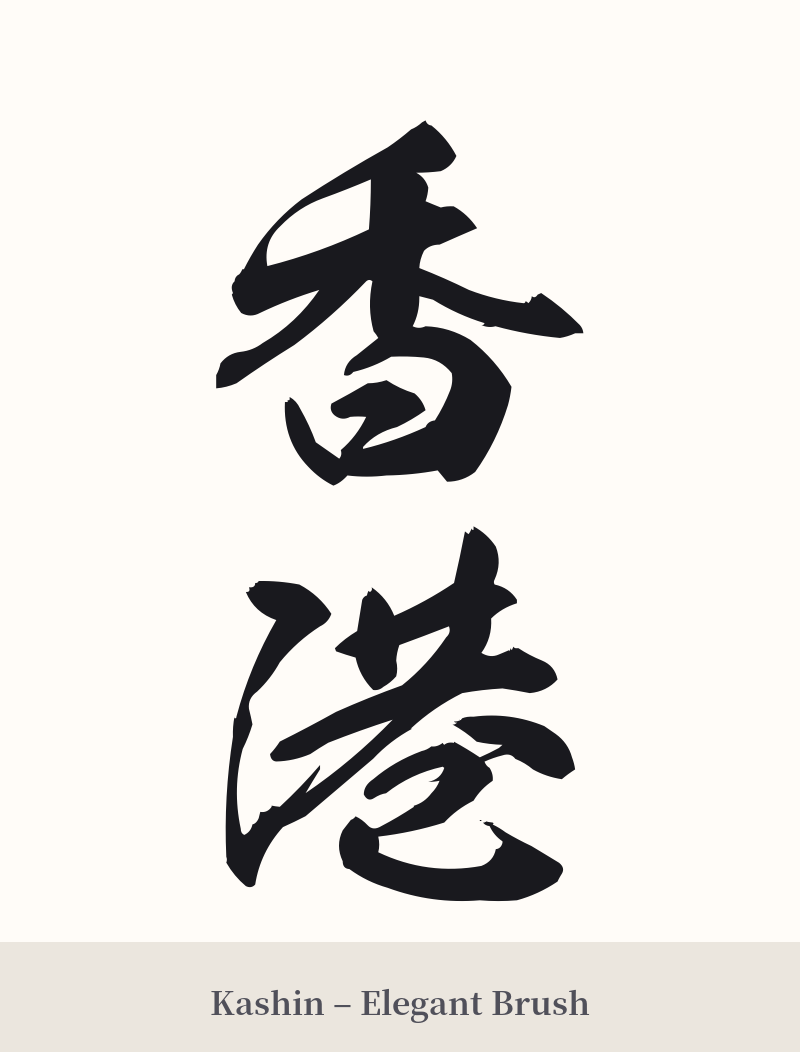
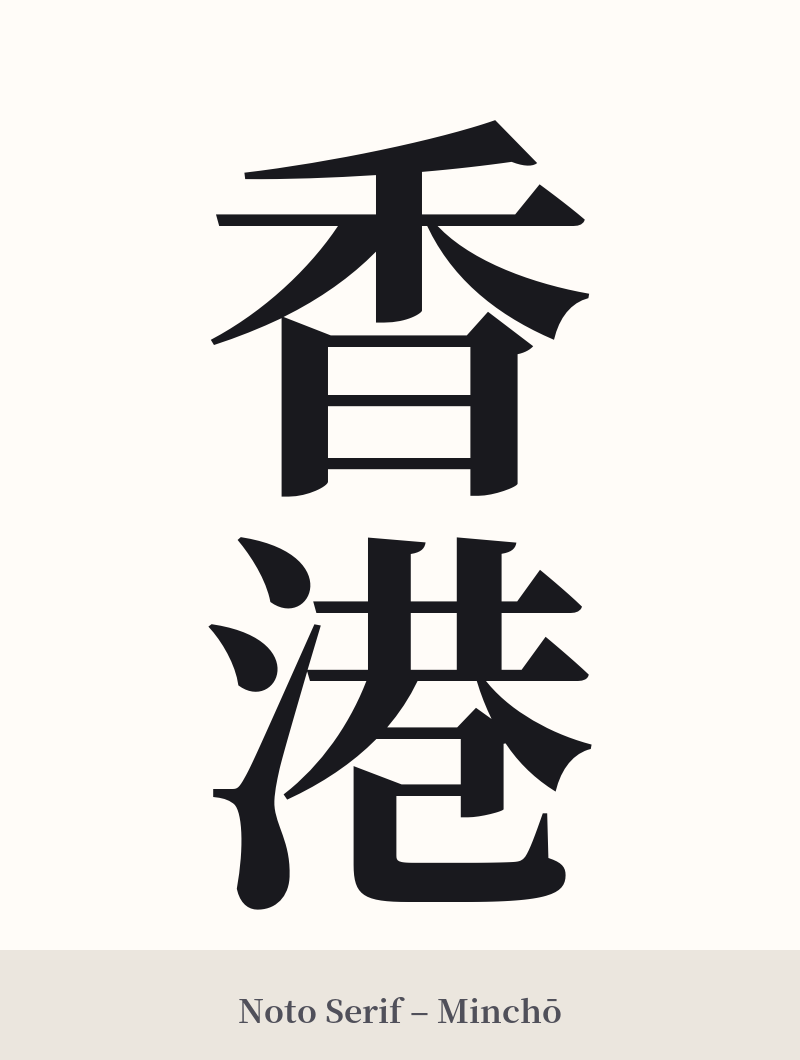
🎨 Tattoo Suitability
📐 Tattoo Design Guide
For a 香港 tattoo, the design should honor its visual balance and cultural weight. The two characters work well together both horizontally and vertically, with a vertical orientation often feeling more traditional and elegant.
– Placement: Due to the combined complexity of 21 strokes, avoid small or cramped areas. A forearm, calf, or back piece allows the artist enough space to render the details cleanly, preventing the strokes from bleeding into each other over time.
– Font Style: A standard, crisp Kaisho (block) script will give the tattoo a strong, classic, and legible look. For a more artistic and dynamic feel, a Gyosho (semi-cursive) script can capture the city's energy and movement. A highly stylized Sosho (cursive) script could be beautiful but may sacrifice legibility.
– Visual Embellishments: Consider pairing the kanji with imagery that enhances its meaning. A background of subtle waves or water can reference the 'Harbor' aspect. Other symbolic additions could include a bauhinia flower (the emblem of Hong Kong), a silhouette of the iconic skyline, or even a traditional Chinese junk boat.
Comments