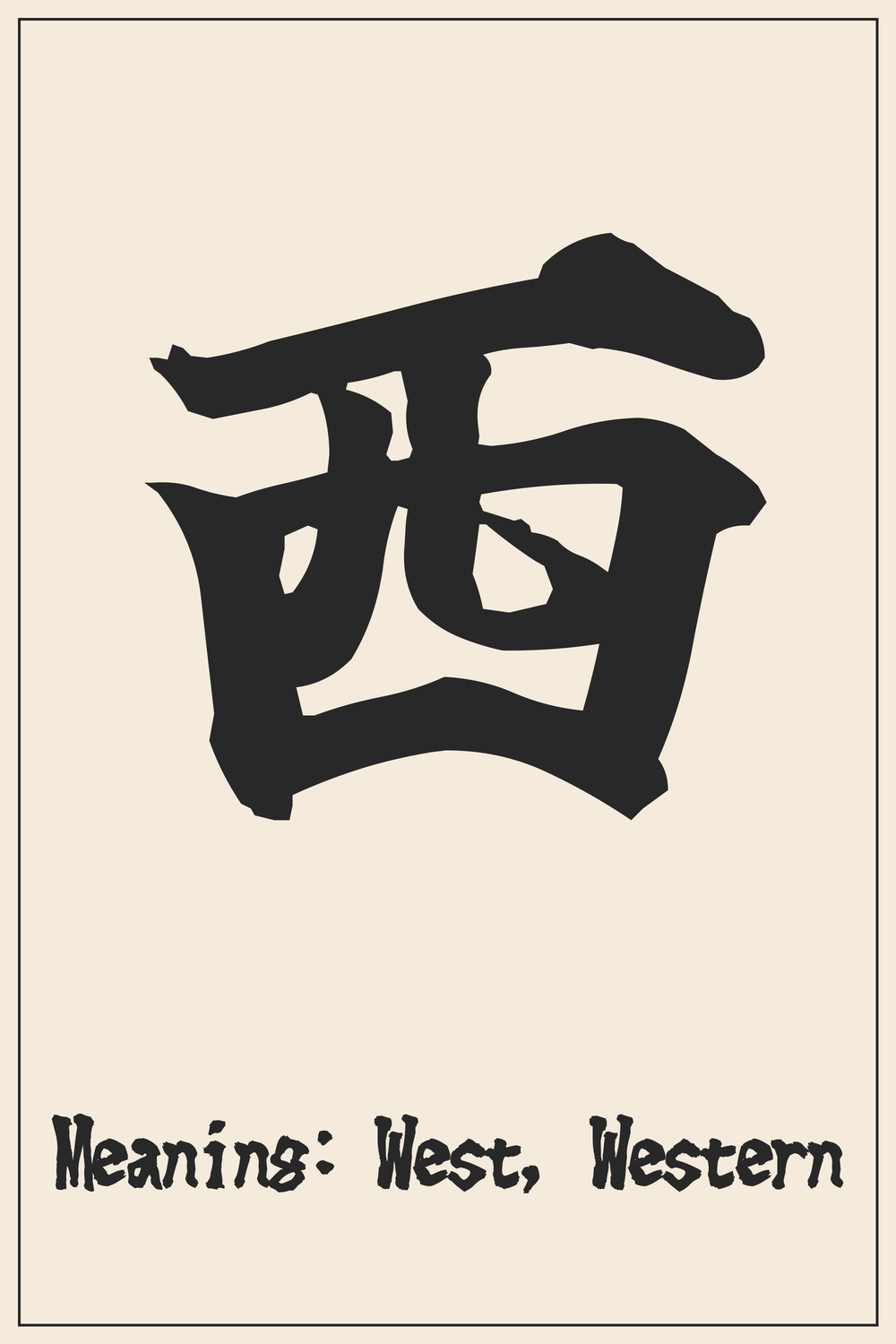
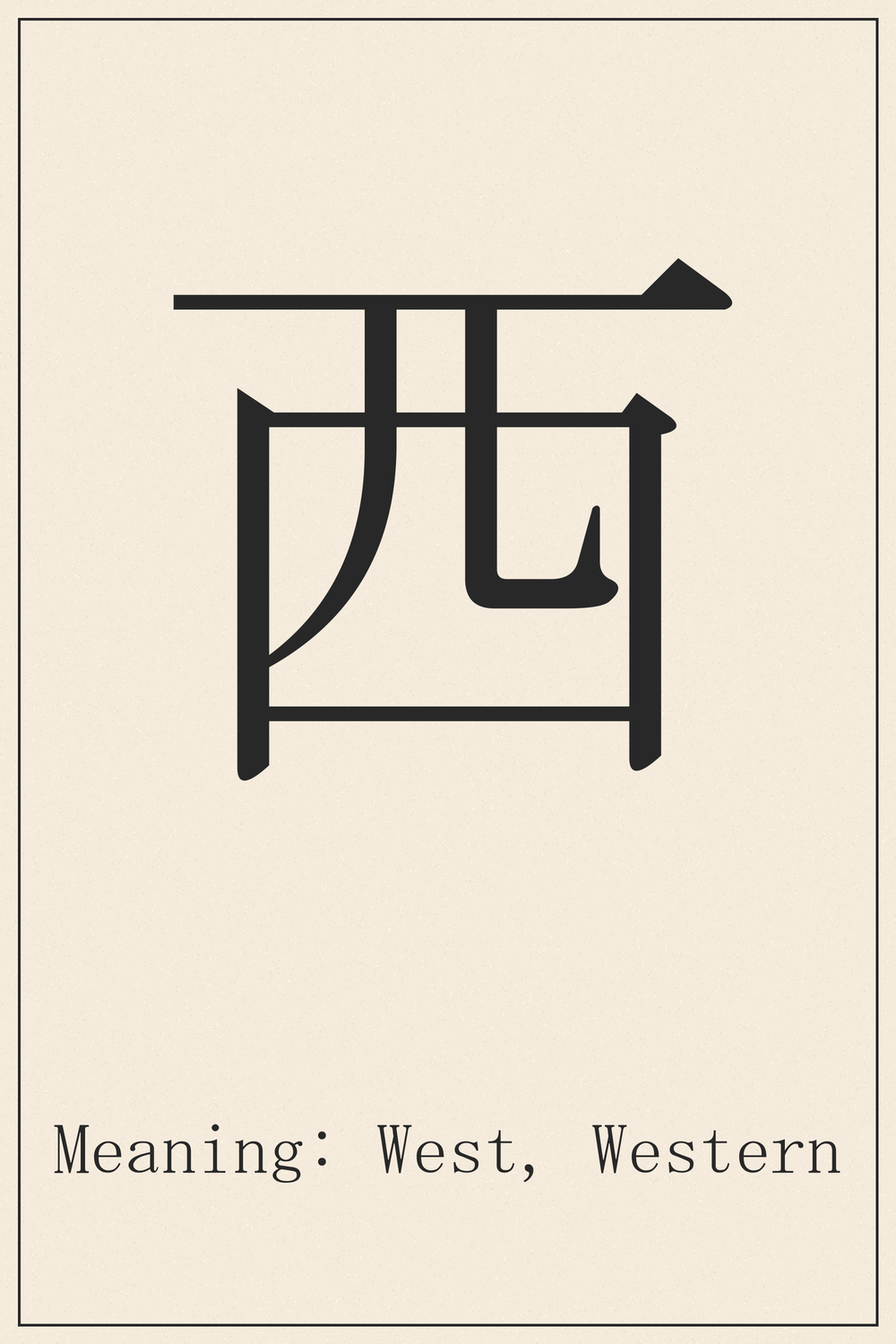
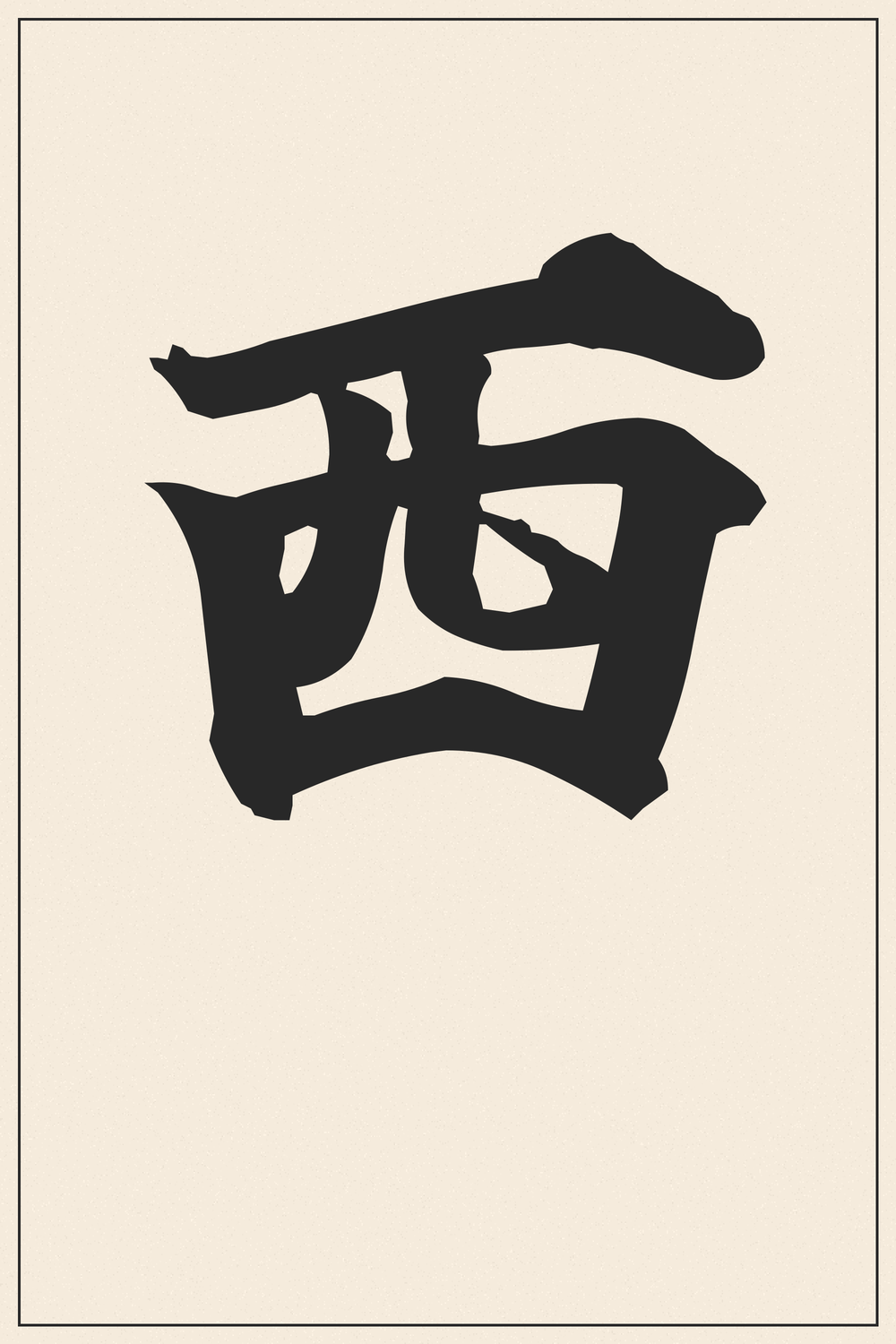
“西” (Nishi) embodies more than just a cardinal direction; it represents the allure of the setting sun, the journey towards new horizons, and a distinct cultural identity. This character subtly guides us through the natural world and human experience, marking a place of transition and reflection.
The atmosphere of a Kanji character changes dramatically depending on the font style. A character that looks elegant in a brush style might look bold and modern in a different font.
Recommendation:
Since a tattoo is permanent, we strongly recommend comparing various font styles beyond what is shown here. Use our designs as a trusted reference for the correct structure, but feel free to explore different artistic variations to find the perfect match for your vision.
The Deep Meaning Behind 西
The character 西, in its ancient oracle bone script, is believed to be a pictograph depicting a bird’s nest or a bird returning to its nest. This imagery strongly associates it with the evening, as birds return home at sunset.
This ancient association solidified its meaning as “west,” the direction where the sun sets. Culturally, “west” in Japan can evoke images of journeys, the setting sun’s beauty, or historical references to western provinces (Saigoku). It signifies a boundary, a point of transition, or simply a geographical orientation.
Kanji Breakdown
The Kanji 西 is a complete character, acting as a pictograph in itself rather than being formed from distinct radicals that individually contribute meaning. Its etymology reveals its core essence.
Meaning: The character 西 itself is an ideogram and pictograph. It depicts a bird’s nest, suggesting the place where birds return in the evening. This fundamental imagery led directly to its meaning as “west,” the direction of the setting sun.
Conclusion
The Kanji 西, meaning “west,” offers a profound connection to the natural cycles of the day and geographical orientation. It encapsulates the imagery of the setting sun, the journey’s end, or the promise of a new dawn beyond the horizon.
Opting for 西 as a tattoo symbolizes an appreciation for direction, natural beauty, and the constant flow of time. Its clean lines and deep etymological roots make it a meaningful and aesthetically pleasing choice, representing a quiet yet powerful connection to the world around us.
Comments