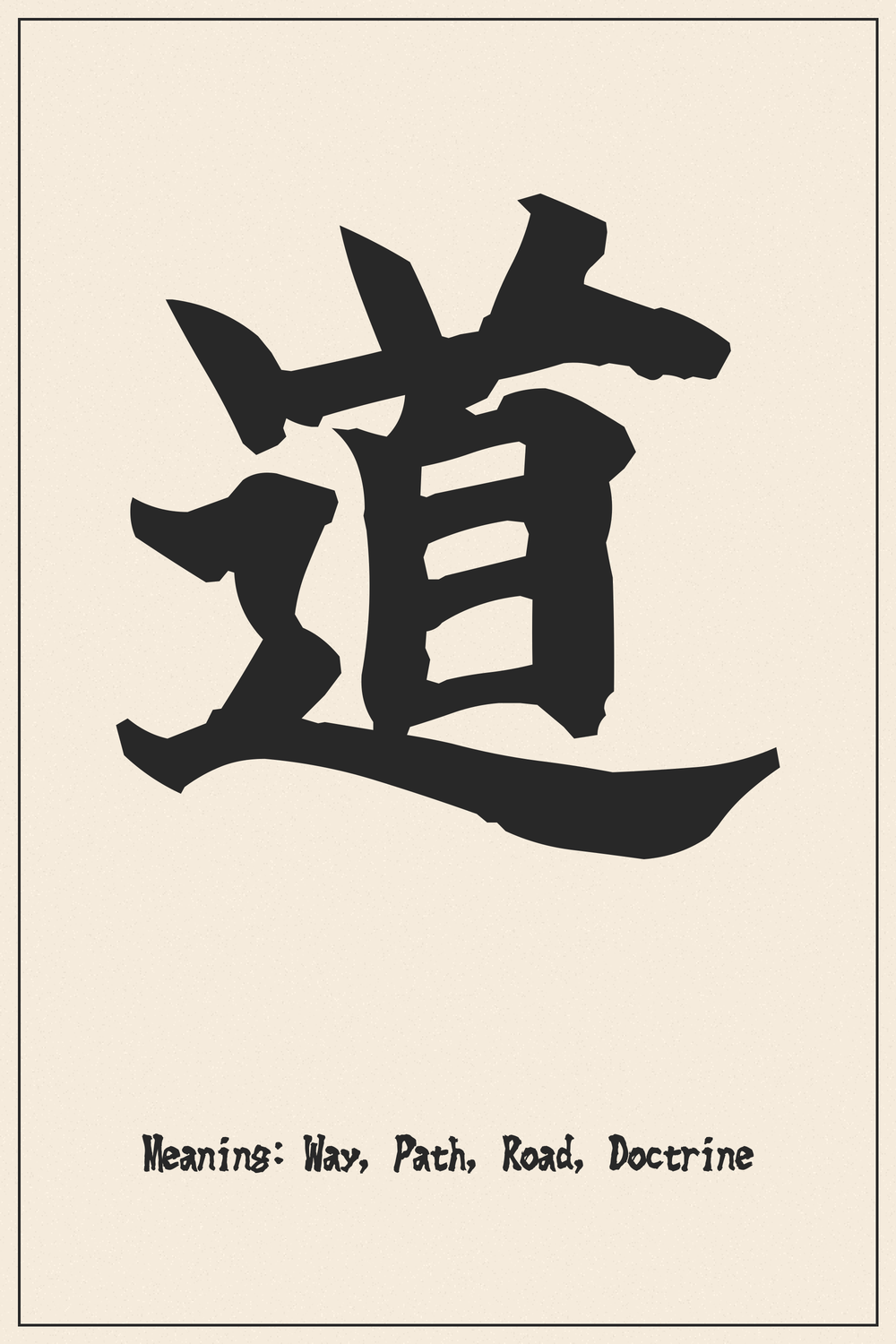
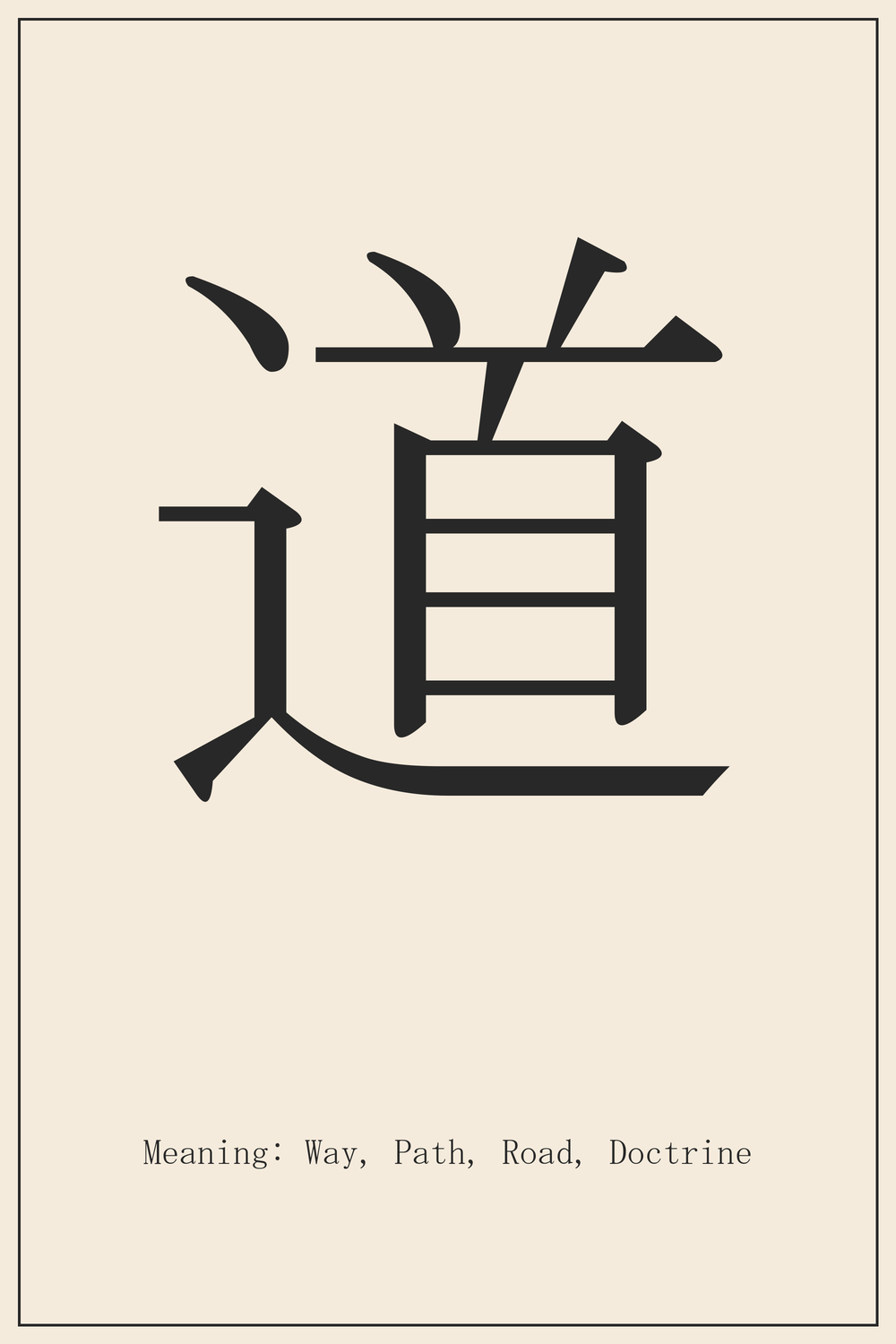
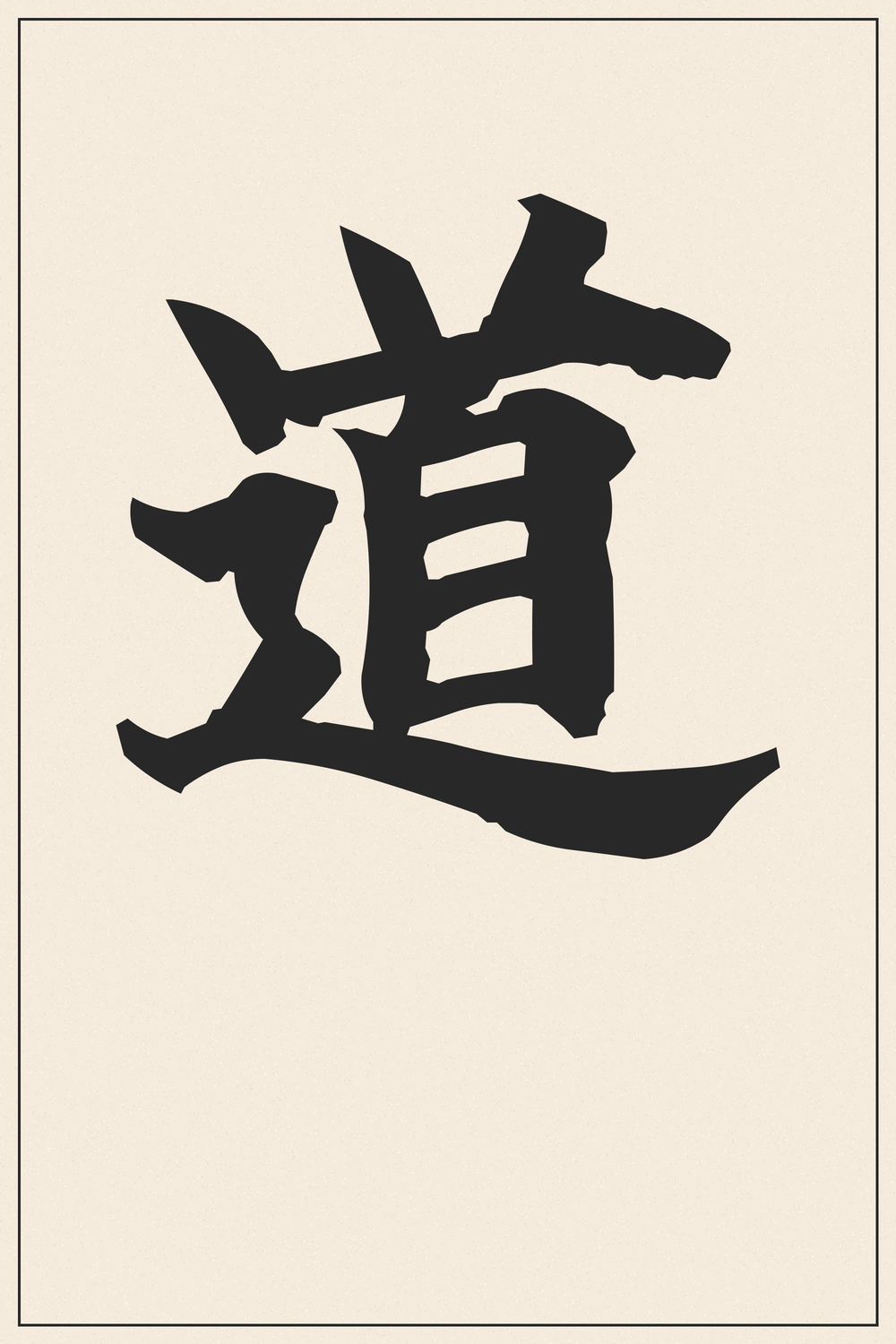
The Kanji 道 (michi, dou) embodies more than just a physical road; it represents a profound journey of life, morality, and spiritual discipline. It signifies the pursuit of a chosen path with dedication and integrity.
The atmosphere of a Kanji character changes dramatically depending on the font style. A character that looks elegant in a brush style might look bold and modern in a different font.
Recommendation:
Since a tattoo is permanent, we strongly recommend comparing various font styles beyond what is shown here. Use our designs as a trusted reference for the correct structure, but feel free to explore different artistic variations to find the perfect match for your vision.
The Deep Meaning Behind 道
The Kanji 道, pronounced ‘michi’ or ‘dou’, is a rich character with deep philosophical roots in Japanese culture. Its etymology traces back to a combination of two elements: 辶 (shinnyou), meaning ‘walk’ or ‘movement’, and 首 (shou), which depicts a head. This ancient combination suggests the idea of a leader or guide showing the way forward.
Beyond its literal meaning of ‘road’ or ‘path’, 道 encapsulates profound concepts such as a moral code, a way of life, or a doctrine. It is central to Japanese spiritual and martial arts philosophies, appearing in terms such like Bushido (武士道 – the way of the warrior), Kendo (剣道 – the way of the sword), Judo (柔道 – the gentle way), and Sado/Chado (茶道 – the way of tea).
Kanji Breakdown
The character 道 is composed of two primary components, each contributing to its multifaceted meaning.
Meaning: This radical, known as ‘shinnyou’ or ‘nyuu’, signifies movement, walking, or a path. It provides the foundational concept of a journey or progression within the character.
Meaning: This component, ‘kubi’ (head), when used within 道, originally represented a head, implying leadership, origin, or guidance. It suggests the direction or principles that define the ‘way’.
Conclusion
道 is a powerful symbol representing life’s journey, moral discipline, and the pursuit of mastery in any art or craft. It signifies following one’s chosen path with integrity and dedication, reflecting a continuous process of learning and self-refinement.
A tattoo of 道 serves as a constant reminder to stay true to your principles, to embrace the challenges of your personal journey, and to strive for continuous self-improvement in all aspects of life. It’s a timeless emblem for those who walk a path of purpose.
Comments