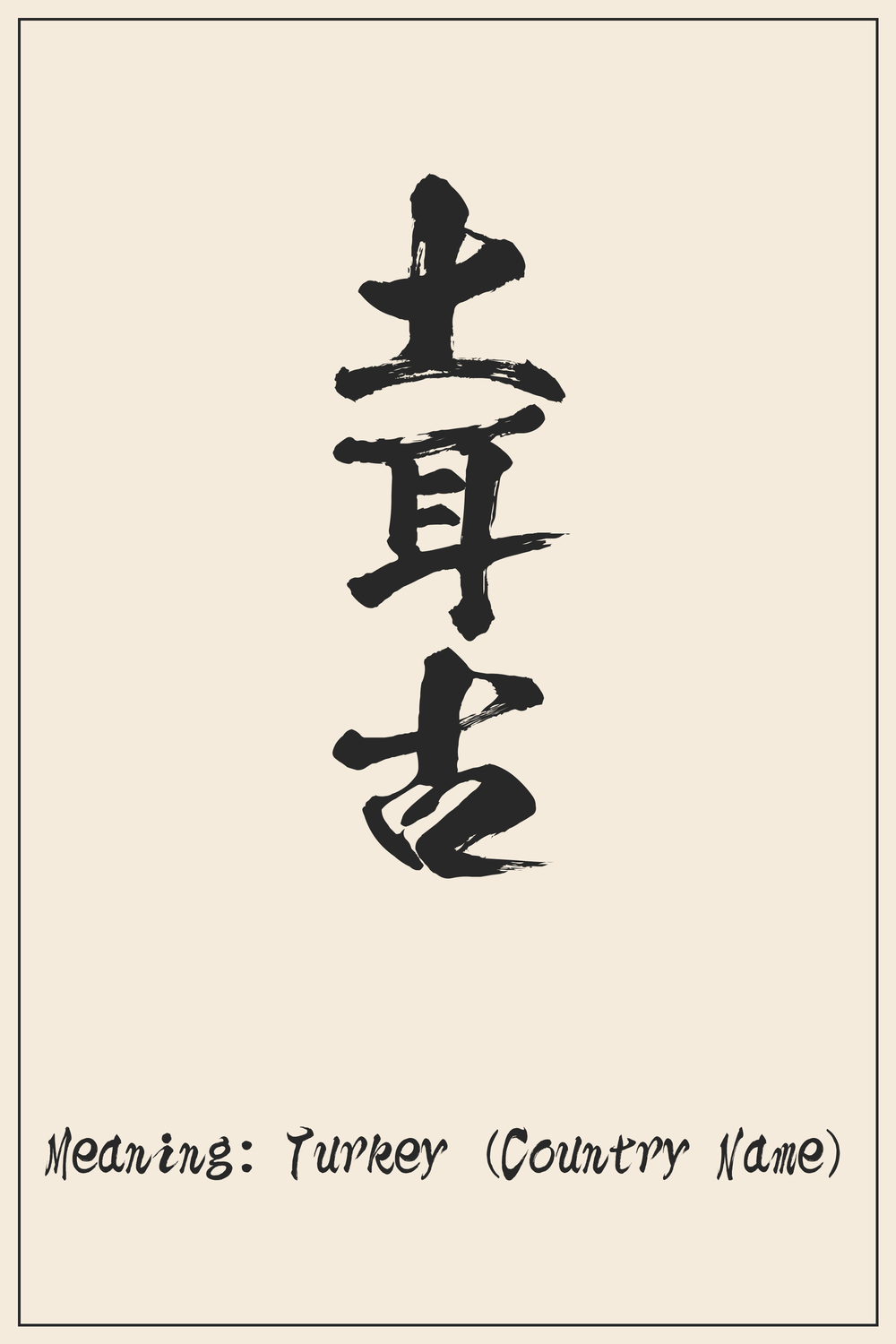
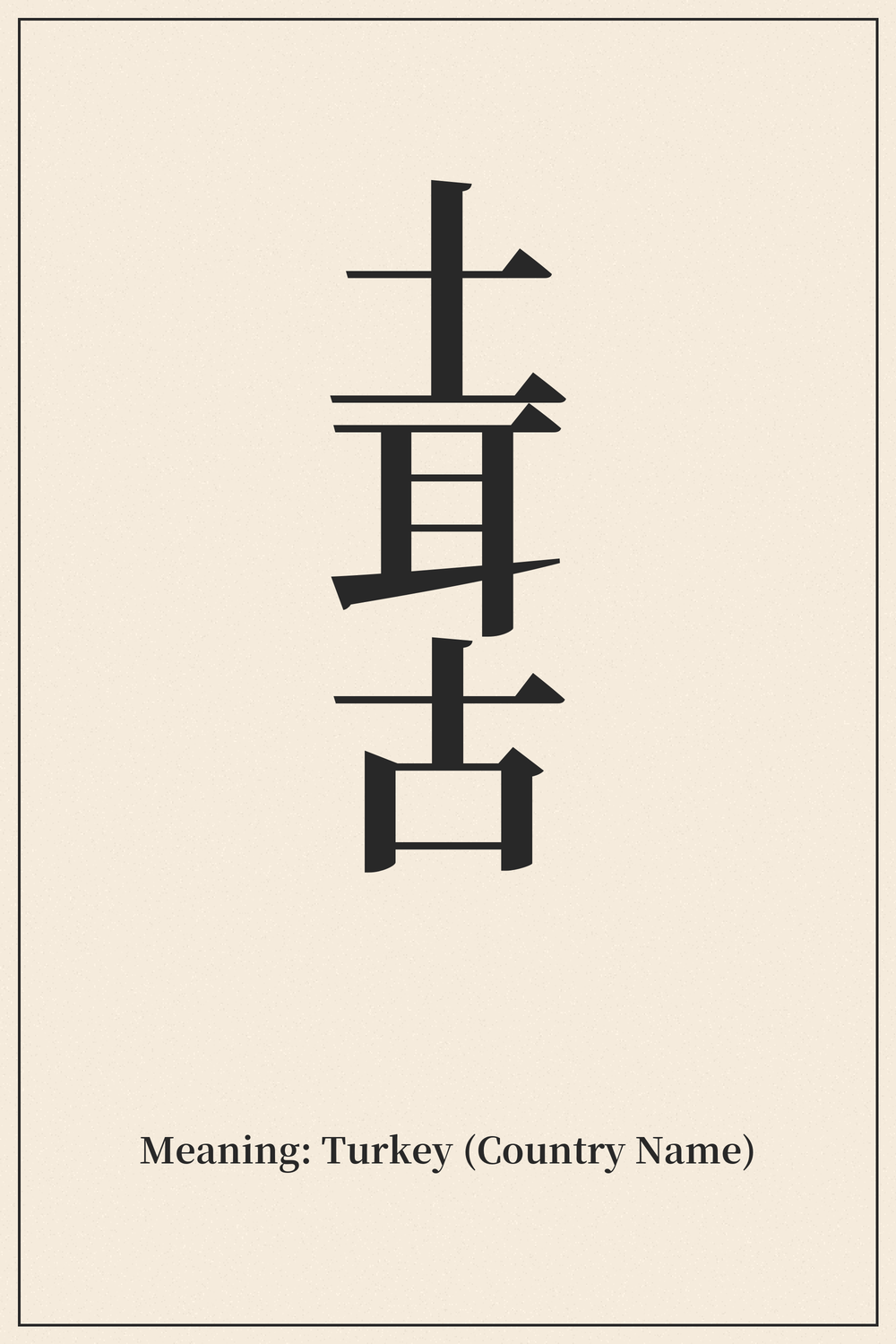
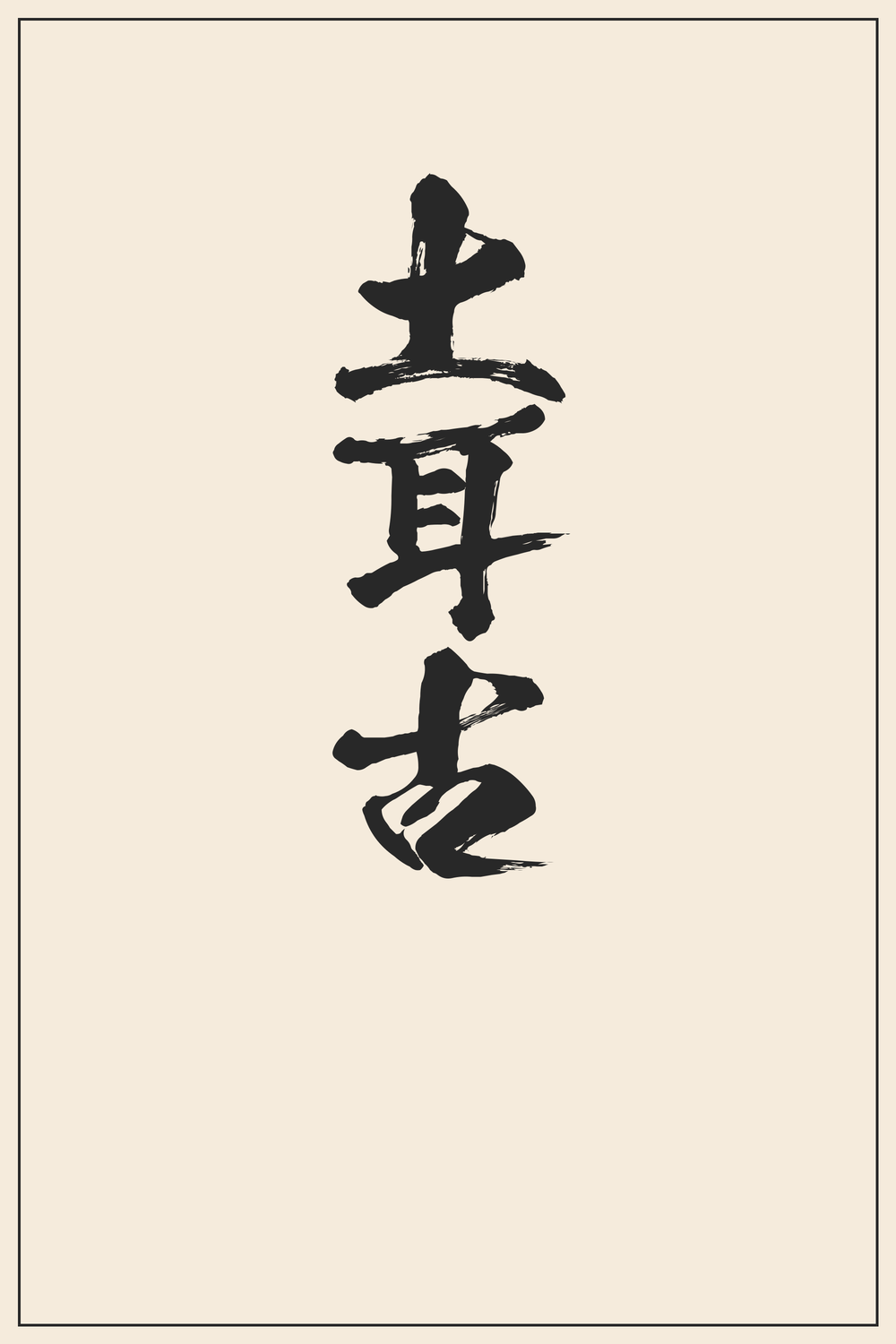
Delve into the fascinating world of Ateji, where Japanese characters are used for their sound rather than their meaning. This is exemplified by ‘土耳古’ (Toruko), the traditional Kanji representation for the country Turkey.
The atmosphere of a Kanji character changes dramatically depending on the font style. A character that looks elegant in a brush style might look bold and modern in a different font.
Recommendation: Since a tattoo is permanent, we strongly recommend comparing various font styles beyond what is shown here. Use our designs as a trusted reference for the correct structure, but feel free to explore different artistic variations to find the perfect match for your vision.
The Deep Meaning Behind 土耳古
The Kanji combination ‘土耳古’ (Toruko) serves as an ‘Ateji’ – a set of characters used purely for their phonetic value to represent a foreign word or name. In this instance, ‘Toruko’ phonetically approximates ‘Turkey’, the name of the country.
Literally, the individual characters translate to ‘土’ (earth/soil), ‘耳’ (ear), and ‘古’ (old/ancient). These literal meanings bear no direct or symbolic connection to the nation of Turkey itself, highlighting their role solely as a phonetic transliteration.
Kanji Breakdown
To understand the components of ‘土耳古’, we examine each character individually, recognizing that their collective meaning here is phonetic.
Meaning: Earth, soil, land. This character visually represents a mound of earth or soil, often depicted with a horizontal line representing the ground and a vertical line extending upwards from it.
Meaning: Ear. This character is a pictograph depicting the shape of an ear, often used in compounds related to hearing or auditory functions.
Meaning: Old, ancient. The character ‘古’ is often said to combine ‘十’ (ten) and ‘口’ (mouth), suggesting ‘ten generations’ or ‘many mouths speaking about the past,’ thus conveying the idea of oldness or antiquity.
Conclusion
‘土耳古’ (Toruko) serves as a fascinating example of Ateji, where Kanji characters are chosen for their sounds to represent a foreign name like Turkey. Its literal meaning of ‘Earth Ear Old’ is coincidental and holds no direct symbolic significance to the country itself.
While a culturally interesting representation of a country name in Japanese, its purely phonetic nature means it does not carry an inherent philosophical or aesthetic depth often sought in Kanji for personal expression. Therefore, for tattoo purposes, it is generally not recommended if you are looking for profound meaning, but rather appreciated for its linguistic curiosity.
Comments