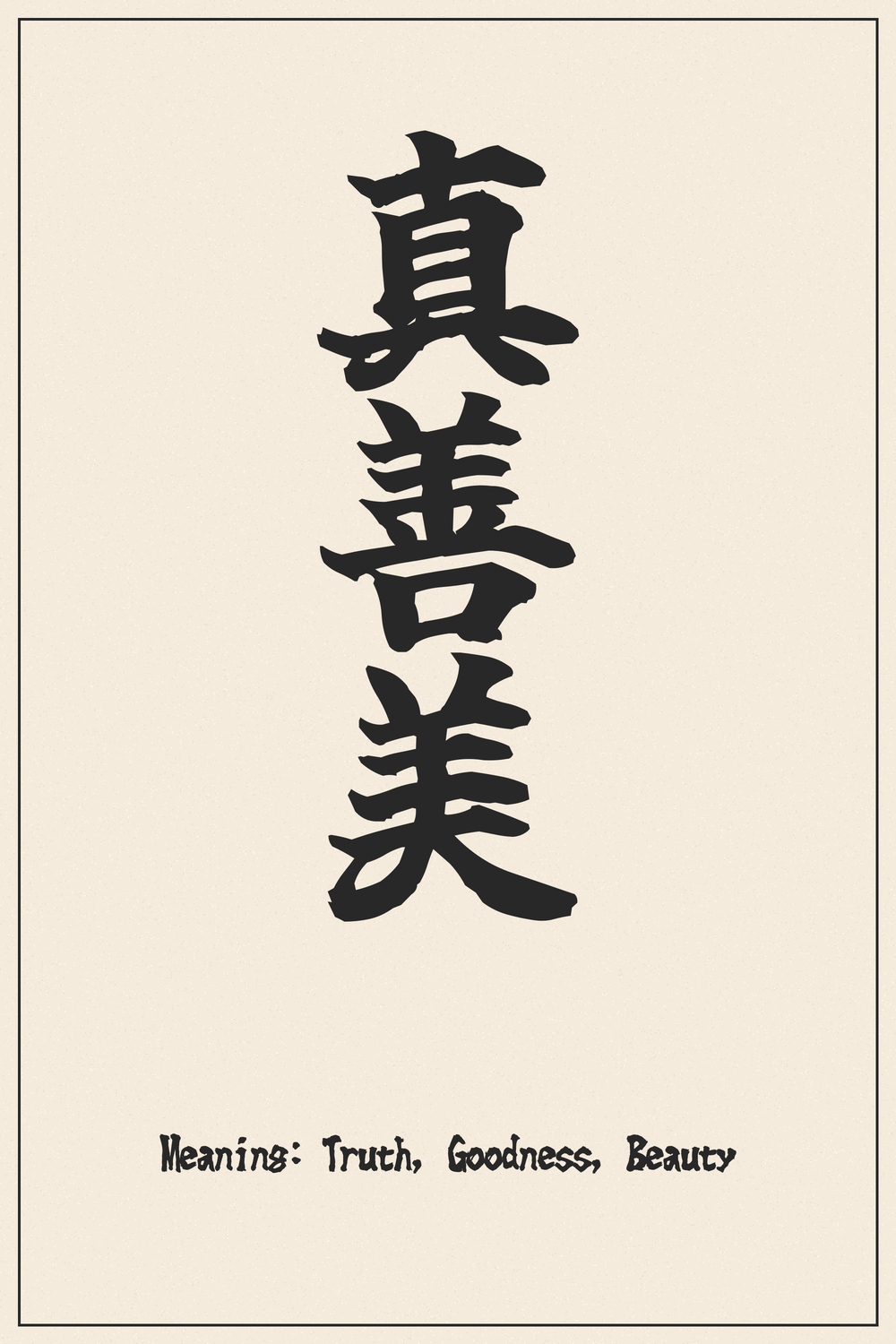
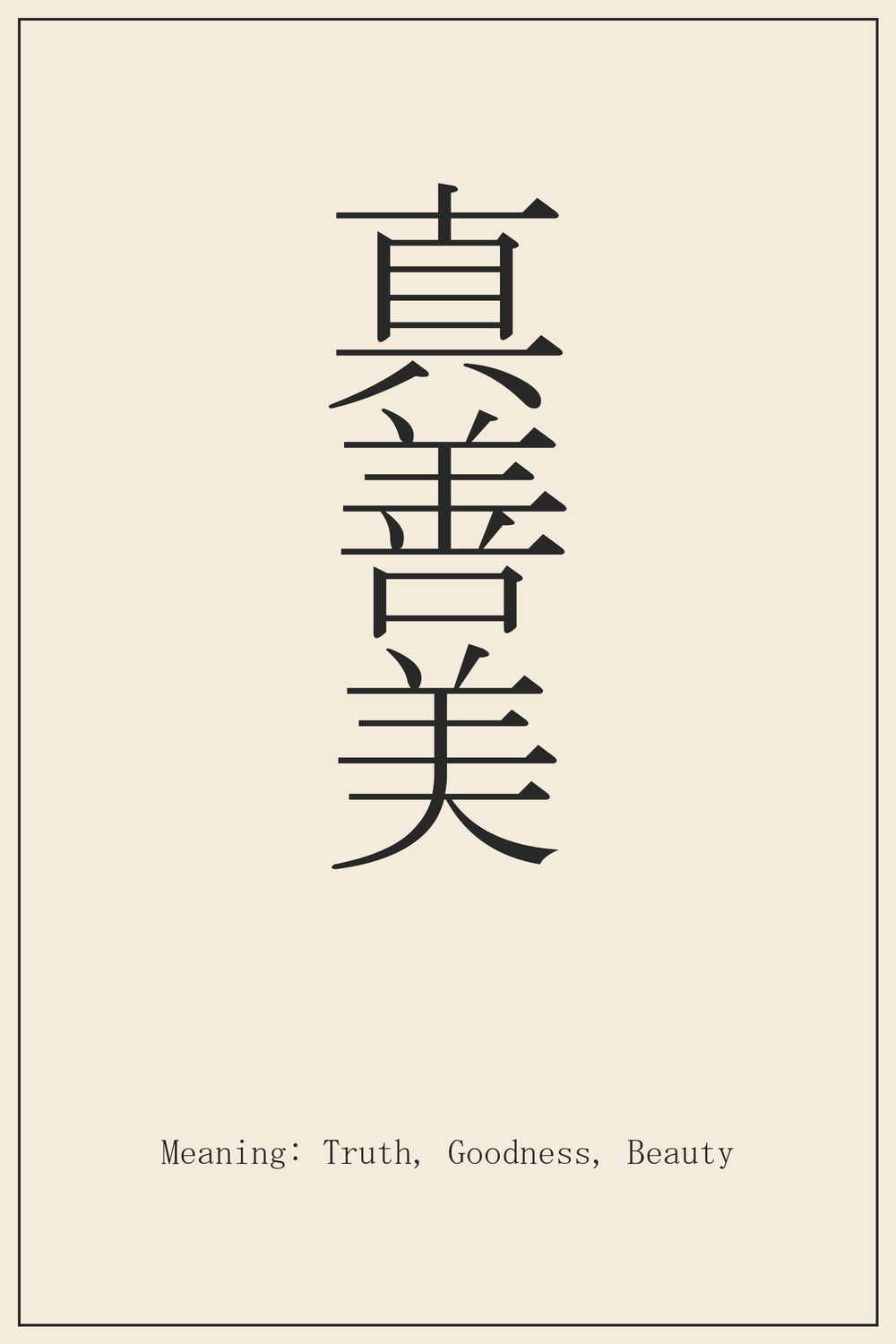
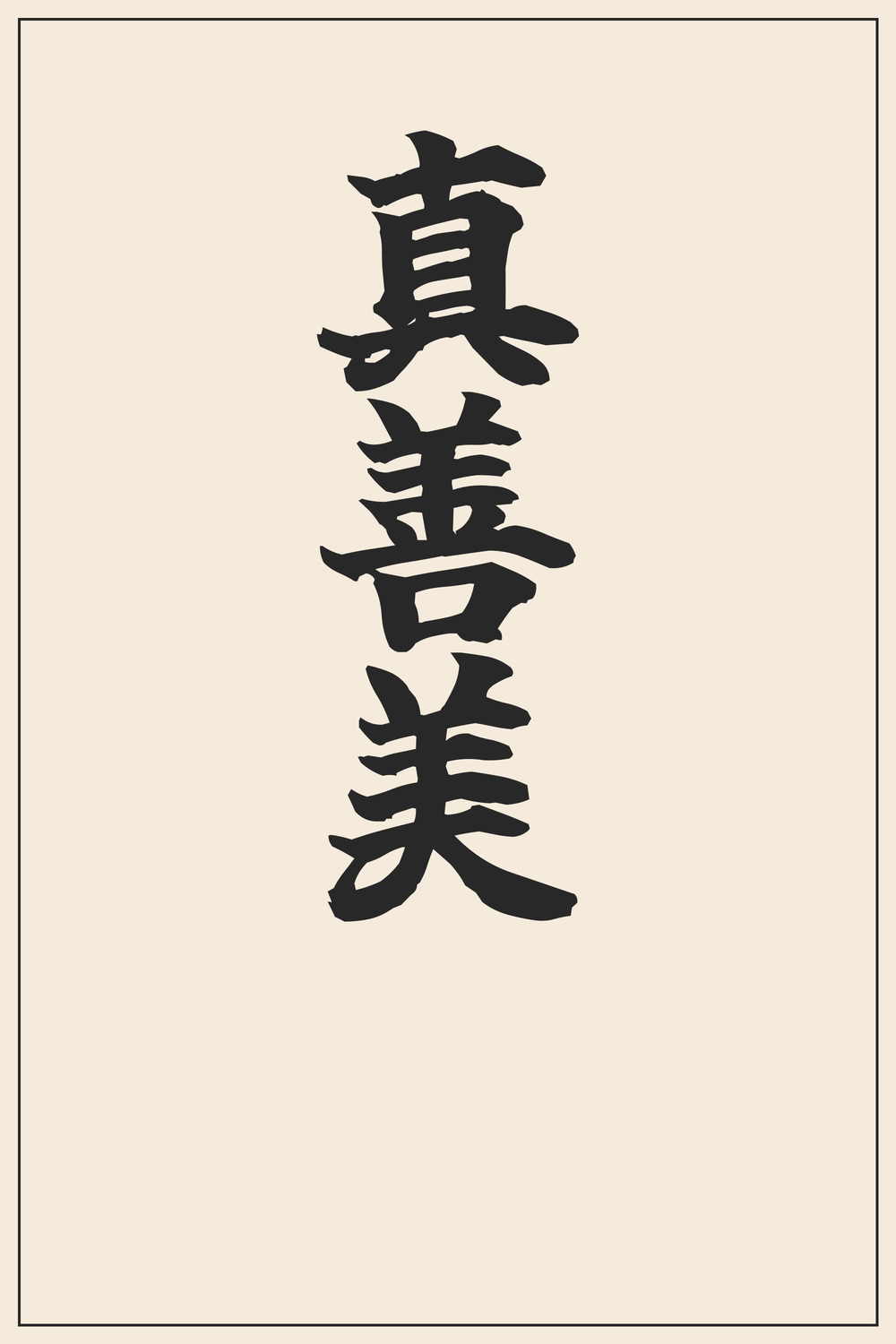
The Kanji compound 真善美 (Shinzenbi) encapsulates the highest aspirations of human culture and philosophy, representing a harmonious triad of fundamental ideals. It is a profound symbol of the ultimate values sought in art, ethics, and truth.
The atmosphere of a Kanji character changes dramatically depending on the font style. A character that looks elegant in a brush style might look bold and modern in a different font.
Recommendation:
Since a tattoo is permanent, we strongly recommend comparing various font styles beyond what is shown here. Use our designs as a trusted reference for the correct structure, but feel free to explore different artistic variations to find the perfect match for your vision.
The Deep Meaning Behind 真善美
The concept of 真善美 (Shinzenbi) represents the three supreme ideals in various philosophical traditions, particularly those influenced by Plato’s triad of Truth, Goodness, and Beauty. In Japanese and East Asian thought, this term is deeply embedded in aesthetics, ethics, and spiritual pursuits, guiding individuals towards a holistic understanding of existence.
It signifies the ultimate aspiration for humanity: to perceive reality (真) as it truly is, to live a life of virtue and benevolence (善), and to appreciate and create beauty (美) in all its forms. Shinzenbi reflects a balanced pursuit of intellectual enlightenment, moral integrity, and aesthetic harmony, often considered essential for a fulfilled life.
Kanji Breakdown
The compound 真善美 is composed of three powerful individual Kanji, each contributing to the profound overarching meaning:
Truth, Reality, Genuineness: This Kanji originally depicted an ancient implement for setting standards, emphasizing what is correct and authentic. It represents the pursuit of objective truth and understanding reality without distortion.
Goodness, Virtue, Benevolence: Composed of elements suggesting a lamb (sheep) and straightness or an eye, 善 implies what is upright, righteous, and morally excellent. It encompasses kindness, ethical conduct, and the well-being of others.
Beauty, Beautiful, Aesthetics: This character combines the elements for ‘sheep’ (羊) and ‘Person’ (人), historically representing a large, well-fed sheep, which was considered beautiful and auspicious. It signifies aesthetic appreciation, grace, and all that is pleasing to the senses and the soul.
Conclusion
The Kanji compound 真善美 offers a deep and timeless message, representing the harmonious pursuit of truth, moral goodness, and aesthetic beauty. It is an ideal symbol for those who strive for integrity, wisdom, and an appreciation for the profound elegance of existence in their own lives.
Choosing 真善美 as a tattoo is an affirmation of these highest philosophical ideals. While its visual density requires careful consideration for size and artist skill, its profound meaning makes it an exceptionally rewarding and inspiring design that will continue to resonate for a lifetime.
Comments