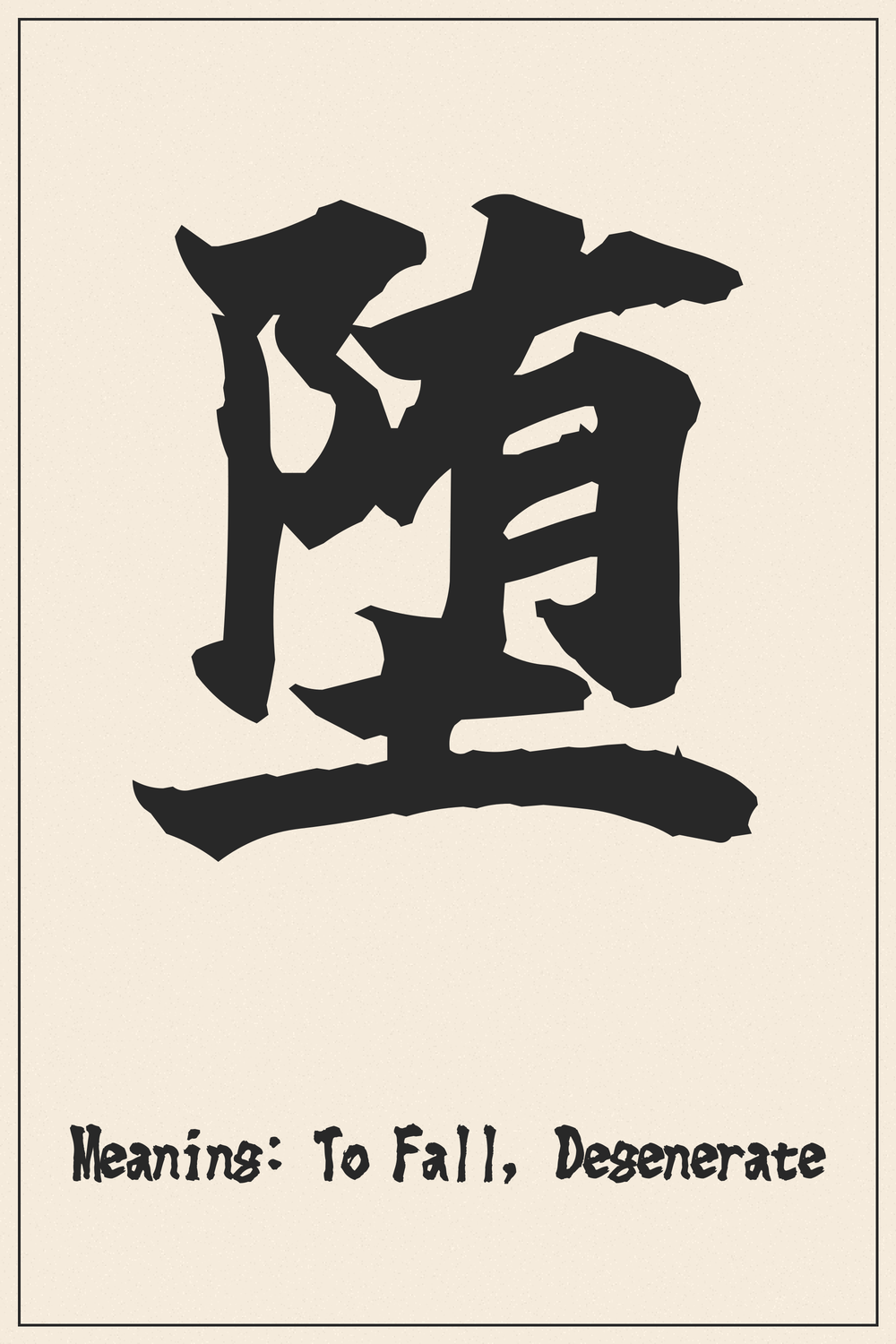
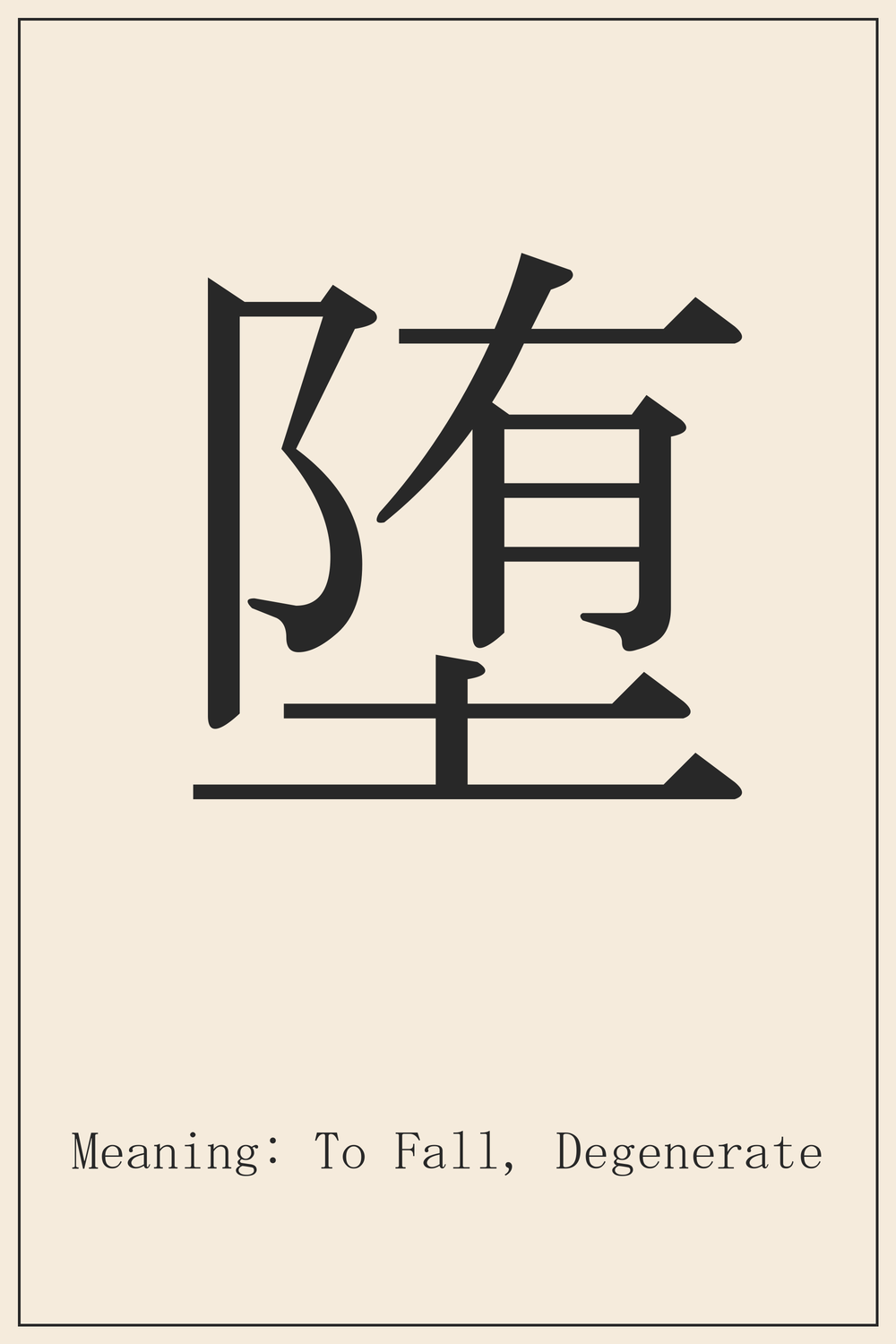
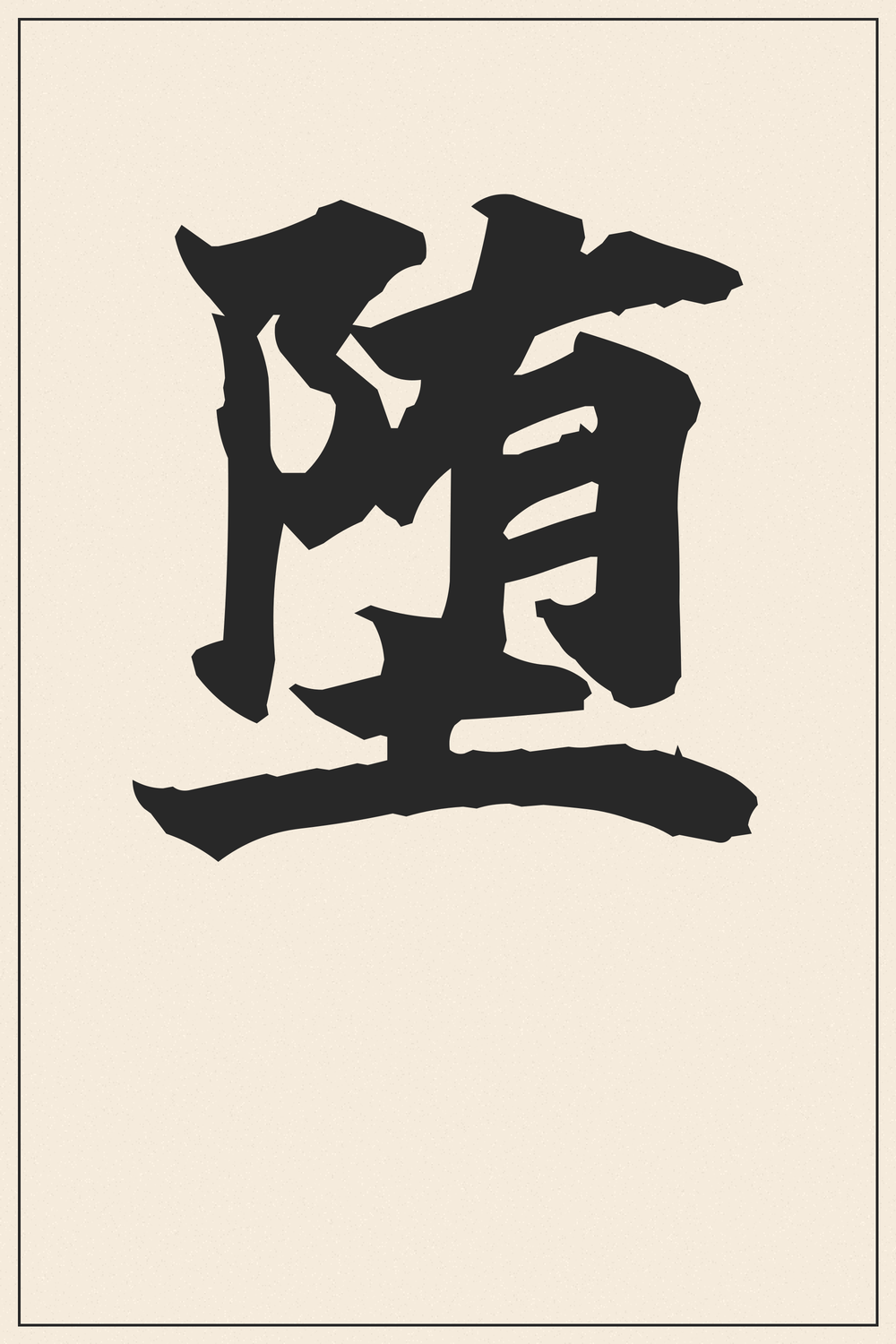
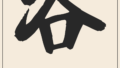
The Kanji 堕 (DA) embodies the stark concept of decline and moral corruption. It serves as a powerful reminder of the fragility of virtue and the potential for downfall in one’s path.
The atmosphere of a Kanji character changes dramatically depending on the font style. A character that looks elegant in a brush style might look bold and modern in a different font.
Recommendation:
Since a tattoo is permanent, we strongly recommend comparing various font styles beyond what is shown here. Use our designs as a trusted reference for the correct structure, but feel free to explore different artistic variations to find the perfect match for your vision.
The Deep Meaning Behind 堕
The character 堕 (DA) combines 阝 (kozatohen), a radical signifying “hill” or “mound” often associated with boundaries or descent, and 隋 (sui), which serves as both a phonetic component and a semantic hint. 隋 itself historically meant “to fall” or “to follow,” and visually comprises ⺼ (nikuzuki, “flesh” or “body”) and 妥 (da, “gentle” or “submissive”). This visual and phonetic combination powerfully illustrates the act of a body or entity yielding and falling from a higher state.
In Japanese culture, 堕 is frequently found in terms reflecting negative states. For instance, 堕落 (daraku) refers to degeneracy or corruption, implying a moral or ethical decline from an ideal standard. It suggests a loss of integrity or a descent into a worse condition, whether physical, spiritual, or societal.
Kanji Breakdown
The Kanji 堕 is composed of two primary elements that convey its meaning of falling or degenerating.
Meaning: Hill, Mound, Place. This radical, often found on the left side of characters, can denote concepts related to geographical features, boundaries, or a sense of descent from a higher place.
Meaning: To fall, to follow, ancient dynasty. In 堕, this component functions both phonetically and semantically, reinforcing the idea of a downward movement or a yielding state, as if a body is submitting to gravity or decline.
Conclusion
The Kanji 堕 encapsulates the serious concept of falling, degenerating, or succumbing to corruption. It speaks to a significant decline from an upright or virtuous state, carrying a strong negative implication.
While impactful in its meaning, a tattoo of 堕 should be considered with extreme caution due to its overwhelmingly negative connotations. For those seeking symbols of strength or aspiration, this Kanji may not be the most fitting choice, as it predominantly represents decline rather than elevation.
Comments