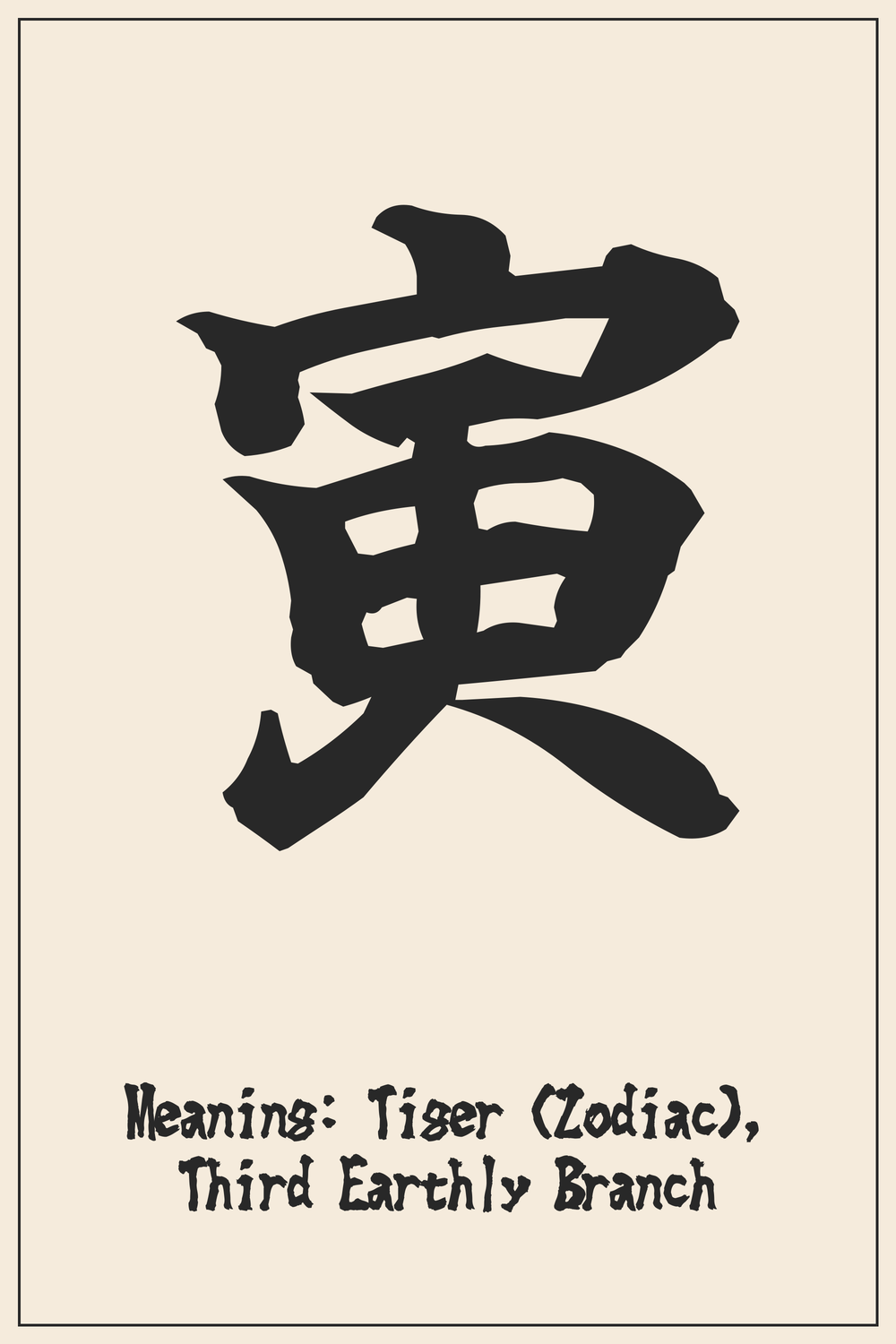
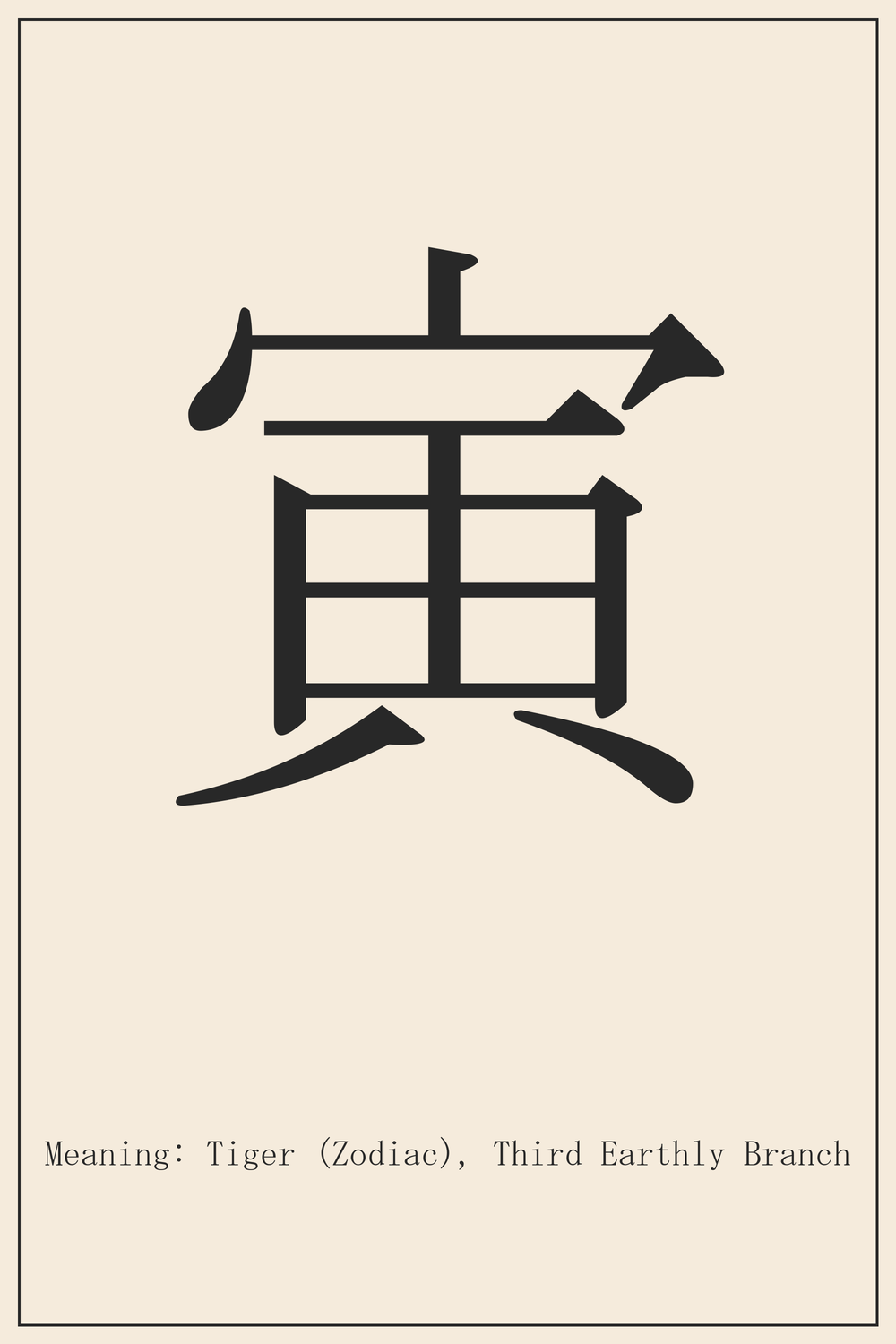
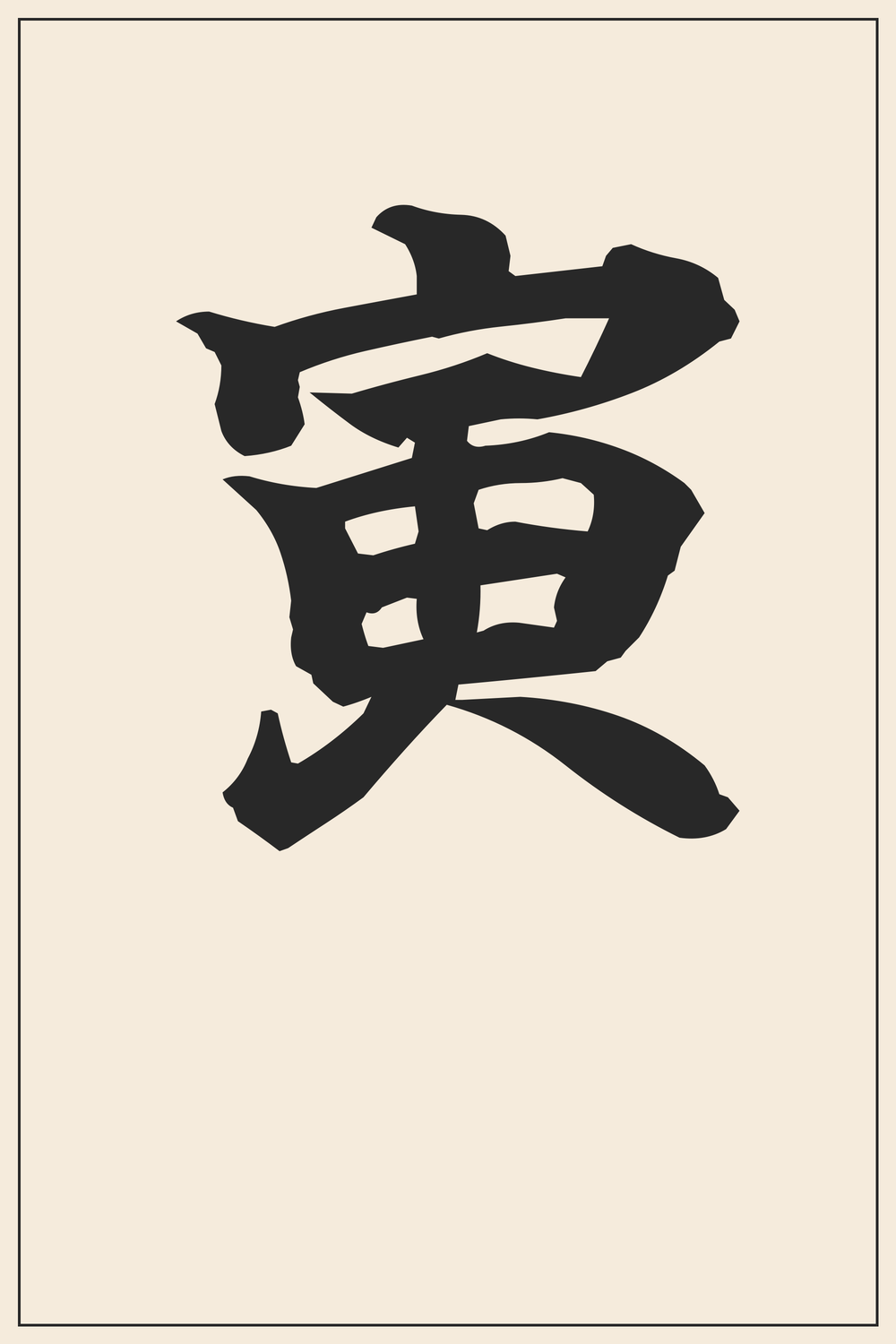
The Kanji ‘寅’ encapsulates the formidable spirit of the Tiger, representing not only an animal but a specific period in the zodiac cycle. It carries connotations of bravery, power, and dynamic energy, marking it as a potent symbol.
The atmosphere of a Kanji character changes dramatically depending on the font style. A character that looks elegant in a brush style might look bold and modern in a different font.
Recommendation:
Since a tattoo is permanent, we strongly recommend comparing various font styles beyond what is shown here. Use our designs as a trusted reference for the correct structure, but feel free to explore different artistic variations to find the perfect match for your vision.
The Deep Meaning Behind 寅
The Kanji ‘寅’ (In, Tora) represents the third of the twelve Earthly Branches (十二支, jūnishi) and is strongly associated with the Tiger. Historically, the Earthly Branches were used in ancient China for time-keeping, calendrical purposes, and later, zodiacal astrology. ‘寅’ specifically denotes the hours between 3 AM and 5 AM, and the direction ENE.
Culturally, individuals born in the Year of the Tiger (寅年, Toradoshi) are often characterized as brave, confident, competitive, and natural leaders. This association imbues the Kanji with traits of courage, power, and an unyielding spirit, making it a revered symbol in East Asian cultures.
Kanji Breakdown
The Kanji ‘寅’ is a single character whose etymology is complex, evolving from ancient pictographic forms. While not composed of easily separable radicals in the modern sense that directly spell out its meaning, its components have historical significance.
Etymology: Ancient forms of ‘寅’ are believed to have depicted a bent bow, which was an early symbol for the third earthly branch. It was later phonetically borrowed to represent the tiger within the zodiac cycle. The character itself suggests a certain tension or potential, aligning with the tiger’s powerful and poised nature.
Conclusion
The Kanji ‘寅’ is far more than just a character for ‘tiger’; it is a profound symbol of the Chinese zodiac, embodying strength, courage, and leadership. Its historical roots in timekeeping and its cultural association with dynamic personality traits make it a powerful emblem.
For a tattoo, ‘寅’ serves as an elegant and meaningful choice, representing not only a birth year but also the inherent qualities of the majestic tiger. It is a symbol for those who identify with boldness, ambition, and an unwavering spirit, a timeless mark of personal power and destiny.


Comments