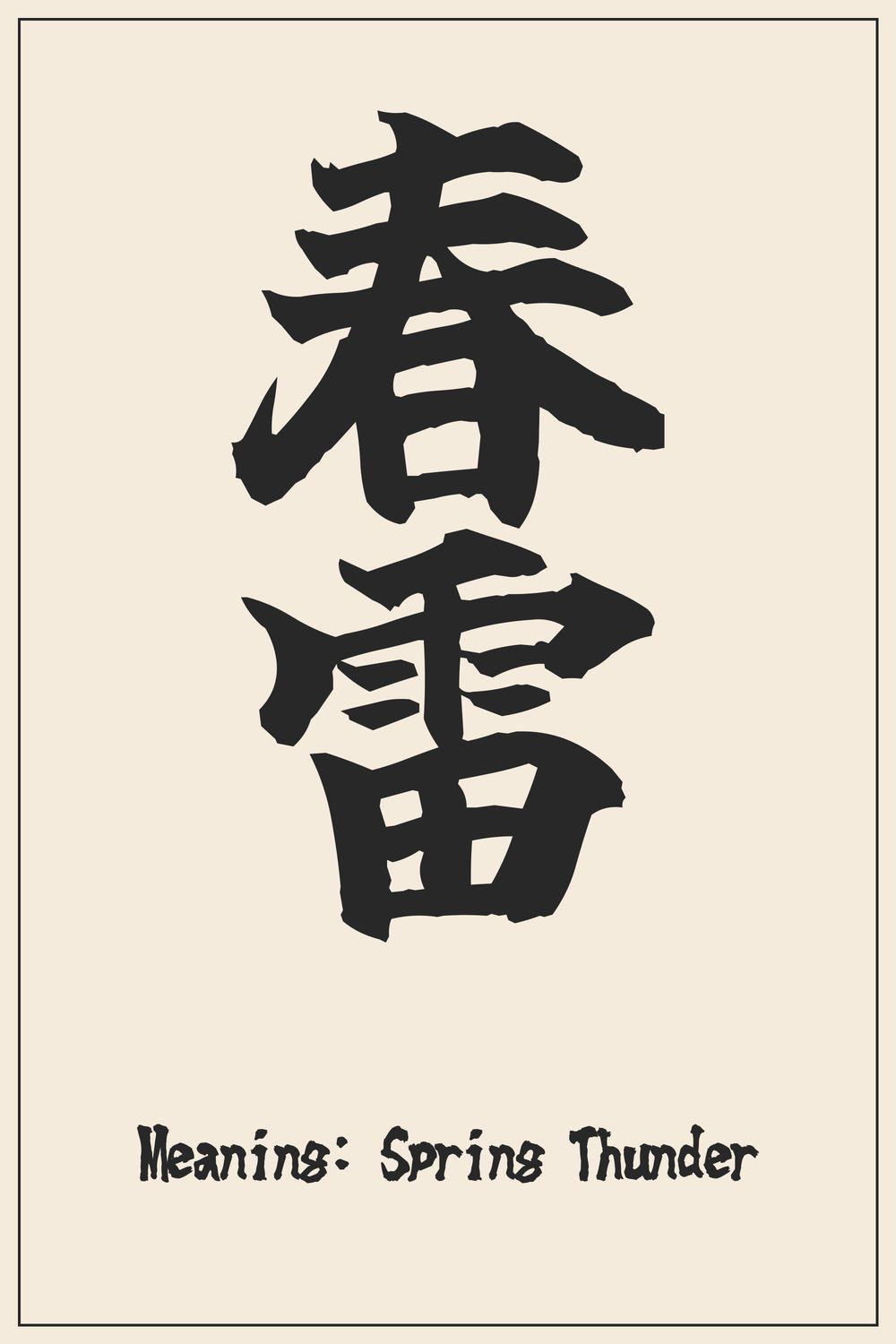
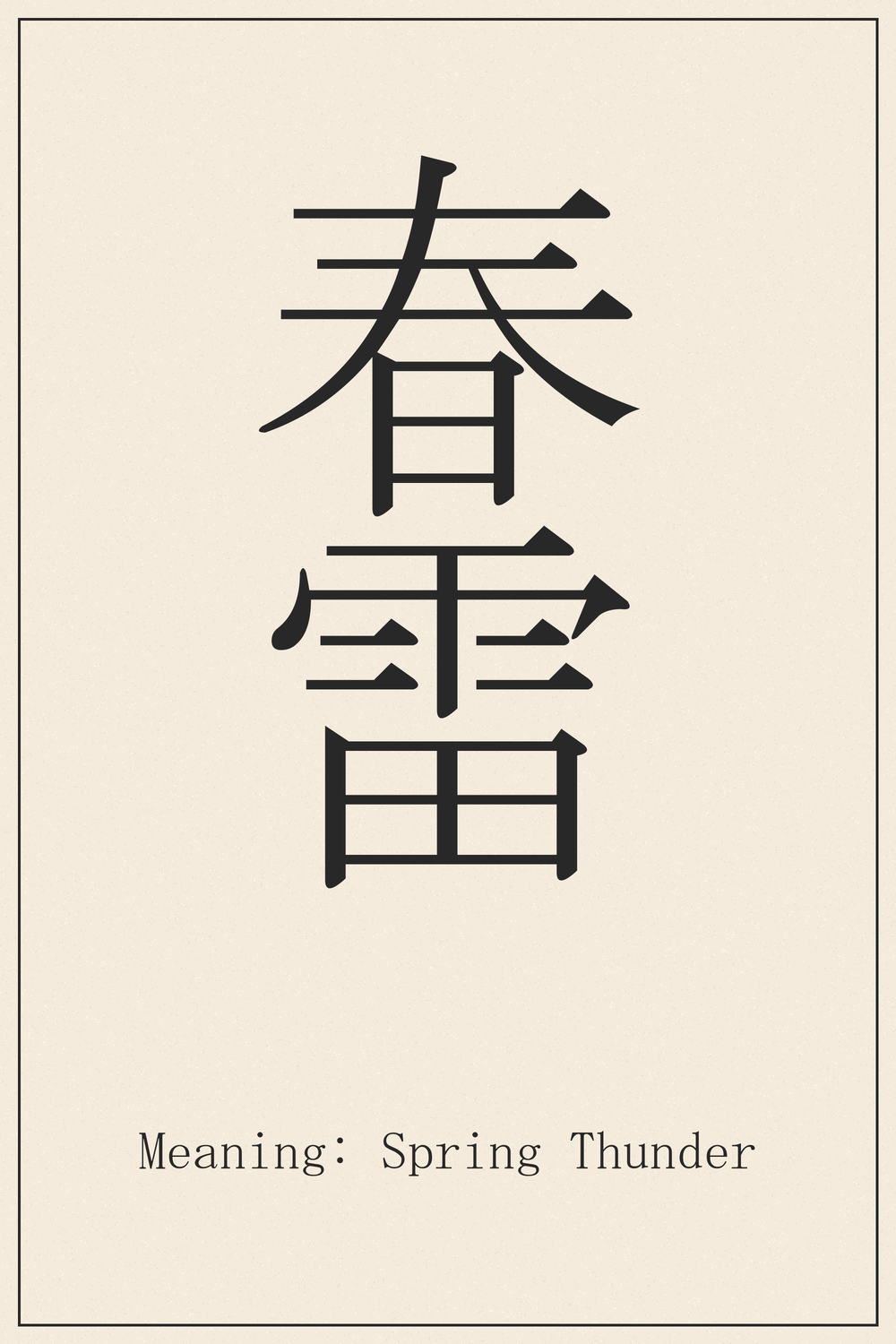
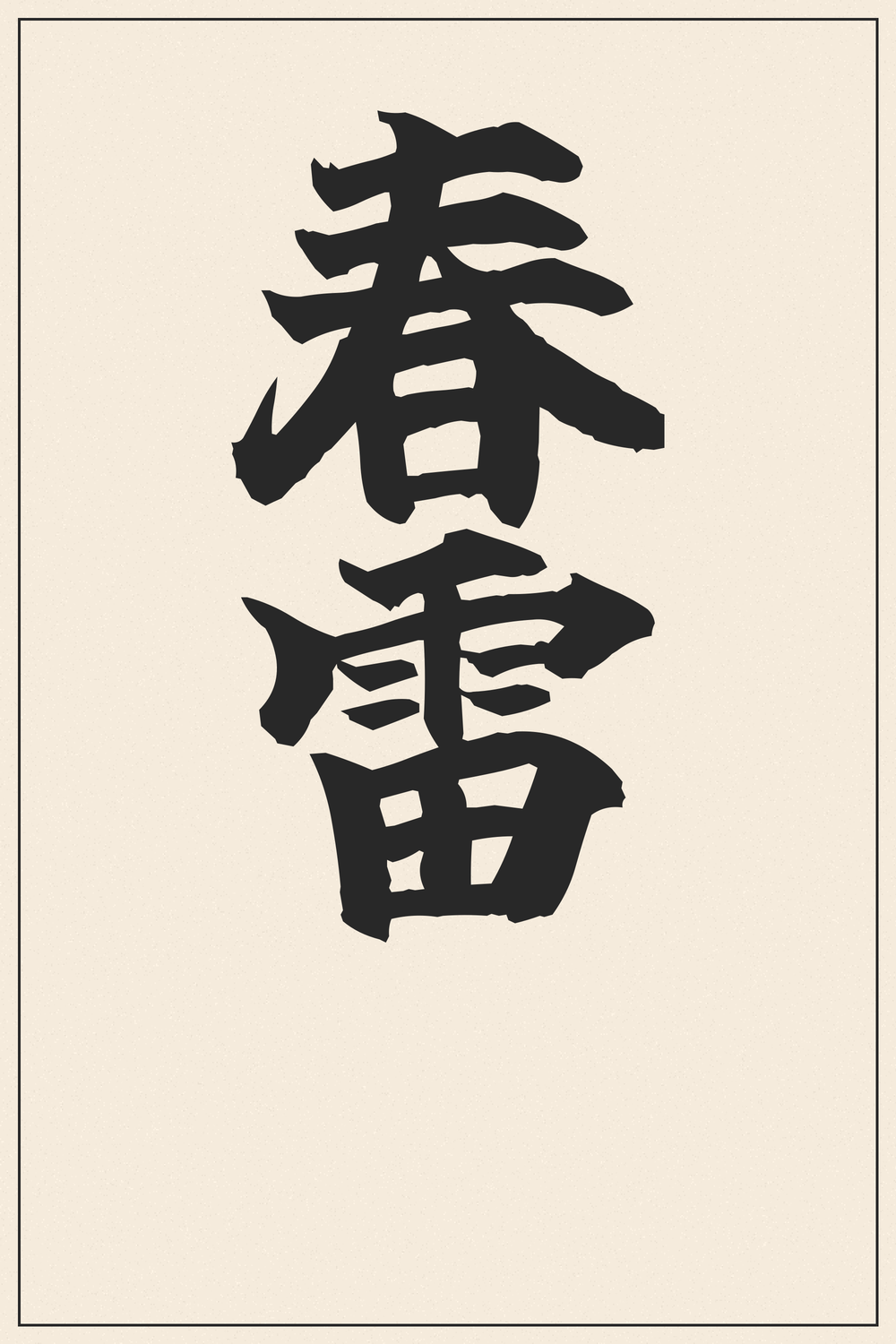
The Kanji compound “春雷” encapsulates the vibrant power of nature’s rebirth. It represents the first thunder of spring, a powerful sound that signals the end of winter’s slumber and the awakening of new life.
The atmosphere of a Kanji character changes dramatically depending on the font style. A character that looks elegant in a brush style might look bold and modern in a different font.
Recommendation:
Since a tattoo is permanent, we strongly recommend comparing various font styles beyond what is shown here. Use our designs as a trusted reference for the correct structure, but feel free to explore different artistic variations to find the perfect match for your vision.
The Deep Meaning Behind 春雷
The term “春雷” is a compound word formed from 春 (shun/haru), meaning “spring,” and 雷 (rai/kaminari), meaning “thunder.” It specifically denotes the first clap of thunder heard in early spring, a climatic event with deep symbolic resonance.
In Japanese culture, “春雷” is highly significant, often appearing in haiku and traditional literature to mark a pivotal moment of seasonal change. It represents nature’s awakening, the melting of snow, and the resurgence of vitality after winter, embodying a sense of anticipation and renewal.
Kanji Breakdown
Let’s explore the individual characters that form “春雷,” revealing their historical origins and symbolic depth.
Meaning: Spring
This character originally depicted plants sprouting under the sun, often with traces of melting ice (represented by the top three strokes similar to 三 for ice or early sprouts), conveying the arrival of warmth and new growth. The bottom part resembles 日 (sun) radiating life.
Meaning: Thunder
The character 雷 combines 雨 (ame/u – rain) at the top with 田 (ta/den – rice paddy/field) below. Ancient forms of 田 in this context are thought to depict a drum or a swirling pattern, symbolizing the rumbling, powerful sound and movement associated with thunder and lightning.
Conclusion
“春雷” beautifully captures the powerful yet delicate transition from winter to spring. It symbolizes awakening, the promise of new beginnings, and the indomitable spirit of nature’s cycle.
For a tattoo, “春雷” serves as a profound emblem of resilience, change, and hope. It’s a perfect choice for those who wish to commemorate a personal transformation or to carry a reminder of renewal and the vibrant energy of life’s continuous cycles.
Comments