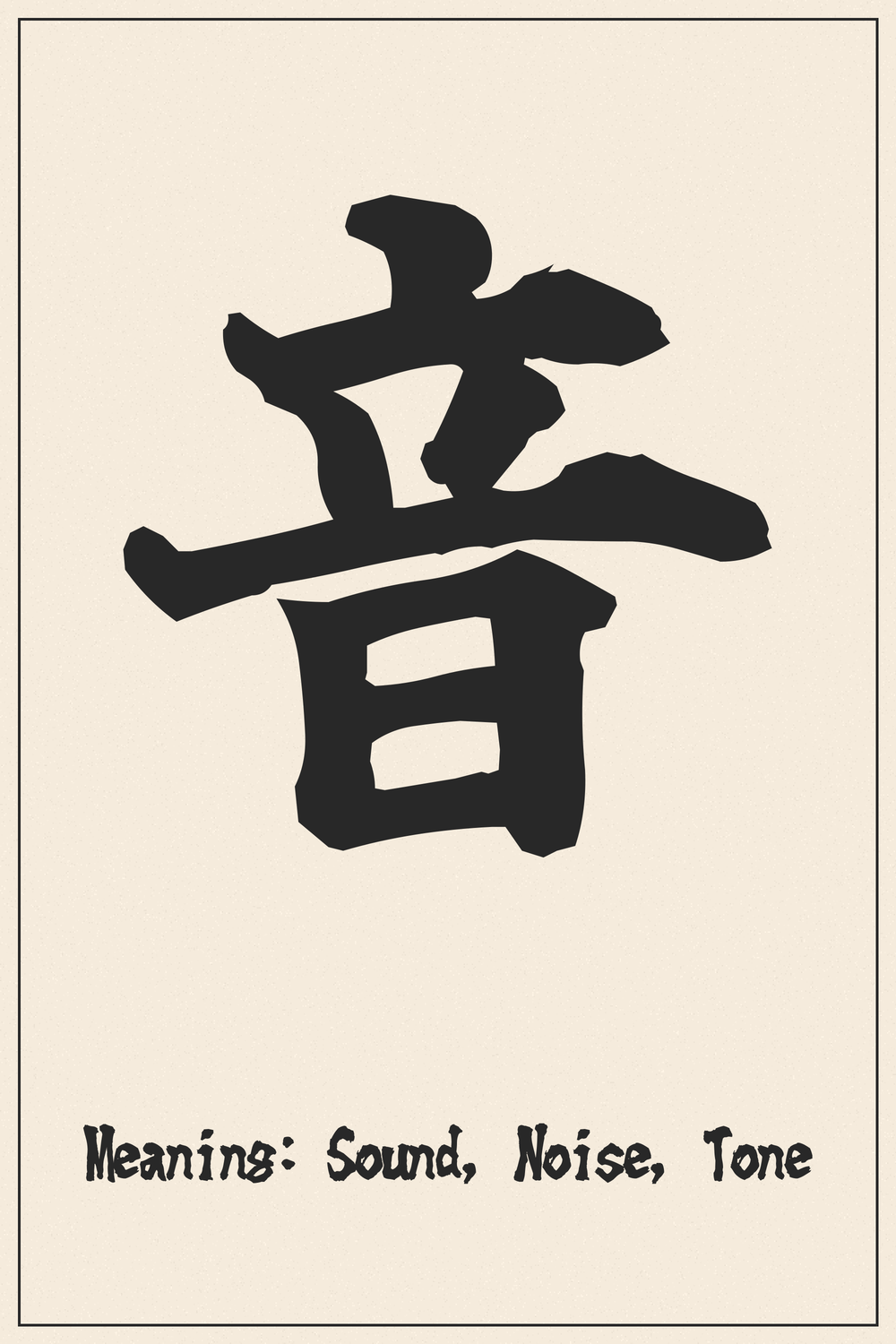
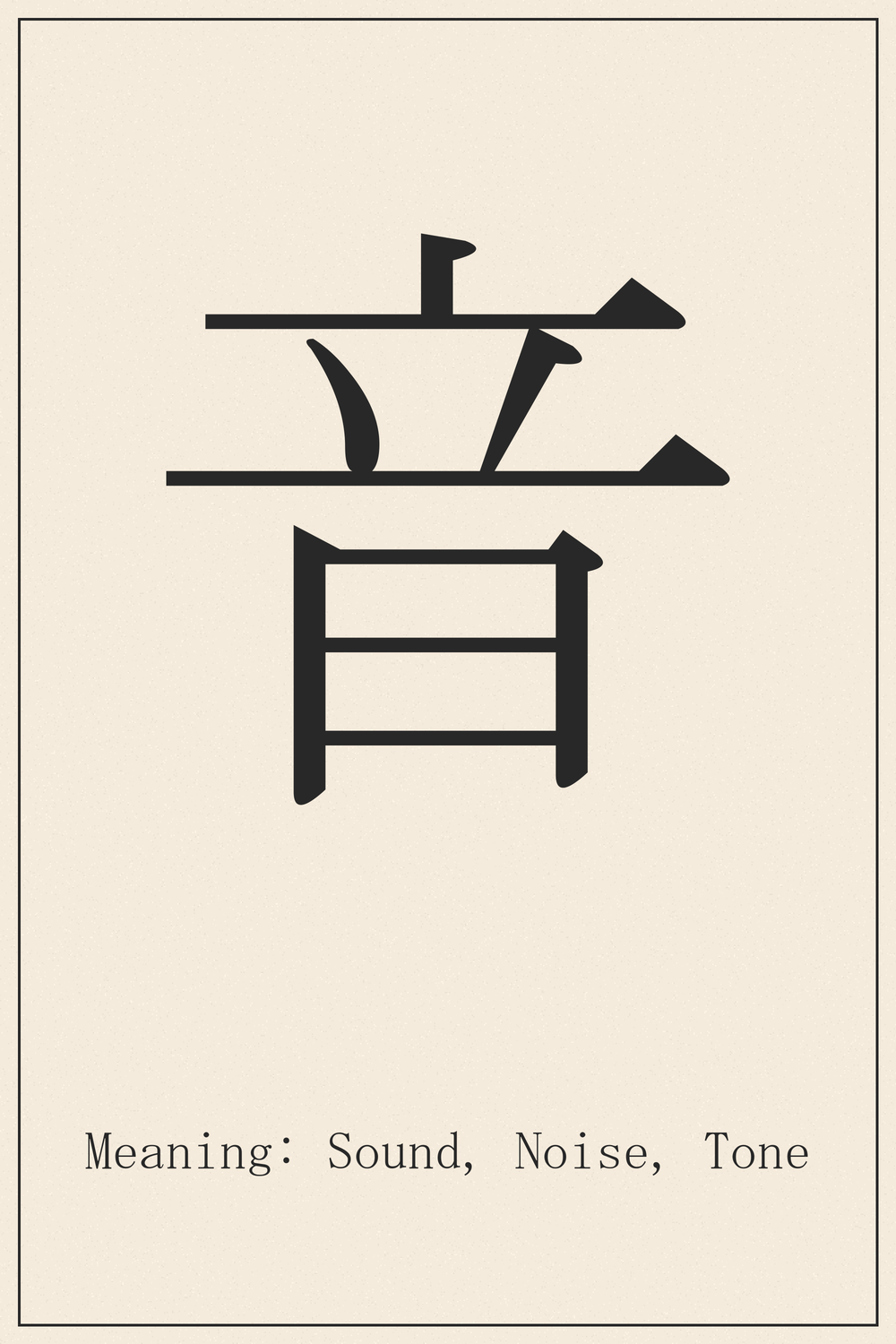
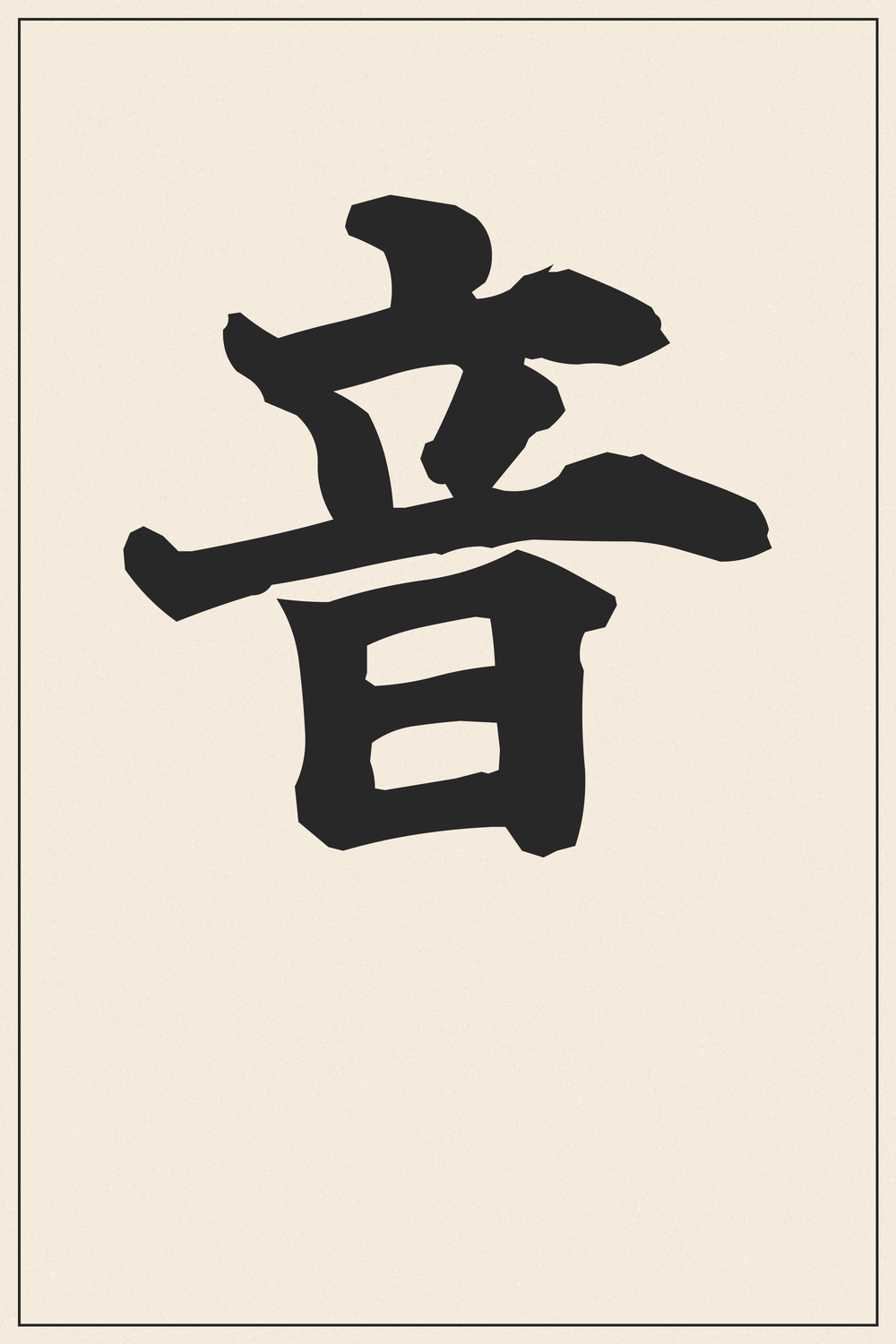
The Kanji for ‘sound’, 音, encapsulates the essence of audible phenomena, from a gentle whisper to a roaring symphony. It represents the vibrations that fill our world and shape our experiences.
The atmosphere of a Kanji character changes dramatically depending on the font style. A character that looks elegant in a brush style might look bold and modern in a different font.
Recommendation:
Since a tattoo is permanent, we strongly recommend comparing various font styles beyond what is shown here. Use our designs as a trusted reference for the correct structure, but feel free to explore different artistic variations to find the perfect match for your vision.
The Deep Meaning Behind 音
The Kanji 音, meaning ‘sound’, is a beautifully constructed character whose origins illustrate the very phenomenon it represents. Its ancient form depicted a mouth (often represented by 口 or a similar component) or a musical instrument, with lines indicating the emanation of sound waves.
In its modern form, it concisely captures the abstract concept of auditory perception. It is fundamental to communication, artistic expression like music, and even the spiritual resonance found in chants or the ringing of temple bells in Japanese culture. It signifies not just noise, but the very fabric of audible experience.
Kanji Breakdown
The character 音 is composed of two primary elements, each contributing to its overall meaning and structure.
Meaning: This component typically means ‘to stand’ or ‘to establish’. In the context of 音, it is often interpreted as a visual representation of something upright or emanating, hinting at the source or direction of sound waves.
Meaning: While usually meaning ‘sun’ or ‘day’, in older Kanji compositions, this component could also represent a mouth (口) or an object producing sound. Here, it functions to convey the concept of emission or articulation of sound.
Conclusion
The Kanji 音 is more than just a character; it is a symbol for the vibrant world of auditory sensation, embodying music, communication, and the subtle vibrations that define existence. It speaks to our ability to listen, create, and be moved by what we hear.
Choosing 音 for a tattoo signifies an appreciation for the audible world, perhaps a love for music, a dedication to finding one’s voice, or a connection to the harmony of life. It’s a compelling choice for those who resonate deeply with the power of sound.
Comments