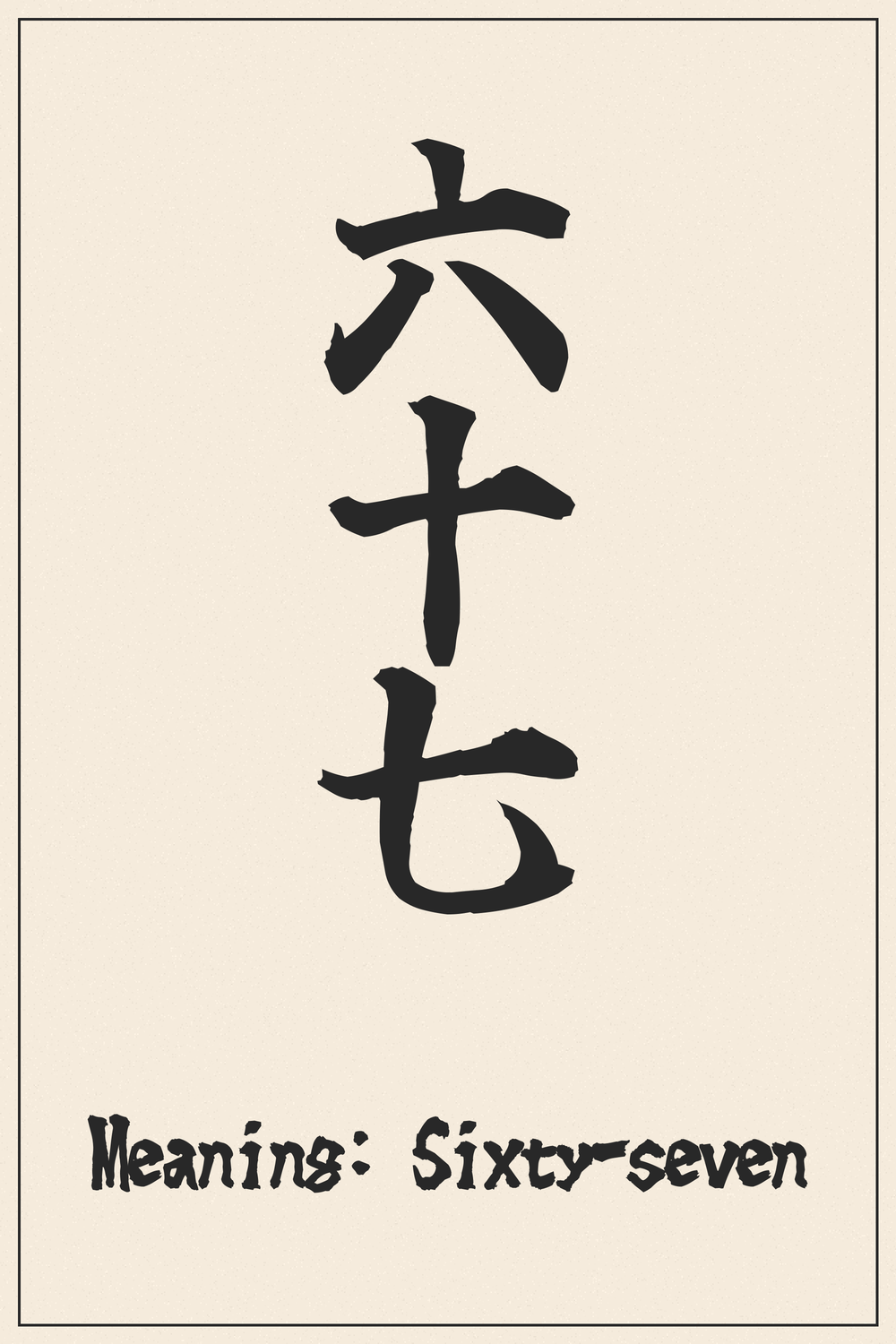
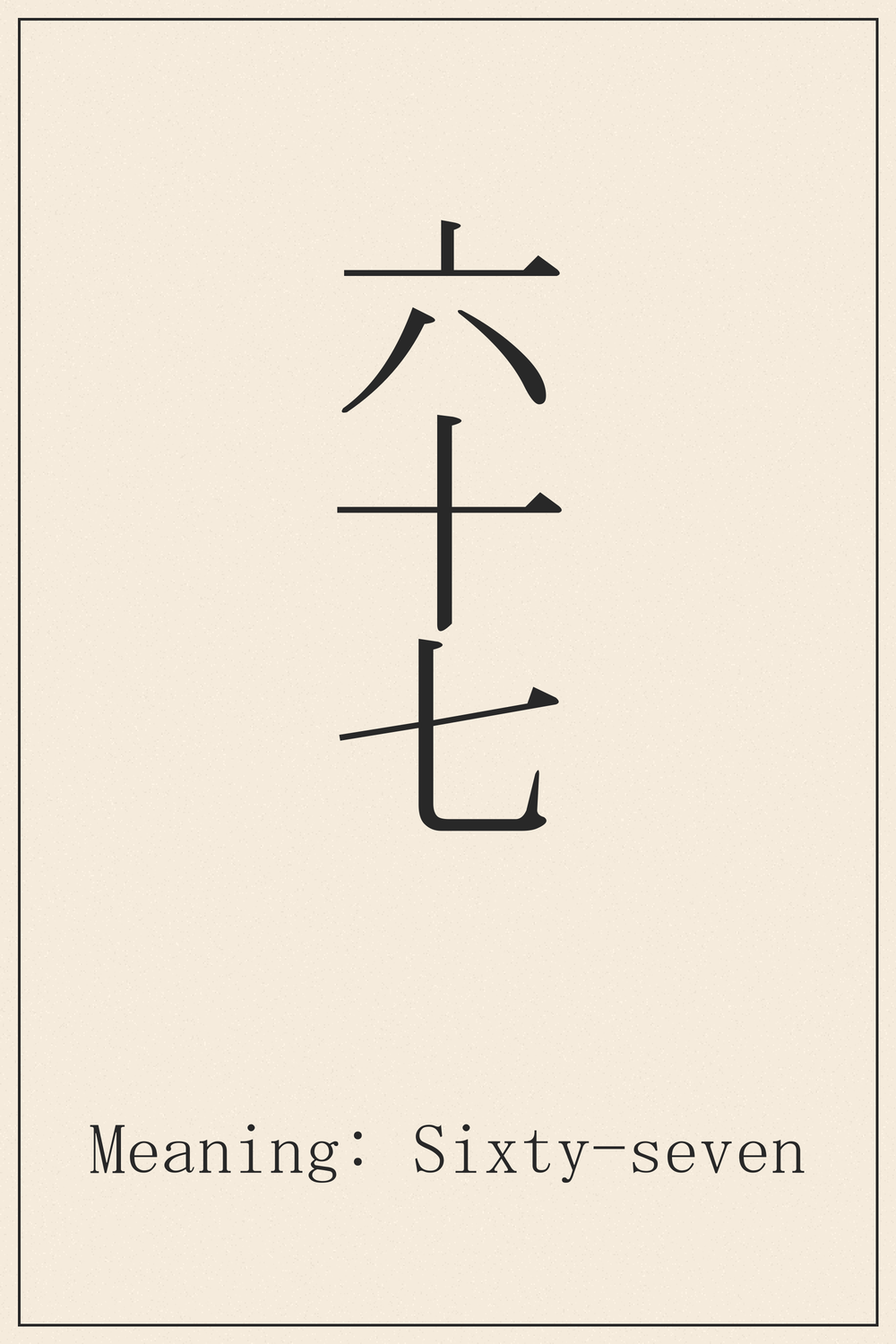

A simple number like “sixty-seven” holds fundamental significance in everyday life and can mark important milestones. While seemingly straightforward, its numerical value underscores order and a specific point in sequence.
The atmosphere of a Kanji character changes dramatically depending on the font style. A character that looks elegant in a brush style might look bold and modern in a different font.
Recommendation:
Since a tattoo is permanent, we strongly recommend comparing various font styles beyond what is shown here. Use our designs as a trusted reference for the correct structure, but feel free to explore different artistic variations to find the perfect match for your vision.
The Deep Meaning Behind 六十七
The Kanji compound “六十七” directly represents the number sixty-seven. This value is formed by combining the individual numerical characters: 六 (six), 十 (ten), and 七 (seven), following the multiplicative and additive principles of Japanese numeration where “six tens and seven” forms the sum.
While not imbued with deep symbolic meaning like auspicious numbers or philosophical concepts, “sixty-seven” holds practical importance in marking ages, dates, or quantities in daily life. It can carry personal significance as a specific age attained, a memorable year, or a particular quantity that resonates with an individual’s experiences.
Kanji Breakdown
The number “sixty-seven” is formed by combining three fundamental Kanji characters, each with its own clear meaning and origin, contributing to the composite numerical value.
Six: This character is an ancient pictogram whose original form is debated but often linked to a shelter or a specific arrangement. It simply represents the numerical value of six.
Ten: Resembling a cross, this Kanji is thought to derive from a tally mark or a bundle, signifying the number ten. It is a cornerstone in the decimal system, indicating multiplication by ten when combined with other numbers.
Seven: A simple character, its etymology is often traced to a pictogram of a cut or a “turn,” directly representing the numerical value of seven.
Conclusion
“六十七” (Rokujuu Nana) precisely denotes the number sixty-seven, a value formed logically from its component characters for six, ten, and seven. This combination elegantly demonstrates the additive and multiplicative principles of the Japanese numerical system.
For a tattoo, “六十七” is a straightforward and clear choice for those wishing to commemorate a specific age, a significant year, or any number of profound personal importance. Its legibility and directness offer a timeless and understated way to mark a meaningful numerical value on the skin.
Comments