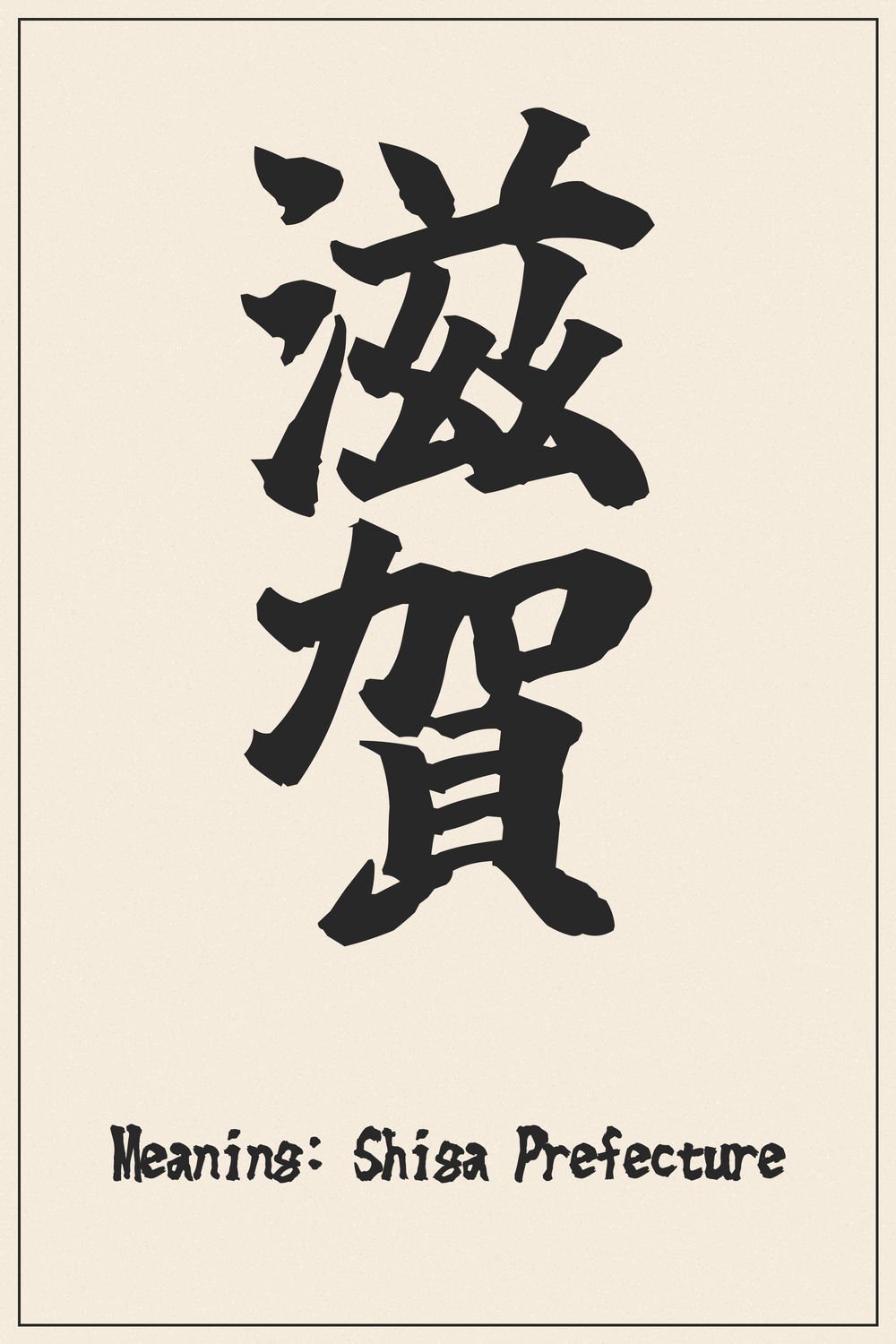
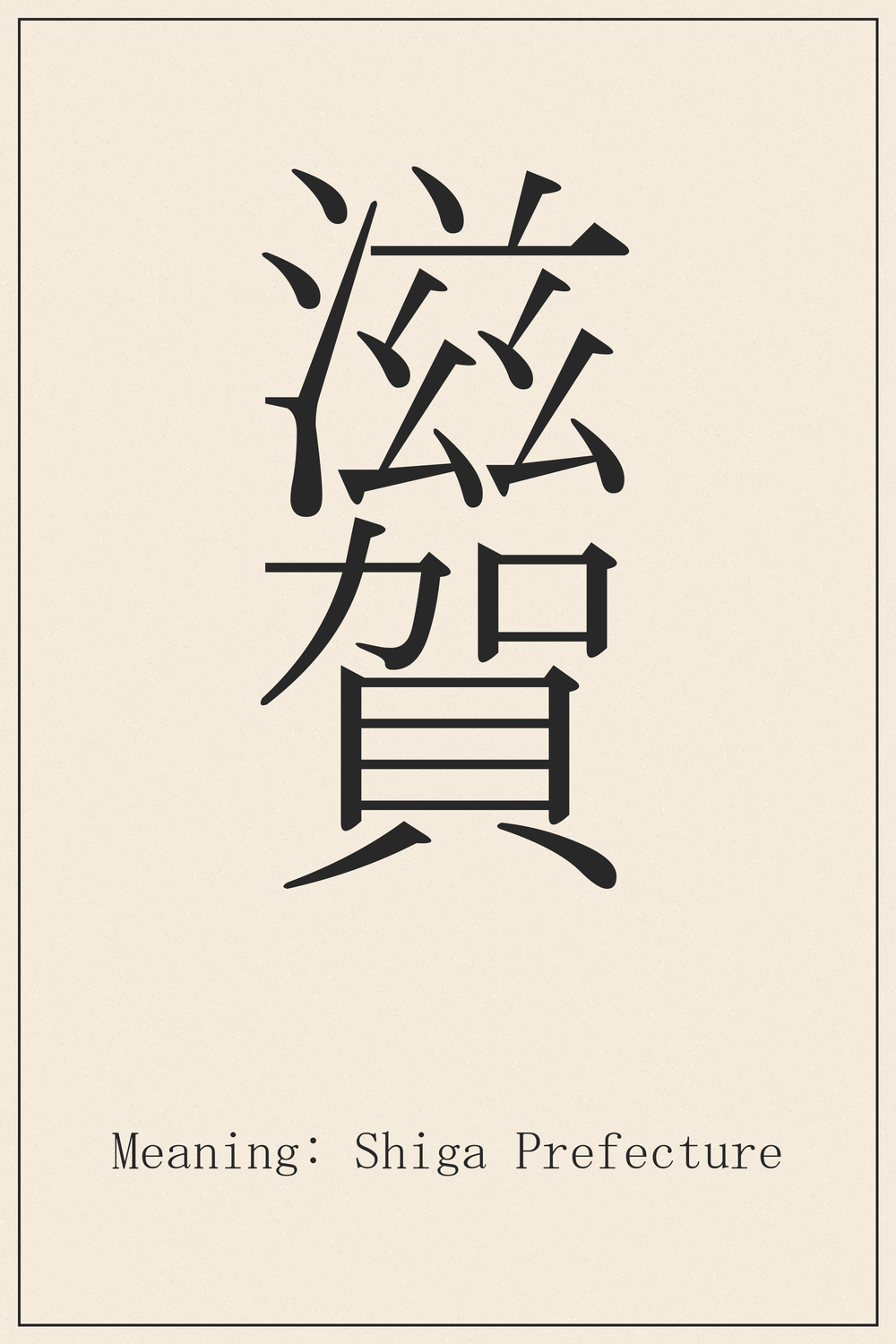
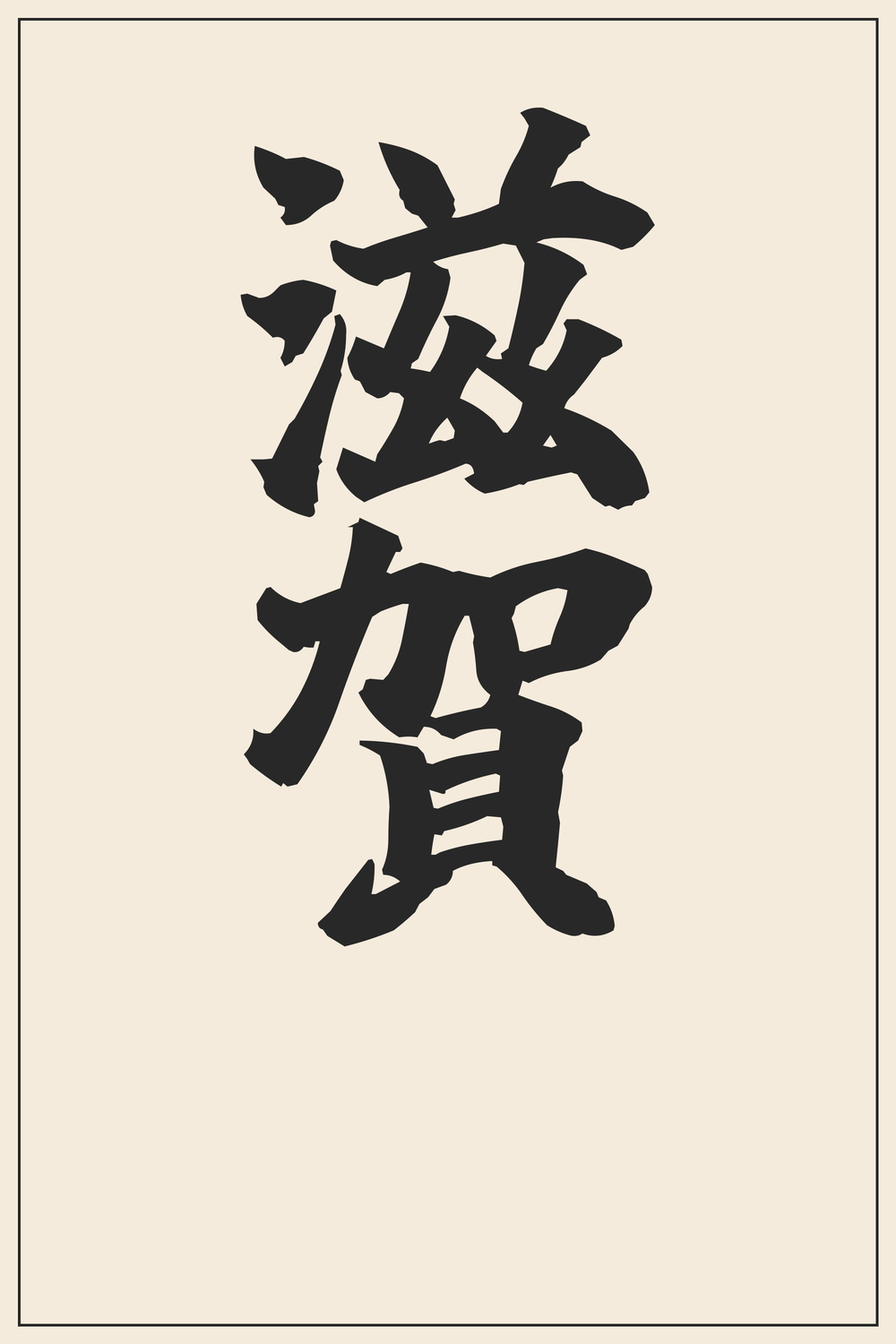
Shiga Prefecture, renowned for Lake Biwa, embodies a unique blend of natural beauty and historical depth. Its Kanji “滋賀” offers a calligraphic representation of this vibrant region.
The atmosphere of a Kanji character changes dramatically depending on the font style. A character that looks elegant in a brush style might look bold and modern in a different font.
Recommendation:
Since a tattoo is permanent, we strongly recommend comparing various font styles beyond what is shown here. Use our designs as a trusted reference for the correct structure, but feel free to explore different artistic variations to find the perfect match for your vision.
The Deep Meaning Behind 滋賀
The name 滋賀 (Shiga) itself is ancient, believed to derive from a combination of terms relating to water and the land. ‘滋’ originally suggests lushness and growth, often associated with water sources, while ‘賀’ implies auspiciousness or celebration, commonly used in place names in classical Japan.
Shiga Prefecture is most famous for Lake Biwa, Japan’s largest freshwater lake, which has profoundly shaped the region’s history, culture, and economy. The Kanji evokes this fertile and historically significant landscape, reflecting centuries of interaction between nature and human civilization.
Kanji Breakdown
Let’s delve into the individual characters that form the distinguished name 滋賀.
Meaning: To grow, to be lush, to nourish, fertile. This character visually combines the ‘water’ radical (氵) on the left with a component (茲) that indicates flourishing vegetation. It inherently carries connotations of fertility, abundance, and life-giving properties, often linked to water.
Meaning: Congratulations, celebration, joy. Composed of the ‘shellfish’ radical (貝), which historically related to currency or valuables, and a phonetic component (加) meaning ‘add’ or ‘increase’, 賀 conveys ideas of auspiciousness and good fortune. In place names, it often implies a blessed or celebrated location.
Conclusion
The Kanji for Shiga, 滋賀, is more than just a place name; it’s a testament to a region blessed with natural splendor and a rich historical tapestry. It speaks of lush landscapes, fertile waters, and a celebrated heritage.
For those with a deep connection to Lake Biwa or the vibrant culture of Shiga Prefecture, this Kanji serves as a meaningful and aesthetically pleasing symbol. It’s a choice that grounds you in a specific, cherished part of Japan.
Comments