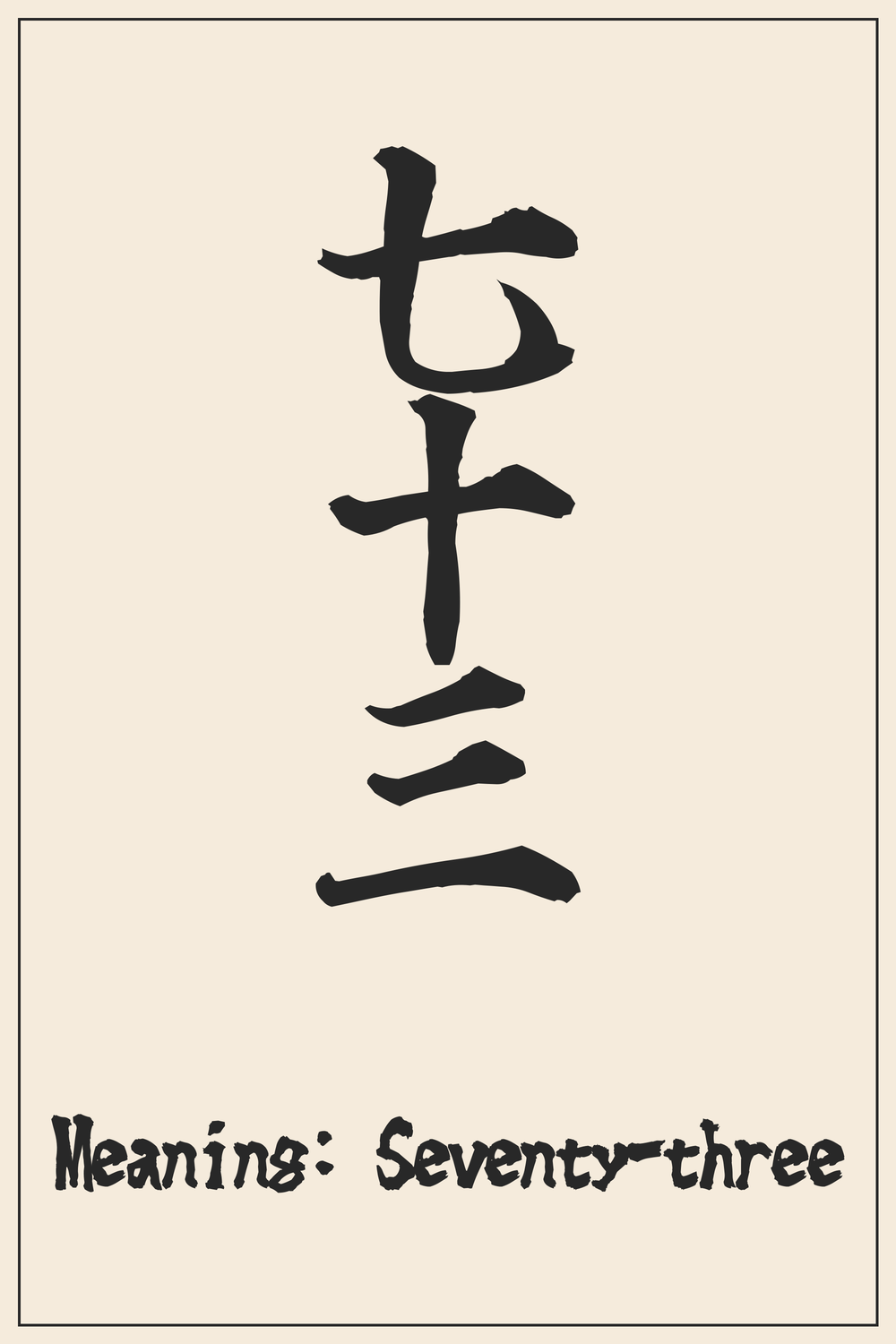
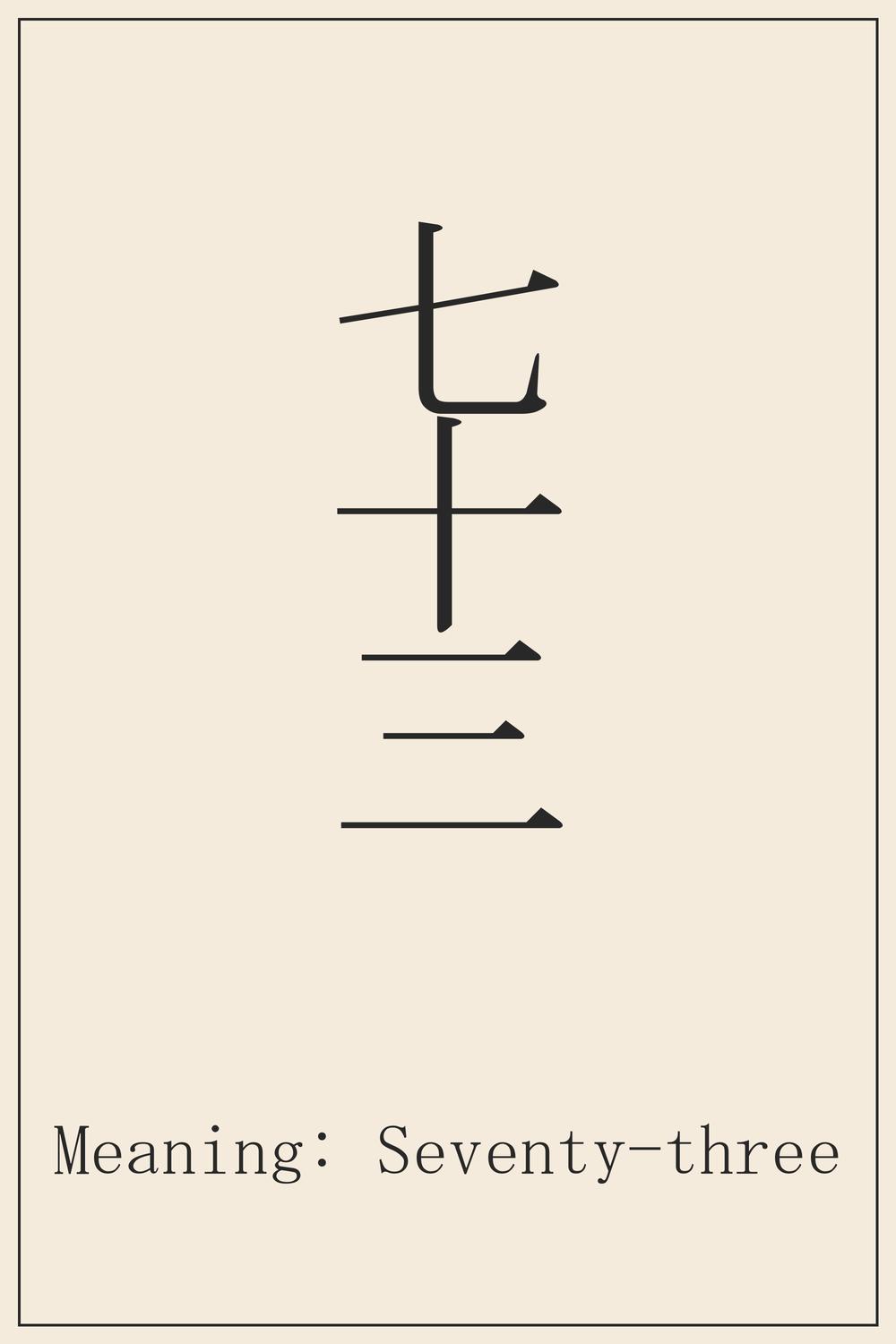
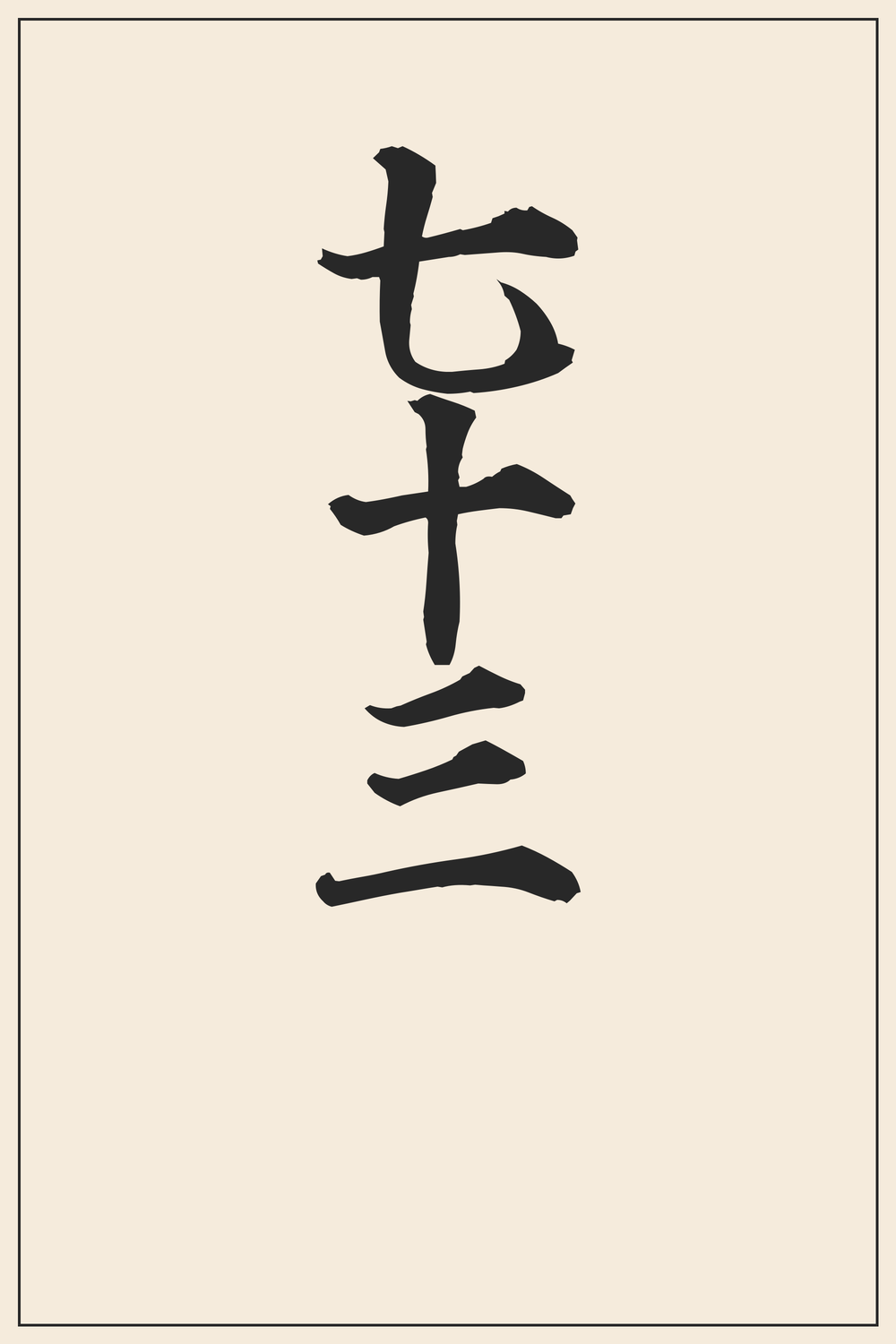
Embrace the significance of seventy-three, a number that can mark milestones, achievements, or a beloved age. This Kanji sequence provides a concise and elegant way to honor specific numerical values in Japanese.
The atmosphere of a Kanji character changes dramatically depending on the font style. A character that looks elegant in a brush style might look bold and modern in a different font.
Recommendation:
Since a tattoo is permanent, we strongly recommend comparing various font styles beyond what is shown here. Use our designs as a trusted reference for the correct structure, but feel free to explore different artistic variations to find the perfect match for your vision.
The Deep Meaning Behind 七十三
The Kanji for numbers are among the oldest and most fundamental characters in the Japanese writing system, derived from ancient Chinese pictographs and ideograms. 七, 十, and 三 each represent simple numerical concepts, reflecting early methods of counting.
While ‘seventy-three’ itself doesn’t carry profound symbolic weight in Japanese culture like some auspicious numbers, it can hold immense personal significance. It might represent an age, a date, a lucky number, or a personal milestone, offering a subtle yet meaningful connection for the wearer.
Kanji Breakdown
Understanding the individual components of ‘七十三’ reveals the simplicity and directness of Japanese numerical representation.
Meaning: Seven
An ancient character often associated with counting, its form is thought to derive from a cross or a cut mark, indicating a division or count.
Meaning: Ten
Originally a pictograph of a vertical stroke with a horizontal stroke, representing a complete tally or a bundle of ten, forming the base of the decimal system.
Meaning: Three
A direct pictograph representing three horizontal lines, making it one of the most straightforward and intuitive numerical characters.
Conclusion
The Kanji ‘七十三’ directly translates to ‘Seventy-three’, serving as a precise and elegant numerical identifier. It is perfect for those who wish to commemorate a specific age, date, or number that holds deep personal meaning without relying on complex symbolism.
Opting for ‘七十三’ as a tattoo is a testament to personal narrative, a discreet yet powerful reminder of a significant moment or value. Its clean lines and clear meaning ensure a timeless appeal, making it a meaningful and aesthetically pleasing choice.
Comments