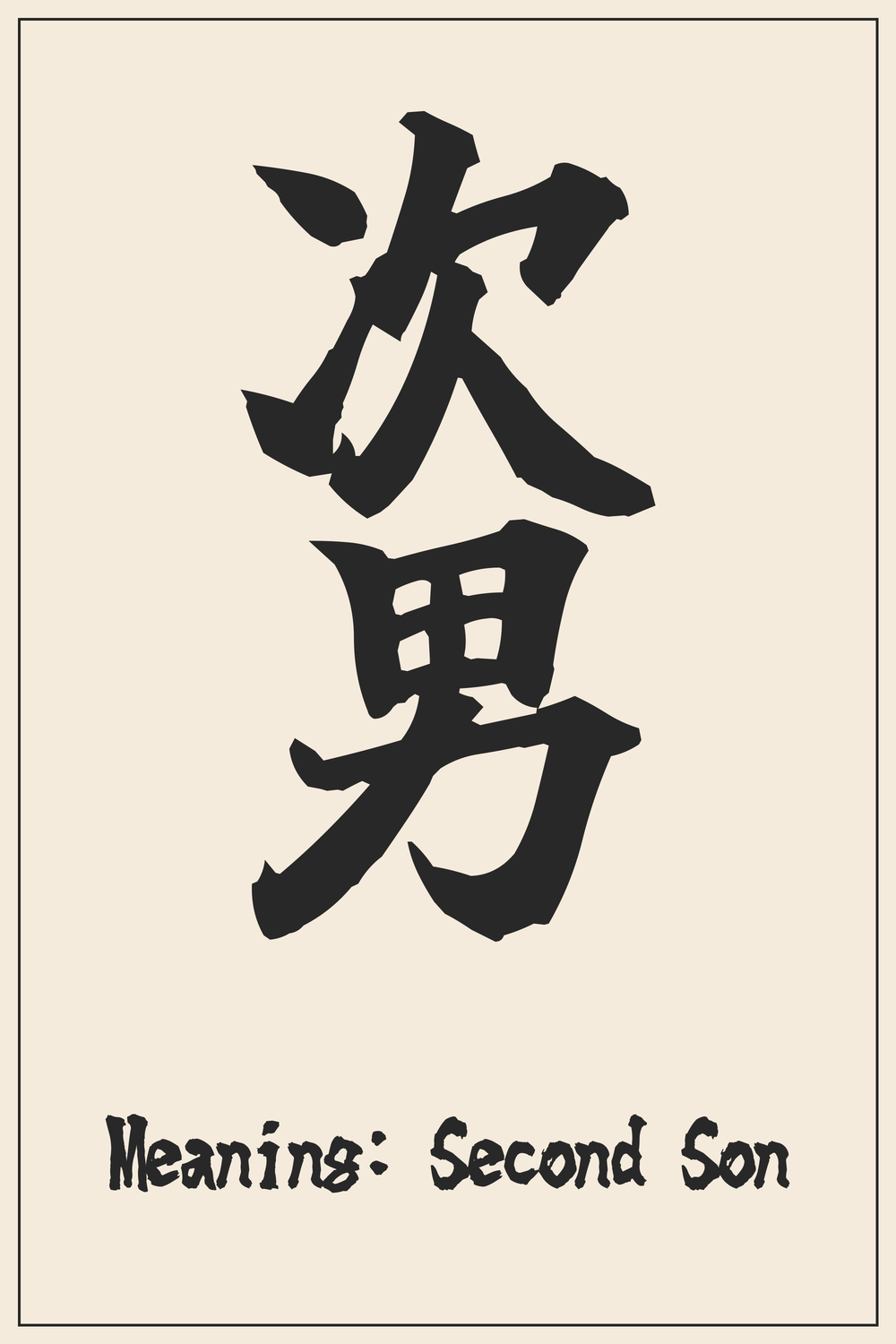
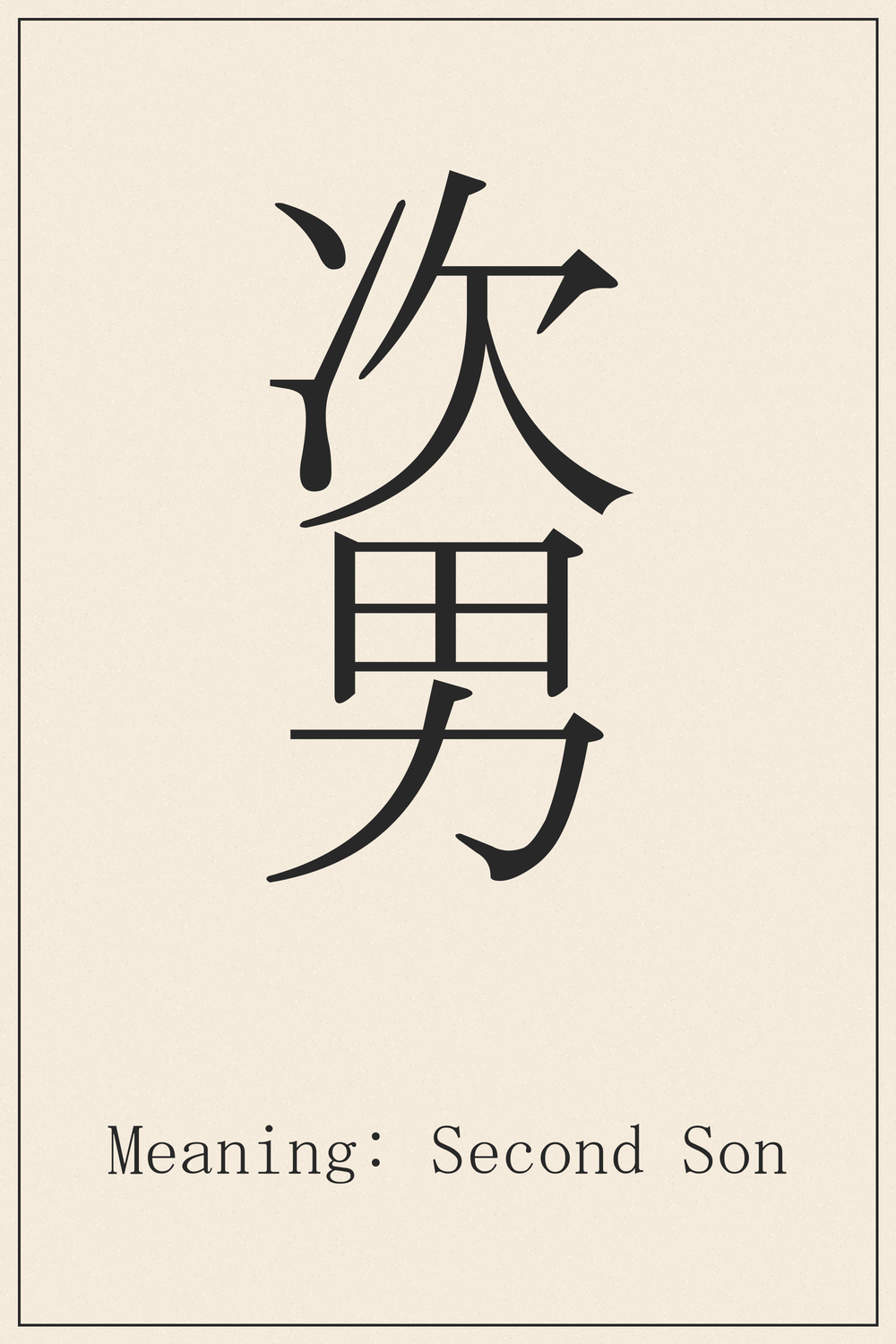
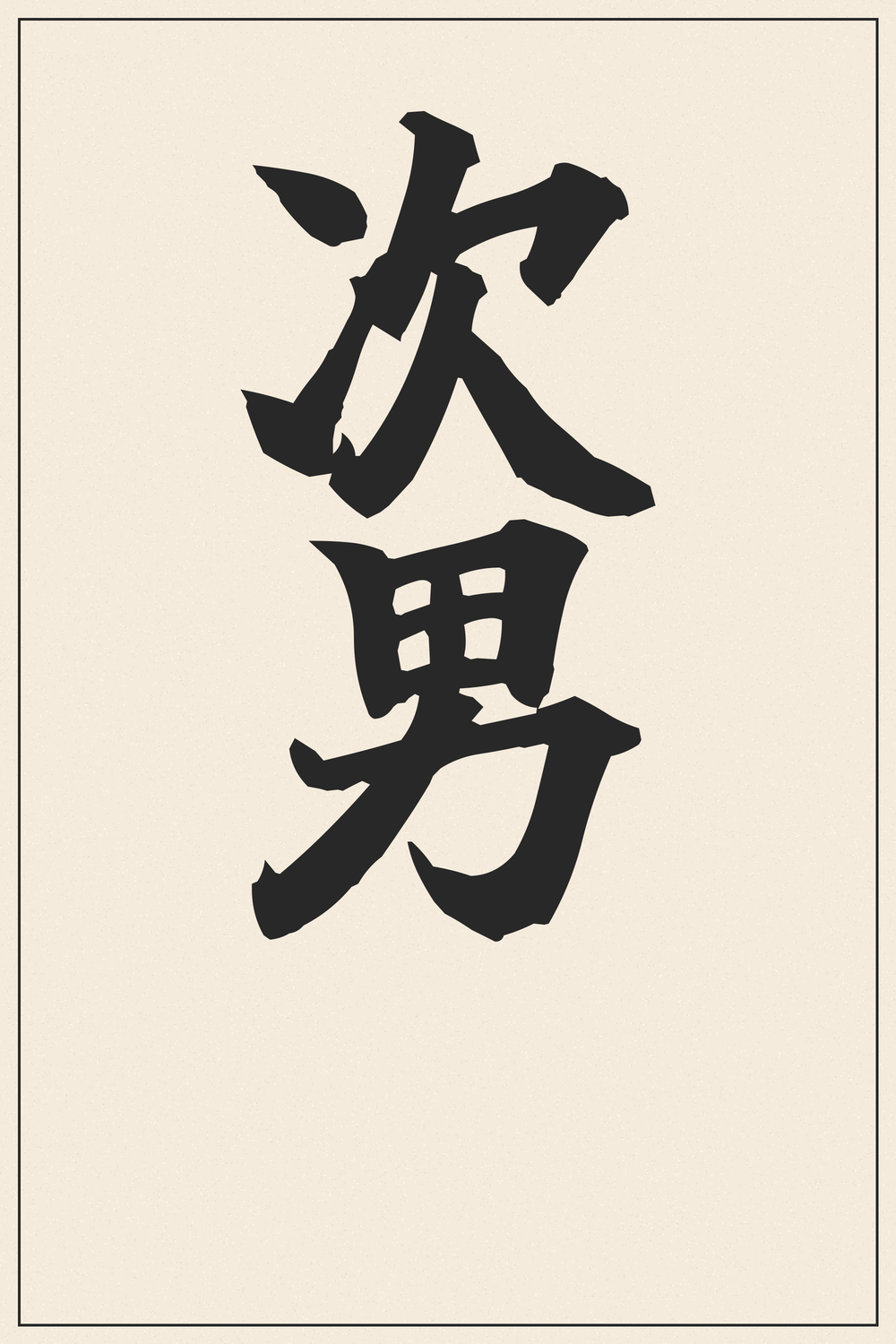
The Kanji combination 次男, pronounced Jinan, beautifully encapsulates the concept of a ‘second son’ within a family lineage. It signifies not just a birth order but often a unique role and identity within the family structure.
The atmosphere of a Kanji character changes dramatically depending on the font style. A character that looks elegant in a brush style might look bold and modern in a different font.
Recommendation:
Since a tattoo is permanent, we strongly recommend comparing various font styles beyond what is shown here. Use our designs as a trusted reference for the correct structure, but feel free to explore different artistic variations to find the perfect match for your vision.
The Deep Meaning Behind 次男
The character 次 (ji) fundamentally conveys the idea of ‘next,’ ‘secondary,’ or ‘order.’ Its etymology suggests a sequence or a step, placing something immediately after another.
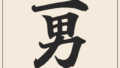
男 (nan/dan), meaning ‘man’ or ‘son,’ is traditionally composed of 田 (ta), representing a ‘rice field,’ and 力 (riki), symbolizing ‘strength’ or ‘power.’ This combination historically depicted a man working in the fields, emphasizing his role and strength in agrarian society.
Combined, 次男 distinctly denotes the ‘second male child’ in a family. In traditional Japanese society, birth order carried significant weight, defining responsibilities and expectations within the household and broader community.
While modern contexts may vary, the term still carries the essence of family structure and the unique position of a younger sibling, often one who can pursue different paths than the eldest.
Kanji Breakdown
Understanding the individual components of 次男 reveals the precise nature of its meaning.
Next, secondary, order: This character indicates sequential order, signifying something that follows immediately after the first. It’s often used to denote ‘second’ or ‘next’ in a series.
Man, male, son: Composed of 田 (field) and 力 (strength), 男 historically represented a strong male working in the fields. In the context of family, it refers specifically to a male child or son.
Conclusion
The Kanji 次男 is a concise and direct representation of a ‘second son,’ embodying themes of family, lineage, and individual identity within a structured order. It speaks to the unique place a younger male sibling holds.
For a tattoo, 次男 serves as a powerful and personal statement, whether celebrating one’s own identity as a second son or commemorating a loved one. Its clear characters offer both aesthetic appeal and profound personal meaning.
Comments