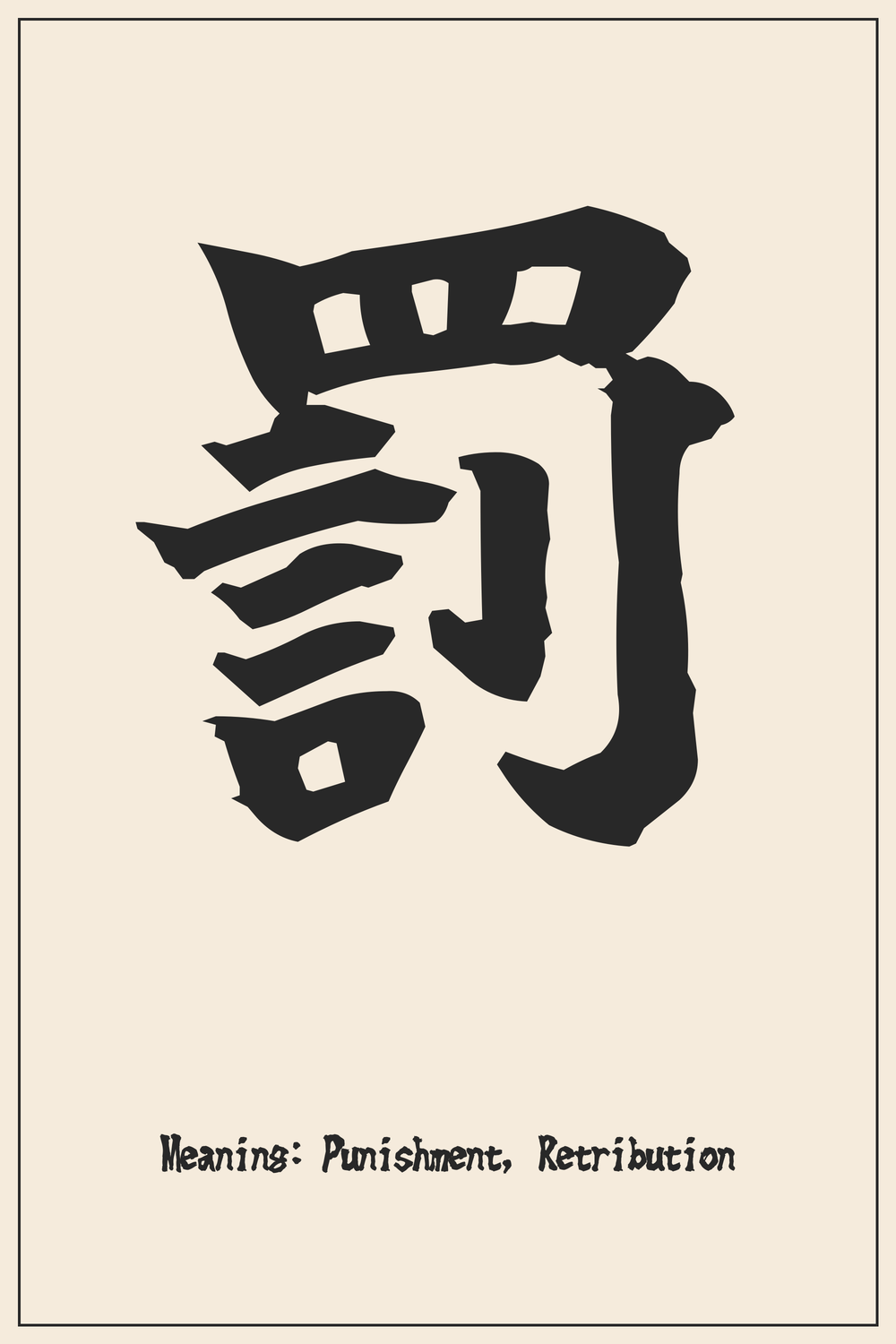
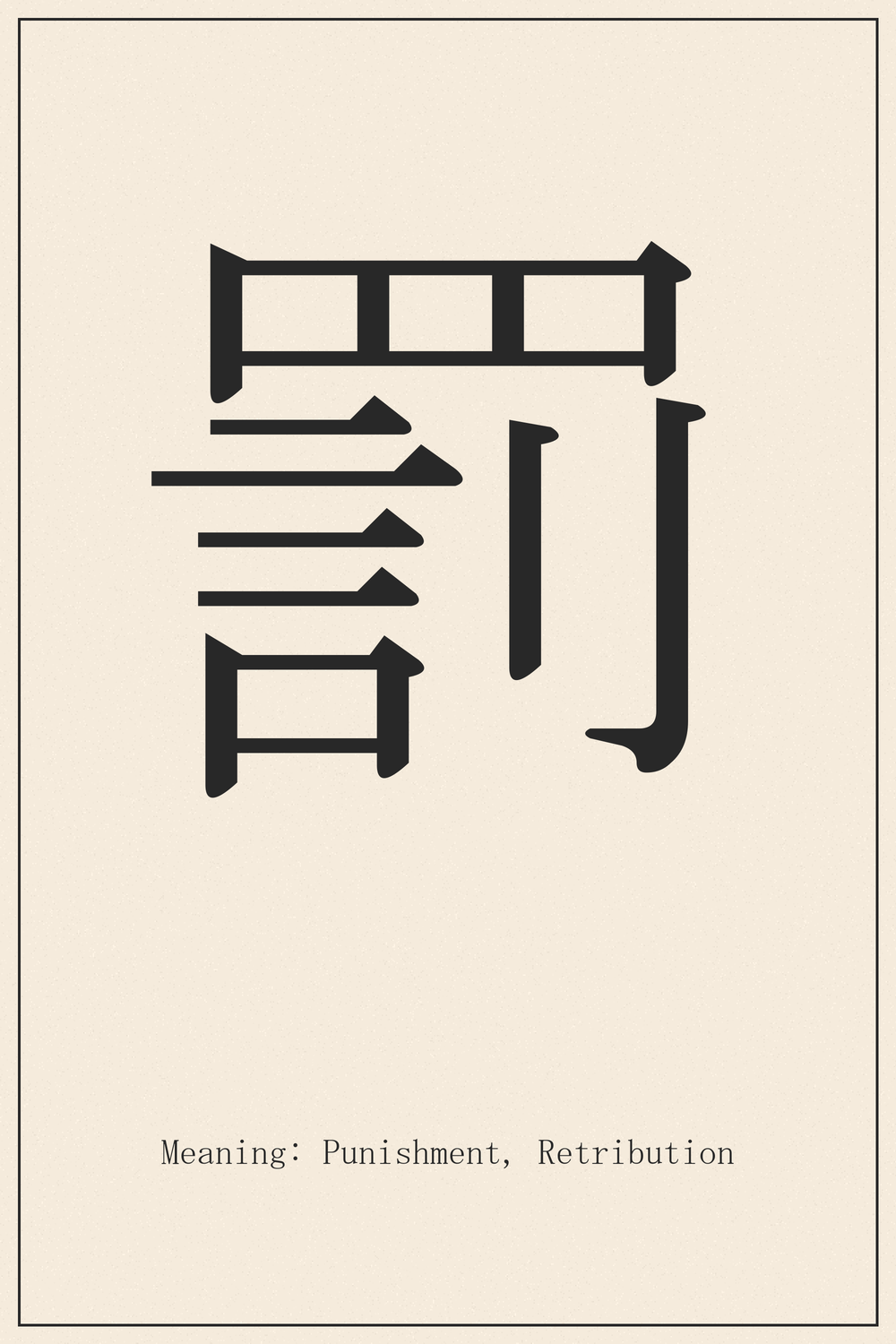
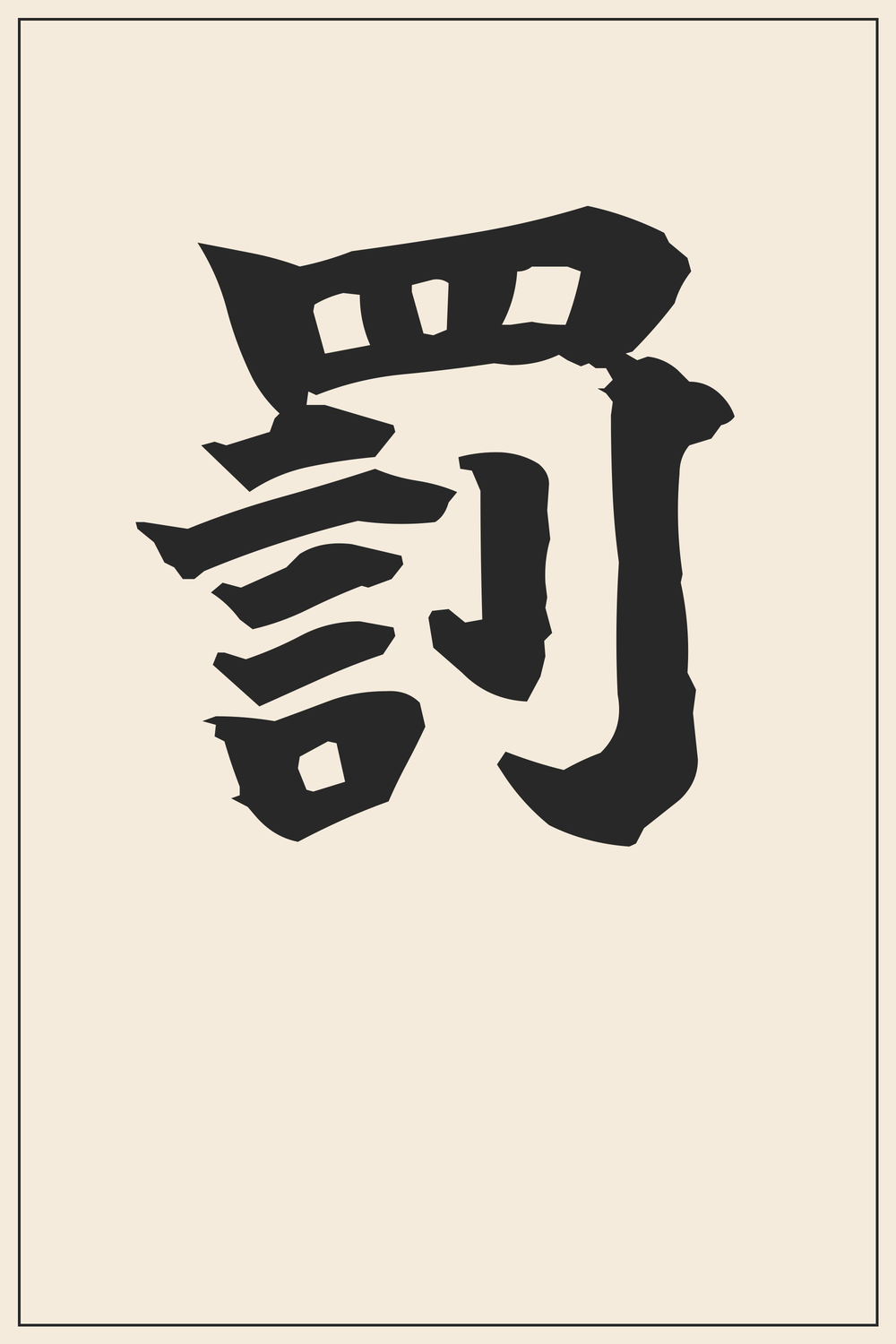
The Kanji 罰 embodies the profound concept of consequence, a powerful symbol reflecting both human justice and divine reckoning. It serves as a stark reminder that actions carry inherent weight, shaping both individual fate and societal order.
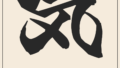
The atmosphere of a Kanji character changes dramatically depending on the font style. A character that looks elegant in a brush style might look bold and modern in a different font.
Recommendation:
Since a tattoo is permanent, we strongly recommend comparing various font styles beyond what is shown here. Use our designs as a trusted reference for the correct structure, but feel free to explore different artistic variations to find the perfect match for your vision.
The Deep Meaning Behind 罰
The Kanji 罰 (batsu) inherently conveys the concept of ‘punishment,’ ‘penalty,’ or ‘retribution.’ Its etymological roots depict a scene of judgment where a verbal accusation leads to a decisive penalty, often symbolized by a blade.
In Japanese culture, 罰 (bachi) carries a nuance beyond legal punishment; it often implies divine retribution (bachi-atari) for immoral acts or disrespecting the sacred. It serves as a moral compass, reminding individuals of the consequences of their actions and the importance of living righteously.
Kanji Breakdown
The character 罰 is a compound ideogram composed of elements that narrate the process of judgment and punishment.
Meaning: Net / Law. This component, derived from ‘net’ (ami), metaphorically represents the law or a net that catches wrongdoers, symbolizing the inescapable nature of justice.
Meaning: Word / Speech. Located beneath the net, this radical signifies the verbal accusation, the reading of a crime, or the judgment pronounced against the offender.
Meaning: Knife / Sword. This radical (rittō) on the right side represents a blade. It symbolizes the execution of the punishment or the severing of the criminal from society, emphasizing the decisive and often harsh nature of the penalty.
Conclusion
The Kanji 罰 deeply encapsulates the principle of punishment and retribution, stemming from ancient concepts of law enforcement and divine consequence. It serves as a potent reminder of accountability and the immutable link between actions and their outcomes, whether societal or spiritual.
While its meaning is potent and direct, individuals considering ‘罰’ should reflect on its strong implications regarding justice, accountability, or the acknowledgment of past actions. It’s a Kanji that unequivocally speaks to the consequences of deeds, making it a profound and thought-provoking choice for those who understand and wish to convey its severe message.
Comments