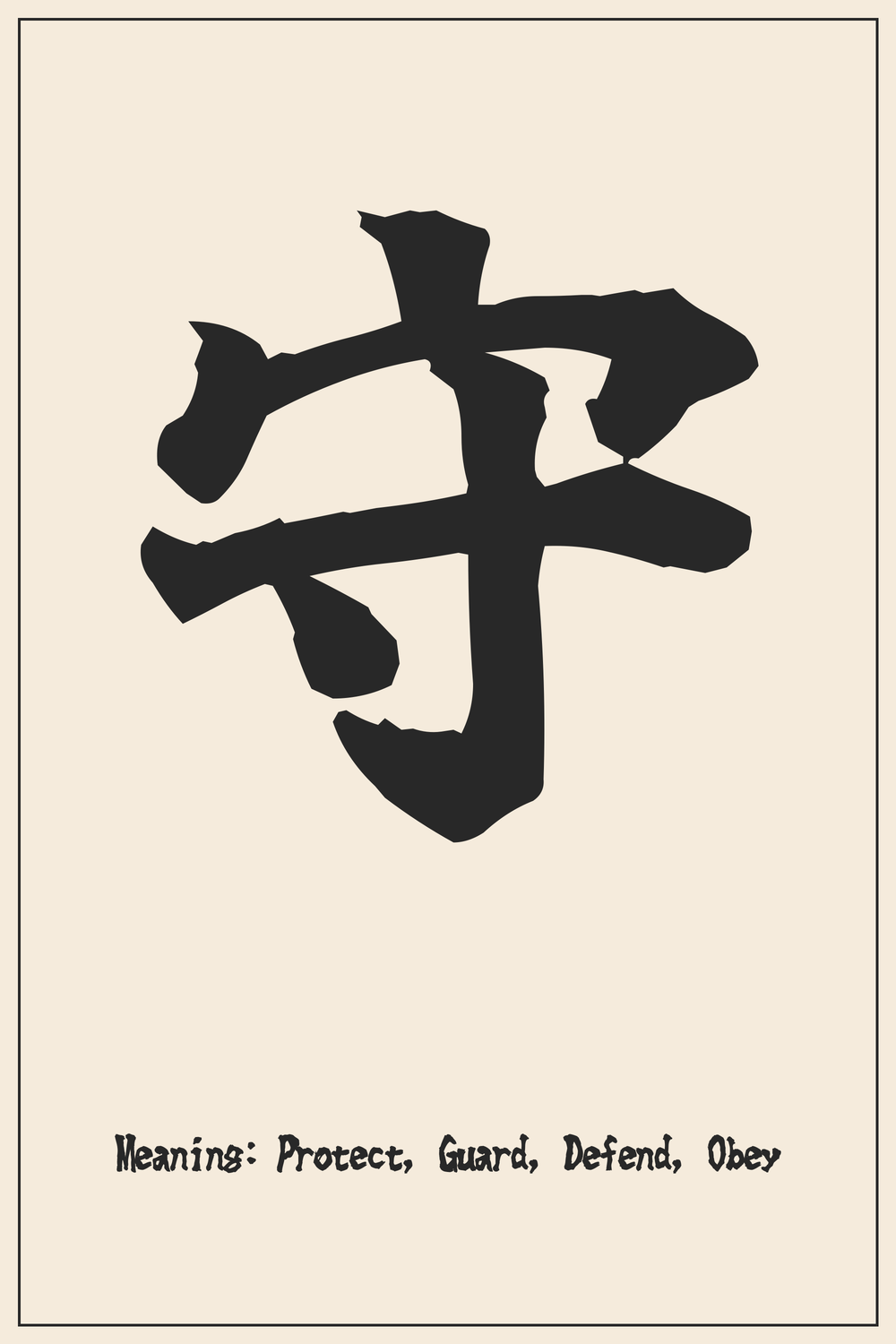
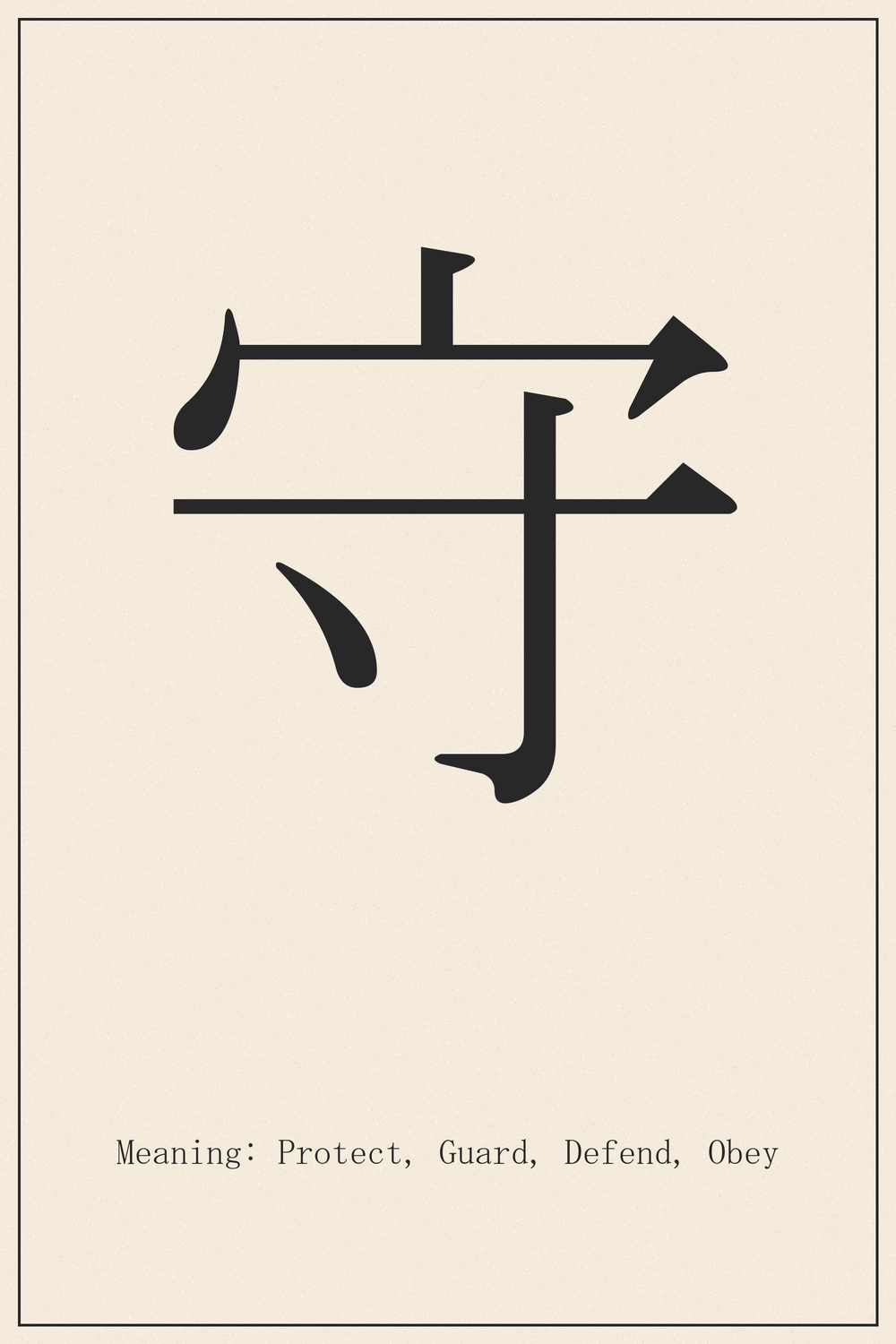
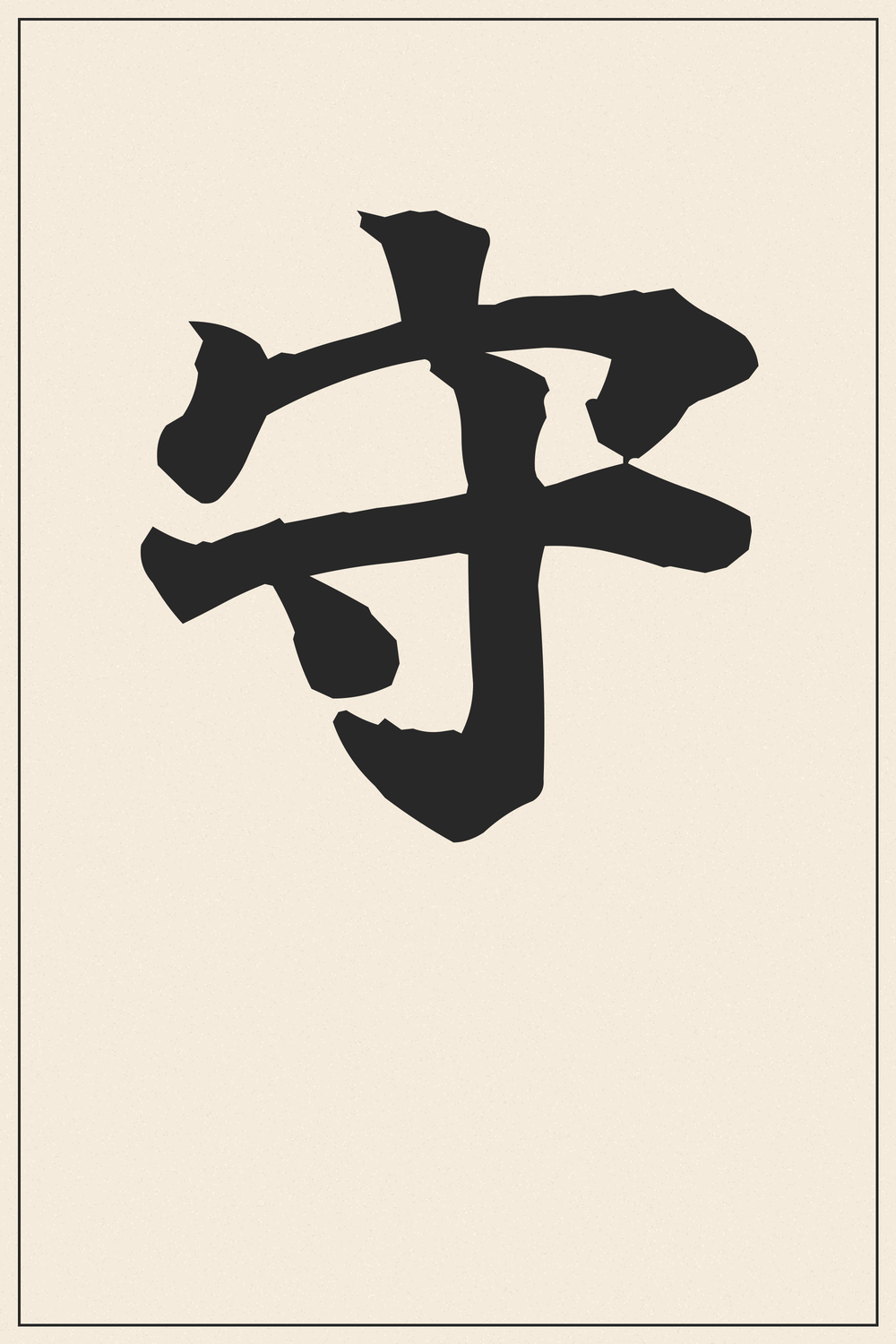
The Kanji 守 embodies the profound concept of protection and guardianship. It signifies not just physical defense, but also the steadfast commitment to uphold values and safeguard what is cherished.
The atmosphere of a Kanji character changes dramatically depending on the font style. A character that looks elegant in a brush style might look bold and modern in a different font.
Recommendation:
Since a tattoo is permanent, we strongly recommend comparing various font styles beyond what is shown here. Use our designs as a trusted reference for the correct structure, but feel free to explore different artistic variations to find the perfect match for your vision.
The Deep Meaning Behind 守
The character 守 (Shu) finds its roots in ancient pictographs. It is thought to depict a roof (宀) sheltering a person or, alternatively, a hand (寸, representing a measure or an action) guarding a dwelling. This visual origin immediately conveys the fundamental idea of safeguarding and providing sanctuary.
In Japanese culture, 守 carries significant weight, extending beyond mere physical defense. It encapsulates the duty to protect family, home, and community, alongside the commitment to uphold traditions, principles, and promises. It is prominently featured in concepts like 守破離 (Shu-Ha-Ri), a philosophical framework in martial arts and traditional arts emphasizing the preservation of foundational teachings.
Kanji Breakdown
The Kanji 守 is composed of two primary components, each contributing to its overarching meaning of protection and guardianship.
Ukanmuri (Roof Radical): This radical visually represents a roof or a house, signifying a place of dwelling, safety, and shelter. It sets the context for what is being protected or guarded.
Sun (Hand/Measure): While often meaning ‘inch’ or ‘small measure,’ in this context, 寸 is frequently interpreted as representing a hand or an action taken by a hand. This implies active involvement in protection or guarding.
Conclusion
The Kanji 守 is a powerful emblem for anyone who identifies as a protector, a guardian, or someone deeply committed to their duties and beliefs. It embodies the strength and resolve required to safeguard what is important, be it individuals, principles, or traditions.
Choosing 守 for a tattoo is a declaration of unwavering commitment and a tribute to the virtues of fidelity and preservation. Its elegant simplicity ensures a beautiful and meaningful design that will stand as a timeless testament to your protective spirit.
Comments