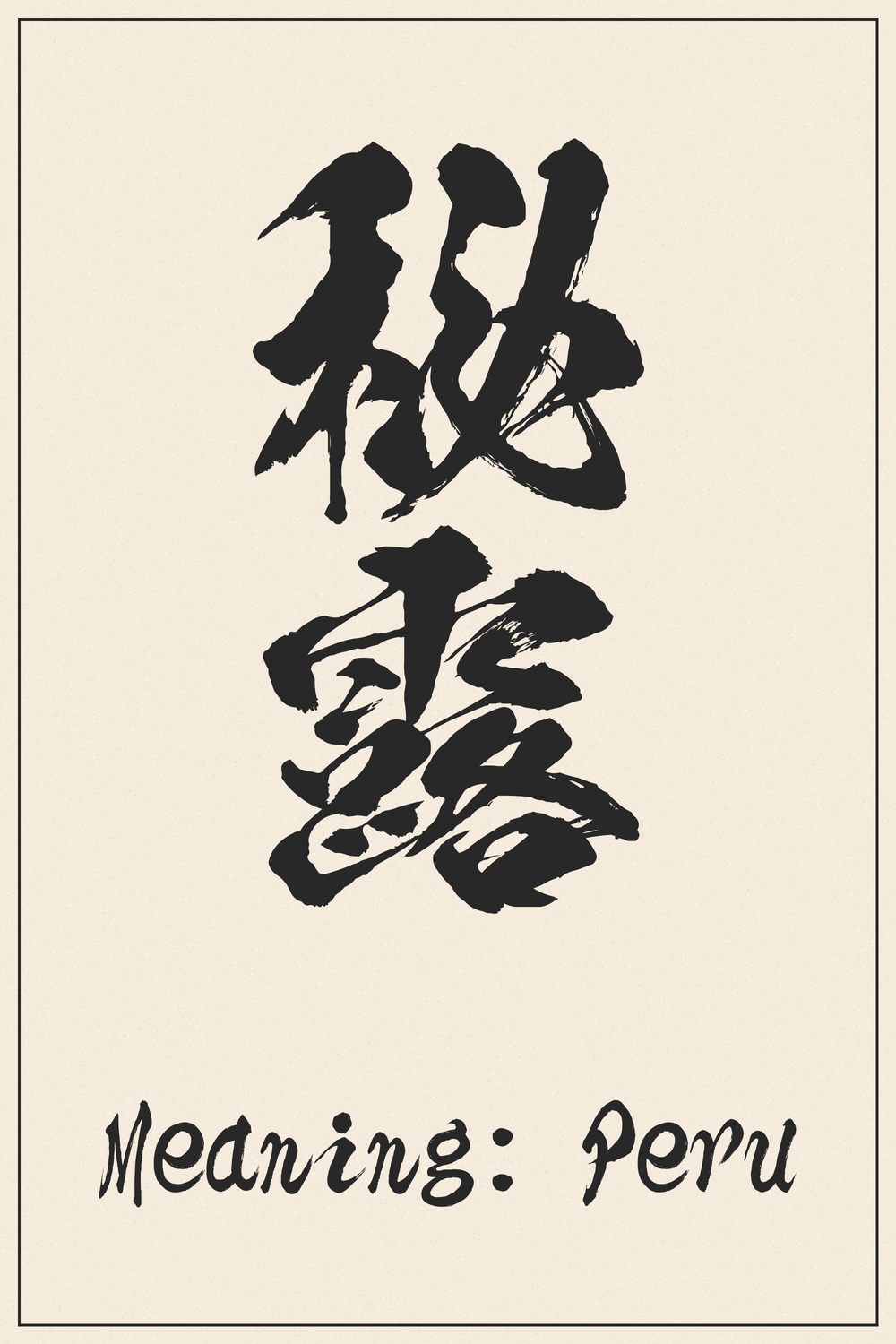
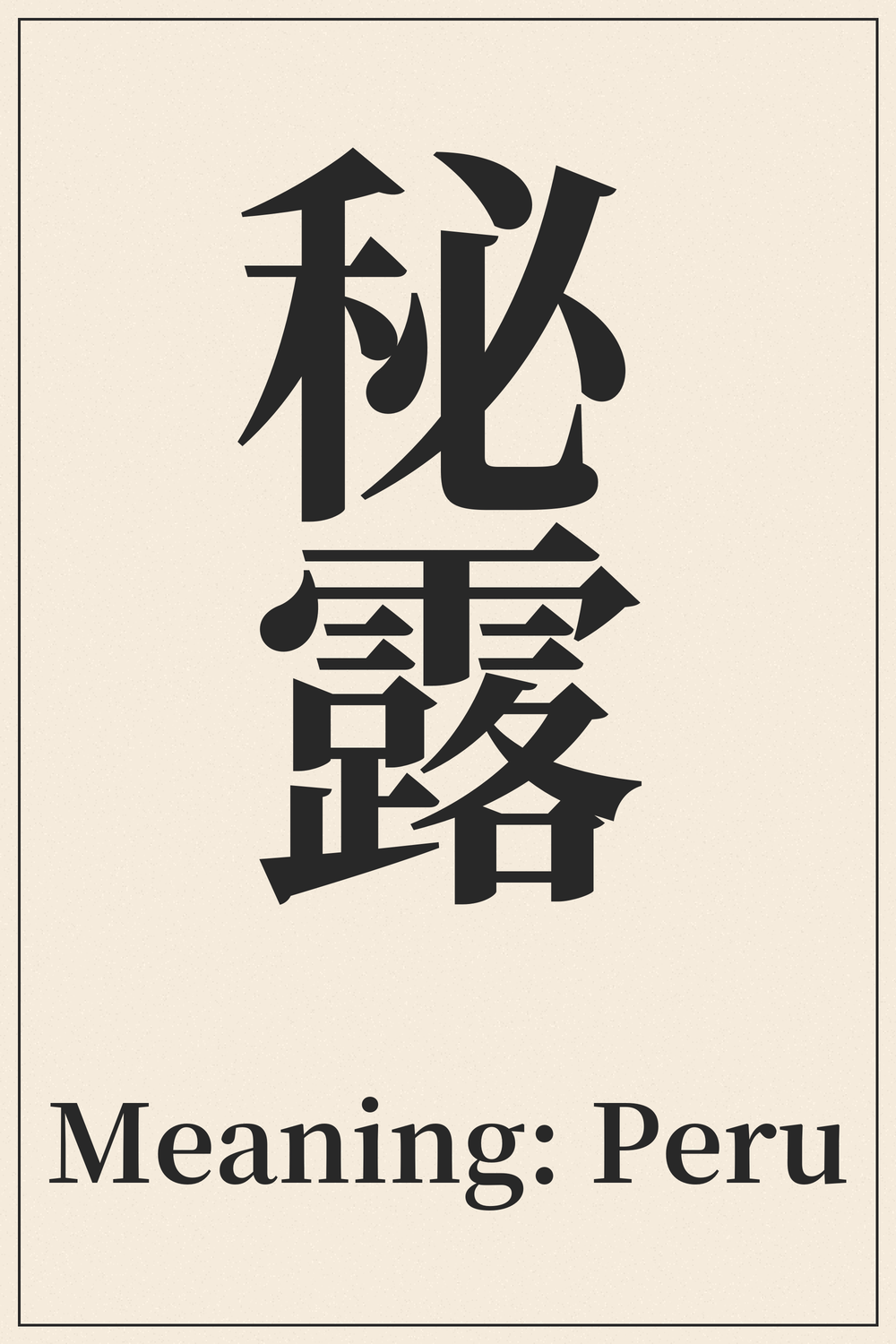
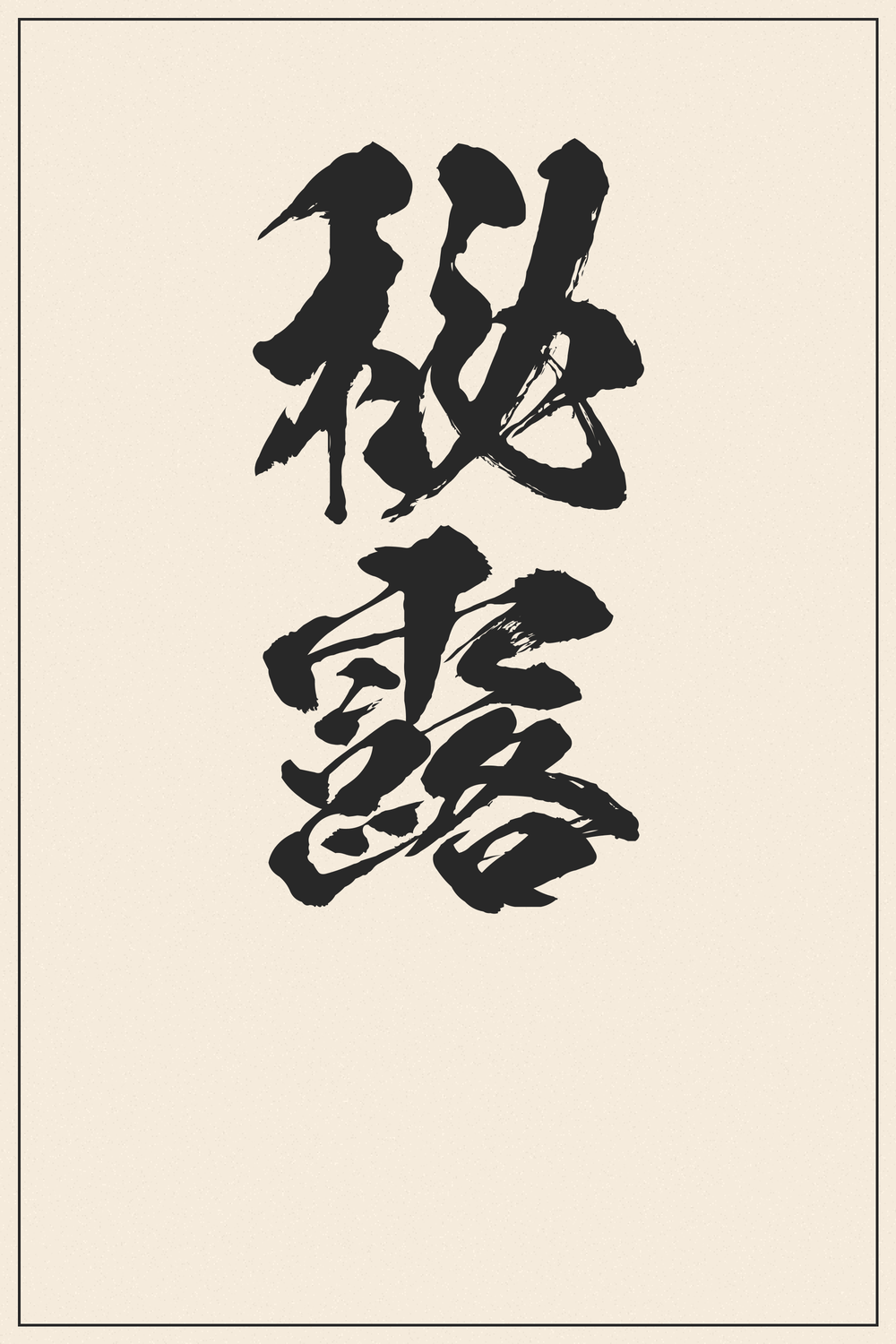
Dive into the fascinating world of Ateji with ‘秘露’ (Peruu), the Kanji representation for the nation of Peru. This unique combination of characters illustrates how Japanese adapts foreign names, transforming them into visually captivating symbols.
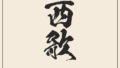
The atmosphere of a Kanji character changes dramatically depending on the font style. A character that looks elegant in a brush style might look bold and modern in a different font.
Recommendation: Since a tattoo is permanent, we strongly recommend comparing various font styles beyond what is shown here. Use our designs as a trusted reference for the correct structure, but feel free to explore different artistic variations to find the perfect match for your vision.
The Deep Meaning Behind 秘露
The Kanji combination ‘秘露’ (Peruu) is a prime example of ‘Ateji’ (当て字), a phonetic transcription where characters are chosen for their sounds rather than their literal meanings to represent foreign words or names. In this case, 秘 (hi) and 露 (ro) are selected to phonetically approximate ‘Peru’.
Literally, 秘 (hi) means ‘secret’ or ‘mystery,’ and 露 (ro) means ‘dew,’ ‘expose,’ or is also used to represent ‘Russia.’ Therefore, ‘秘露’ can be humorously interpreted as ‘secret dew’ or ‘mysterious exposure.’ This literal meaning, however, is not relevant to its function as the name for the South American country; its use is purely phonetic to honor the sound of ‘Peru’ within the Japanese language system.
Kanji Breakdown
Understanding the individual components of ‘秘露’ reveals the fascinating etymological layers that contribute to its unique form.
Meaning: Secret, Mystery, Privacy. The character 秘 (hi) combines the radical 示 (shimesu), meaning ‘altar’ or ‘to show,’ with 必 (hitsu), which provides the phonetic element and also conveys ‘certainly’ or ‘must.’ Together, they evoke a sense of something kept hidden or sacred, perhaps a divine secret.
Meaning: Dew, Expose, Reveal, Russia. The character 露 (ro) is composed of 雨 (ame), meaning ‘rain,’ and 路 (ro), meaning ‘road’ or ‘path.’ The rain radical visually connects to moisture, while 路 contributes phonetically. Its primary meaning relates to ‘dew’ or ‘exposed to the elements,’ but it is famously used phonetically for ‘Russia’ (露西亜, Roshia) and in this context for ‘Peru.’
Conclusion
As ‘秘露’ (Peruu) for Peru, this Kanji serves as a testament to the versatility of the Japanese writing system. It embodies a creative linguistic solution, using characters primarily for their sound to integrate foreign concepts, rather than for their inherent semantic values.
For those considering ‘秘露’ as a tattoo, it holds significance as a unique representation of Peru. While its literal meaning of ‘secret dew’ might be amusing, its true value lies in its role as a phonetic symbol, connecting the beauty of Kanji with the spirit of a vibrant nation. It’s a subtle nod to cultural adaptation and global connection.
Comments