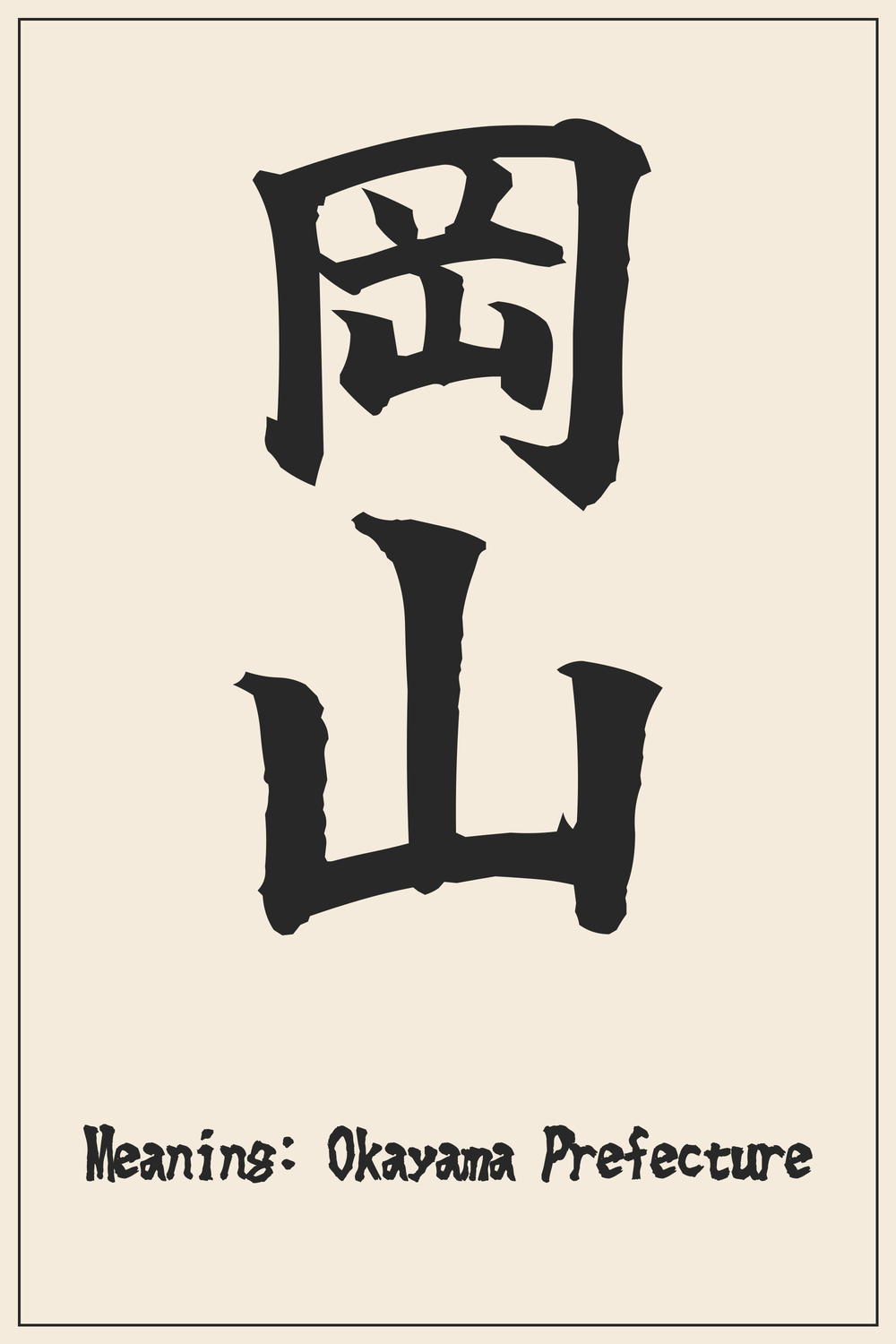
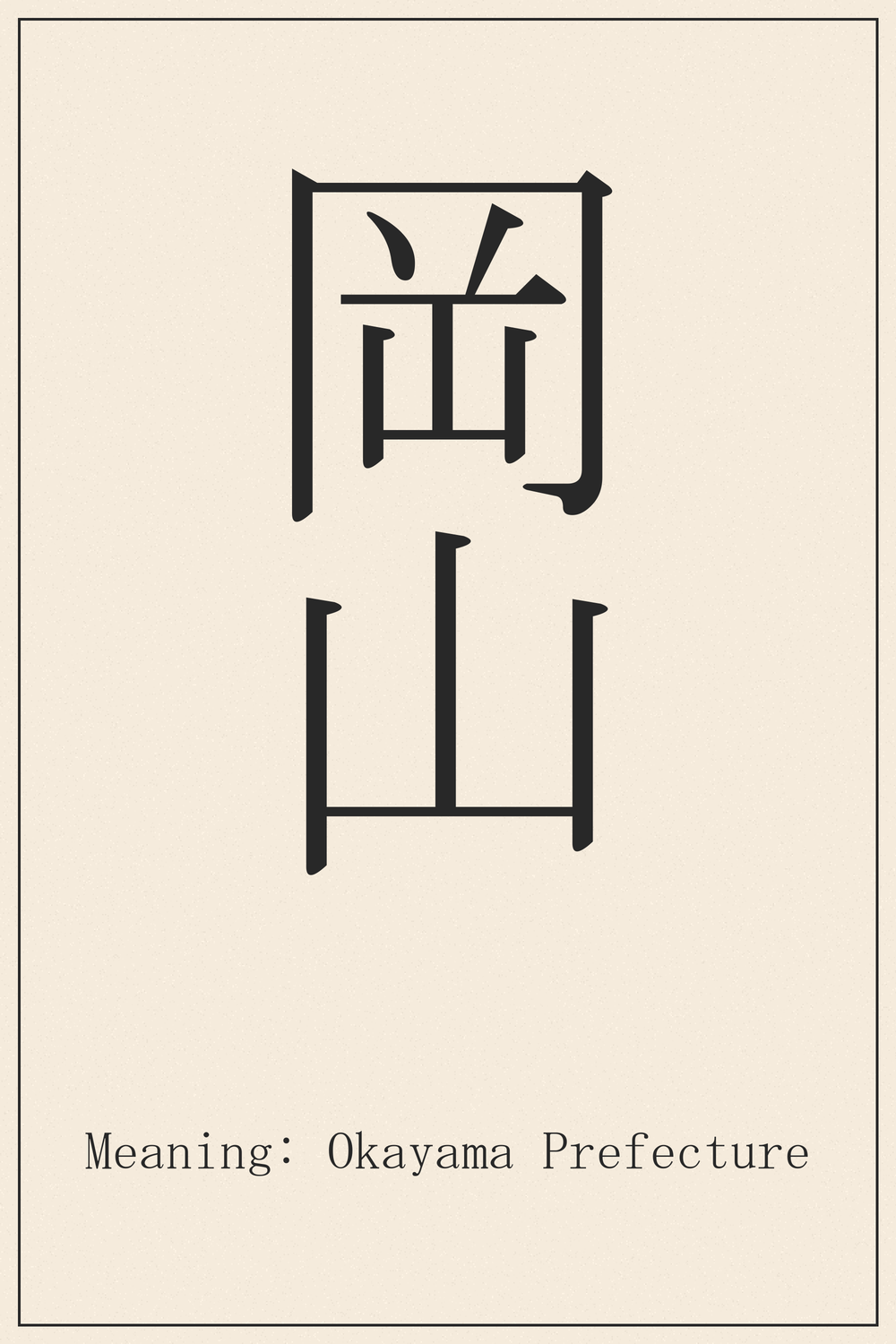
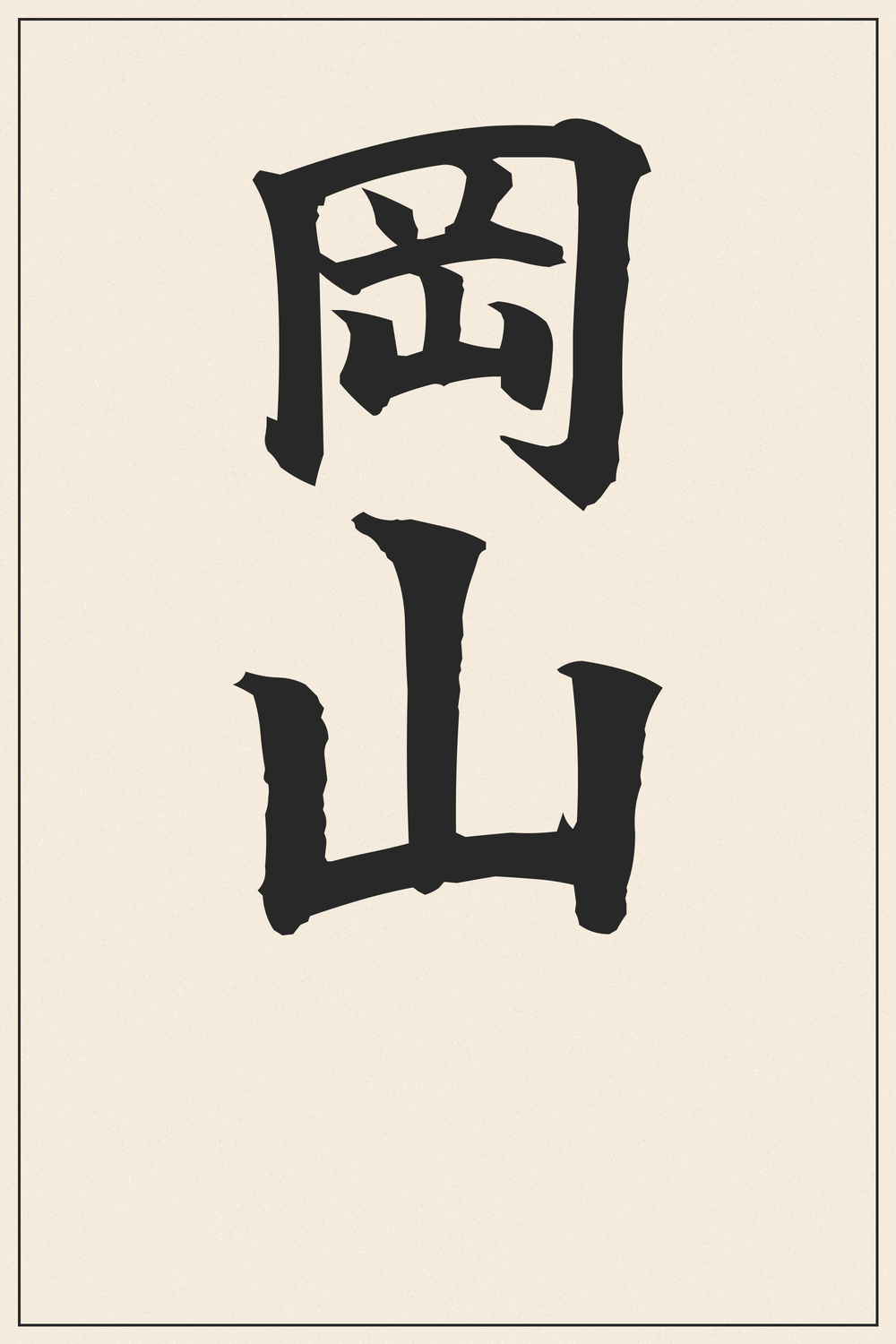
Representing a vibrant region known for its unique culture and history, the Kanji 岡山 (Okayama) embodies a distinct Japanese identity. It’s a choice that resonates with those who cherish regional pride and connection.
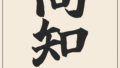
The atmosphere of a Kanji character changes dramatically depending on the font style. A character that looks elegant in a brush style might look bold and modern in a different font.
Recommendation:
Since a tattoo is permanent, we strongly recommend comparing various font styles beyond what is shown here. Use our designs as a trusted reference for the correct structure, but feel free to explore different artistic variations to find the perfect match for your vision.
The Deep Meaning Behind 岡山
The name 岡山 (Okayama) is a combination of 岡 (oka), meaning ‘hill’ or ‘ridge,’ and 山 (yama), meaning ‘mountain.’ This directly reflects the geography of the region, historically characterized by its hilly and mountainous terrain.
Okayama Prefecture, situated in the Chugoku region of Honshu, is renowned for its iconic Korakuen Garden, one of Japan’s three great landscape gardens, and the charming historical streets of Kurashiki. It is also famously associated with the beloved Japanese folklore hero, Momotaro, the Peach Boy, adding a layer of mythical charm to its identity.
Kanji Breakdown
The Kanji 岡山 is composed of two distinct characters, each contributing to its geographical and cultural significance.
Meaning: Hill, ridge. This character combines elements suggesting an elevated landform. Historically, it depicted a high mound or hill, often serving as a natural boundary or landmark.
Meaning: Mountain. A straightforward pictogram, 山 vividly depicts three peaks of a mountain range. It is one of the most fundamental and recognizable kanji, representing nature’s grandeur.
Conclusion
Choosing 岡山 as a tattoo is a powerful way to express a connection to this specific Japanese prefecture, embodying its unique natural landscape and rich cultural heritage. It represents more than just a place; it signifies a story, a legend, and a distinct regional spirit.
For those with roots in Okayama, or anyone captivated by its beauty and history, this Kanji serves as a refined and meaningful tribute. Its clear form ensures a striking and enduring piece of body art that celebrates Japanese regional identity.
Comments