


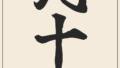
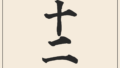
Numbers hold a fundamental place in expressing the fabric of existence, from simple counts to profound milestones. The Kanji 九十一 represents the numerical value of ninety-one, a clear and direct expression of quantity.
The atmosphere of a Kanji character changes dramatically depending on the font style. A character that looks elegant in a brush style might look bold and modern in a different font.
Recommendation:
Since a tattoo is permanent, we strongly recommend comparing various font styles beyond what is shown here. Use our designs as a trusted reference for the correct structure, but feel free to explore different artistic variations to find the perfect match for your vision.
The Deep Meaning Behind 九十一
In Japanese, the number ninety-one, 九十一 (kyuujuuichi), is constructed using a base-ten system, where 九 (nine) precedes 十 (ten) to form ninety, followed by 一 (one). This systematic approach highlights the logical and ordered nature of numerical representation in the language.
While a simple numerical value, 九十一 can represent a significant milestone, a specific count, or a point in a sequence. Its meaning is directly tied to the context in which it is used, often signifying an age, a date, or a number of accomplishments, making it a subtle nod to personal journey or quantitative achievements.
Kanji Breakdown
The number ninety-one is composed of three fundamental Kanji, each carrying its own distinct origin and meaning.
Nine: The character 九 (kyuu/ku) originally depicted a bent arm, suggesting ‘bending’ or ‘twisting’. It was later adopted to represent the number nine, potentially due to its position as the last single digit before entering double-digits, implying a ‘turn’ or ‘completion’ of a cycle within the single-digit count.
Ten: The Kanji 十 (juu) is thought to have originated from a simple vertical stroke, with a horizontal line later added to signify completeness or “all directions.” In ancient numerology, ten often represented a full cycle or totality, as it is the base of many counting systems.
One: The simplest of all Kanji, 一 (ichi) is a single horizontal stroke. It represents unity, the beginning, or a solitary entity. Its fundamental nature underscores its role as the building block for all other numbers.
Conclusion
The Kanji 九十一 (Kyuujuuichi), signifying “ninety-one,” is a straightforward representation of a numerical value. While lacking a singular deep philosophical meaning, its power lies in its versatility as a marker for significant counts, ages, or achievements in one’s life. It can represent a stage in a journey or a quantity of experiences.
For a tattoo, 九十一 offers a clean, easily readable design due to the simplicity of its constituent characters. It is an excellent choice for those wishing to commemorate a specific number that holds personal importance, whether as an an age, a date, or a count of something meaningful, providing a personal touch without complex symbolism.
Comments