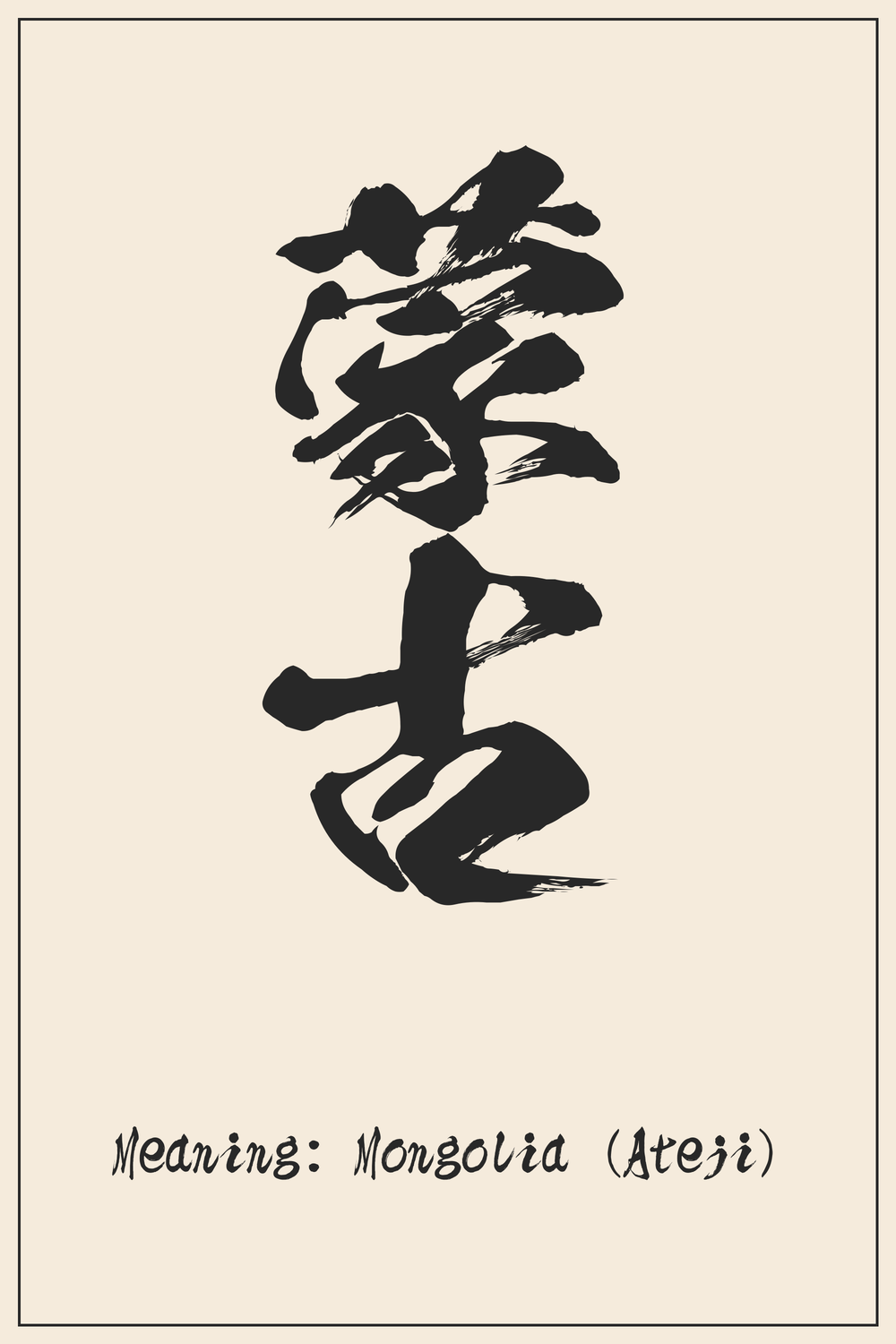
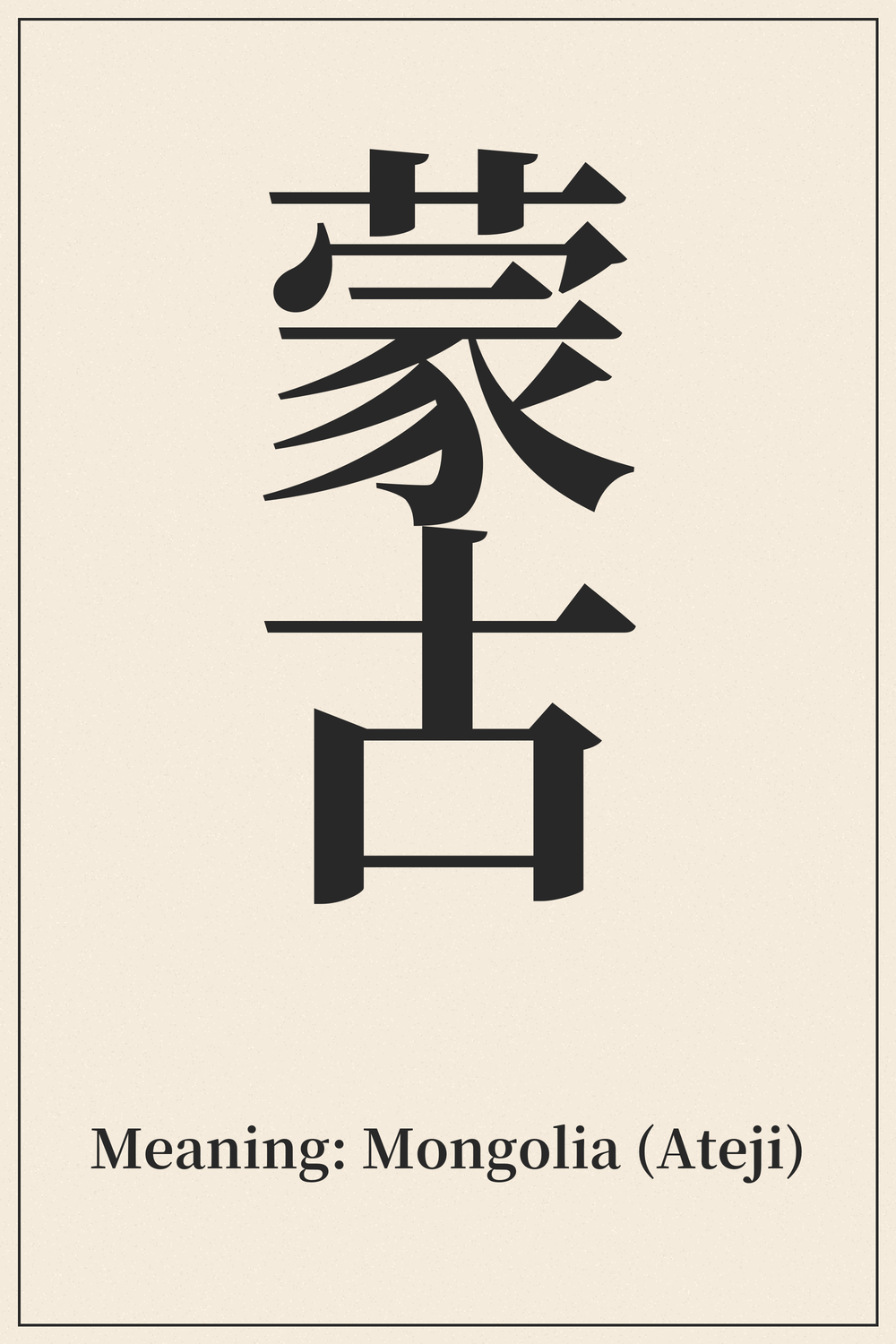
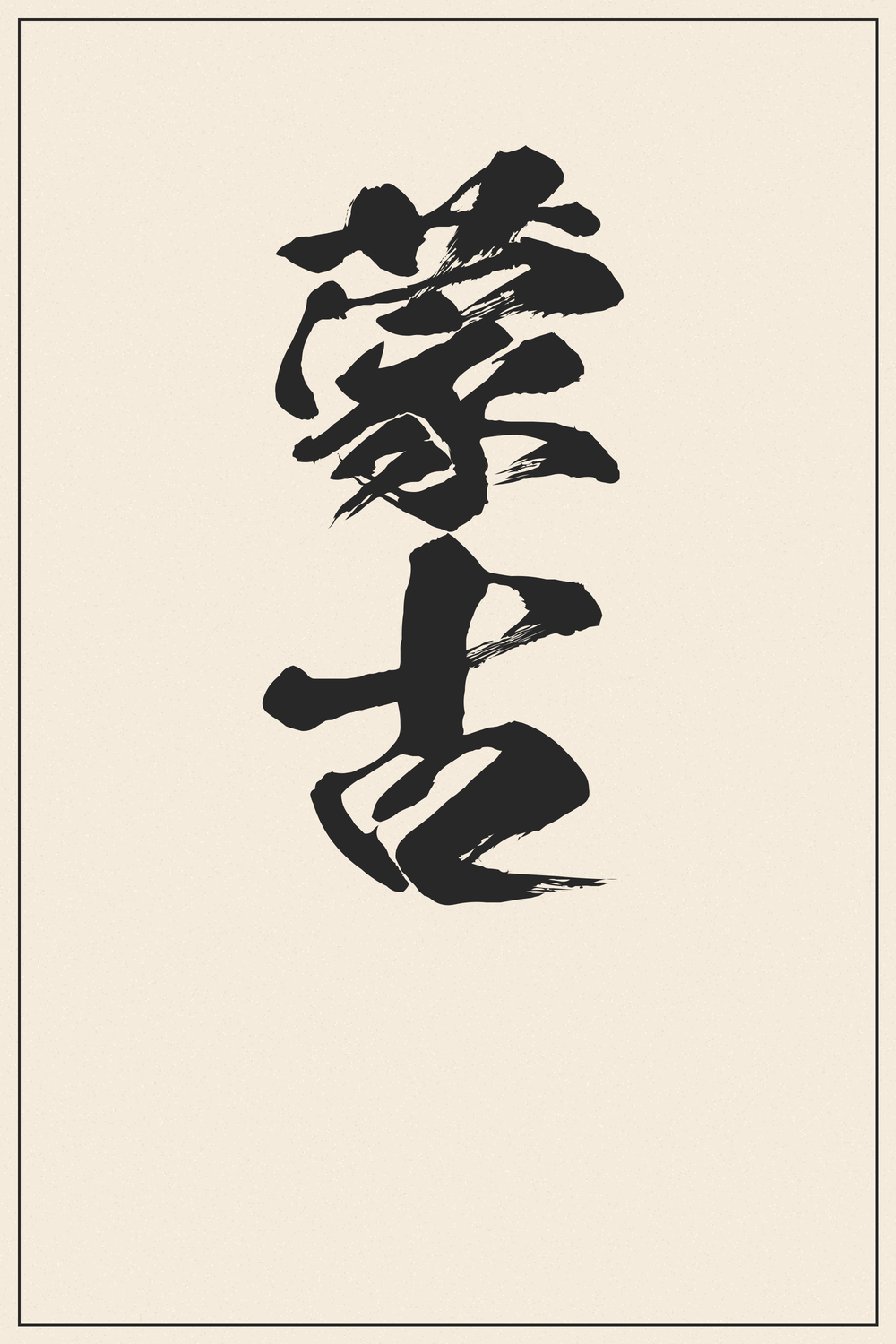
Discover the unique representation of Mongolia in Japanese Kanji, known as 蒙古 (Mouko). This fascinating term highlights how foreign names are phonetically adapted into the Japanese writing system.
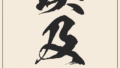
The atmosphere of a Kanji character changes dramatically depending on the font style. A character that looks elegant in a brush style might look bold and modern in a different font.
Recommendation: Since a tattoo is permanent, we strongly recommend comparing various font styles beyond what is shown here. Use our designs as a trusted reference for the correct structure, but feel free to explore different artistic variations to find the perfect match for your vision.
The Deep Meaning Behind 蒙古
The Kanji compound 蒙古 (Mouko) serves as an ateji, a phonetic representation, for the country Mongolia. This means the characters were chosen primarily for their sounds (mou-ko) rather than their intrinsic meanings, to approximate the pronunciation of ‘Mongol’.
Historically, ateji were common for translating foreign terms and names into Japanese before more standardized transliteration methods became widespread. While the individual characters might seem unrelated to the modern perception of Mongolia, their combination captured the sound for a Japanese audience, reflecting a specific historical approach to foreign nomenclature.
Kanji Breakdown
The compound 蒙古 consists of two distinct Kanji, each contributing to its phonetic representation rather than its literal meaning in this context.
Meaning: This Kanji broadly means ‘to receive, to suffer, to cover, to be ignorant, dark’. In the context of ‘Mouko’, its primary role is phonetic, providing the ‘mou’ sound.
Meaning: This Kanji signifies ‘old, ancient, classic’. For ‘Mouko’, it contributes the ‘ko’ sound, completing the phonetic approximation.
Conclusion
The Kanji 蒙古 (Mouko) offers a glimpse into the historical linguistic adaptations of foreign names into Japanese. Its significance lies not in its literal character meanings, but in its phonetic role in representing the nation of Mongolia, highlighting a unique cultural and linguistic practice.
For those considering this Kanji, appreciate its unique phonetic purpose and its connection to a rich cultural history. It stands as a testament to the versatility of the Japanese writing system in incorporating foreign terms, serving as a specific ateji for a country name.
Comments