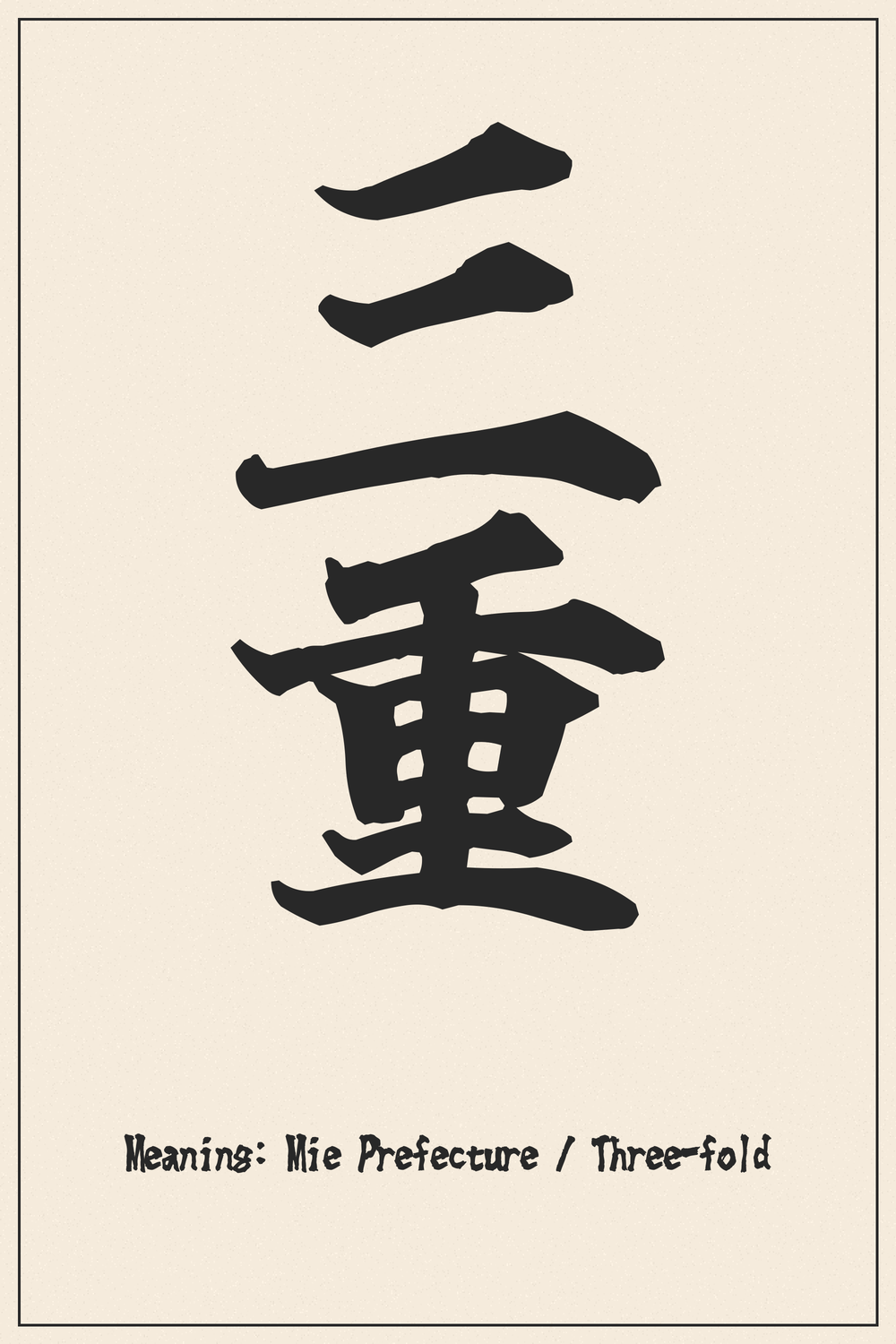
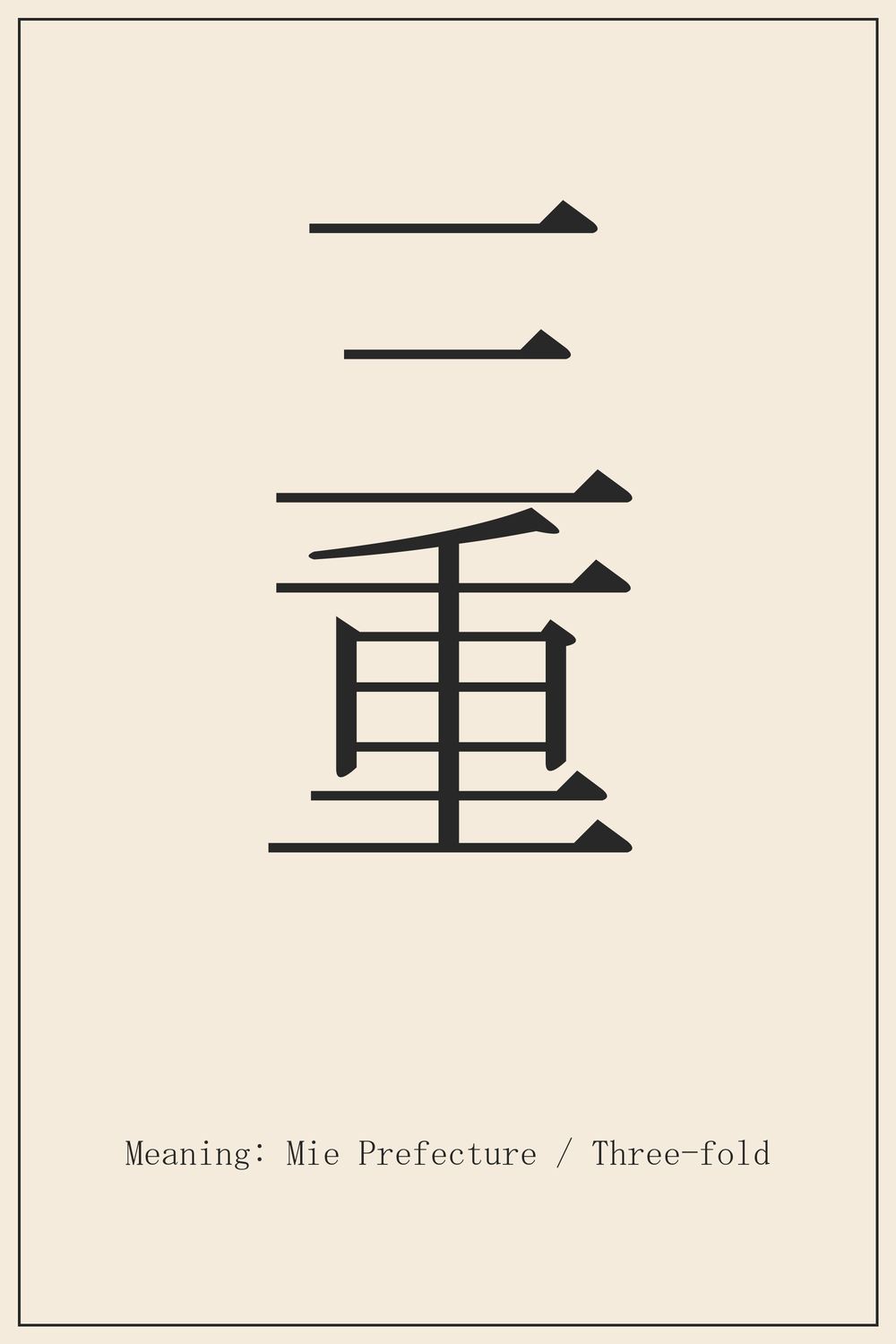
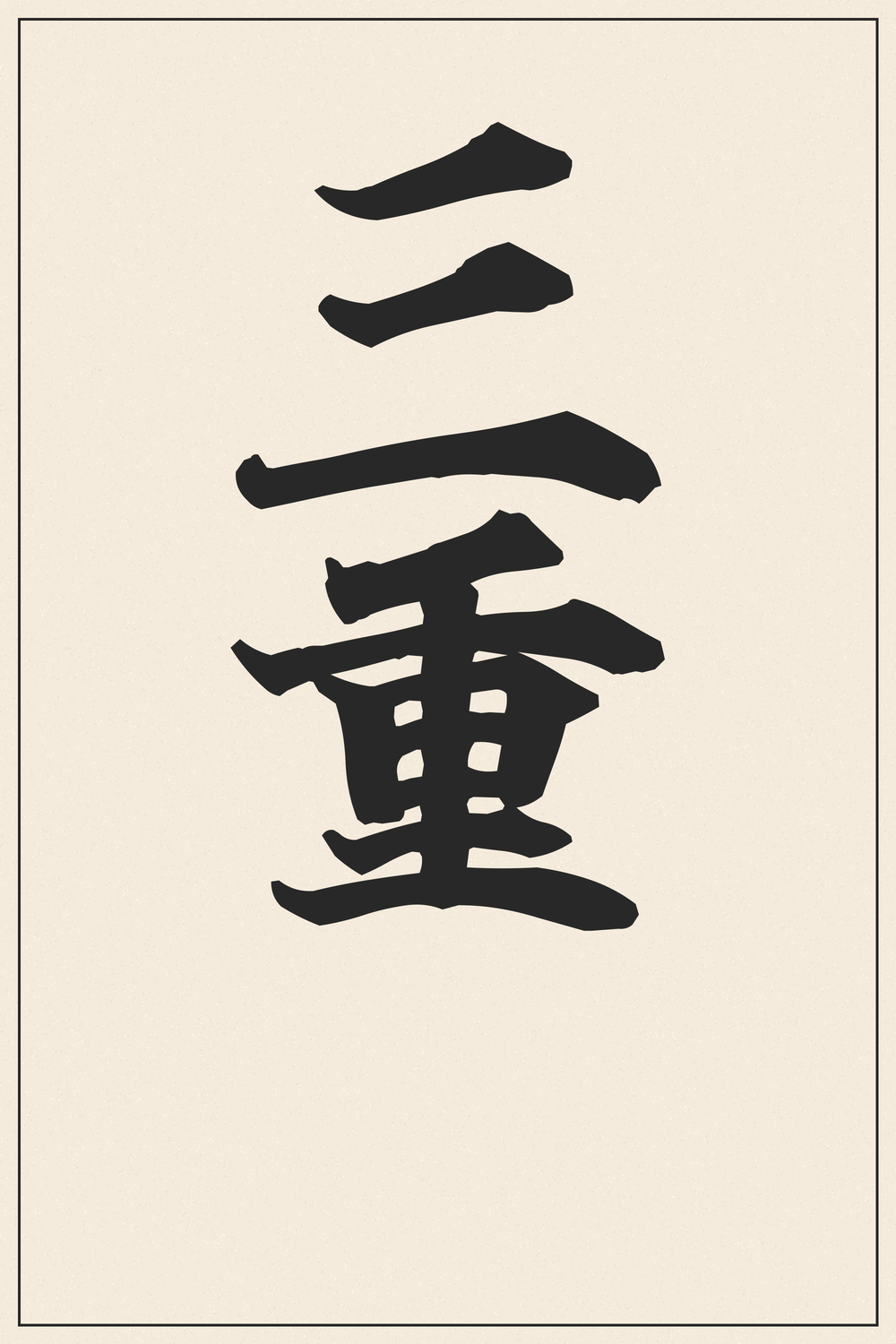
Embrace the spirit of a significant Japanese region with the Kanji ‘三重’. This character combination represents Mie Prefecture, a place steeped in ancient history and natural beauty.
The atmosphere of a Kanji character changes dramatically depending on the font style. A character that looks elegant in a brush style might look bold and modern in a different font.
Recommendation:
Since a tattoo is permanent, we strongly recommend comparing various font styles beyond what is shown here. Use our designs as a trusted reference for the correct structure, but feel free to explore different artistic variations to find the perfect match for your vision.
The Deep Meaning Behind 三重
The name ‘三重’ (Mie) literally translates to ‘three-fold’ or ‘three layers’. Historically, the origin of the prefecture’s name is debated, with one prominent theory linking it to ‘三重津’ (Mie-tsu), an ancient port mentioned in historical texts like the Kojiki. Another theory suggests it comes from ‘御杖三重’ (Mitsu-e Mie), referring to the multiple layers of imperial walking staffs used during ancient pilgrimages.
Mie Prefecture is located in the Kansai region of Honshu and is perhaps most famous as home to the Ise Grand Shrine (伊勢神宮), one of Japan’s most sacred Shinto sites. The region boasts a rich tapestry of cultural heritage, stunning coastal landscapes, and distinctive local cuisine, making it a deeply cherished part of Japan’s identity.
Kanji Breakdown
The Kanji ‘三重’ is a compound of two characters, each contributing to its overall meaning and historical context.
Meaning: Three. This character is a simple pictogram representing three horizontal strokes, signifying the number three. It forms the numerical prefix of ‘three-fold’ in Mie.
Meaning: Heavy, serious, layer, fold. This character depicts a person (人) standing beneath multiple layers or possibly a heavy object, conveying the idea of ‘layers’ or ‘heaviness’. In ‘三重’, it specifically denotes ‘fold’ or ‘layer’, completing the ‘three-fold’ meaning.
Conclusion
Choosing ‘三重’ as a Kanji signifies more than just a place; it embodies a connection to Japan’s ancient spiritual heartland and its layered history. It represents a region of profound cultural significance, from its sacred shrines to its picturesque landscapes.
For a tattoo, ‘三重’ is a meaningful choice that honors a specific part of Japan’s heritage. Its elegant simplicity and deep regional association make it a distinctive and personal symbol for anyone looking to carry a piece of Japanese history and geography with them.
Comments