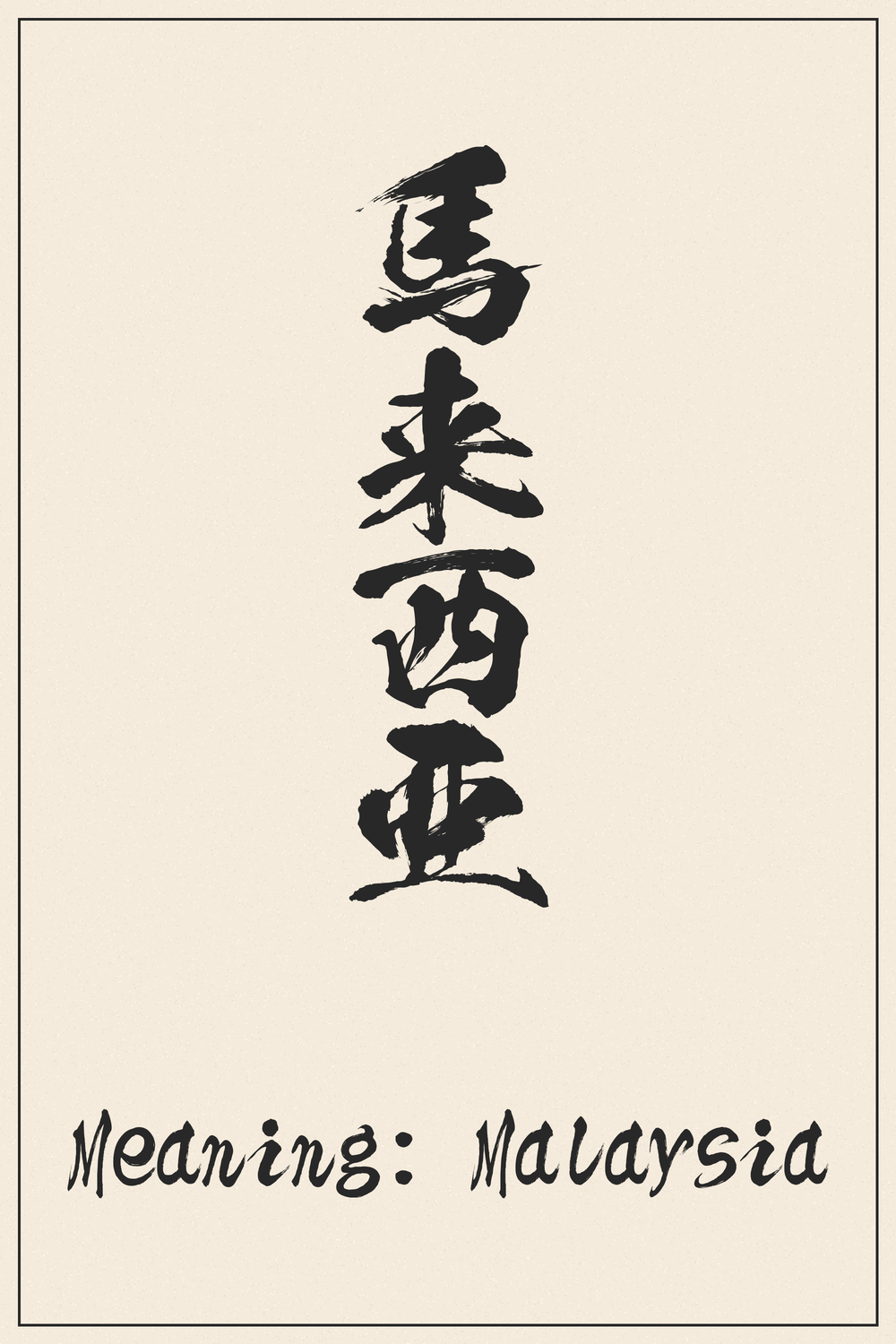
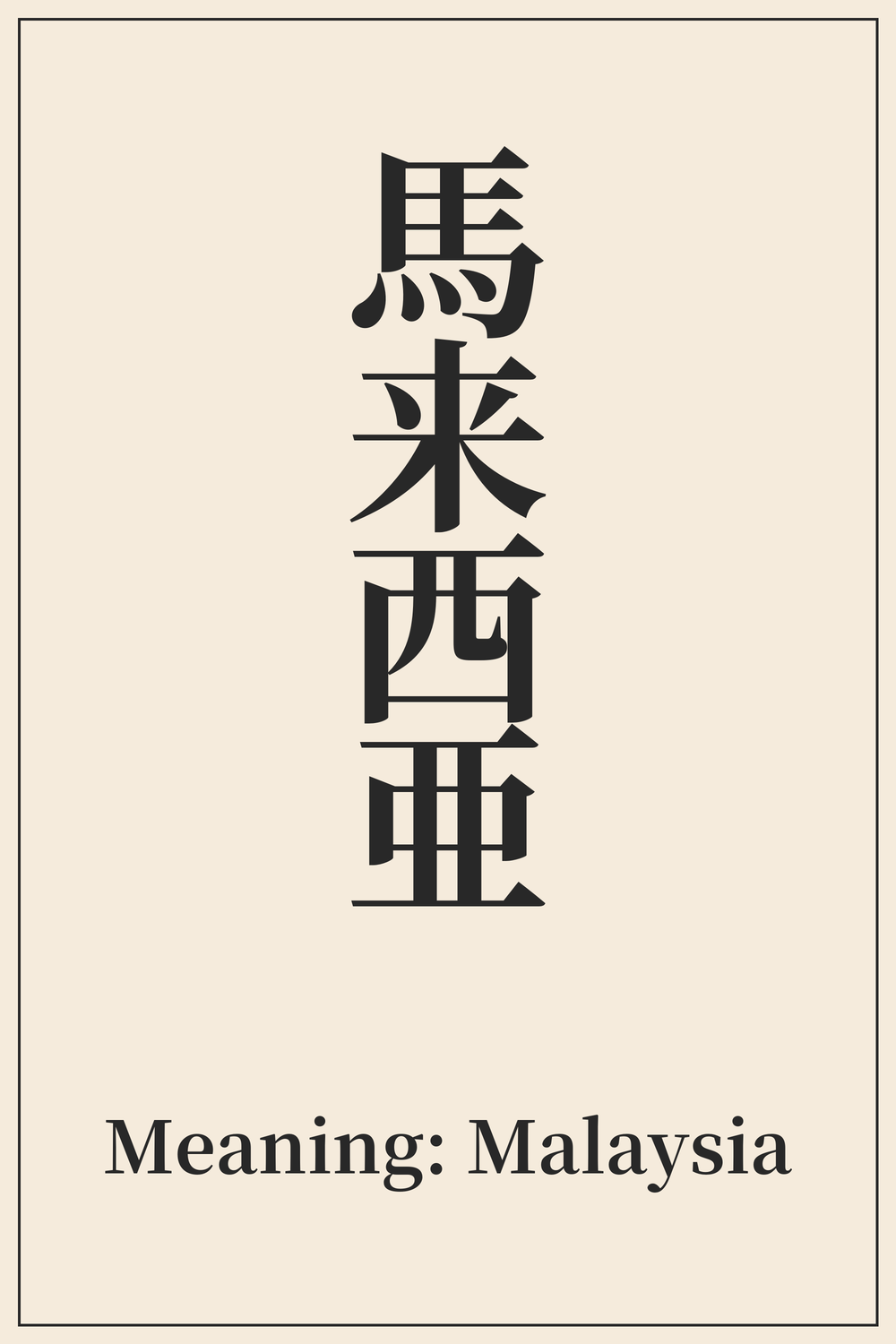
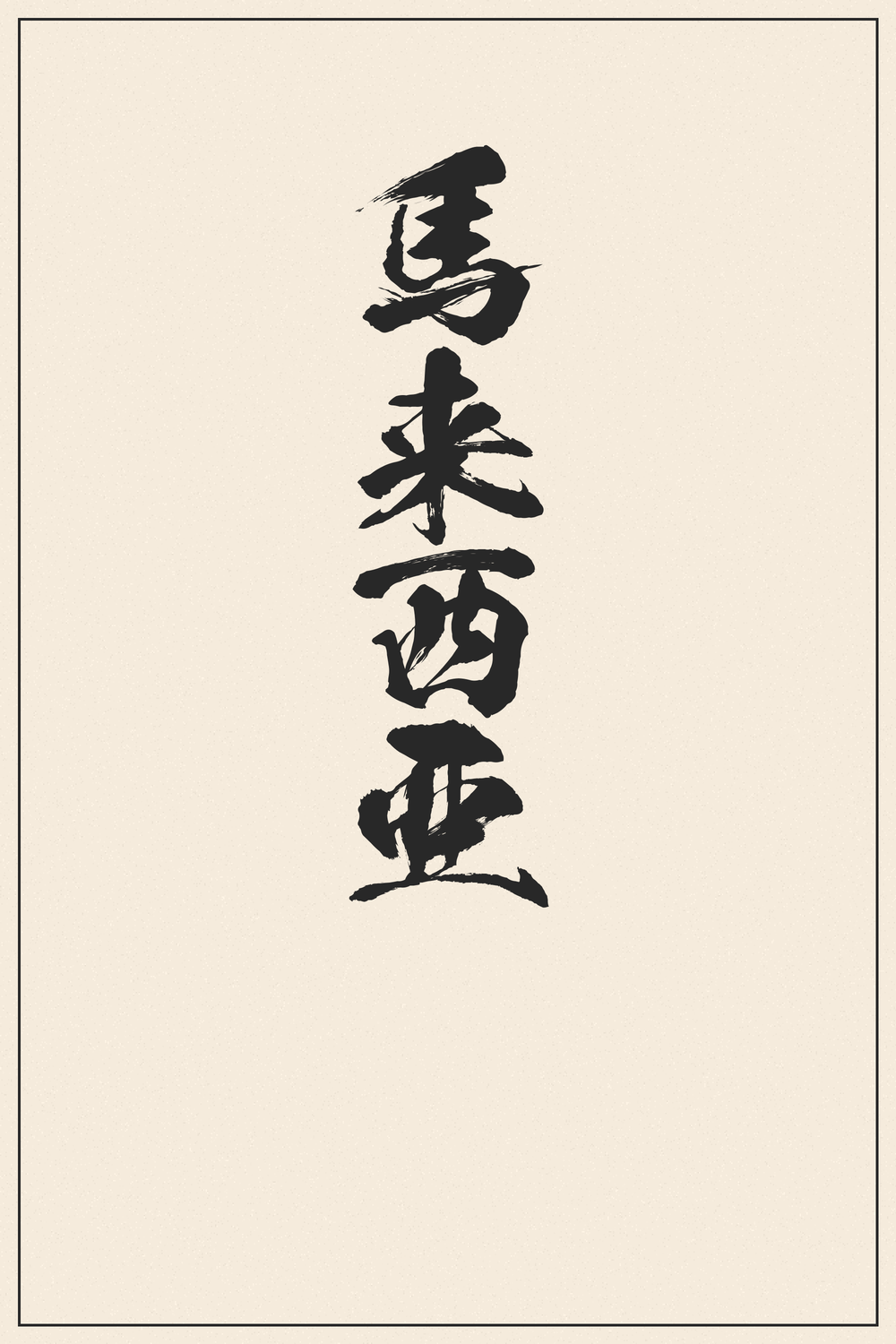
Uncover the unique linguistic artistry of Japanese, where sound meets meaning to capture distant lands. 馬来西亜 (Baraishia) beautifully illustrates this by representing the vibrant nation of Malaysia through phonetic characters.
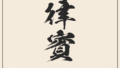
The atmosphere of a Kanji character changes dramatically depending on the font style. A character that looks elegant in a brush style might look bold and modern in a different font.
Recommendation: Since a tattoo is permanent, we strongly recommend comparing various font styles beyond what is shown here. Use our designs as a trusted reference for the correct structure, but feel free to explore different artistic variations to find the perfect match for your vision.
The Deep Meaning Behind 馬来西亜
馬来西亜 (Baraishia) is a prime example of ateji (当て字), a Japanese practice of using kanji characters primarily for their phonetic values, rather than their inherent meanings, to represent foreign words or names. In this case, these four characters combine to phonetically approximate the sound of “Malaysia.”
While the individual characters carry their own traditional meanings, their collective purpose here is solely to convey the sound of the country’s name. This method of transliteration allows Japan to integrate foreign place names into its written language in a culturally coherent manner, making them easily recognizable to Japanese speakers.
Kanji Breakdown
The characters in 馬来西亜 are used for their sounds. Here’s a look at their individual, literal meanings:
Meaning: Horse. This character depicts the animal itself, with its mane, legs, and tail clearly represented.
Meaning: Come, next. This kanji originally depicted wheat or barley, symbolizing the ‘coming’ of the harvest season.
Meaning: West. This character is thought to have originated from the depiction of a bird’s nest or a bird returning to its nest in the west at sunset.
Meaning: Asia, second, sub-. Often used phonetically for foreign names, or as a prefix signifying ‘sub’ or ‘inferior.’ In the context of “Asia” (亜細亜), it functions as a phonetic component.
Conclusion
馬来西亜 (Baraishia) is a fascinating example of how Japanese kanji are employed phonetically to represent global names. While the characters individually mean ‘horse,’ ‘come,’ ‘west,’ and ‘sub’ respectively, their combined purpose is to accurately spell out ‘Malaysia’ for Japanese speakers.
For those seeking a tattoo that reflects a connection to Malaysia and an appreciation for Japanese linguistic ingenuity, 馬来西亜 offers a unique and culturally rich choice. Its phonetic nature highlights the adaptability of kanji, making it a distinctive and meaningful representation.
Comments