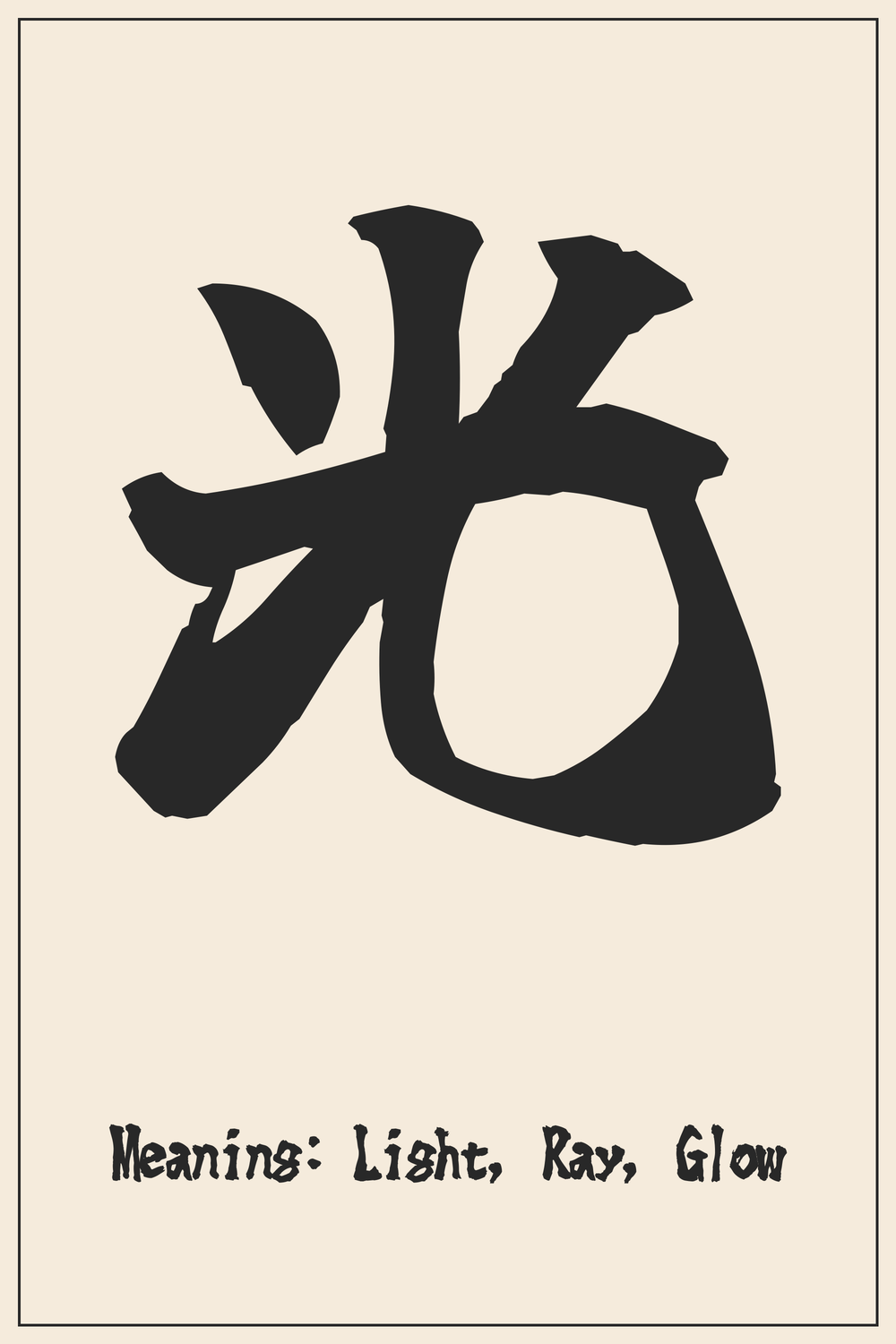
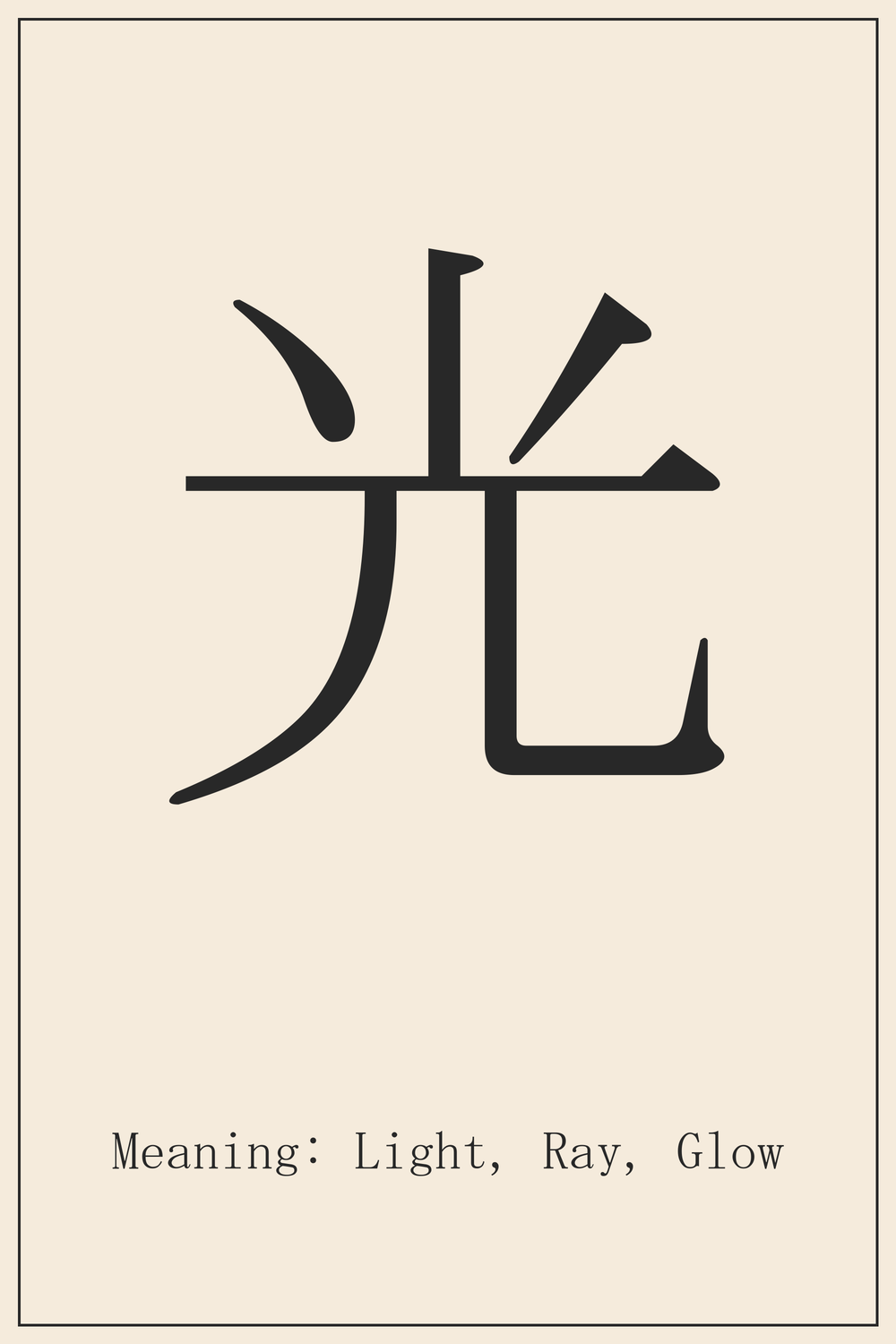
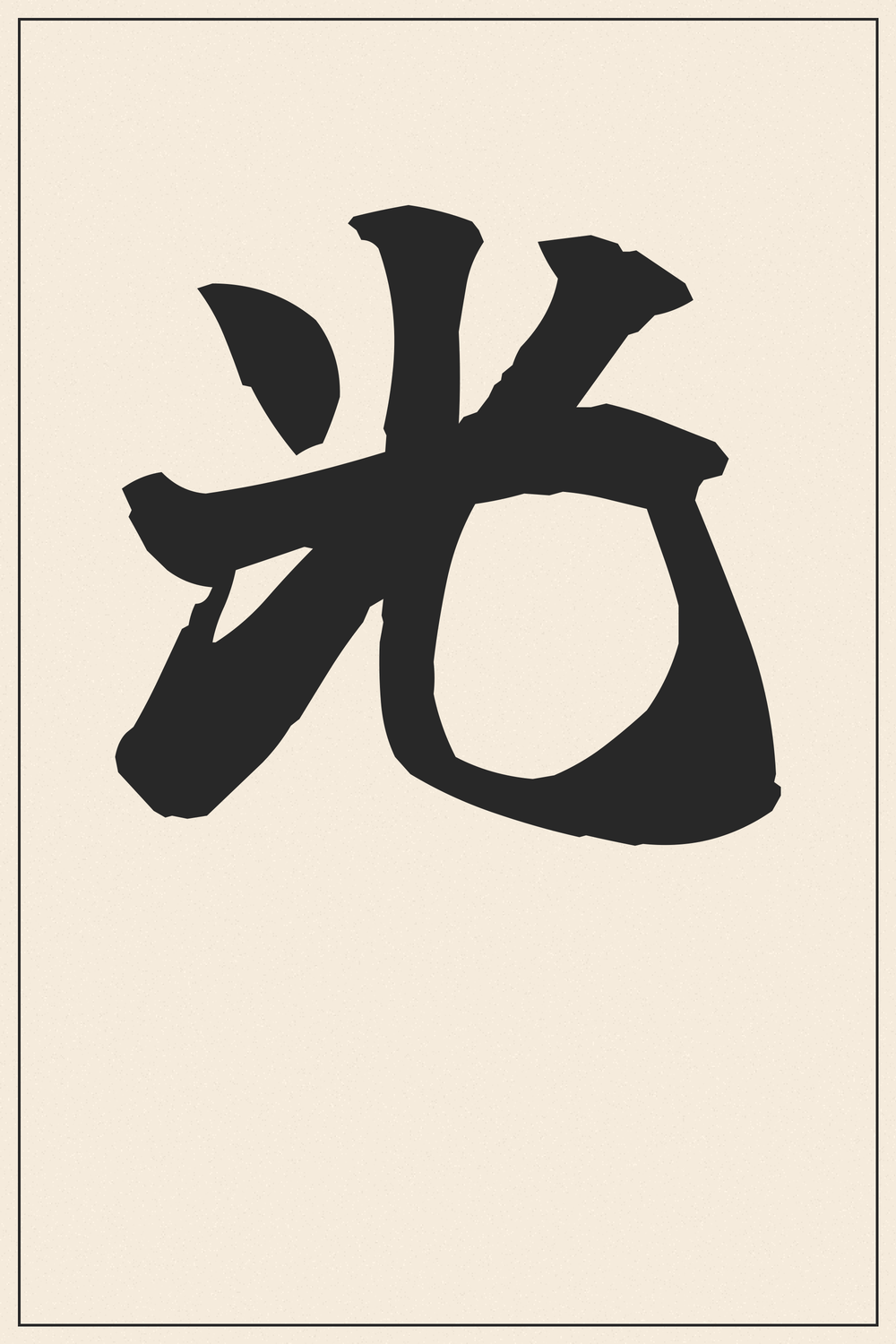
The Kanji 光 (Hikari) illuminates the path, representing not just physical radiance but also hope, guidance, and enlightenment. It’s a symbol of clarity and the essence of existence, profoundly impacting culture and personal spirit.
The atmosphere of a Kanji character changes dramatically depending on the font style. A character that looks elegant in a brush style might look bold and modern in a different font.
Recommendation:
Since a tattoo is permanent, we strongly recommend comparing various font styles beyond what is shown here. Use our designs as a trusted reference for the correct structure, but feel free to explore different artistic variations to find the perfect match for your vision.
The Deep Meaning Behind 光
The Kanji 光 (Hikari) is ancient, originating from a pictograph depicting a person (儿) with fire (火, often stylized or simplified as the top component) shining above them. This imagery directly conveys the concept of ‘light’ or ‘illumination’ emanating from a source.
In Japanese culture, 光 holds profound significance, often associated with hope, enlightenment, and divine presence. It is a common motif in poetry, art, and spirituality, representing clarity of mind, guidance in darkness, and the fundamental energy of life itself. It frequently appears in names, signifying a bright future or character.
Kanji Breakdown
The Kanji 光 is composed of two primary elements that visually represent its meaning:
Fire, Flame: The upper component of 光 symbolizes fire or a flame, the ultimate source of light in ancient times.
Person, Human Legs: The lower component represents a kneeling person, suggesting the act of someone being illuminated or basking in the light.
Conclusion
The Kanji 光 is more than just a character for ‘light’; it embodies aspiration, truth, and the enduring human spirit. Its elegance and deep philosophical resonance make it a powerful symbol for personal expression.
Choosing 光 as a tattoo signifies an embrace of positivity, a commitment to finding clarity, and a dedication to being a source of hope. It is a timeless emblem that resonates with universal themes of guidance and inspiration.
Comments