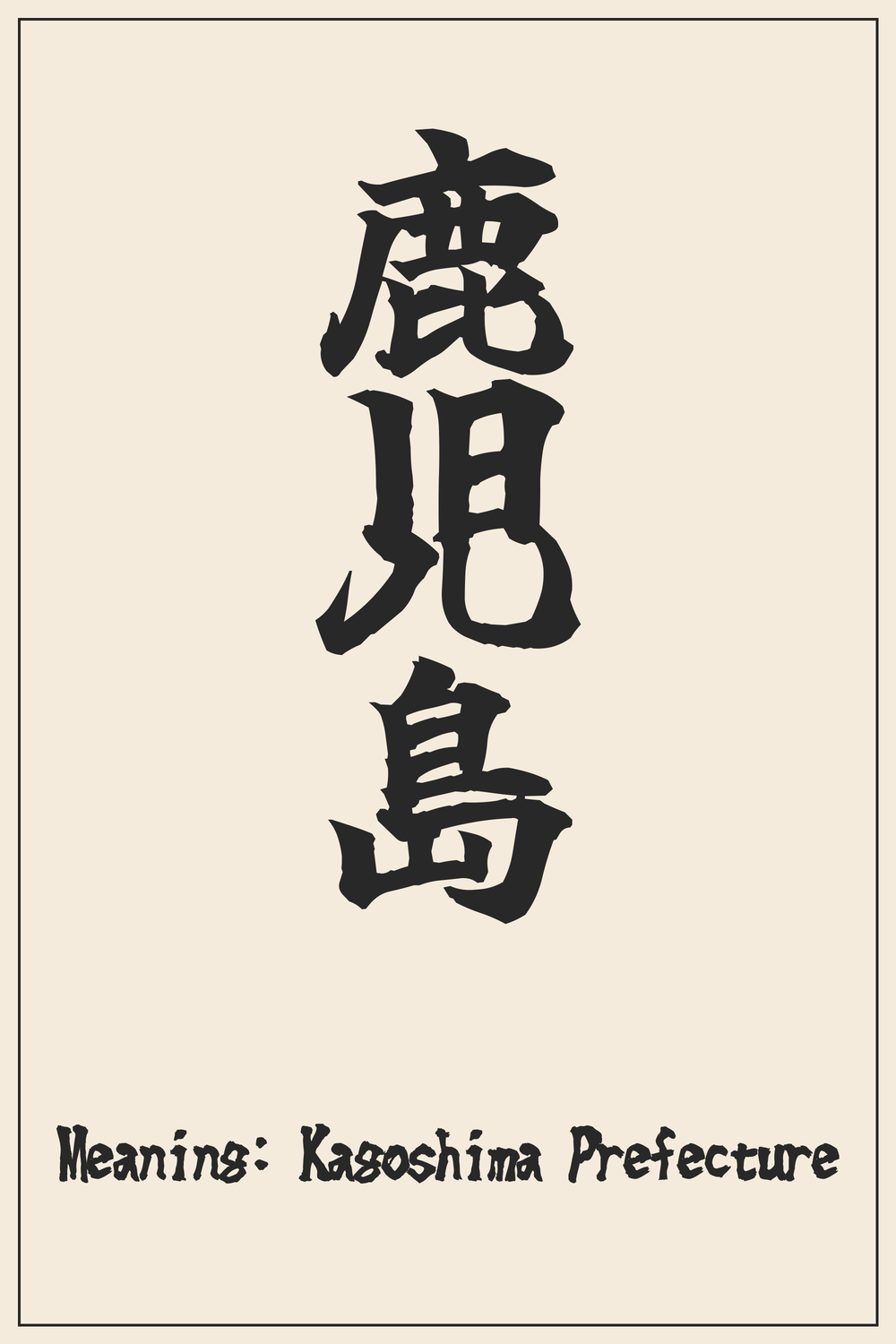
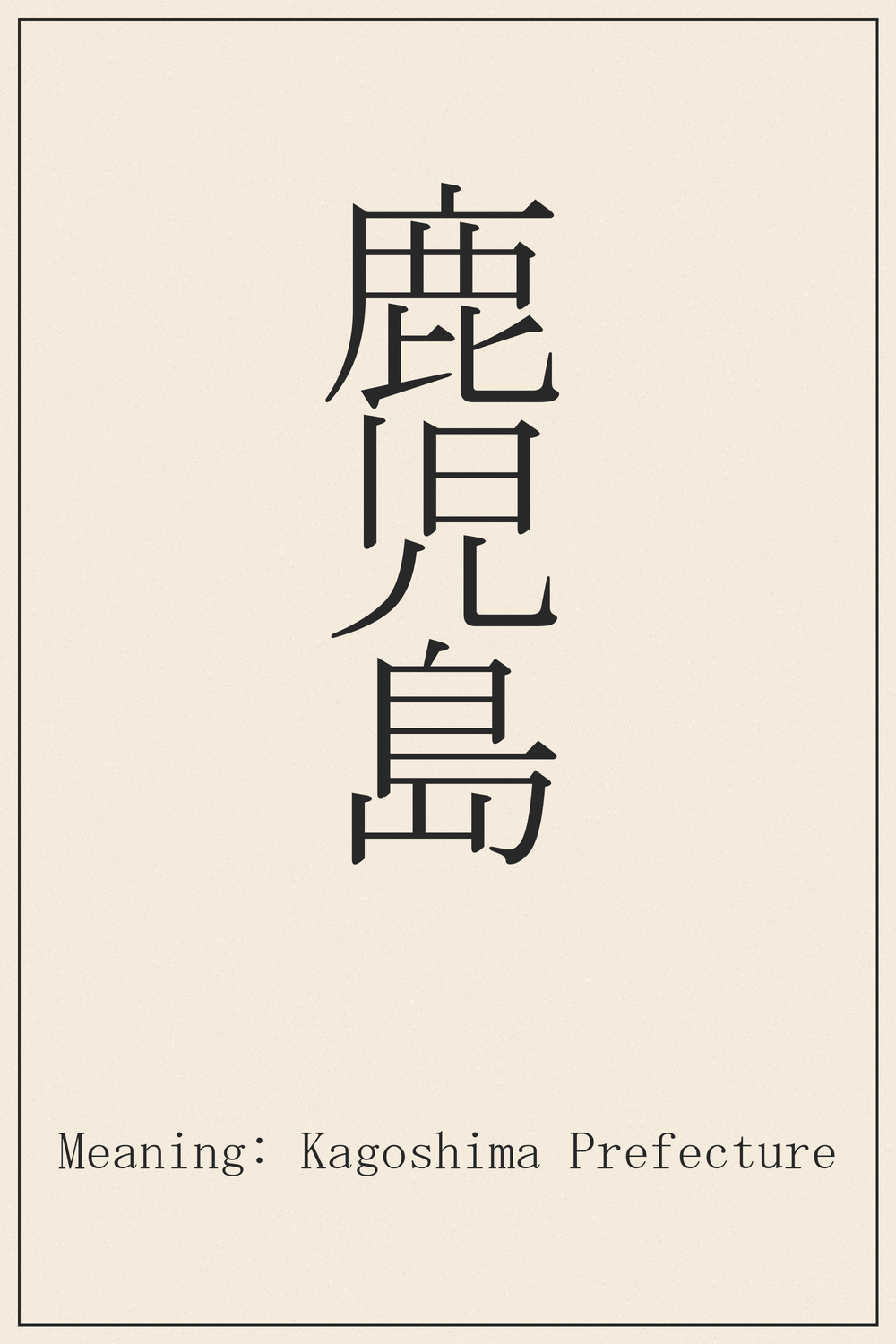

鹿児島 represents Kagoshima, a vibrant prefecture in southern Japan. This Kanji encapsulates the region’s unique identity, from its active volcano to its rich history and natural beauty.
The atmosphere of a Kanji character changes dramatically depending on the font style. A character that looks elegant in a brush style might look bold and modern in a different font.
Recommendation:
Since a tattoo is permanent, we strongly recommend comparing various font styles beyond what is shown here. Use our designs as a trusted reference for the correct structure, but feel free to explore different artistic variations to find the perfect match for your vision.
The Deep Meaning Behind 鹿児島
鹿児島 is primarily a phonetic rendering of an ancient place name. The characters themselves carry literal meanings but combine to form the name of this distinctive Japanese prefecture. Its historical significance as a former feudal domain adds layers to its identity.
Kagoshima Prefecture is famed for Sakurajima, an active volcano, its subtropical climate, and its unique dialect and cuisine. It holds a pivotal place in Japanese history, particularly during the Meiji Restoration, making the Kanji a powerful symbol of regional pride and historical depth.
Kanji Breakdown
The compound 鹿児島 is composed of three characters, each contributing to the phonetic representation of this significant Japanese prefecture.
Meaning: Deer. The character 鹿 depicts a deer, with its antlers and body. In the context of Kagoshima, it is likely used for its phonetic value rather than its literal meaning, forming part of the historical name.
Meaning: Child. The character 児 represents a child, often depicted as a small human figure. Like 鹿, its inclusion in 鹿児島 is primarily phonetic, contributing to the ancient sound of the place name.
Meaning: Island. 島 clearly depicts an island, with birds (or mountains) on a mountain radical over a bird radical, suggesting land surrounded by water. This character directly reflects Kagoshima’s geography, surrounded by numerous islands and the sea.
Conclusion
鹿児島 is more than just a place name; it’s a testament to a region rich in natural wonders, historical importance, and unique cultural identity. It represents a deep connection to Japan’s diverse geography and heritage.
For those seeking a Kanji tattoo that embodies a specific Japanese region, its volcanic power, and island beauty, 鹿児島 offers a distinctive and meaningful choice. It is a symbol that resonates with a sense of place and profound historical narratives.
Comments