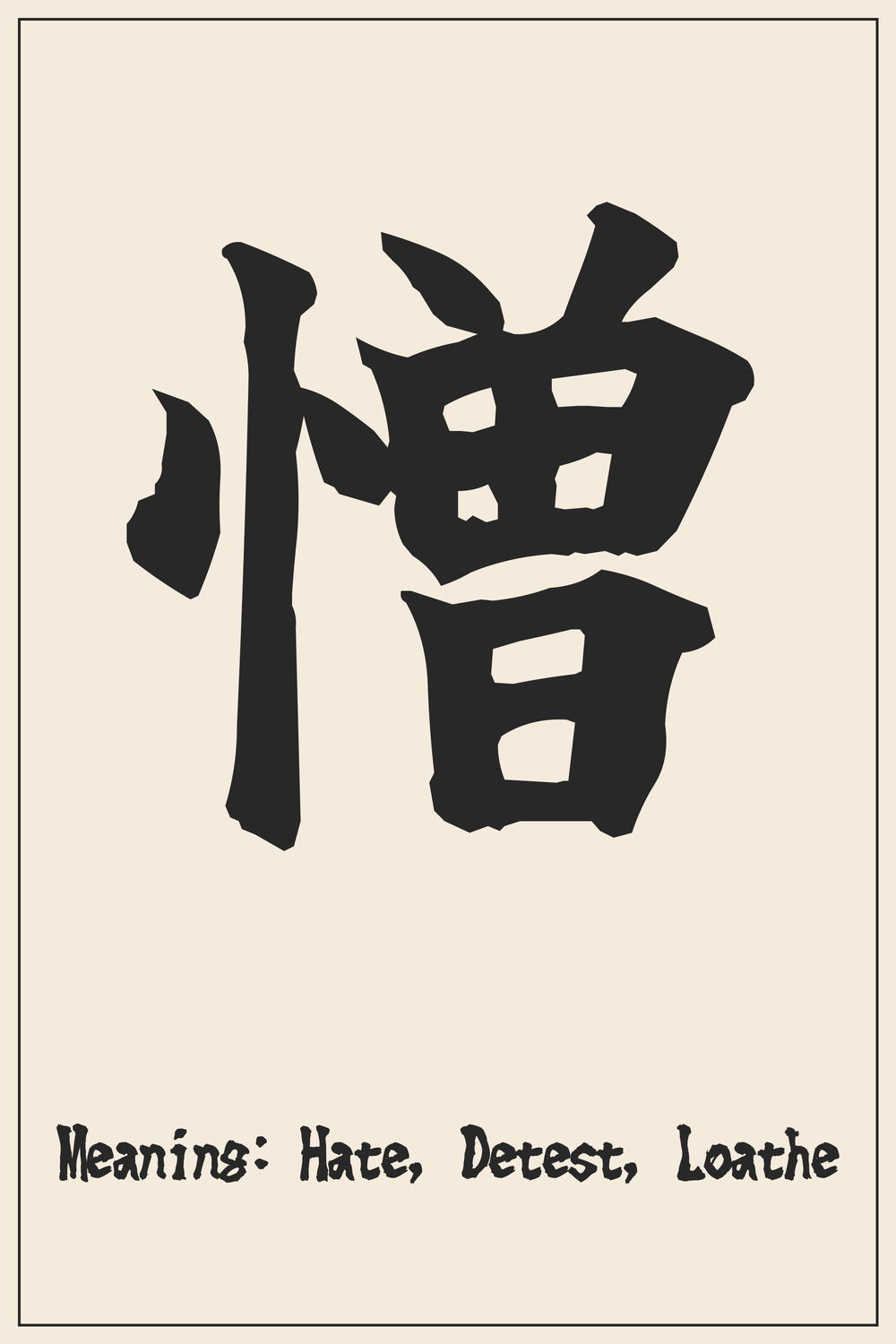
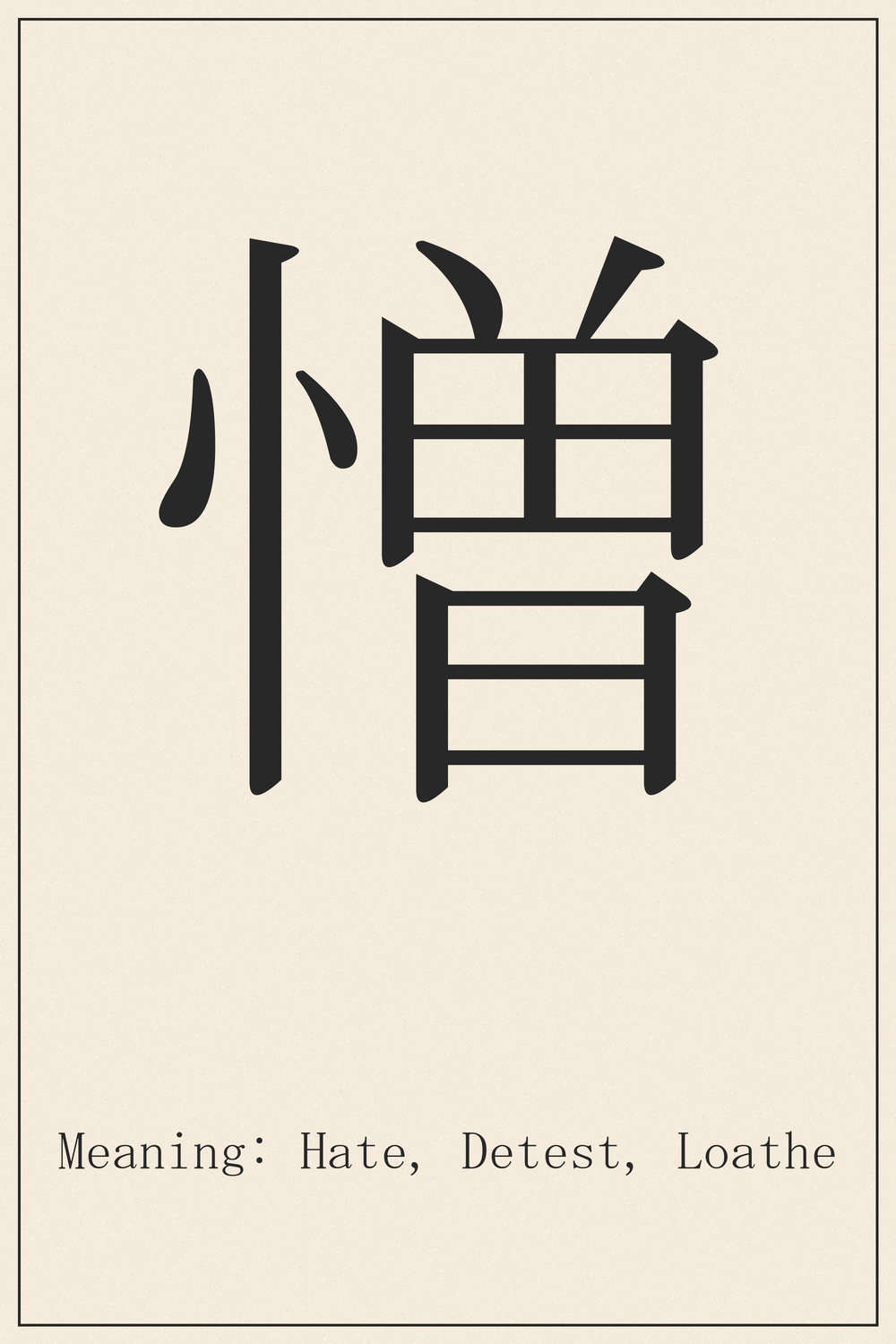
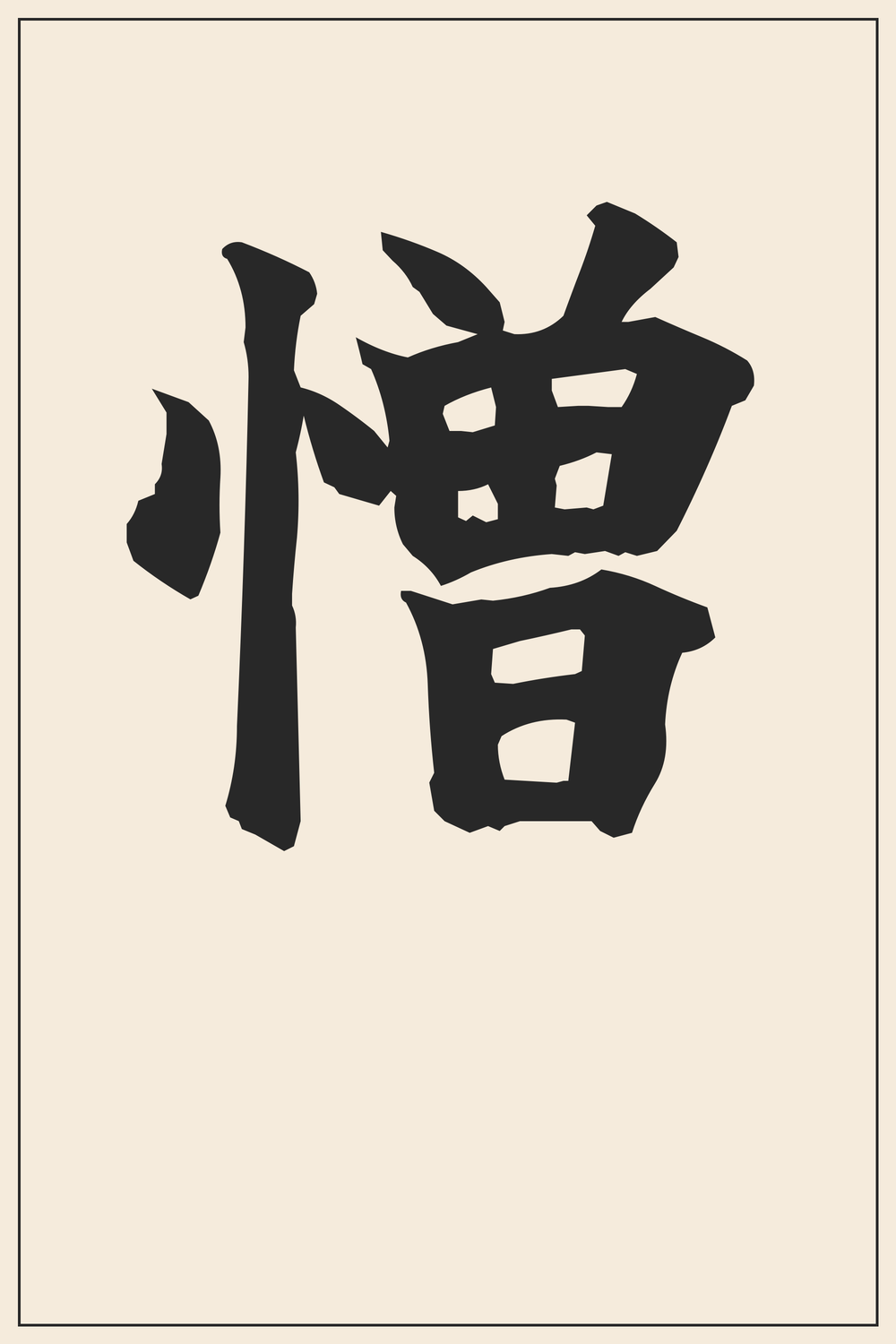
The Kanji 憎 embodies the powerful and often destructive emotion of hate. It represents a deep-seated aversion, a feeling that can consume the human spirit.
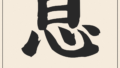
The atmosphere of a Kanji character changes dramatically depending on the font style. A character that looks elegant in a brush style might look bold and modern in a different font.
Recommendation:
Since a tattoo is permanent, we strongly recommend comparing various font styles beyond what is shown here. Use our designs as a trusted reference for the correct structure, but feel free to explore different artistic variations to find the perfect match for your vision.
The Deep Meaning Behind 憎
The Kanji 憎 (niku) profoundly represents the emotion of hatred. Its etymology reveals a combination of elements that underscore the depth and intensity of this feeling. It is not merely a transient dislike but a powerful, often consuming aversion.
In Japanese culture, while harmony (wa) is highly valued, the existence of negative emotions like hate is undeniably recognized in literature, drama, and historical accounts. This Kanji encapsulates the darker side of human emotion, frequently appearing in narratives of conflict, revenge, and deep personal struggle, offering a stark portrayal of the human condition.
Kanji Breakdown
The character 憎 is composed of two significant components:
Heart/Mind Radical: Known as ‘risshinben’, this radical is a common component in Kanji related to emotions, feelings, and mental states. Its presence signifies that 憎 is an emotion originating from the heart or mind.
Formerly/Repeatedly: This component acts as a phonetic element, providing the ‘zo’ sound (though the common kun’yomi is ‘niku’). Beyond its sound, ‘曽’ can also carry a nuance of something ‘formerly’ or ‘repeatedly’ occurring, suggesting that hatred is often a deep-seated, perhaps accumulated, or persistent emotion rather than a fleeting one.
Conclusion
The Kanji 憎 is a powerful symbol of deep hatred, aversion, and detestation. While it represents a profound aspect of the human emotional spectrum, its intensely negative connotation makes it a sensitive choice for personal expression.
For those considering a Kanji tattoo, it is crucial to carefully weigh the message conveyed. While some may wish to express a defiance or acknowledgment of internal struggles, the direct display of ‘憎’ might carry unintended implications. Reflection on the enduring meaning is always advised for such a permanent inscription.
Comments