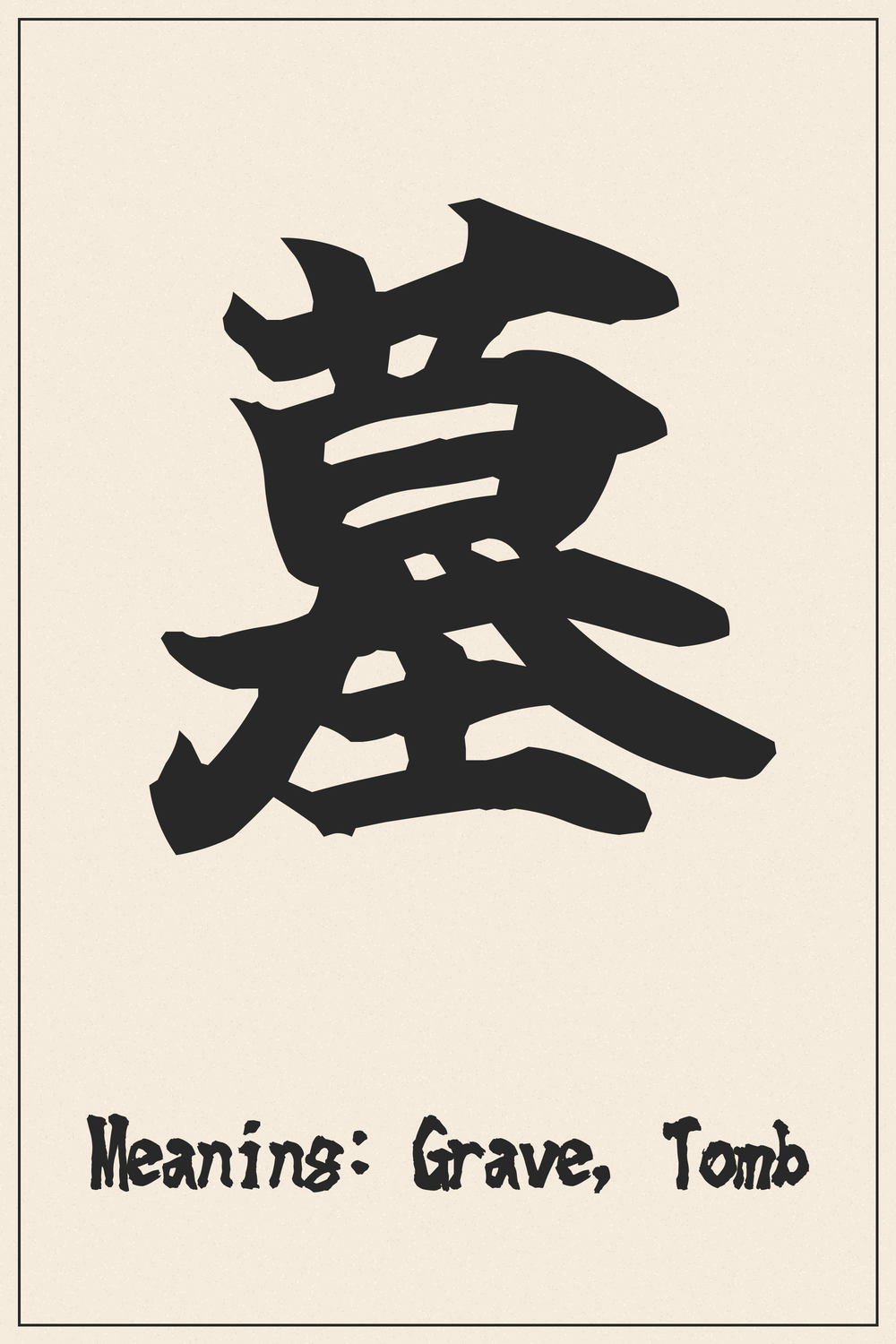
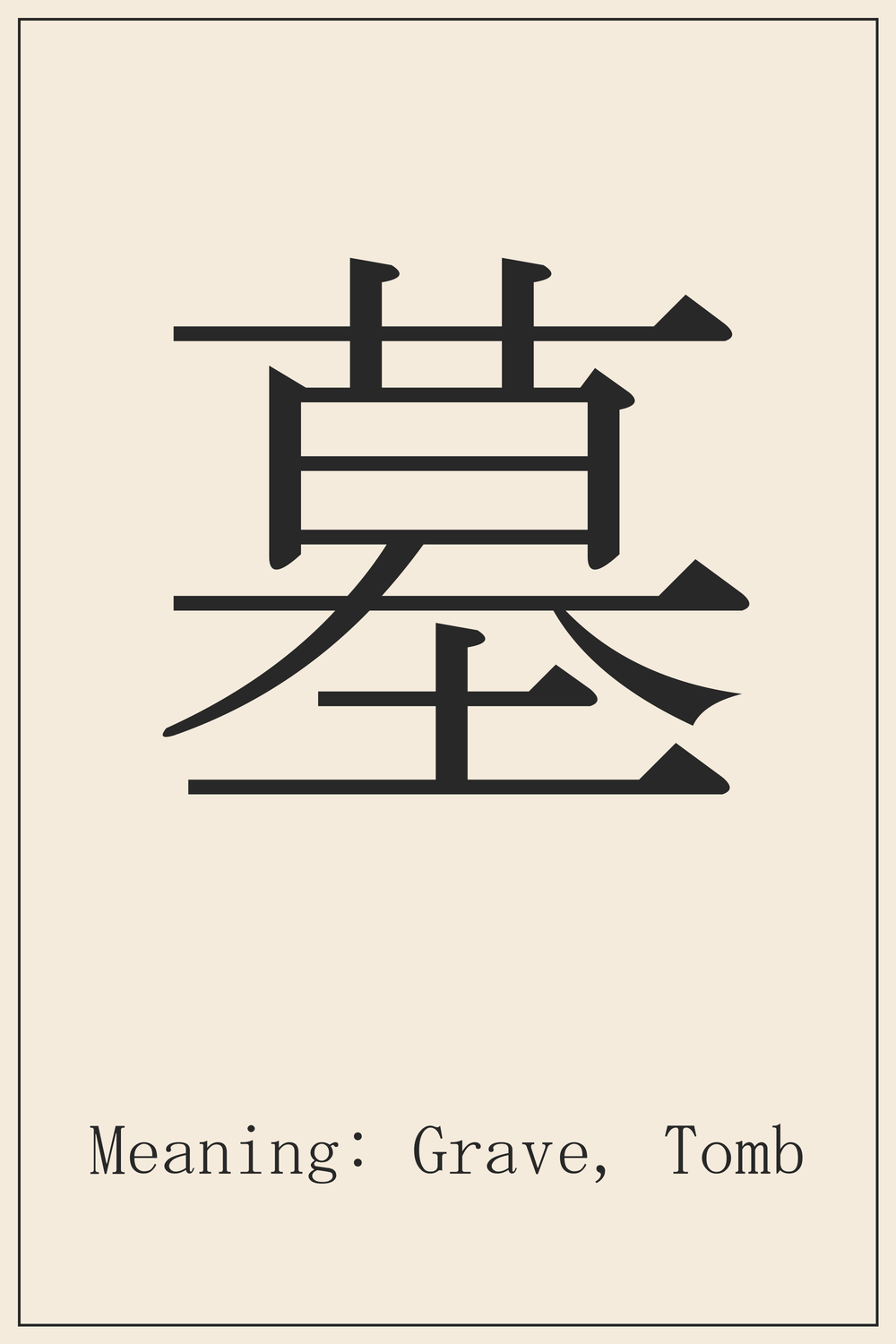
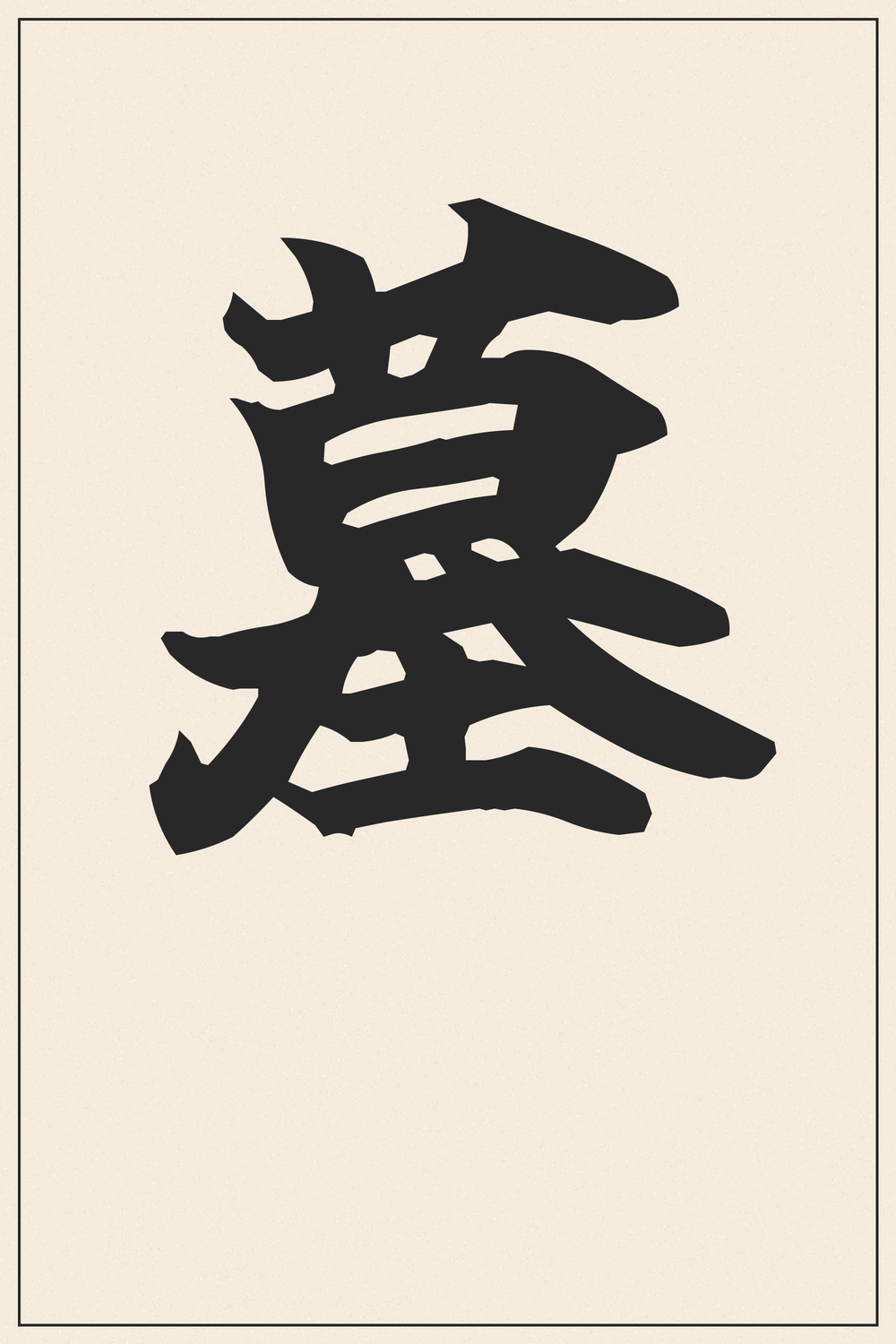
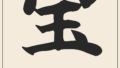
The Kanji “墓” (Baka/Bo) encapsulates the solemn yet profound concept of a grave or tomb, symbolizing memory, respect, and the eternal cycle of existence. It represents a place of final rest and a point of connection between the living and the departed.
The atmosphere of a Kanji character changes dramatically depending on the font style. A character that looks elegant in a brush style might look bold and modern in a different font.
Recommendation:
Since a tattoo is permanent, we strongly recommend comparing various font styles beyond what is shown here. Use our designs as a trusted reference for the correct structure, but feel free to explore different artistic variations to find the perfect match for your vision.
The Deep Meaning Behind 墓
The character 墓 is a phono-semantic compound. It combines 莫 (bò), meaning “to set/sink,” “sunset,” or “do not,” which functions as the phonetic component and also suggests the idea of “covering” or “concealing.” The semantic component is 土 (do), meaning “earth” or “soil,” indicating a mound of earth covering the deceased.
Together, they depict a covered mound of earth, signifying a grave. In Japanese culture, 墓 plays a crucial role in ancestor worship and family continuity. Visiting family graves (お墓参り, ohaka-mairi) is an important ritual, especially during Obon and other holidays, to show respect and maintain a connection with deceased relatives. These visits involve cleaning the grave, offering flowers and incense, and praying, reinforcing familial bonds and cultural traditions.
Kanji Breakdown
The Kanji 墓 is composed of two primary elements, each contributing to its overall meaning and sound.
Meaning: Sunset, dusk, do not, nothing.
This component is complex but functions as both a phonetic indicator for “Bo” and subtly implies the idea of something being covered or passing away, akin to the setting sun, which aligns with the concept of a grave.
Meaning: Earth, soil, ground.
This radical clearly signifies the material aspect of a grave, being a mound of earth or a burial site. It grounds the meaning of the character in the physical world.
Conclusion
The Kanji 墓 is a powerful symbol of remembrance, respect, and the cycle of life and death, deeply embedded in Japanese cultural practices surrounding ancestor veneration. It evokes a sense of solemnity and connection to heritage, representing the final resting place and a locus of memory.
Choosing 墓 as a tattoo signifies a profound acknowledgment of one’s lineage, a personal connection to those who have passed, and a contemplation of mortality and legacy. It serves as a reminder of respect for the past and the enduring presence of memory, making it a meaningful and deeply personal choice for ink.
Comments