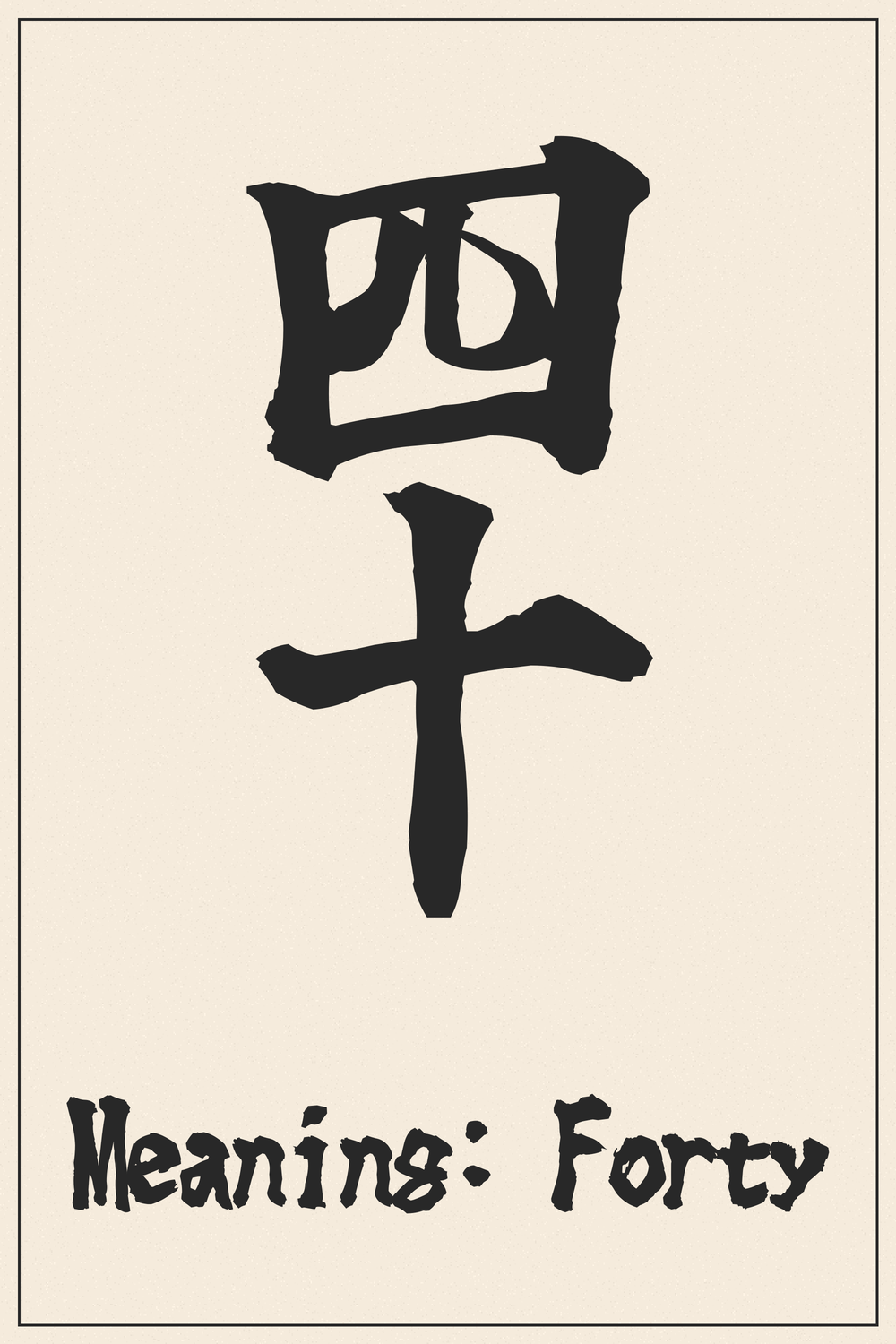
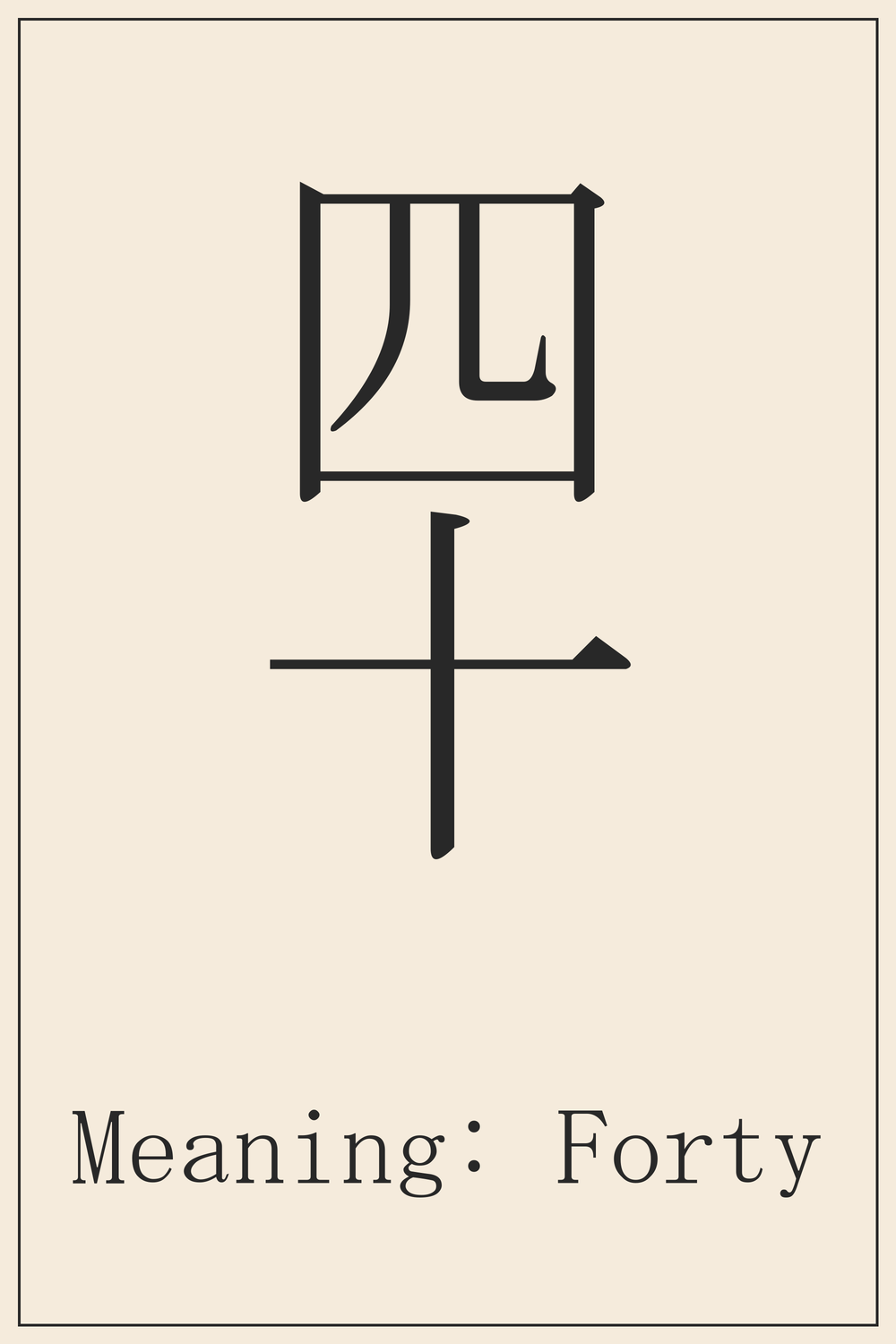
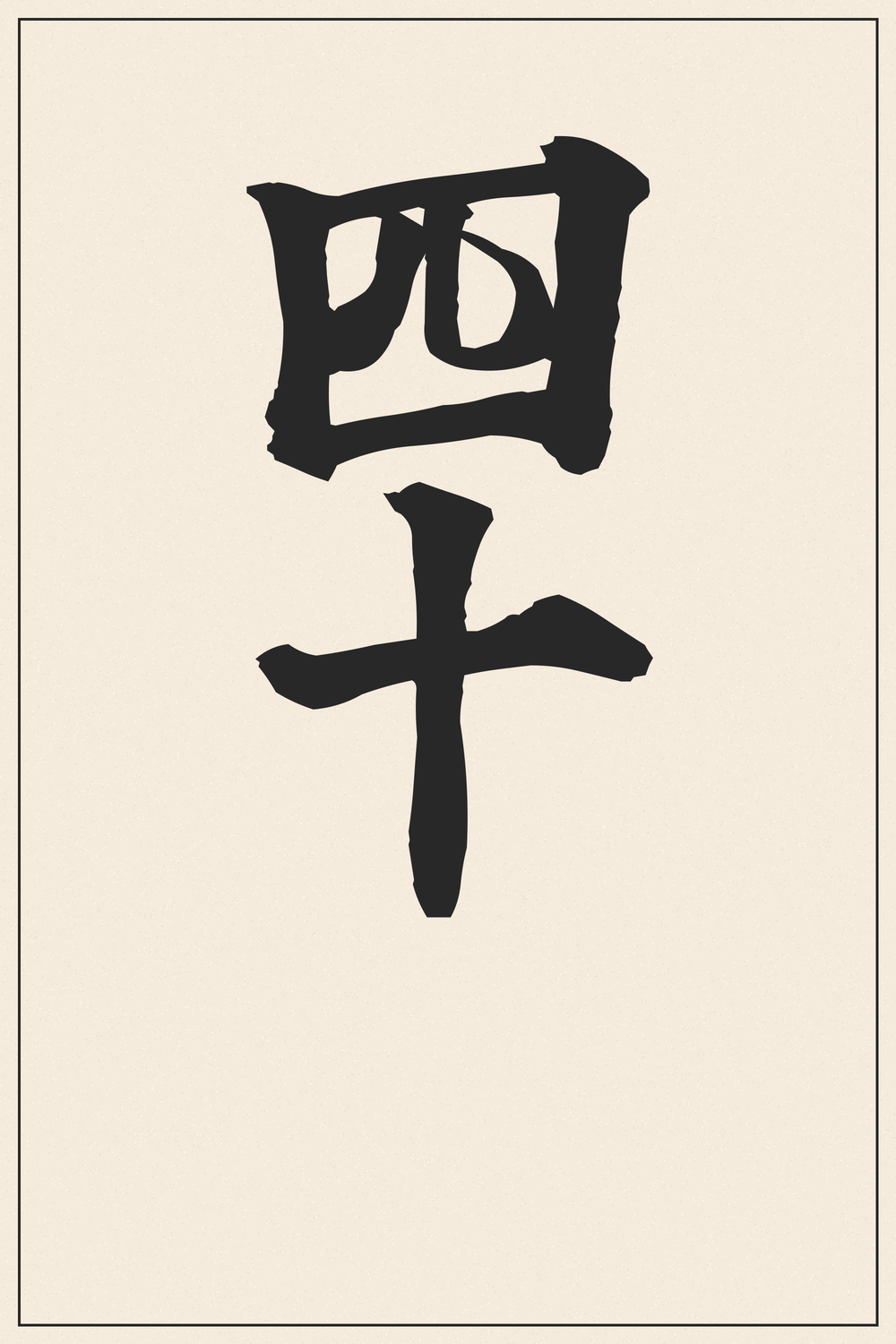
The Kanji ‘四十’ represents the number forty, a significant milestone in many life journeys. It often symbolizes a period of reflection, experience, and new beginnings.
The atmosphere of a Kanji character changes dramatically depending on the font style. A character that looks elegant in a brush style might look bold and modern in a different font.
Recommendation:
Since a tattoo is permanent, we strongly recommend comparing various font styles beyond what is shown here. Use our designs as a trusted reference for the correct structure, but feel free to explore different artistic variations to find the perfect match for your vision.
The Deep Meaning Behind 四十
The Kanji ‘四十’ is a compound number meaning ‘forty’. It is formed by combining ‘四’ (four) and ‘十’ (ten). In Japanese counting, larger numbers are often formed by multiplying or adding basic numerical Kanji. Thus, ‘four tens’ directly translates to forty.
Culturally, the age of forty holds significant weight across many societies. It is often seen as a pivotal turning point, representing midlife, accumulated wisdom, and a period for re-evaluation and new endeavors. In some traditions, it marks the completion of certain cycles or the beginning of a mature phase of existence.
Kanji Breakdown
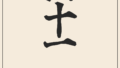
The compound ‘四十’ is composed of two fundamental numerical characters:
Meaning: Four. This character is thought to be a pictograph of a mouth or enclosure with four lines inside, signifying the number four.
Meaning: Ten. The character ‘十’ is believed to derive from a simple mark or a representation of crossed hands, symbolizing the full count of ten fingers.
Conclusion
The Kanji ‘四十’ encapsulates the concept of forty, a numerical value that often transcends mere counting to represent a significant period in one’s life. It symbolizes maturity, experience, and the wisdom gained through years.
For those seeking a tattoo that marks a personal milestone or celebrates a significant age, ‘四十’ offers a clean, elegant, and universally understood representation. Its simple yet profound meaning makes it a thoughtful and enduring choice for a personal emblem.
Comments