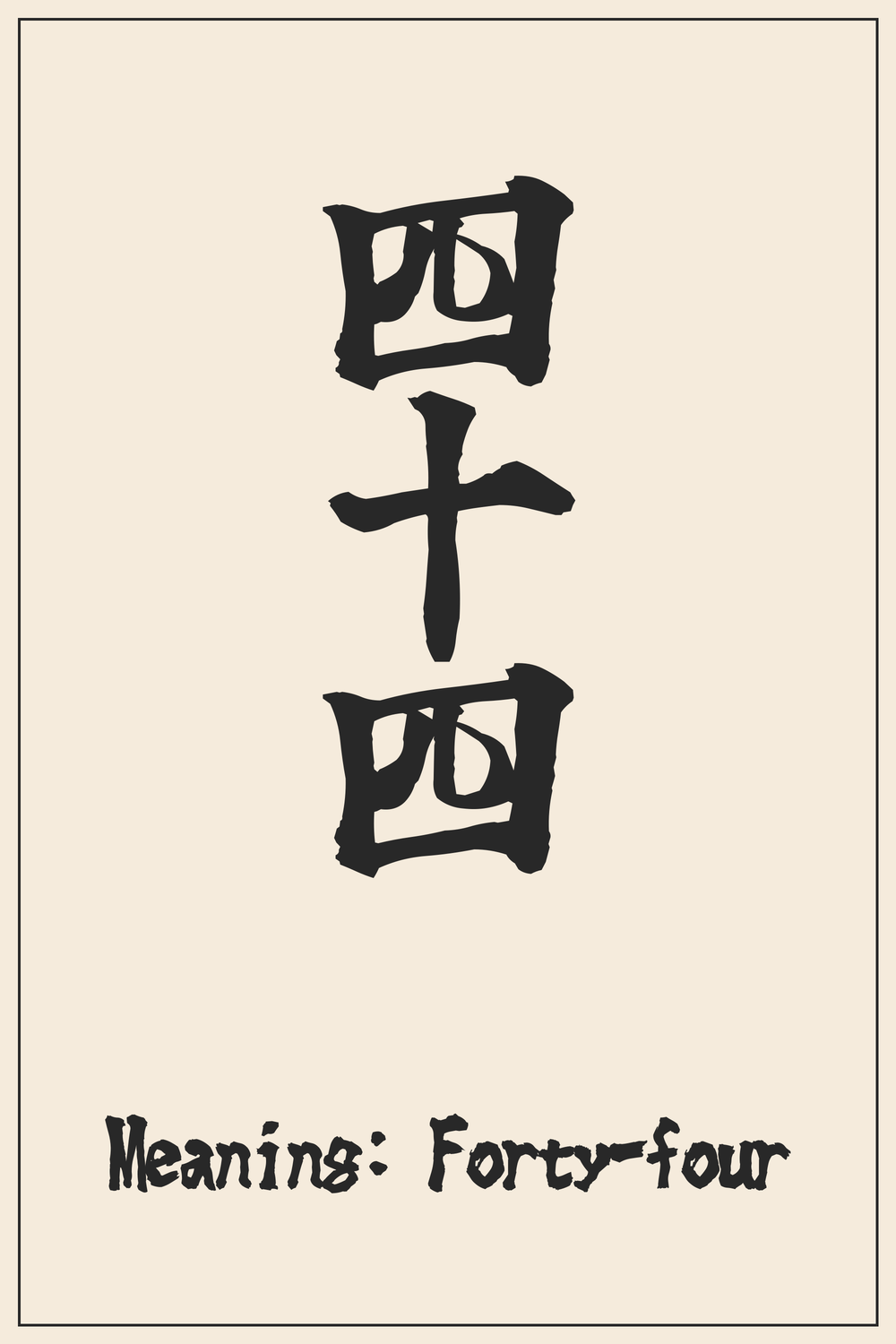
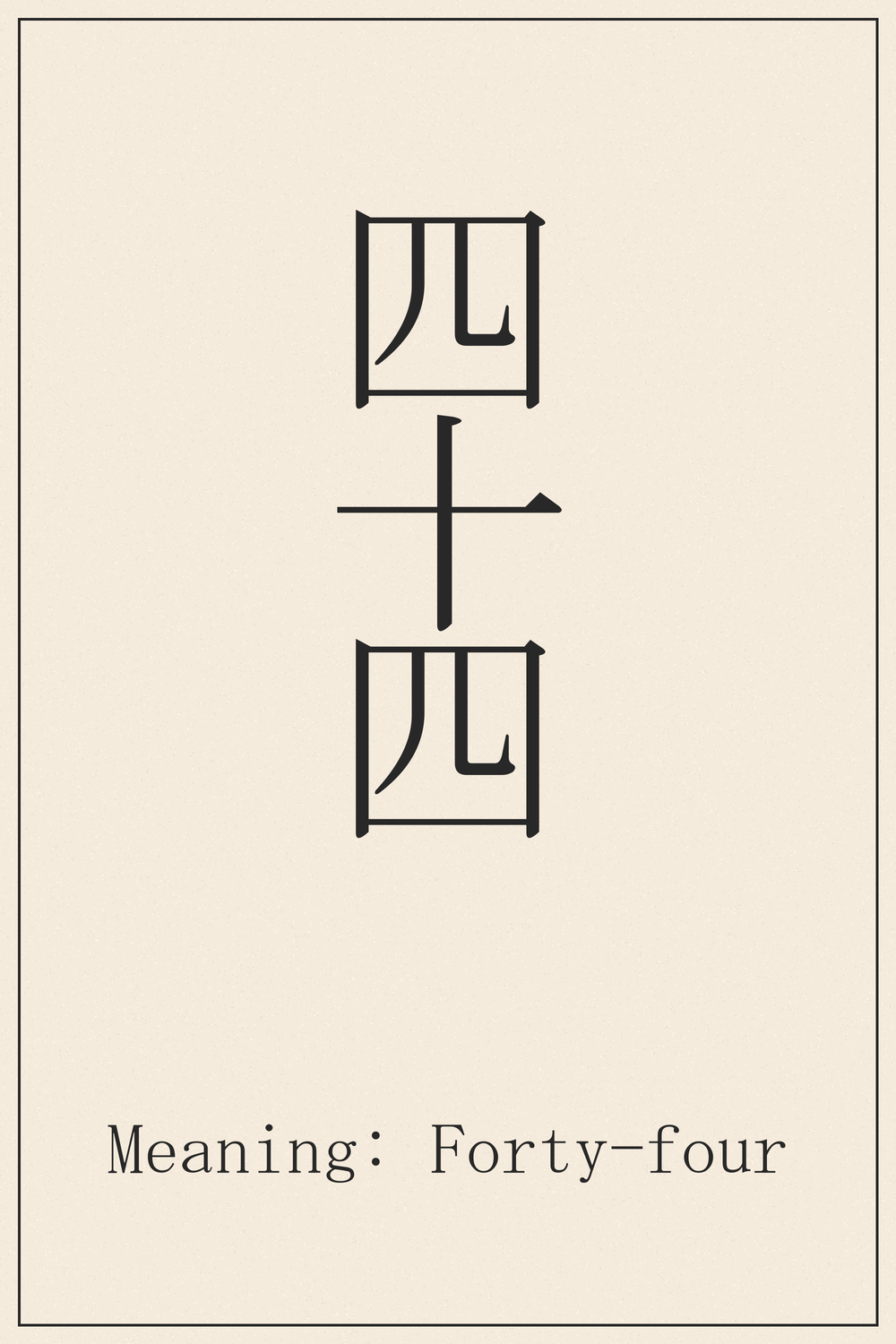
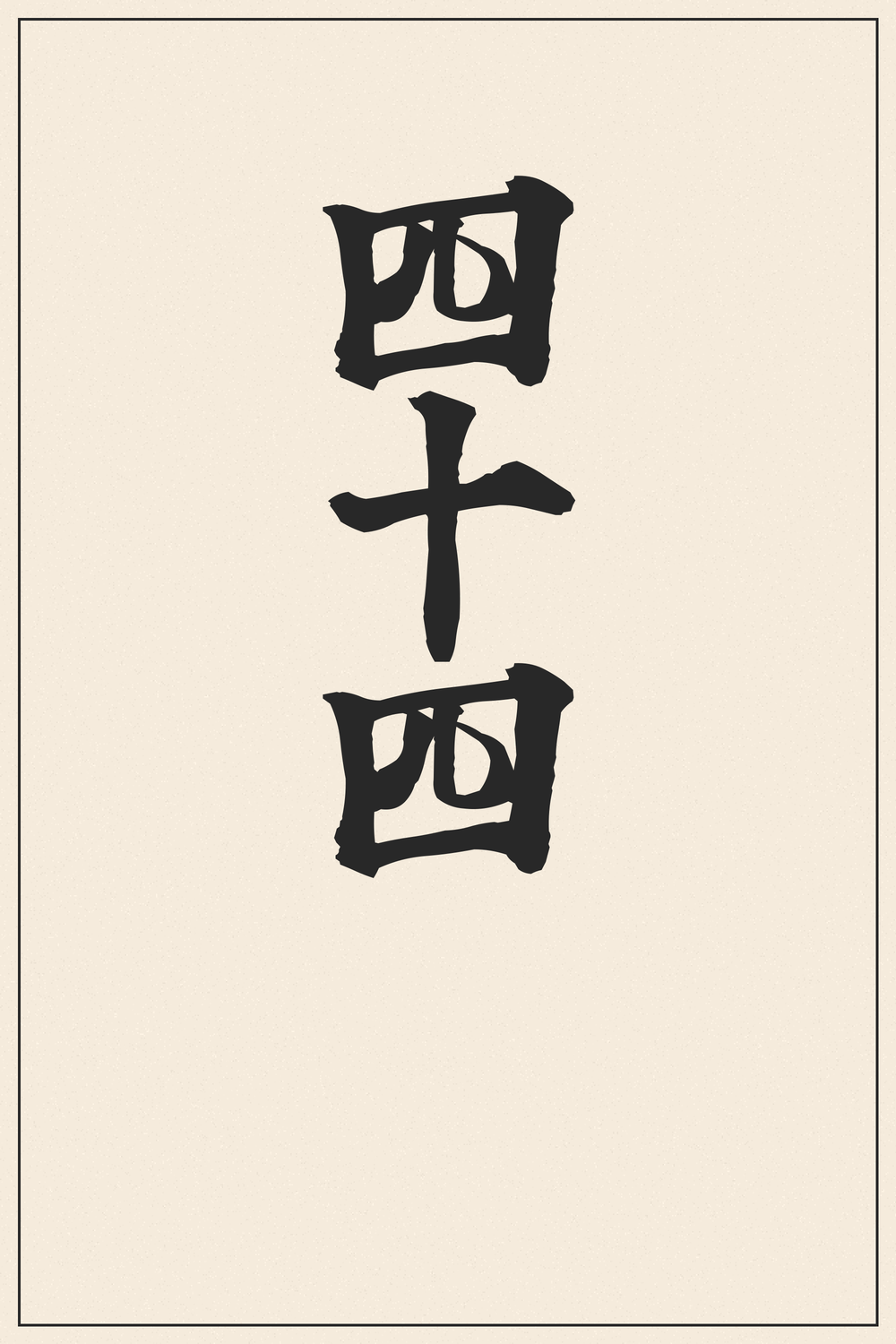
The Kanji 四十四 represents the numerical value forty-four. While seemingly straightforward, its constituent characters carry significant cultural nuances in Japanese tradition.
The atmosphere of a Kanji character changes dramatically depending on the font style. A character that looks elegant in a brush style might look bold and modern in a different font.
Recommendation:
Since a tattoo is permanent, we strongly recommend comparing various font styles beyond what is shown here. Use our designs as a trusted reference for the correct structure, but feel free to explore different artistic variations to find the perfect match for your vision.
The Deep Meaning Behind 四十四
The number forty-four, written as 四十四, is a compound numeral formed by repeating the character for four, 四, and implicitly using 十 (ten) to denote place value. While numerically simple, its cultural weight is profound due to a strong linguistic superstition.
In Japanese, the most common reading for 四 (four) is ‘shi’, which is a homophone for the word 死 (death). This association renders the number four highly inauspicious. When ‘four’ is repeated, as in ‘forty-four’, the negative connotation is amplified, often leading to its avoidance in contexts such as hospital rooms, hotel floors, or apartment numbers.
Kanji Breakdown
The compound 四十四 is constructed from two fundamental characters, with the character for ‘four’ being repeated.
Meaning: Four (Shi, Yon). Originally a pictogram of an enclosure or a division, it evolved to represent the cardinal number four. In Japanese, its ‘shi’ reading is famously a homophone for ‘death’, giving it a significant cultural impact.
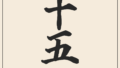
Meaning: Ten (Juu). A simple cross symbol, believed to originate from a needle or a vertical line marking a division, signifying the number ten. It serves as a base for compound numbers, forming ‘forty’ when combined with ‘four’ (四+十=四十).
Conclusion
The Kanji 四十四 simply denotes the number forty-four. However, the pervasive superstition surrounding the ‘shi’ (death) pronunciation of ‘four’ makes this numeral one of the most culturally significant and avoided in Japan. The double presence of ‘four’ in ‘forty-four’ intensifies this association, creating a strong sense of bad luck.
For those considering a Kanji tattoo, while the characters themselves are visually simple, the profound negative connotations of 四十四 make it an extremely ill-advised choice. It is crucial to respect such deeply ingrained cultural beliefs, especially when permanently marking one’s body.
Comments