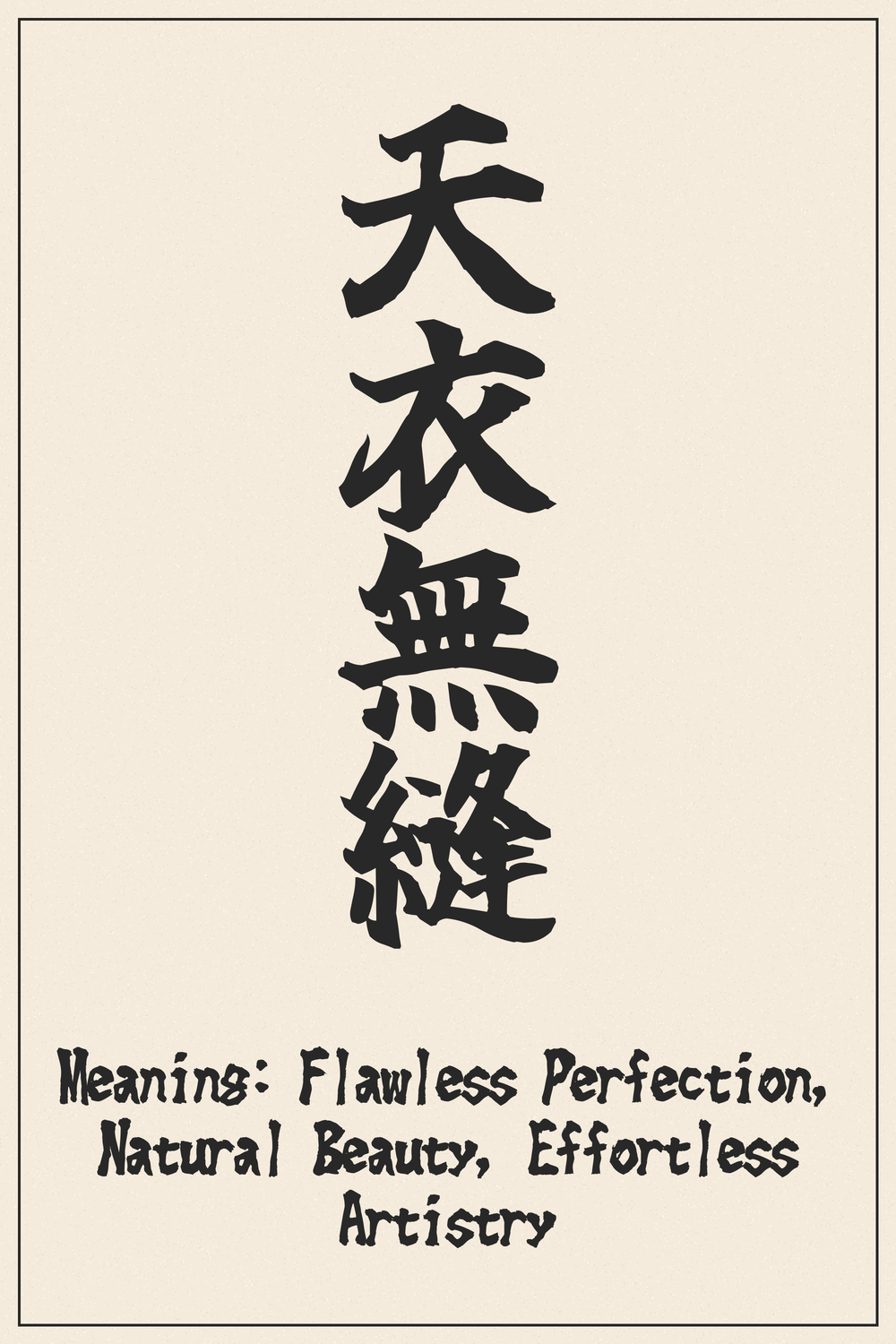
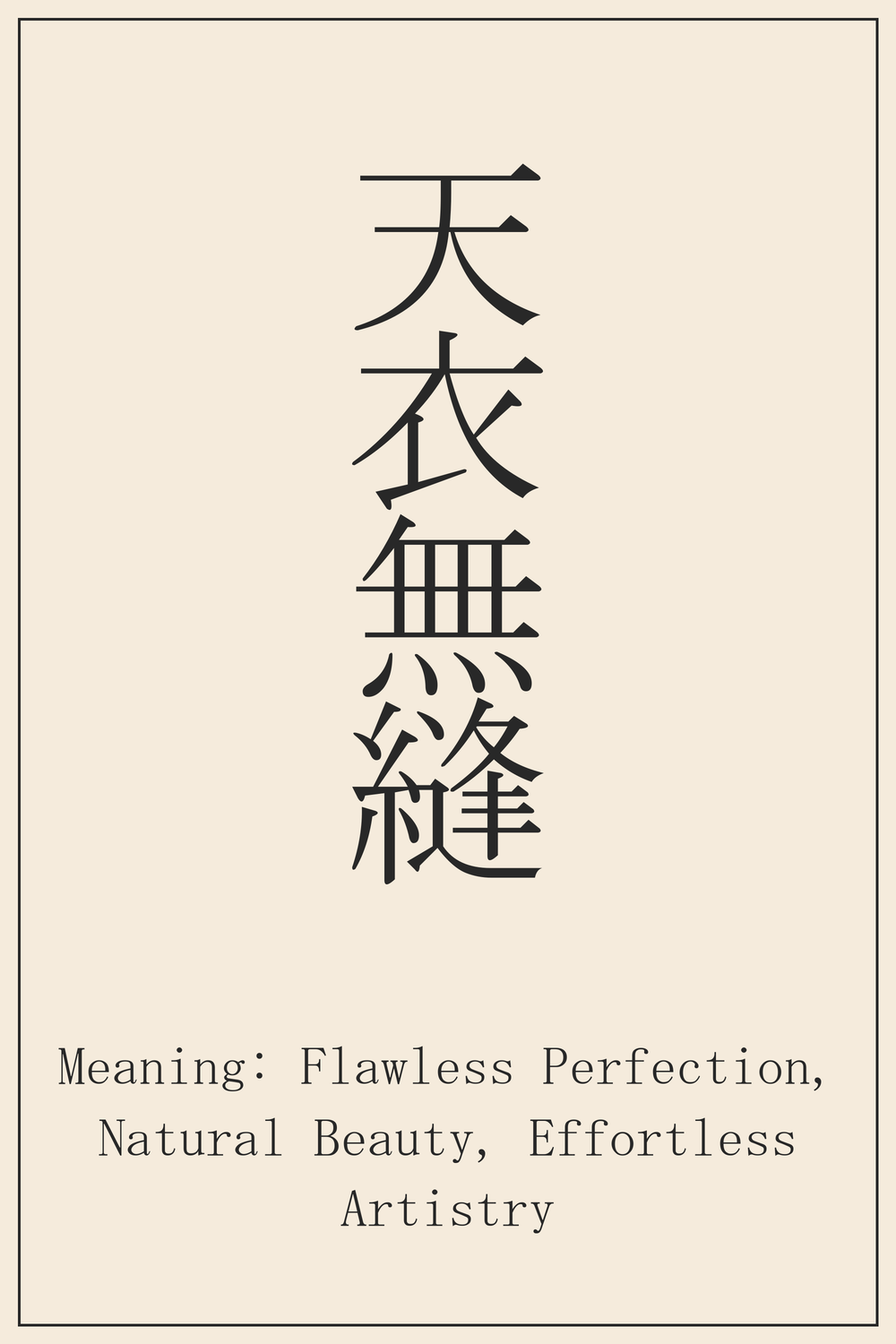
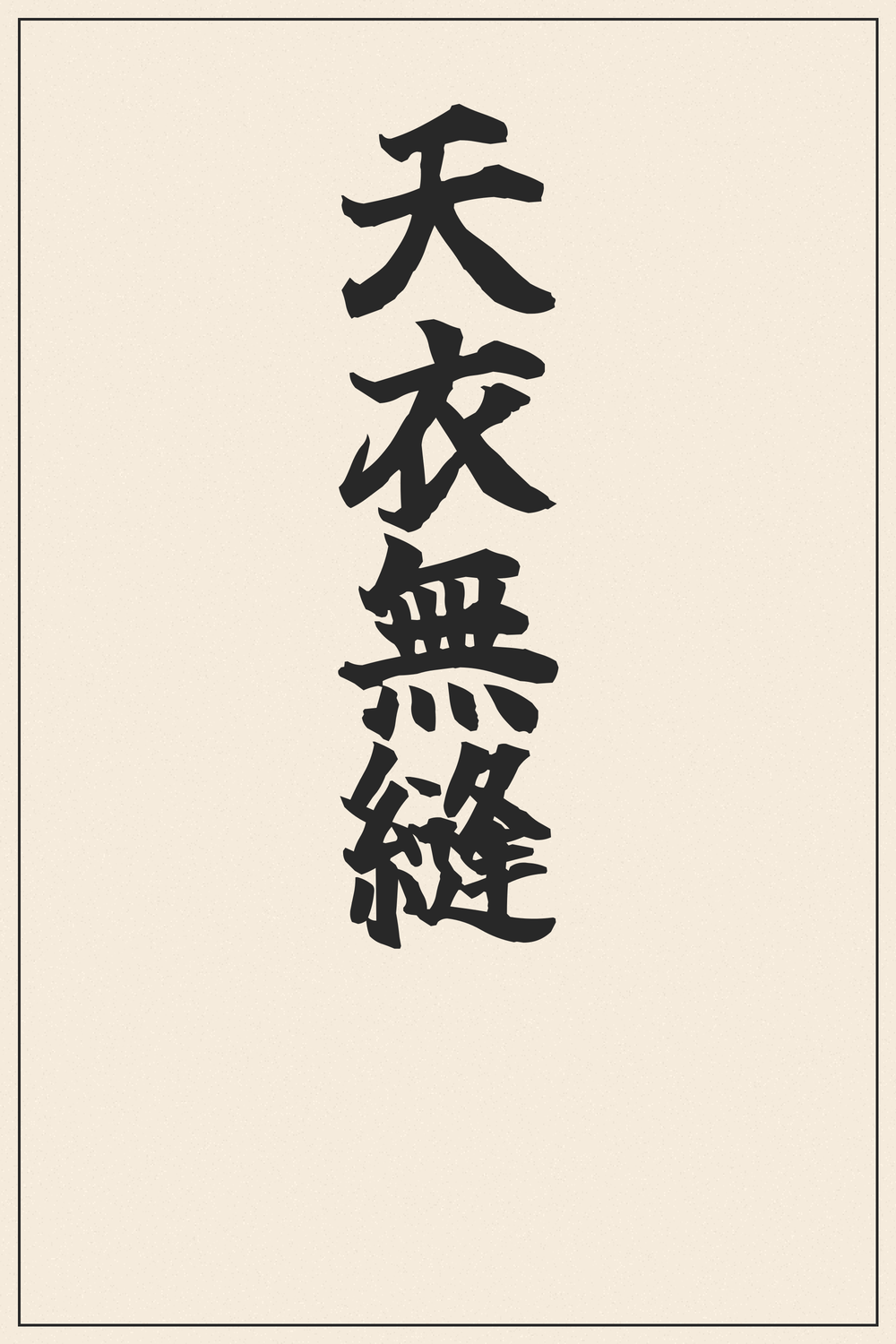
Delve into the profound elegance of 天衣無縫, an idiom that captures the essence of natural, unadorned perfection. This phrase speaks to a beauty so complete, it appears divinely effortless and without flaw.
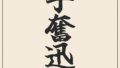
The atmosphere of a Kanji character changes dramatically depending on the font style. A character that looks elegant in a brush style might look bold and modern in a different font.
Recommendation:
Since a tattoo is permanent, we strongly recommend comparing various font styles beyond what is shown here. Use our designs as a trusted reference for the correct structure, but feel free to explore different artistic variations to find the perfect match for your vision.
The Deep Meaning Behind Ten’i Muhō
The idiom 天衣無縫 (Ten’i Muhō) originates from ancient Chinese folklore, specifically referencing the celestial robes worn by heavenly maidens. These divine garments were said to have no seams, symbolizing a perfection so absolute that it transcended human craftsmanship and appeared utterly natural and effortless.
In Japanese culture, this phrase is used to describe something or someone that is so exquisitely beautiful, flawless, or skillfully executed that it seems to have been created without any visible effort or imperfection. It often conveys a sense of innocent grace, profound artistry, or a character that is pure and unblemished, reflecting a sublime, natural state of being.
Kanji Breakdown
Each character contributes to the profound meaning of ‘Ten’i Muhō’, illustrating the concept of a perfection that is divine and naturally elegant.
Heaven, Sky: This character signifies the celestial realm, divine power, and that which is natural or above. Its ancient form depicted a large human, with the line above representing the sky or head.
Clothing, Robe: Representing garments, this character is a pictograph of a flowing robe with a distinct collar. Here, it specifically refers to the divine attire of celestial beings.
None, Without: This character denotes absence or lack. Originally depicting a person dancing with ornaments, it later came to mean ‘nothingness’ or ‘to not have’, crucial for the idiom’s meaning of ‘without seams’.
Sewing, Seam: Composed of the radical 糸 (ito – thread) and a component meaning ‘to meet’ or ‘to join’, this character directly refers to the act of sewing and, by extension, the seam created by it. Its negation signifies a lack of human intervention.
Conclusion
“Ten’i Muhō” is a magnificent expression of beauty and perfection that is unforced, pure, and divinely natural. It celebrates the ideal of effortless elegance and a flawless state that transcends ordinary human endeavor, making it a truly aspirational concept.
Choosing “Ten’i Muhō” for a tattoo is to embrace a powerful symbol of ultimate grace and an intrinsic, unblemished quality. It is a profound declaration of appreciation for natural artistry and perfection, a timeless reminder of the sublime beauty that exists in the world and can be cultivated within oneself.
Comments