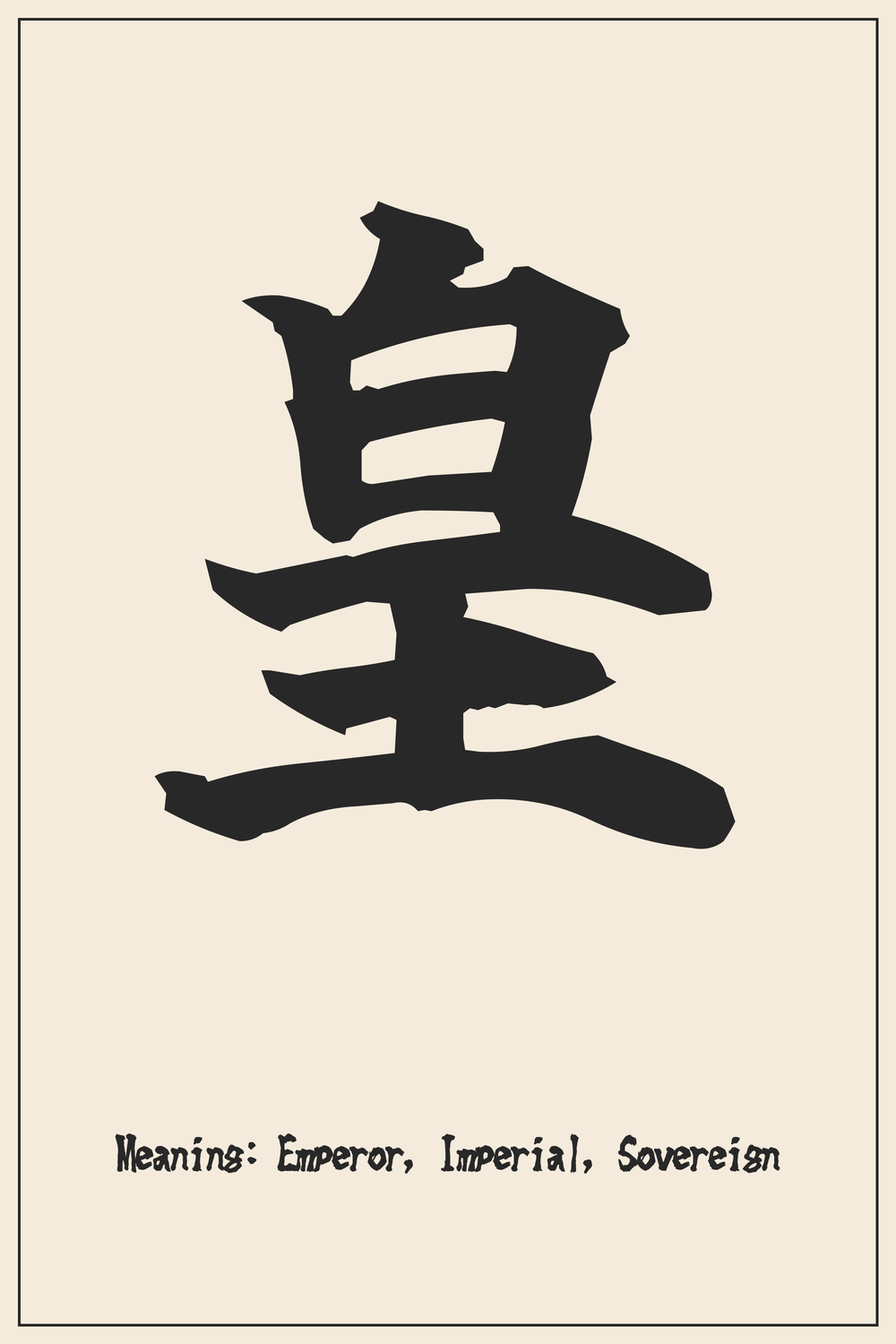
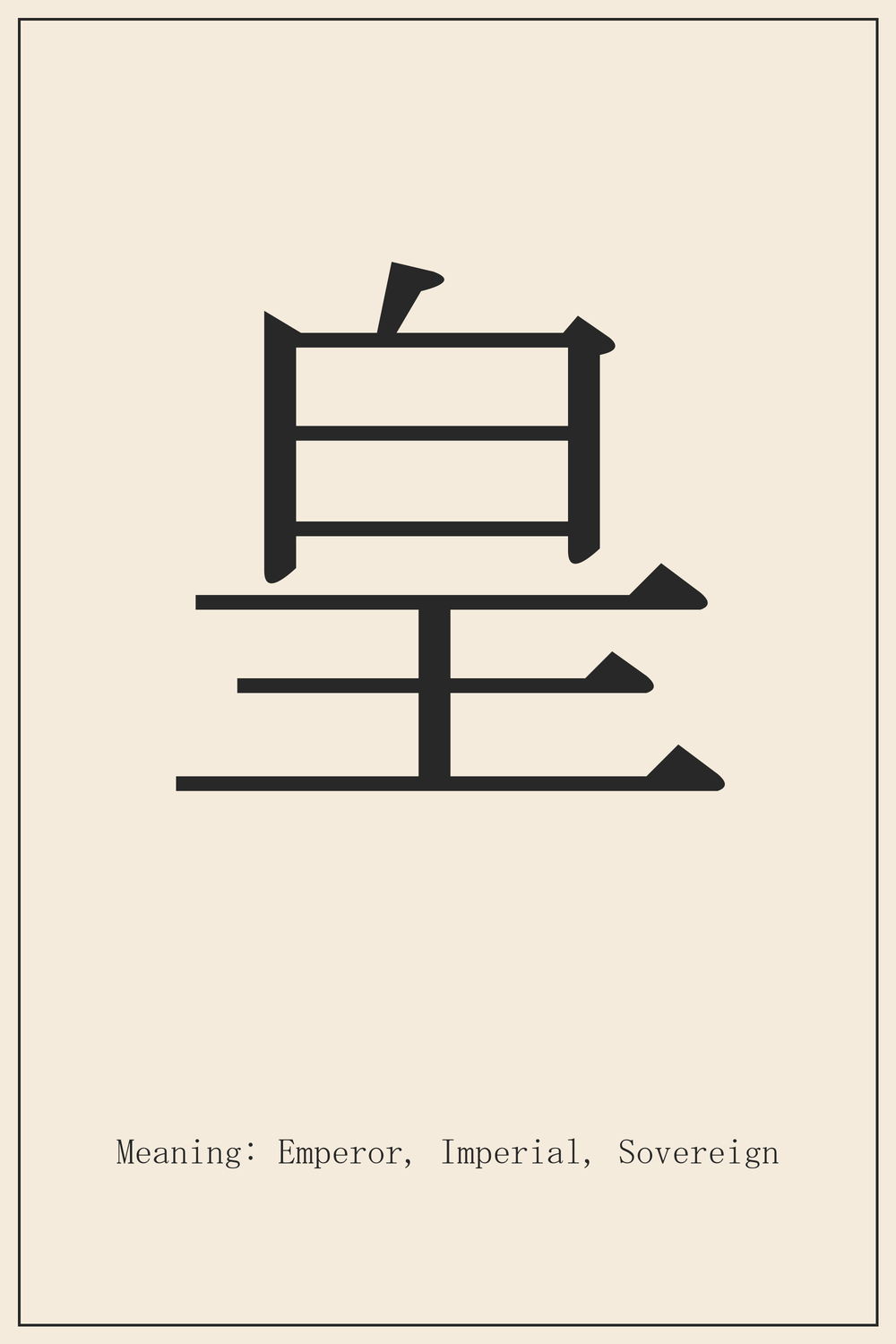
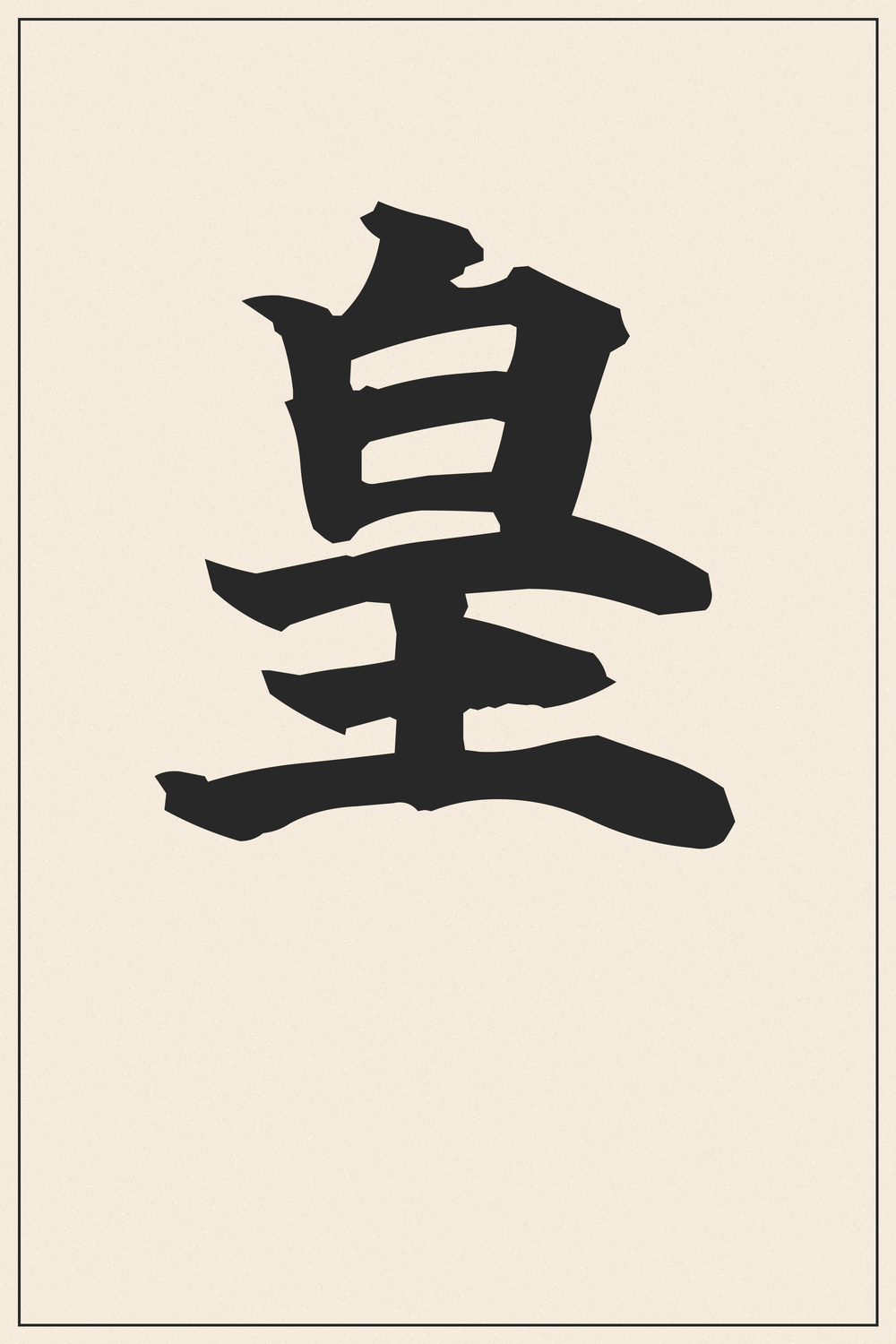
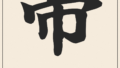
The Kanji 皇 (Kō) embodies supreme authority and the revered imperial lineage of Japan. It is a symbol that resonates with deep historical significance and regal power.
The atmosphere of a Kanji character changes dramatically depending on the font style. A character that looks elegant in a brush style might look bold and modern in a different font.
Recommendation:
Since a tattoo is permanent, we strongly recommend comparing various font styles beyond what is shown here. Use our designs as a trusted reference for the correct structure, but feel free to explore different artistic variations to find the perfect match for your vision.
The Deep Meaning Behind 皇
The character 皇 (Kō) has ancient roots, believed to originally depict a person wearing an elaborate crown, signifying supreme authority, or a radiant being. Over time, it evolved to combine 王 (ō, king) and 白 (haku, white, brilliant, eminent), emphasizing a king who is brilliant, pure, and holds unparalleled eminence.
In Japan, 皇 is profoundly significant as it forms part of 天皇 (Tennō), the title for the Emperor of Japan. It symbolizes the unbroken imperial line, divine right, and the spiritual and temporal head of the nation, embodying the very essence of national identity and tradition.
Kanji Breakdown
The Kanji 皇 is comprised of two significant components that convey its ultimate meaning.
Meaning: King, Ruler
This radical fundamentally represents royalty and governance, depicting a ruler standing between heaven and earth.
Meaning: White, Brilliant, Pure, Eminent
Positioned atop the “King” component, 白 adds connotations of purity, brilliance, divine light, or supreme distinction, elevating the ruler to an imperial or sovereign status.
Conclusion
The Kanji 皇 is a powerful emblem of ultimate authority, divine lineage, and the profound cultural heritage of the Japanese imperial system. It encapsulates the ideals of a supreme ruler, revered and eminent.
For those drawn to symbols of sovereignty, tradition, and profound cultural depth, 皇 offers a design that is both historically rich and visually commanding. Its intricate details make it a sophisticated choice, best rendered by a skilled artist to honor its regal essence.
Comments