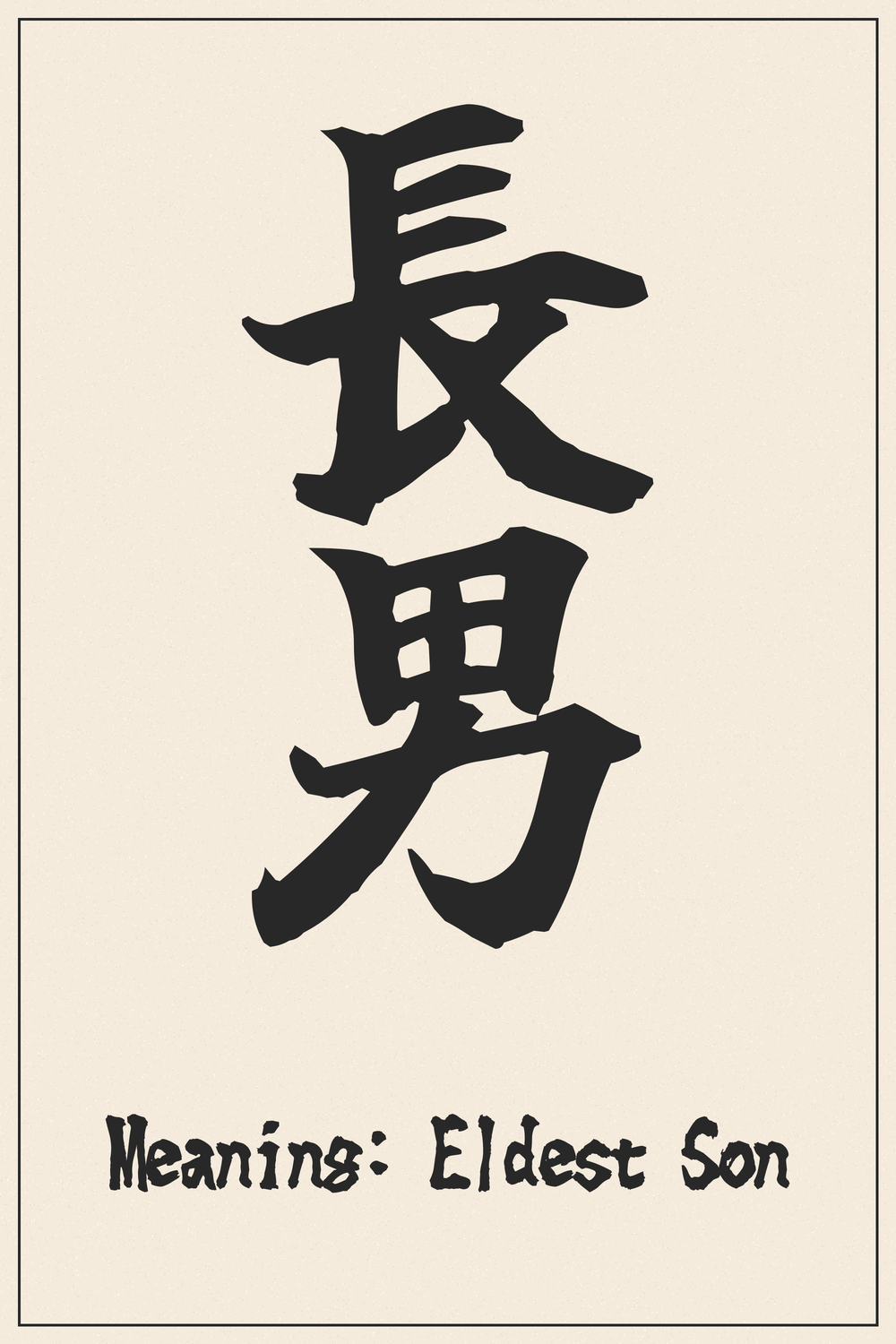
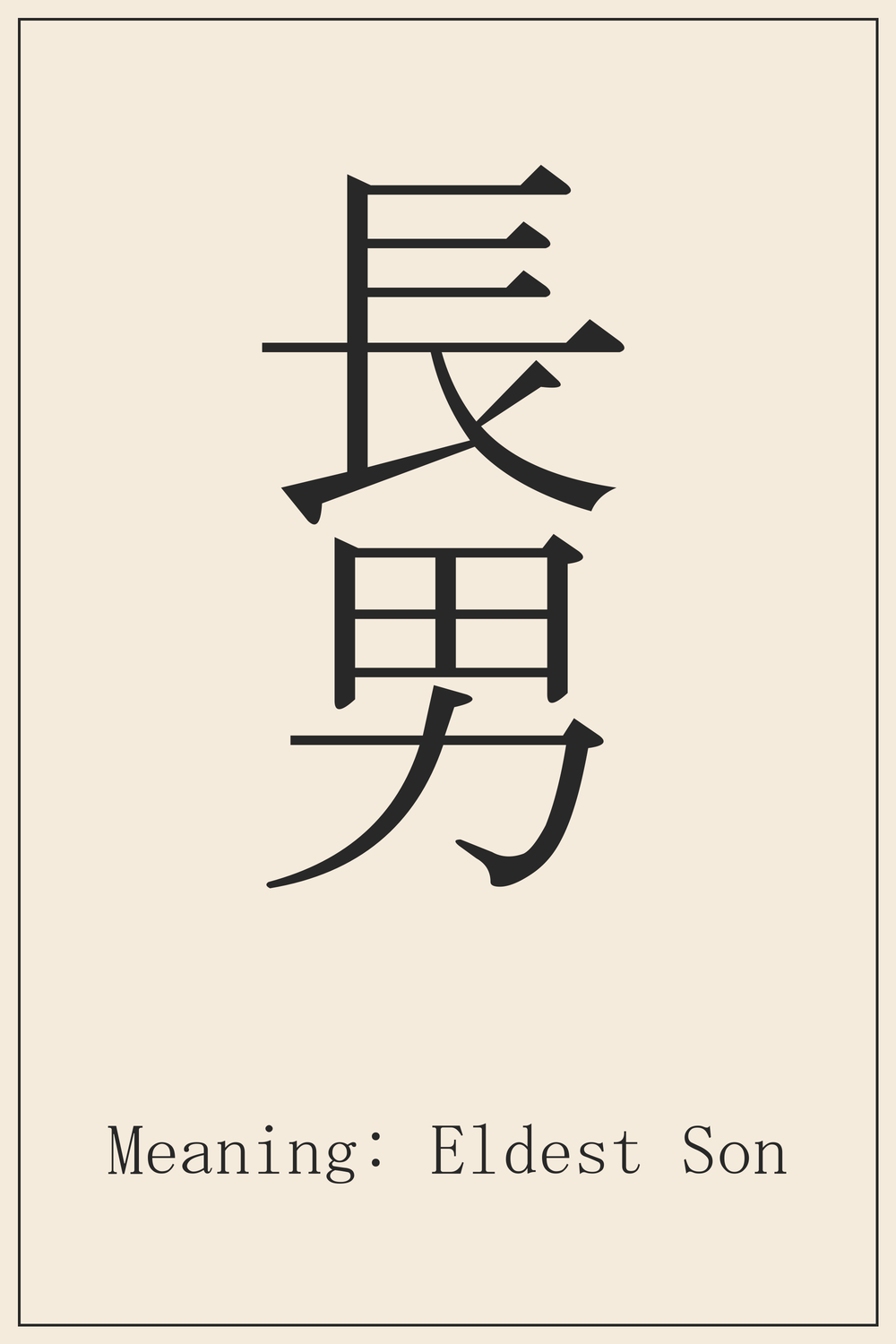
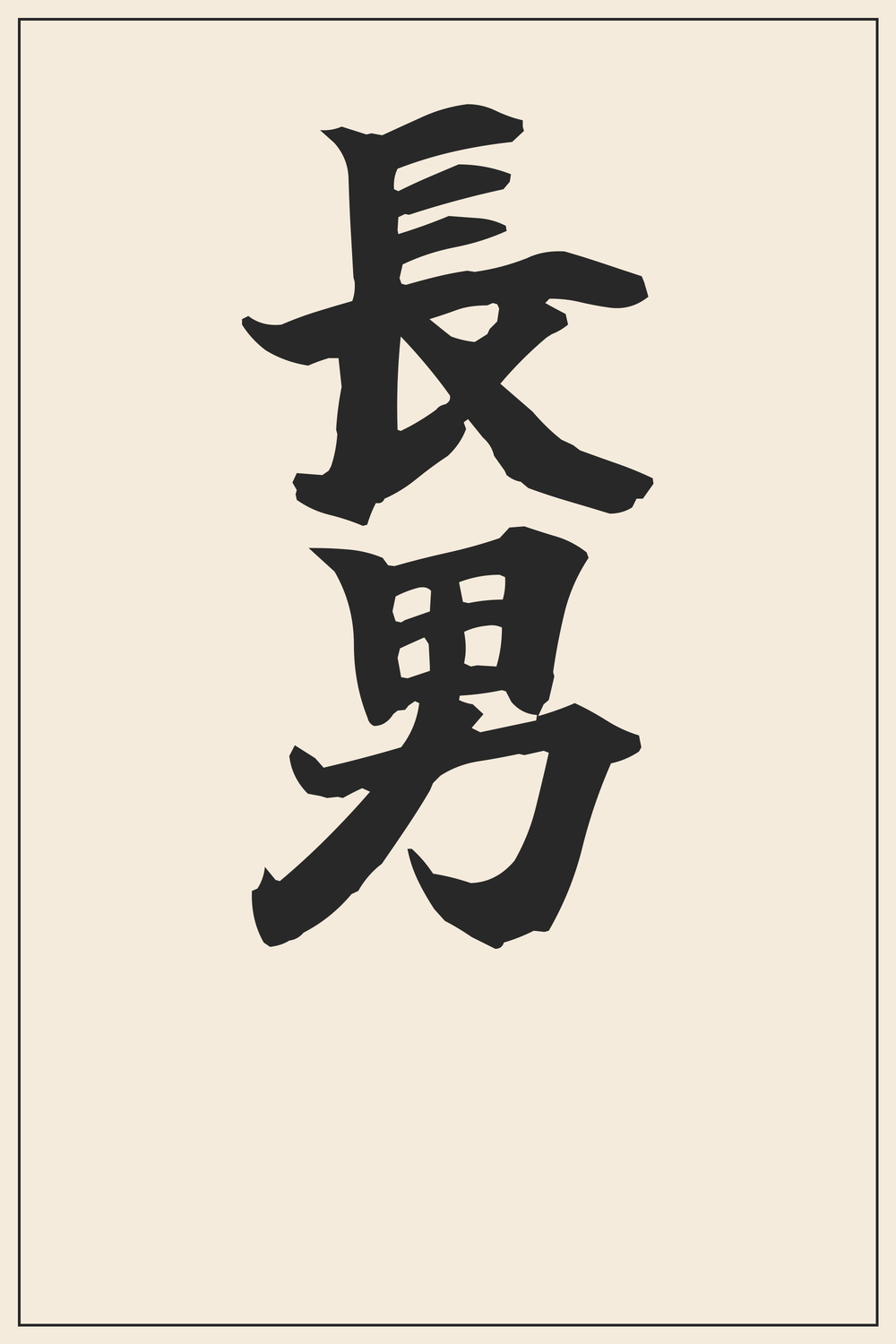
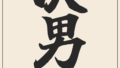
The Kanji for ‘長男’ represents more than just a birth order; it embodies a lineage of responsibility and an enduring connection to family heritage. It signifies the primary heir and the first guardian of a family’s legacy.
The atmosphere of a Kanji character changes dramatically depending on the font style. A character that looks elegant in a brush style might look bold and modern in a different font.
Recommendation:
Since a tattoo is permanent, we strongly recommend comparing various font styles beyond what is shown here. Use our designs as a trusted reference for the correct structure, but feel free to explore different artistic variations to find the perfect match for your vision.
The Deep Meaning Behind 長男
The term ‘長男’ (Chōnan) literally translates to ‘long’ or ‘senior’ (長) and ‘man’ or ‘male’ (男). This compound accurately reflects its core meaning: the eldest or firstborn son. Its etymology points to the concept of seniority and the male lineage, which historically held significant weight in Japanese and many East Asian societies.
Culturally, the eldest son traditionally carried immense responsibility, often being the primary heir and the designated head of the family (家長, kachō) upon the father’s retirement or passing. This role encompassed not only material inheritance but also the continuation of the family name, ancestral rituals, and the well-being of the extended family. While modern society has seen shifts, the inherent sense of duty and importance associated with the ‘長男’ persists in many familial contexts.
Kanji Breakdown
The Kanji ‘長男’ is composed of two distinct characters, each contributing to its profound meaning.
Meaning: Long, chief, elder. This character can denote physical length or a position of seniority and leadership, often represented by someone ‘long’ in experience or status.
Meaning: Man, male. This character is thought to be a pictogram depicting a field (田) with a hoe or strength (力) below it, symbolizing a man working in the fields, emphasizing masculinity and labor.
Conclusion
The Kanji ‘長男’ is a powerful symbol of lineage, responsibility, and the enduring bond of family. It speaks to the historical and cultural significance placed upon the firstborn son, who traditionally carried the torch of family legacy.
For those wishing to honor their heritage, acknowledge their role within their family, or simply appreciate the cultural depth of Japanese familial traditions, a ‘長男’ tattoo serves as a respectful and deeply personal emblem. It is a timeless testament to connection and duty, ideal for a meaningful and lasting design.
Comments