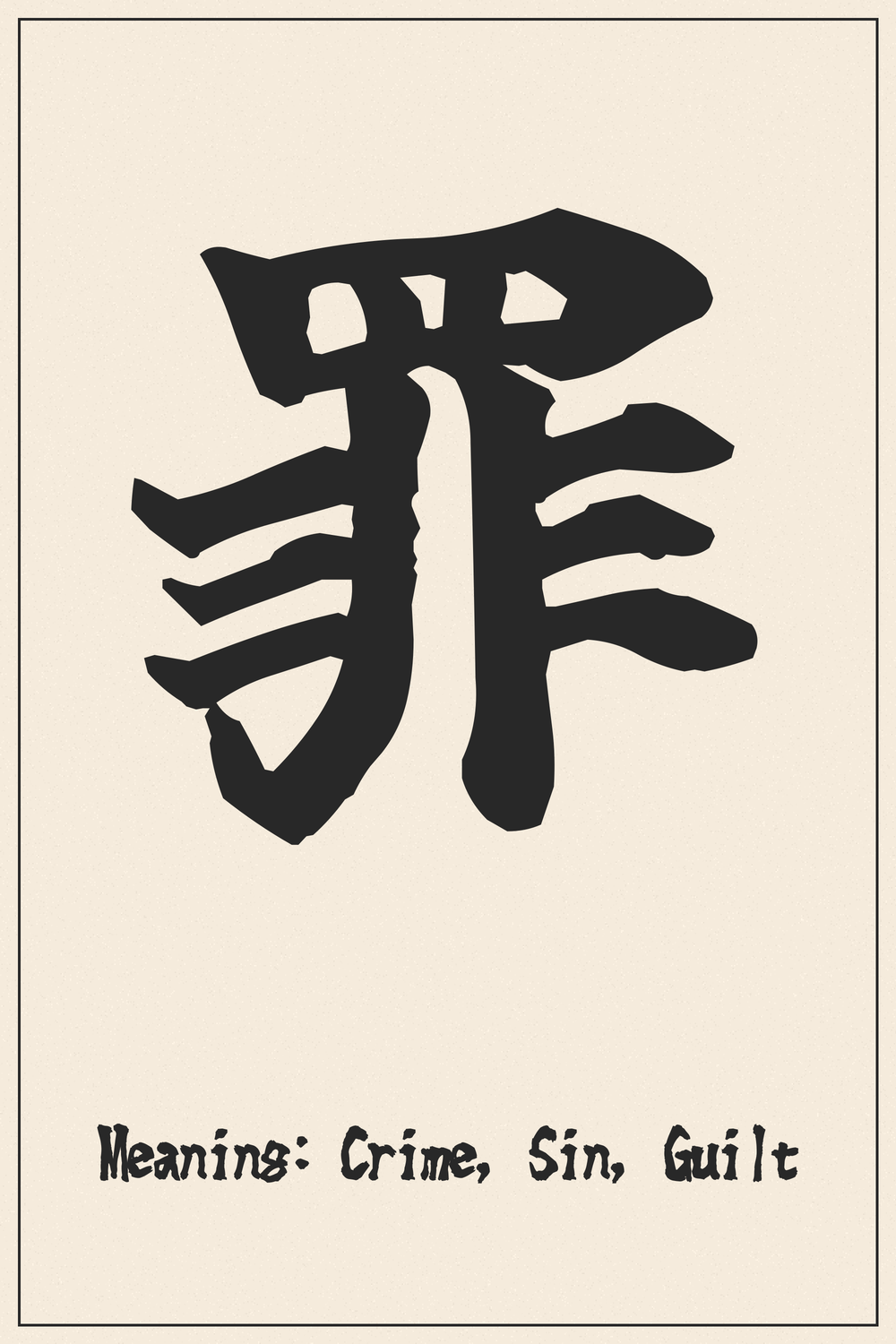
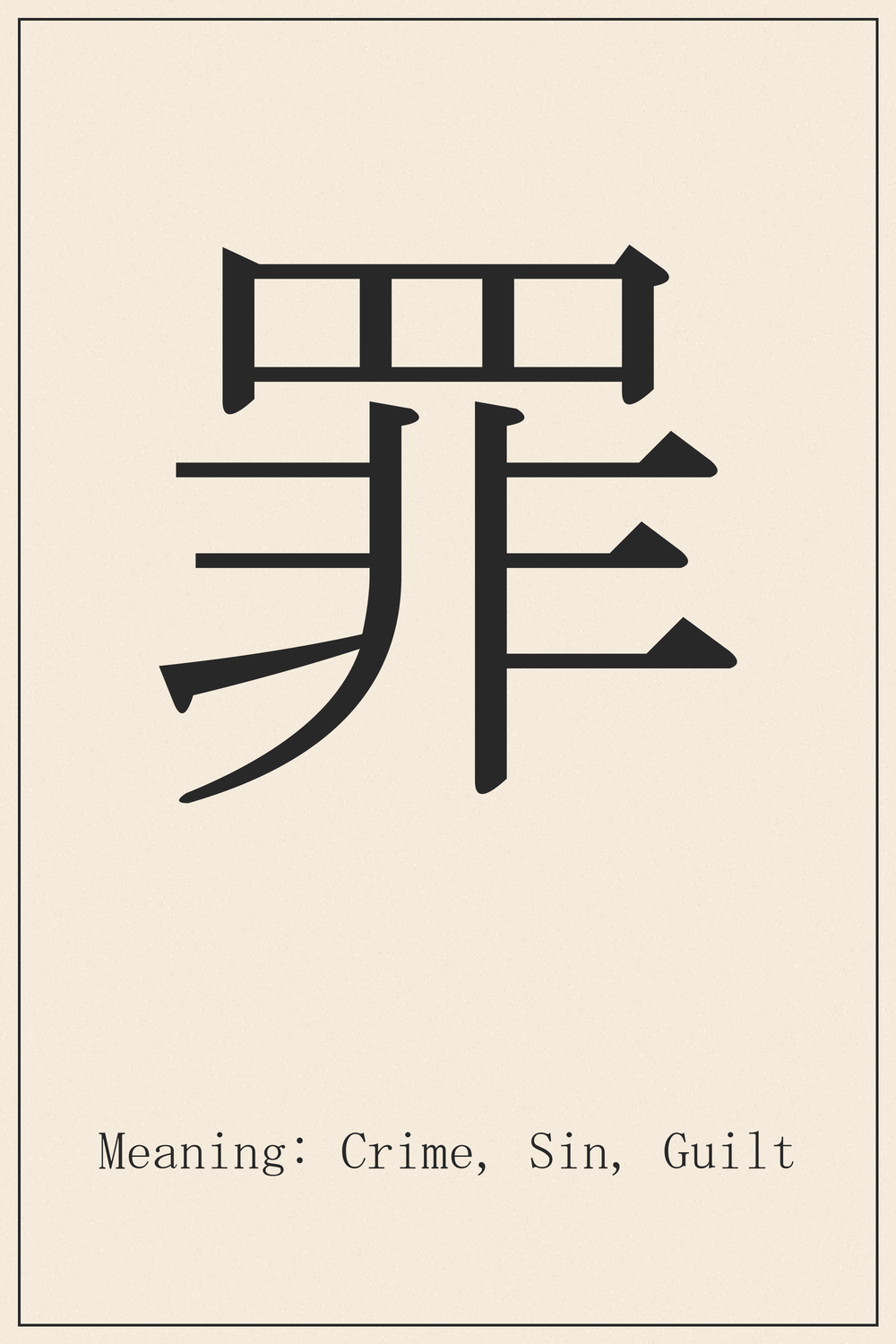
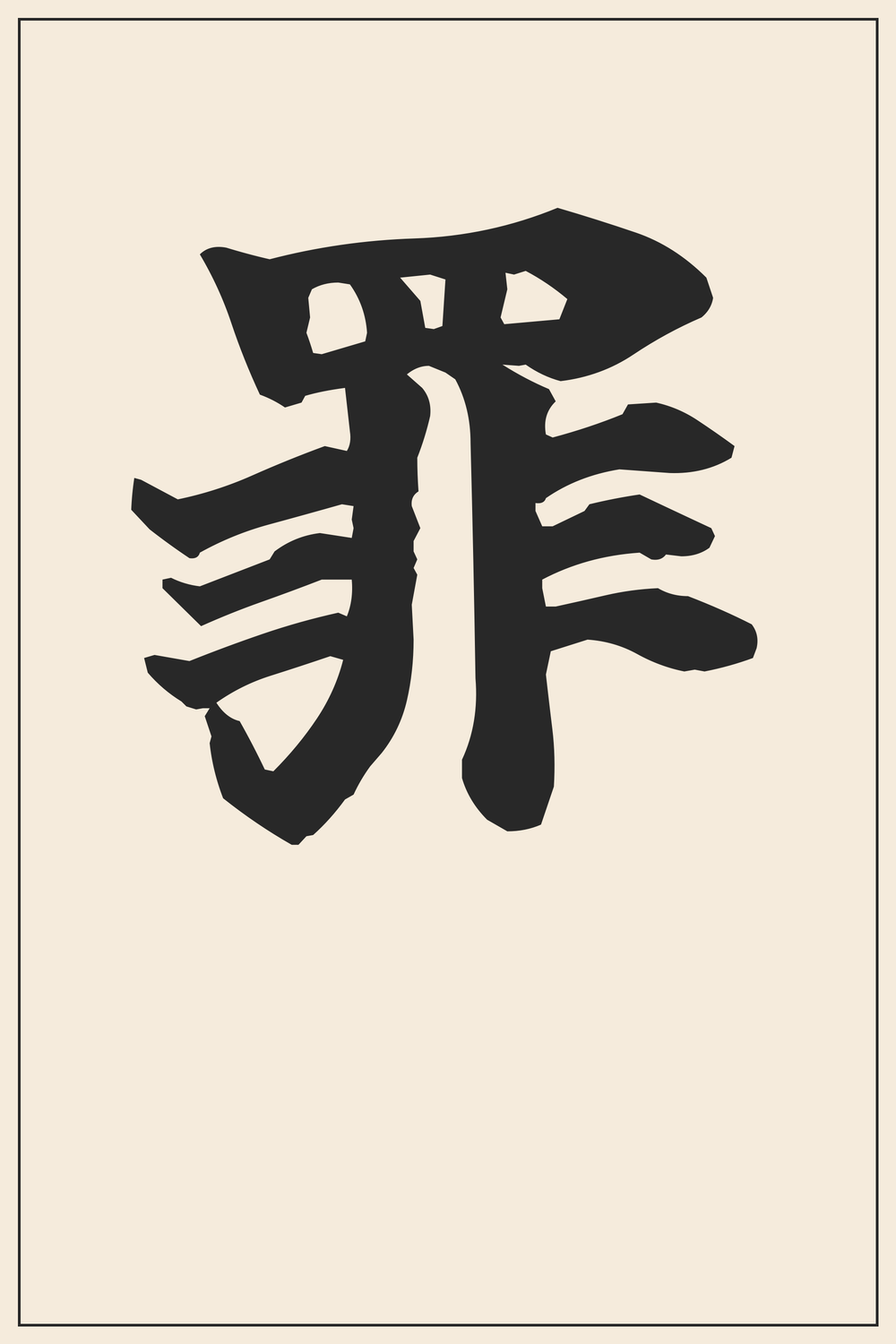
The Kanji “罪” (Tsumi) is a powerful character that confronts the profound concepts of human wrongdoing and accountability. It embodies the weight of transgression, urging introspection into moral boundaries and personal responsibility.
The atmosphere of a Kanji character changes dramatically depending on the font style. A character that looks elegant in a brush style might look bold and modern in a different font.
Recommendation:
Since a tattoo is permanent, we strongly recommend comparing various font styles beyond what is shown here. Use our designs as a trusted reference for the correct structure, but feel free to explore different artistic variations to find the perfect match for your vision.
The Deep Meaning Behind 罪
The Kanji 罪 originates from ancient pictograms. Its structure combines components that suggest “catching” or “netting” with “wrongdoing,” illustrating the idea of being ensnared by one’s transgressions. This etymology highlights the historical understanding of crime as a departure from accepted societal norms.
In Japanese culture, 罪 (tsumi) is often associated with both legal offenses and moral/religious impurity or sin, particularly in Shinto. It signifies actions that disturb harmony, whether social or spiritual, and often necessitates purification (harae) or atonement.
Kanji Breakdown
The Kanji 罪 is composed of two significant elements, each contributing to its profound meaning.
Net, Capture, Ensnarement: This radical often implies being caught, trapped, or entangled. In the context of 罪, it suggests the idea of being caught in the act of wrongdoing or ensnared by the consequences of one’s actions.
Wrong, Not, Mistake, Injustice: This component directly denotes negativity or opposition to what is right. Its presence underscores the core meaning of transgression and moral deviation embedded within 罪.
Conclusion
The Kanji 罪 profoundly encapsulates the multifaceted concept of crime, sin, and guilt, reflecting humanity’s perpetual struggle with moral choices and their repercussions. It serves as a powerful symbol of accountability and the often-heavy burden of transgression.
While bearing a somber meaning, a tattoo of 罪 could represent a deeply personal reflection on past mistakes, a commitment to personal growth, or a stark reminder of the importance of ethical conduct. It is a bold statement, chosen not lightly, but with profound intent.
Comments