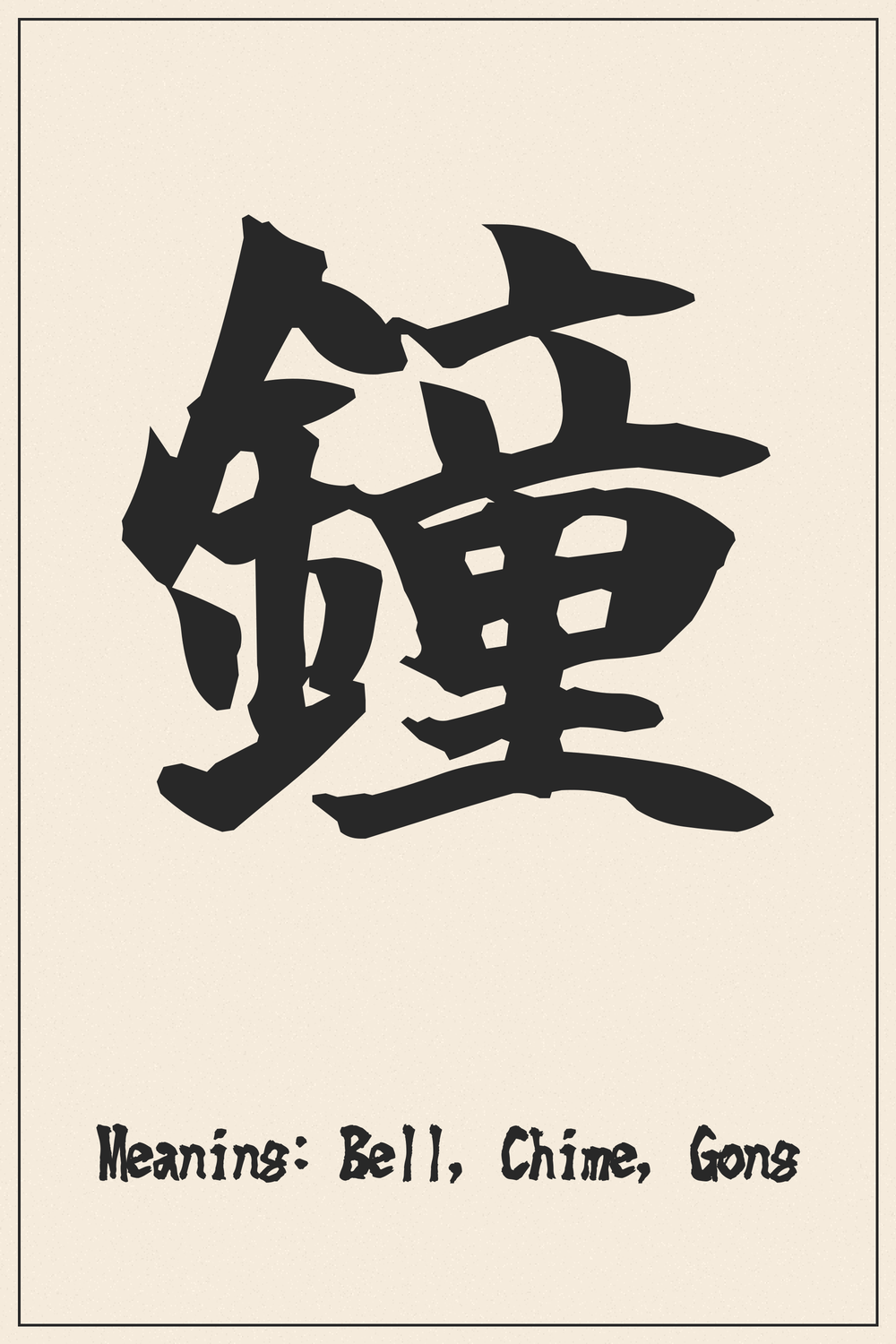
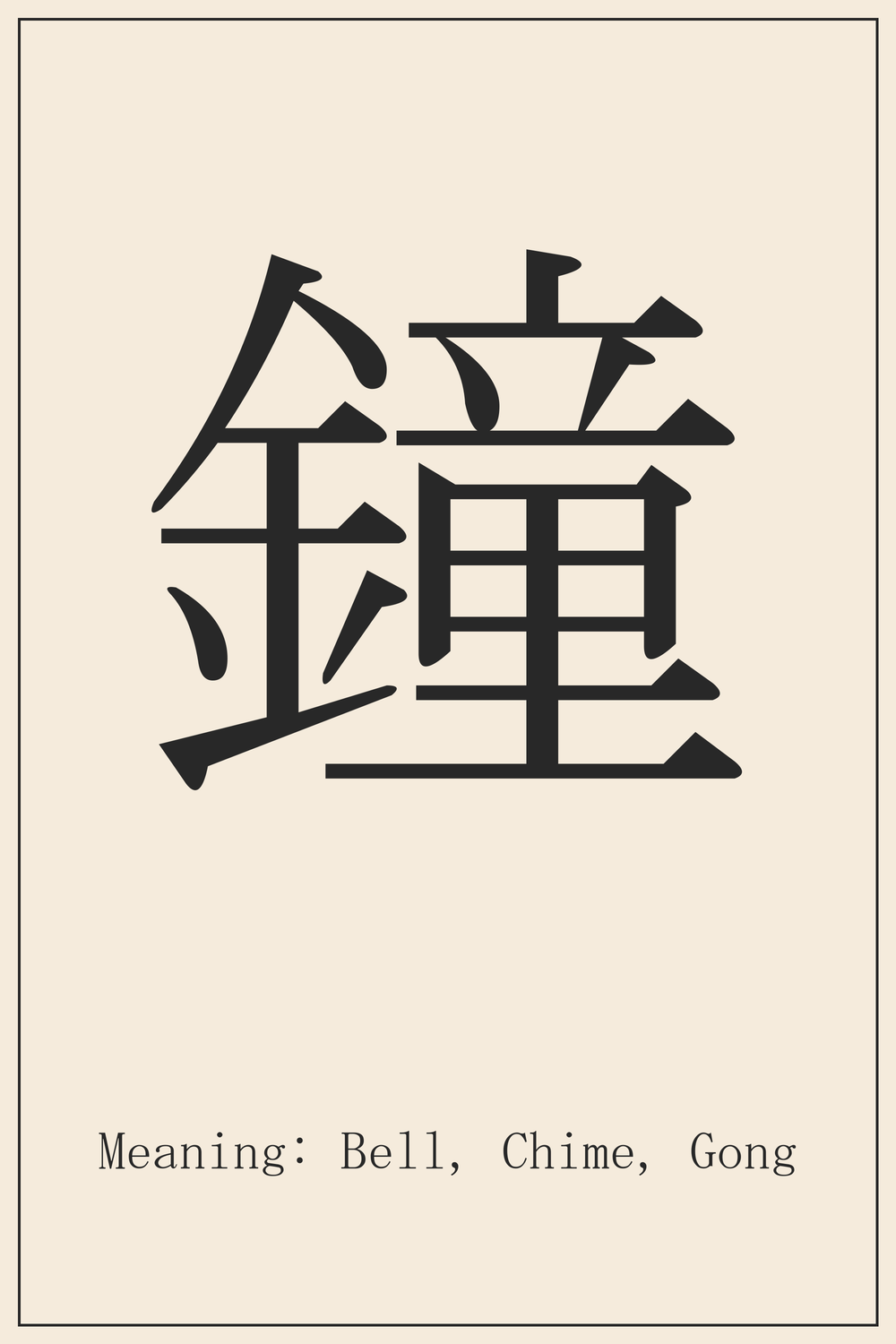
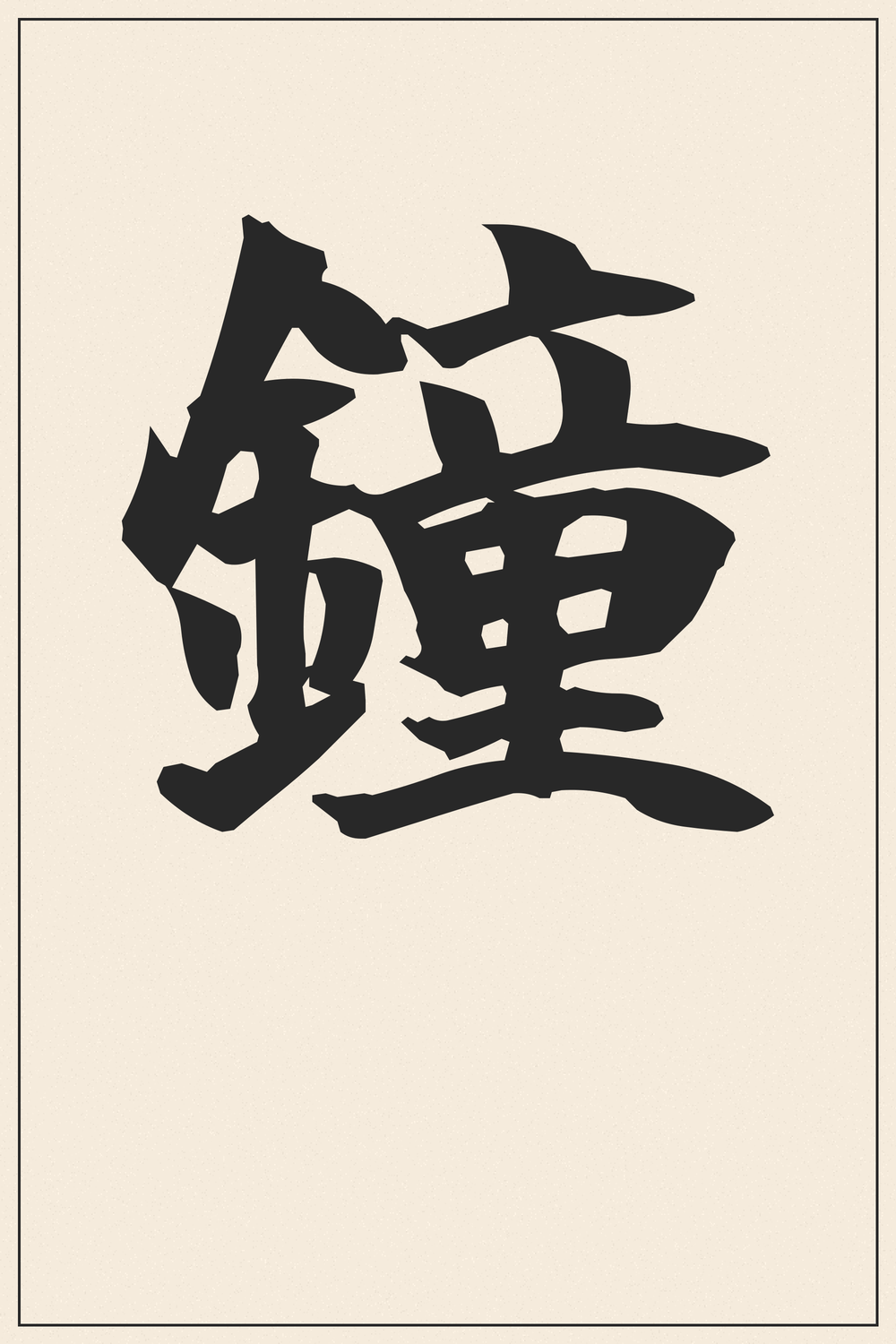
The Kanji 鐘 embodies more than just a musical instrument; it represents a profound call to mindfulness and spiritual awakening. Its resonant symbolism connects deeply with tradition and the serene soundscapes of ancient Japan.
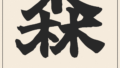
The atmosphere of a Kanji character changes dramatically depending on the font style. A character that looks elegant in a brush style might look bold and modern in a different font.
Recommendation:
Since a tattoo is permanent, we strongly recommend comparing various font styles beyond what is shown here. Use our designs as a trusted reference for the correct structure, but feel free to explore different artistic variations to find the perfect match for your vision.
The Deep Meaning Behind 鐘
The Kanji 鐘 (kane, shō) primarily signifies a ‘bell’ or ‘chime’. Its etymological roots combine the radical 金 (kin), meaning ‘metal’ or ‘gold’, indicating the material from which bells are typically made. This metallic element highlights the durability and resonant quality inherent in a bell’s structure.
The phonetic component is 童 (dō), meaning ‘child’ or ‘youth’, which also lends its sound to create a sense of ‘chime’ or ‘sound’. Together, these components eloquently form a character that represents a metal instrument designed to produce a clear, resonant sound. In Japanese culture, the 鐘, particularly the temple bell (梵鐘, bonshō), holds deep spiritual significance, often rung to mark time, aid in meditation, or cleanse the soul during events like New Year’s Eve (除夜の鐘, Joya no Kane).
Kanji Breakdown
The Kanji 鐘 is composed of two primary elements that convey its meaning and sound.
Meaning: Metal, gold. This radical indicates the material composition, signifying that a bell is made of metal, providing its inherent strength and ability to resonate.
Meaning: Child, youth. While literally meaning ‘child’, this component acts phonetically here to suggest the ‘sound’ or ‘chime’ aspect of the bell.
Conclusion
The Kanji 鐘, more than a simple object, is a symbol of profound cultural and spiritual significance in Japan. It represents a call to clarity, a marker of time, and a sound that guides reflection and spiritual awakening, particularly through the revered temple bells.
For those seeking a tattoo that embodies tradition, spiritual resonance, and a connection to the serene sounds of Japan, 鐘 makes an excellent choice. Its intricate design lends itself to a beautiful tattoo, provided its detailed strokes are accommodated with appropriate sizing to ensure lasting clarity.
Comments