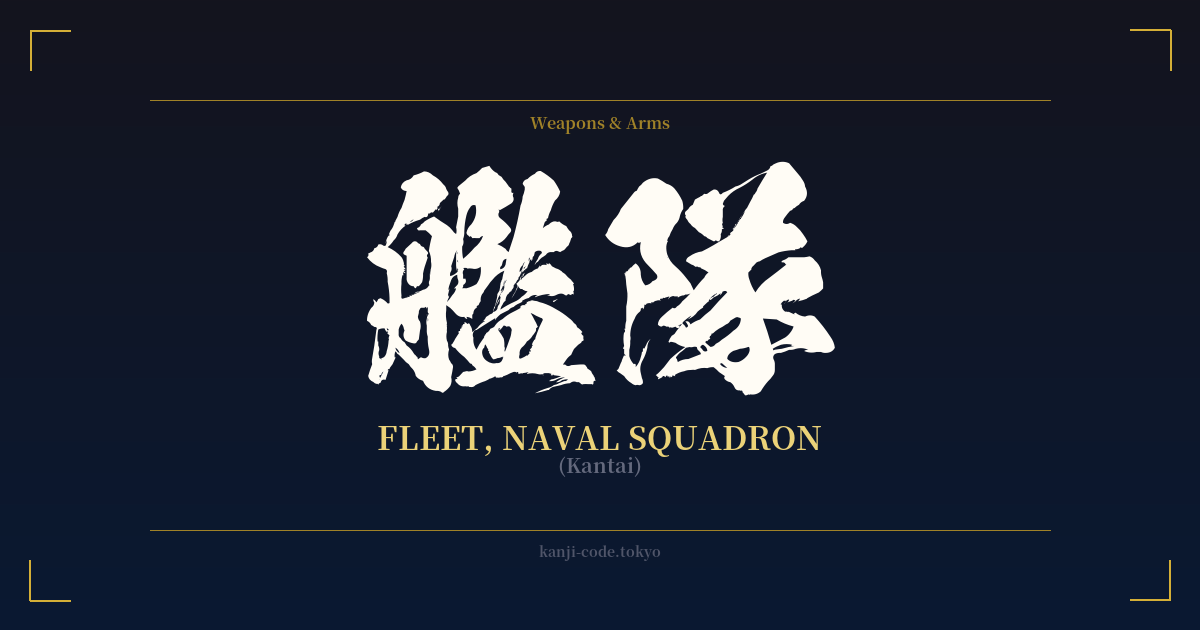
✍️ 艦隊 (Kantai) — Cultural Context
艦隊 (Kantai) translates directly to a naval fleet or squadron. It is a word built for a specific purpose: to describe an organized group of warships operating under a single command. For Japan, an island nation defined by its relationship with the sea, the concept of a powerful fleet has been a cornerstone of its identity, defense, and at times, its imperial ambitions.
The significance of naval power in Japan is ancient. The nation's fate was famously saved by a "divine wind" (神風, Kamikaze) that destroyed the Mongol invasion fleets in the 13th century, cementing the sea as Japan's ultimate defense. However, the modern concept of Kantai is most closely tied to the Meiji Restoration and the subsequent rise of the Imperial Japanese Navy (大日本帝国海軍, Dai-Nippon Teikoku Kaigun).
The Imperial Japanese Navy's Combined Fleet (連合艦隊, Rengō Kantai) became a symbol of national strength and modernization. Its victory against the Russian fleet at the Battle of Tsushima in 1905 was a moment of immense national pride. This history, however, is inseparable from the aggression of World War II, where the Kantai became the instrument of Japan's expansionist policies. Names of its battleships, like Yamato and Musashi, are legendary but also tied to immense conflict and tragedy. This historical weight is the primary reason the word carries such a heavy and potentially controversial connotation today.
In the post-war era, the term is used by the Japan Maritime Self-Defense Force (海上自衛隊, Kaijō Jieitai), though the context is now strictly defensive. Beyond its military application, Kantai has found a new life in popular culture. Science fiction anime and manga, such as Space Battleship Yamato and Legend of the Galactic Heroes, frequently use Kantai to refer to fleets of spaceships, carrying the themes of command, strategy, and large-scale battle into futuristic settings.
More recently, the game and anime series Kantai Collection (艦これ, KanColle) has had a massive cultural impact. The series personifies historical Japanese warships as female characters, blending military history with 'moe' aesthetics. This has introduced the word Kantai and its associated history to a new generation, though in a highly stylized and often de-politicized form.
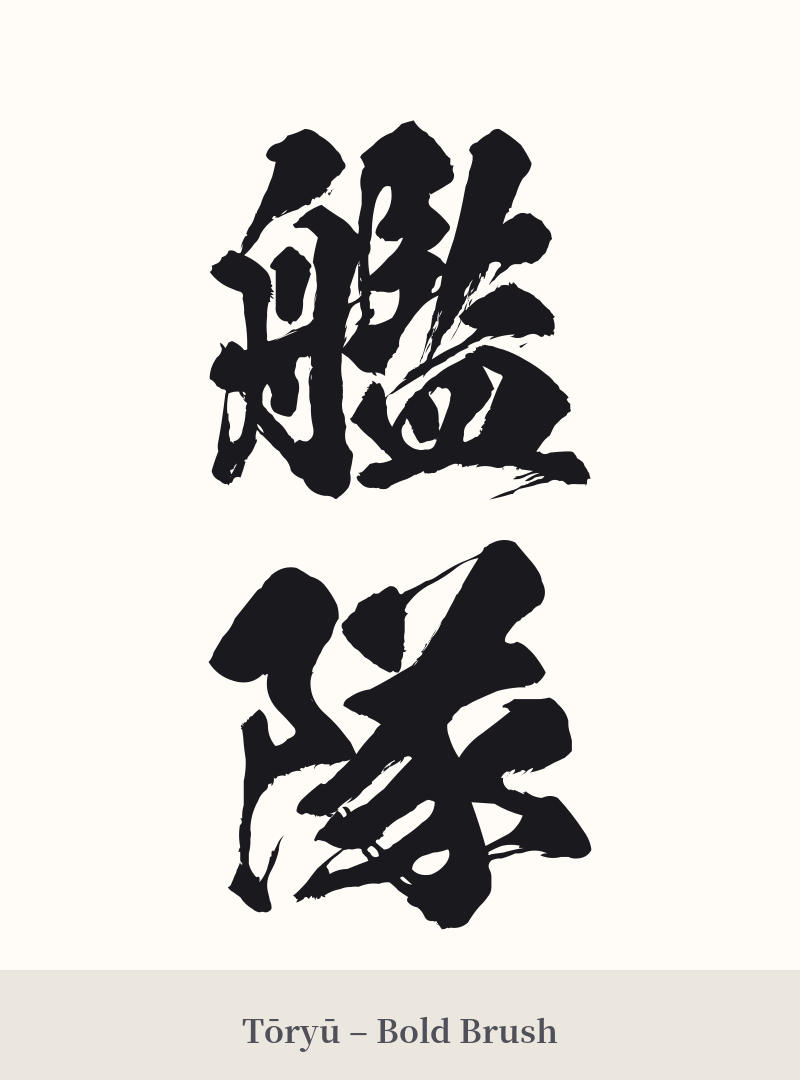
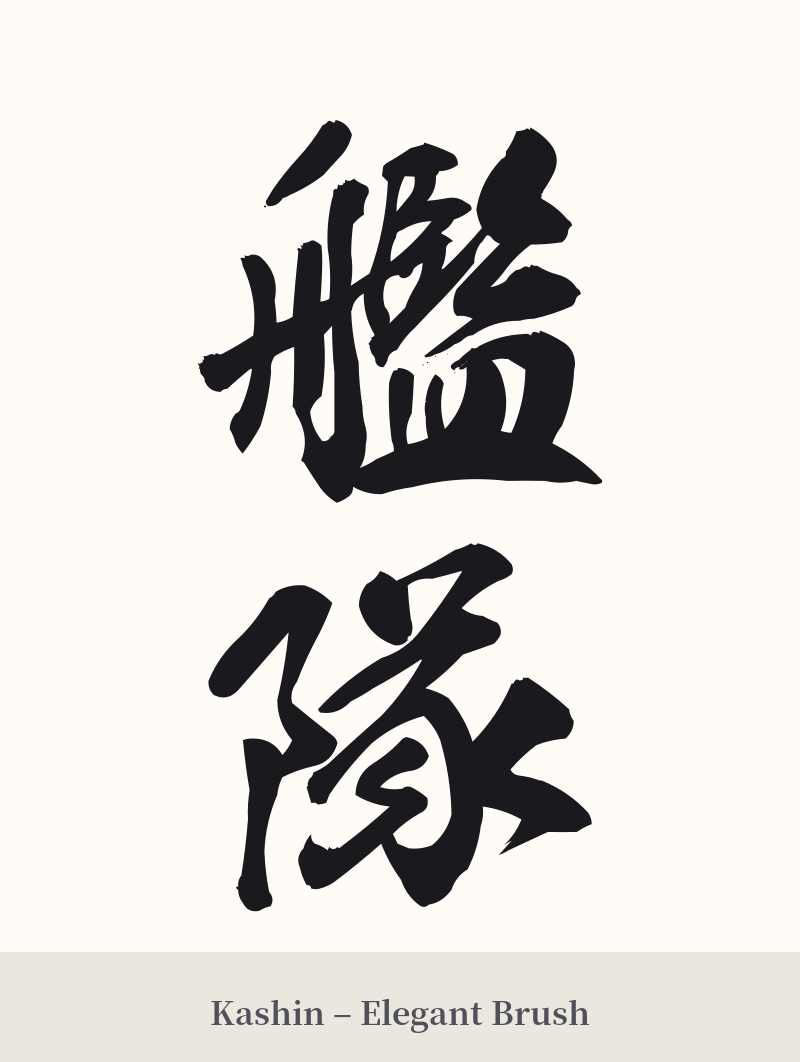
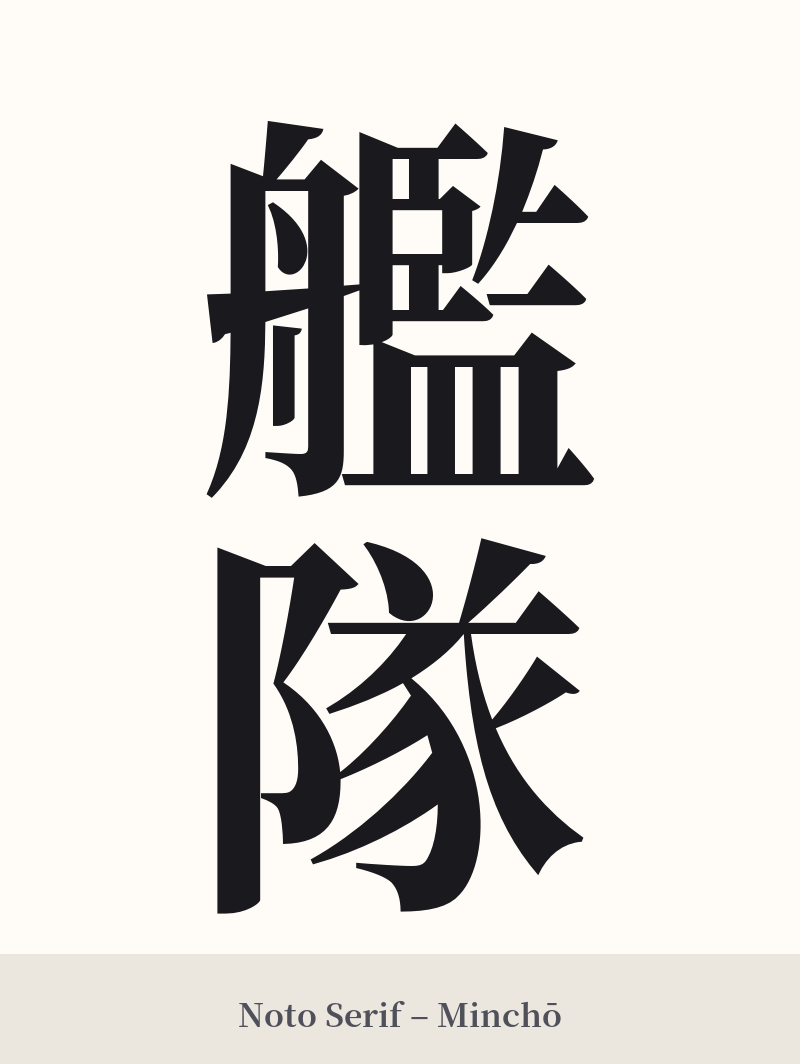
🖌️ Font Styles for 艦隊
The same kanji can look dramatically different depending on the calligraphy style. Choose a font that matches the mood you want for your tattoo or design.
🎨 Tattoo Suitability
📐 Tattoo Design Guide
Due to the complexity and detail of the characters in 艦隊, a tattoo of this word requires careful planning.
– Placement: This design needs space to be legible. Consider large, flat areas like the back, chest, or the outer thigh. A vertical orientation along the forearm or calf could also be effective, provided it's large enough.
– Font Style: The characters are dense, so clarity is key. A bold, clean Kaisho (block) script will ensure each stroke is defined. A strong, semi-cursive Gyosho script can add a sense of movement, like ships on water, but requires a very skilled artist to avoid it becoming an illegible smudge.
– Visual Tips: To avoid legibility issues, do not shrink this design. Emphasize to your artist that the small spaces within the 艦 character must remain open. Pairing it with imagery like traditional Japanese waves or an anchor can reinforce the naval theme, but be cautious about adding other symbols that might amplify its militaristic meaning.
Comments