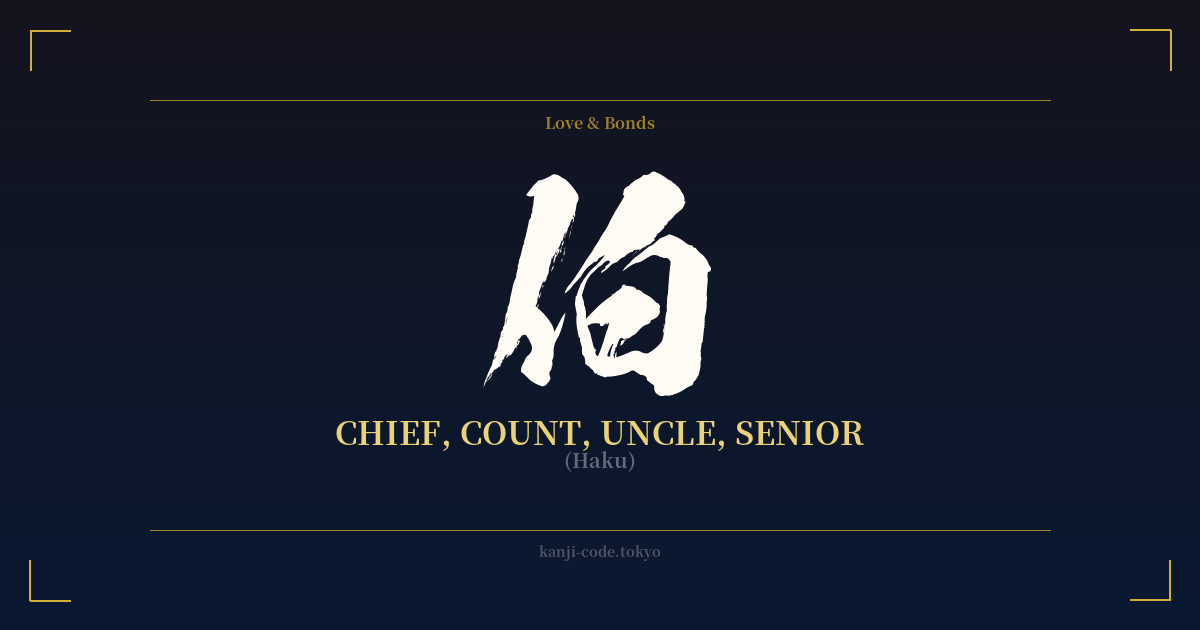
✍️ 伯 (Haku) — Cultural Context
The kanji 伯 (haku) is a character steeped in the principles of hierarchy, seniority, and specific social roles. Its structure provides a clue to its core meaning: the left-side radical, 亻, signifies a 'person,' while the right-side component, 白 (haku, 'white'), serves as a phonetic guide. However, some etymological theories suggest 白 also implies 'first' or 'eldest,' creating a powerful image of the 'first person' or the senior-most individual.
Historically, the most fundamental meaning of 伯 is 'the eldest brother.' From this concept of familial seniority, its meaning expanded to encompass leadership roles in a broader sense, such as 'chief' or 'head of a group.' This sense of high rank is most famously preserved in the Meiji-era aristocratic title 伯爵 (hakushaku), the Japanese equivalent of a European 'Count' or 'Earl.' This was part of the five-tiered nobility system (kazoku) established to organize the new oligarchy, placing a Count below a Duke (公爵) and Marquis (侯爵) but above a Viscount (子爵) and Baron (男爵).
In everyday modern Japanese, the most common encounter with 伯 is in kinship terms. It is used to make a crucial distinction regarding one's uncle. The word 伯父 (oji) specifically refers to one's father's older brother. This is distinct from 叔父 (also pronounced oji), which refers to one's father's younger brother or a mother's brother. This subtle difference underscores the importance of age and status within the traditional Japanese family structure, a nuance entirely carried by the choice between 伯 and 叔.
A fascinating and somewhat unexpected modern usage of 伯 is as an abbreviation for Brazil. The old phonetic transcription (ateji) for Brazil was 伯剌西爾 (Burajiru). Consequently, the character 伯 is still used in formal contexts to represent the country, such as in the term 日伯関係 (Nippaku kankei), meaning 'Japan-Brazil relations.'
Across these varied uses—from an ancient term for the eldest brother to a modern abbreviation for a South American nation—the common thread in 伯 is the idea of precedence, seniority, or being the 'first' in a given category. It is a character not of raw power, but of established order and rank.
🖌️ Font Styles for 伯
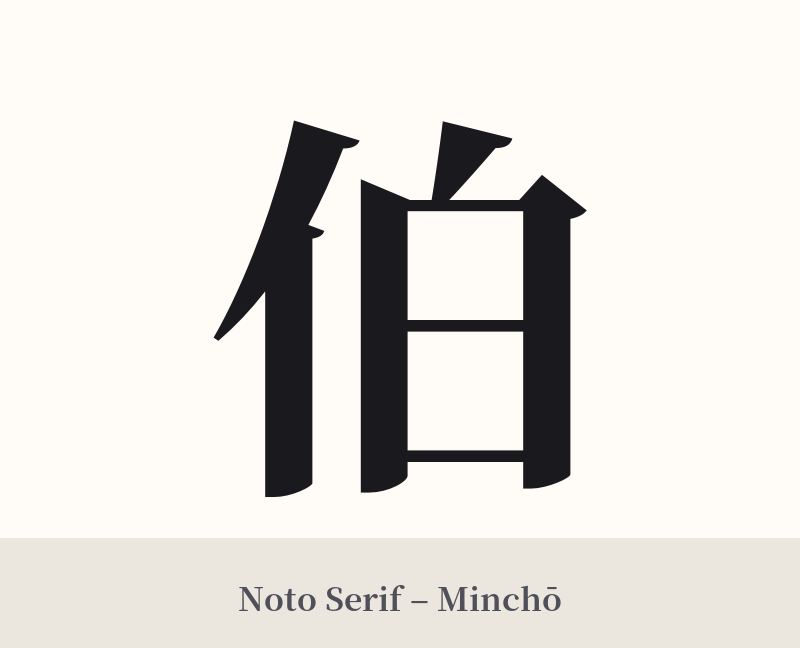
The same kanji can look dramatically different depending on the calligraphy style. Choose a font that matches the mood you want for your tattoo or design.
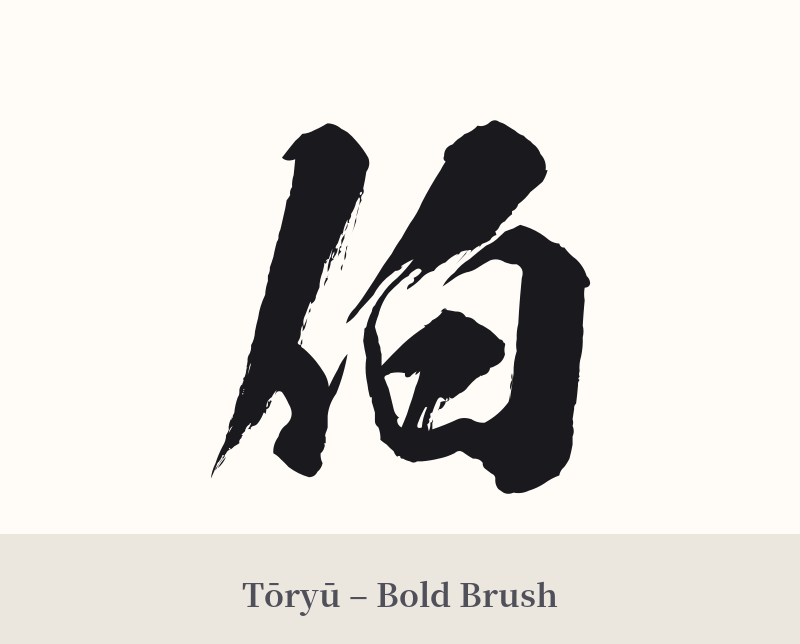
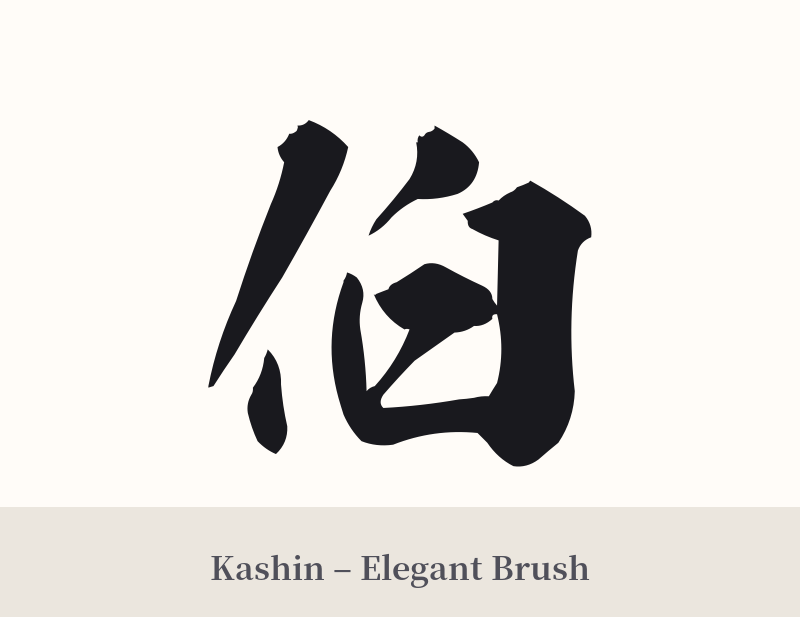
🎨 Tattoo Suitability
📐 Tattoo Design Guide
Given its specific and somewhat formal meaning, the kanji 伯 works best in designs that reflect its context. As a standalone piece, it can appear ambiguous, so thoughtful planning is key.
– Placement: This character is not large or complex, making it suitable for smaller, more discreet locations. Consider the inner wrist, the area behind the ear, the ankle, or as a small element on the nape of the neck. It may look lost or underwhelming in a large space like a full back or chest piece unless integrated into a larger composition.
– Style: For a classic, authoritative look, a bold Kaisho (block) or Mincho (serif) font is an excellent choice. This emphasizes the character's structural balance and formal connotations. For a more historical or personal feel, a semi-cursive Gyosho script could work, but be aware that this may reduce legibility.
– Visual Tips: It is strongly recommended to pair 伯 with other elements to provide context. If you wish to honor a senior family member, it could be part of a design with their name or a symbolic flower. If the 'Brazil' connection is the inspiration, incorporating green and yellow colors or motifs from Brazilian culture would clarify the intent. Using it alone risks looking like an unfinished word or a random character.
Comments