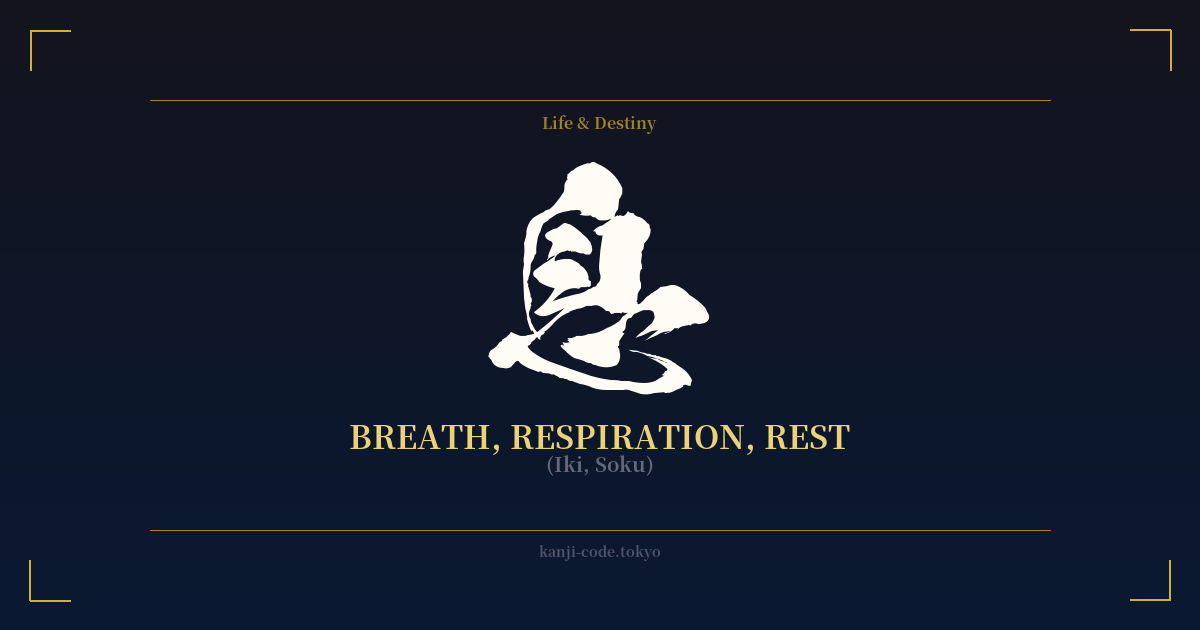
✍️ 息 (Iki, Soku) — Cultural Context
The kanji 息 (iki) is one of the most fundamental and profound characters in the Japanese language. At its core, it represents 'breath' or 'respiration'—the simple, rhythmic act that defines life itself. But its meaning extends far beyond mere biology, touching upon concepts of life force, mindfulness, and tranquility.
The character’s origin offers a beautiful insight into its meaning. It is a phono-semantic compound, combining 自 (ji), which originally depicted a nose, and 心 (shin/kokoro), meaning 'heart'. Together, they represent the breath that flows from the 'self' and is connected to the 'heart' or core of one's being. This etymology beautifully captures the idea of breath as the bridge between the physical body and the inner spirit.
In Japanese culture, breath is not just a passive function; it is an active tool for focus and spiritual cultivation. This is most evident in Zen Buddhism, where breath-counting meditation, known as 'susokukan' (数息観), is a foundational practice. By focusing on the 'iki', practitioners anchor their minds in the present moment, quieting the storm of thoughts and achieving a state of calm clarity. The gentle inhale and exhale become a mantra, a return to the source.
This reverence for breath extends into the world of Japanese martial arts, or 'budō'. The concept of 'kokyū' (呼吸), which uses the same kanji for 'breath', is central to generating power, maintaining balance, and controlling one's energy (ki). A master swordsman or karateka understands that true strength comes not from brute muscle, but from the synchronized, controlled release of breath. The powerful shout known as a 'kiai' (気合) is a potent manifestation of this principle, focusing all of one's spirit into a single moment through a sharp exhalation.
Beyond these specialized fields, 息 permeates everyday language and expression. To be breathless with awe is 'iki o nomu' (息を飲む, literally 'to swallow breath'). When two people are perfectly in sync, their 'iki ga au' (息が合う, 'breaths match'). A deep sigh, releasing tension or sorrow, is a 'tameiki' (ため息). These phrases show how deeply the concept of breath is woven into the emotional and relational fabric of Japanese life.
Furthermore, with the reading 'soku', the kanji takes on the meaning of 'rest' or 'respite'. It appears in words like 'kyūsoku' (休息), meaning a break or rest. This links the act of breathing to the essential need for pause and recovery, reminding us that in the rhythm of life, the space between actions—the quiet exhale—is just as important as the action itself.
🖌️ Font Styles for 息
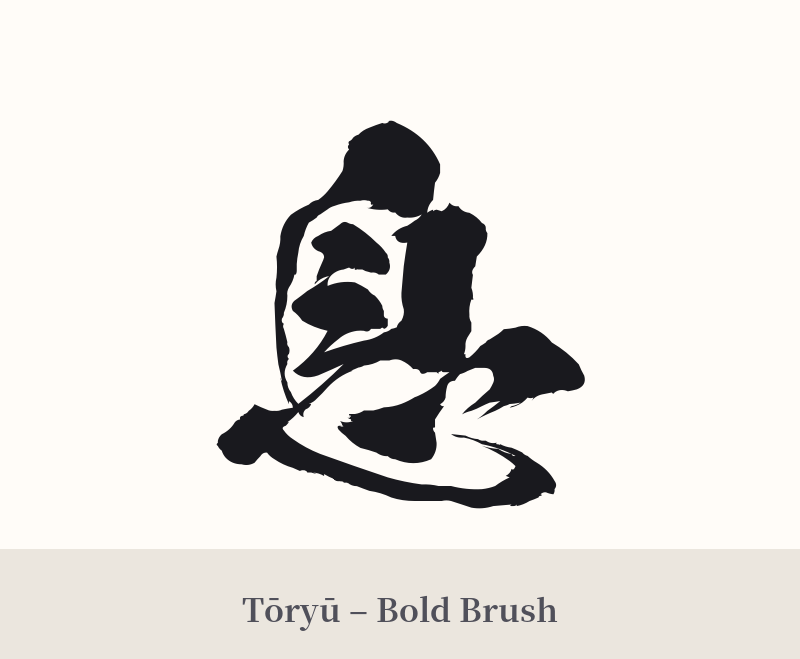
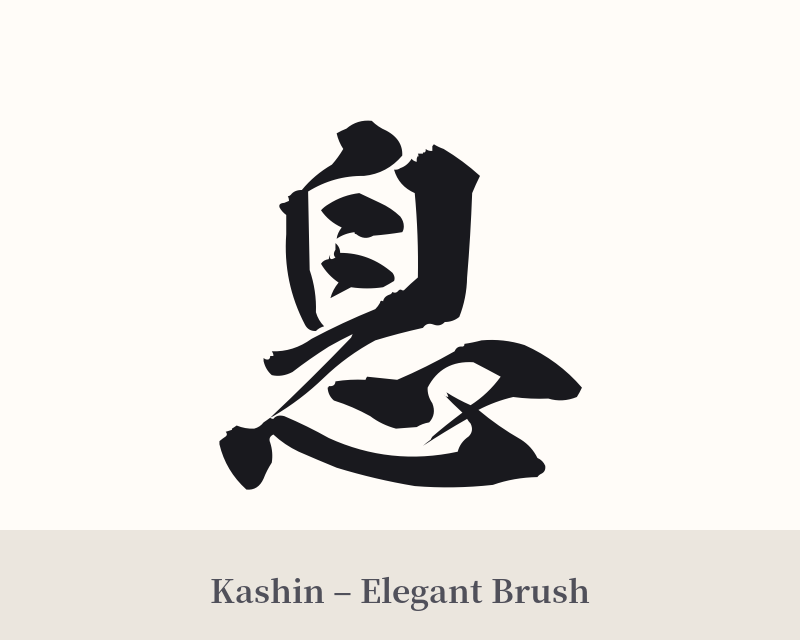
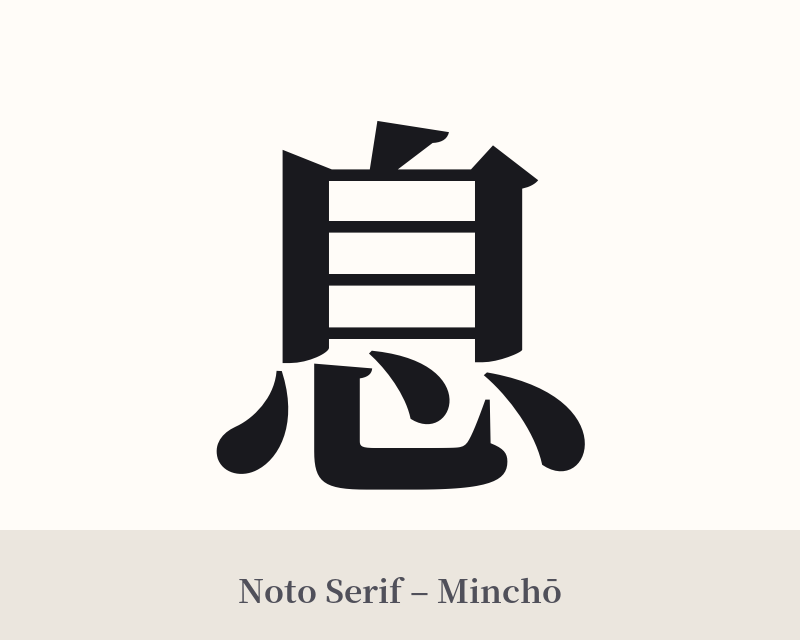
The same kanji can look dramatically different depending on the calligraphy style. Choose a font that matches the mood you want for your tattoo or design.
🎨 Tattoo Suitability
📐 Tattoo Design Guide
The kanji 息 offers a blend of profound meaning and visual elegance, making it an excellent choice for a tattoo. Its balanced form works well in various styles and placements.
– Placement: Consider areas connected to breathing and the body's core. The ribs, chest (over the heart), or the back of the neck are powerful choices. For a more subtle design, the inner forearm or wrist allows for personal reflection.
– Font Style: A traditional calligraphy style like 'shodō' can emphasize the flow and energy of breath, with dynamic, expressive strokes. Conversely, a clean, minimalist 'Mincho' or 'Gothic' font can highlight the character's simple, fundamental nature.
– Visual Tips: You might consider integrating 息 with an 'ensō' circle to symbolize enlightenment and the present moment. It can also be designed to look as if it's dissolving like a puff of air or flowing like wind, visually reinforcing its meaning.
Comments