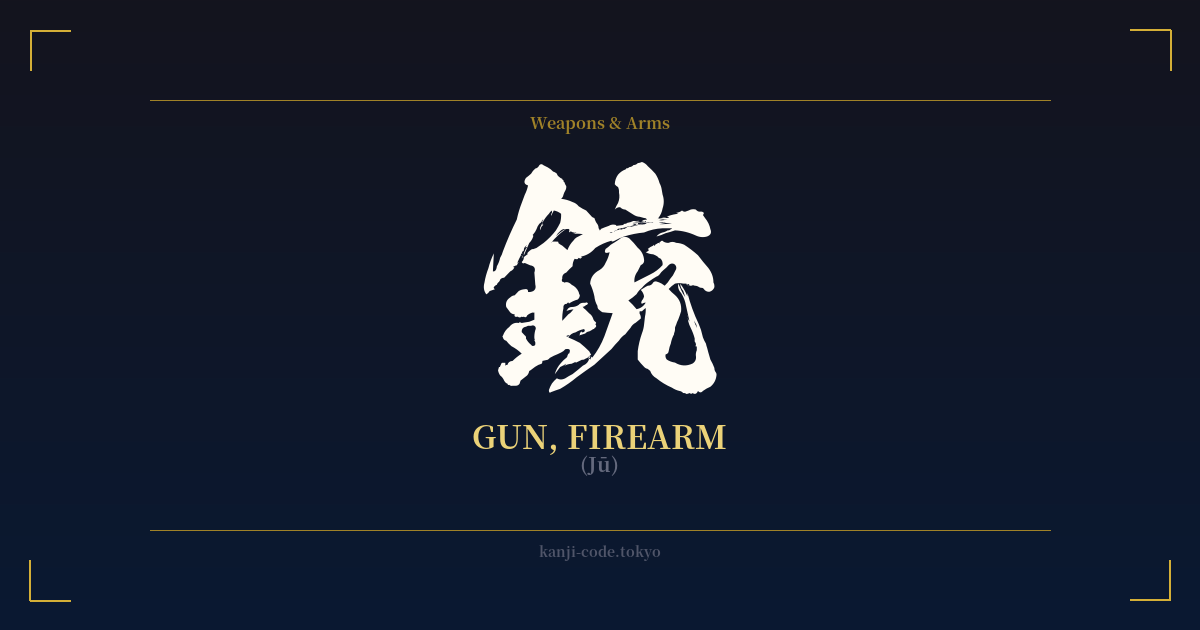
✍️ 銃 (Jū) — Cultural Context
The kanji 銃 (Jū) is the modern Japanese character for 'gun' or 'firearm'. Its construction offers a clear glimpse into its meaning: it combines the radical 金 (kin/kane), meaning 'metal', with the phonetic component 充 (jū), which means 'to fill' or 'to charge'. Together, they create a vivid picture of a metal object that is filled or charged, a perfect description of a firearm loaded with gunpowder and a projectile.
Firearms have a complex and fascinating history in Japan. They were first introduced in 1543 when Portuguese traders were shipwrecked on the island of Tanegashima. The local lord purchased two matchlock arquebuses from them and set about manufacturing copies. These firearms, known as Tanegashima (種子島), spread rapidly and dramatically changed the nature of warfare during the tumultuous Sengoku period (Warring States period). The dominance of the samurai's traditional bow and sword was challenged, and battles were increasingly decided by formations of ashigaru (foot soldiers) armed with guns.
However, after Japan was unified under the Tokugawa shogunate in the early 17th century, a remarkable reversal occurred. The government imposed severe restrictions on the production and ownership of firearms. This policy, aimed at preventing rebellion and preserving the social hierarchy with the samurai class at its apex, led to Japan effectively abandoning the gun for over two centuries. The sword was re-established as the preeminent symbol of the warrior, a cultural shift that cemented the katana's iconic status.
This historical context is crucial for understanding the modern Japanese perception of 銃. Following World War II, Japan adopted a pacifist constitution and enacted some of the strictest gun control laws in the world. For the average Japanese citizen, guns are not a part of daily life, sport, or culture. They are seen almost exclusively in the hands of the police, the Self-Defense Forces, or, most prominently in the public imagination, criminals and yakuza. This association is heavily reinforced by movies, anime, and manga, where firearms are the tools of gangsters, rebels, and dystopian enforcers. Therefore, the character 銃 carries a strong, often negative, connotation of violence, illegality, and anti-social behavior, a stark contrast to its perception in some other cultures.
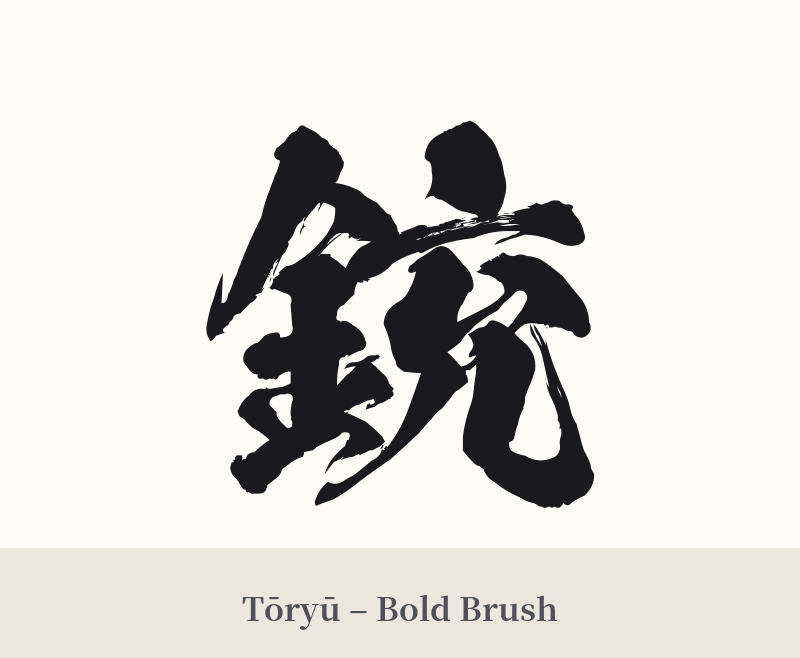
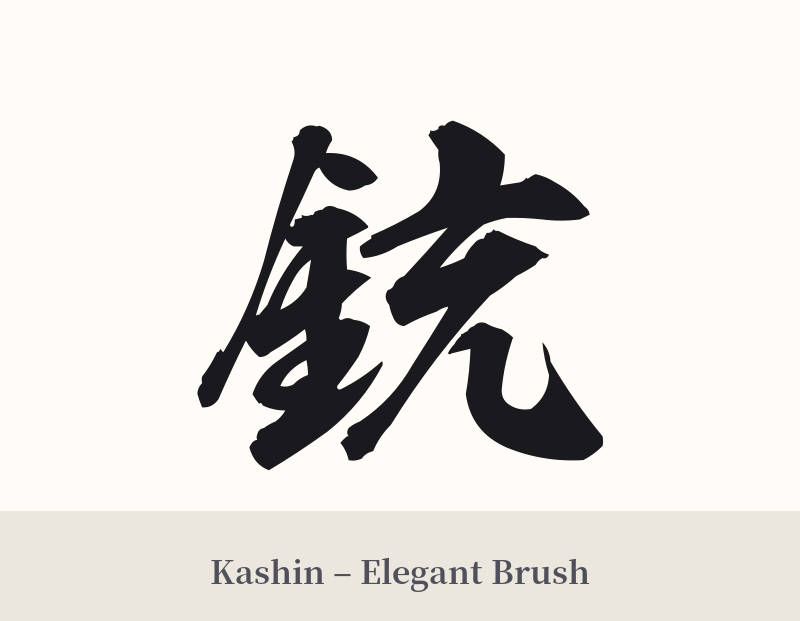
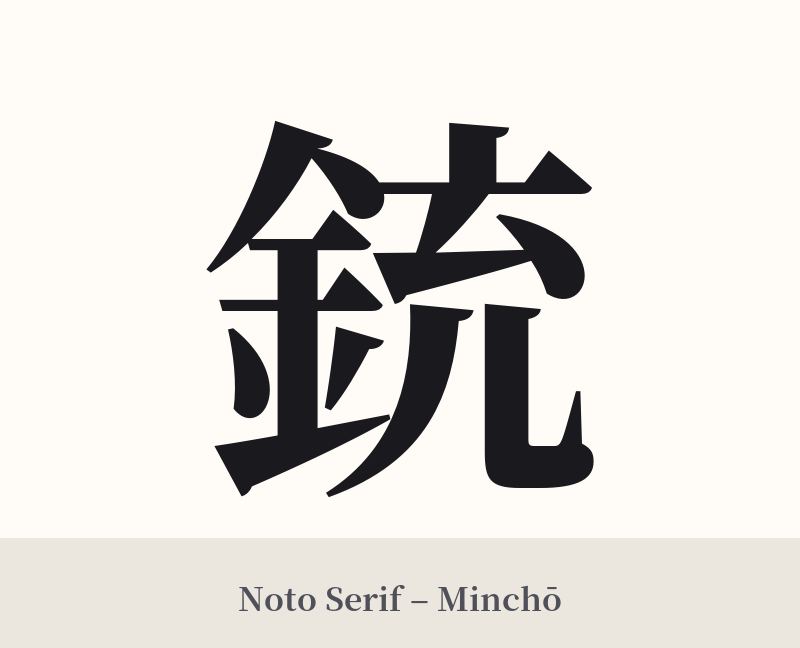
🖌️ Font Styles for 銃
The same kanji can look dramatically different depending on the calligraphy style. Choose a font that matches the mood you want for your tattoo or design.
🎨 Tattoo Suitability
📐 Tattoo Design Guide
Given the modern and mechanical nature of 銃, certain design choices can enhance its aesthetic. This is a character that often looks best with precision and clarity rather than flowing, organic styles.
– Placement: Consider areas like the forearm, calf, or the back of the shoulder. These spots provide a flat, stable canvas that allows the character's strokes to be rendered cleanly.
– Font Style: A crisp, modern font is highly recommended. Geometric or blocky styles like a sans-serif or a sharp Mincho typeface complement the subject matter. Avoid overly cursive or expressive calligraphy (shodō) styles, as the flowing, traditional feel can clash with the industrial nature of a firearm.
– Visual Tips: As a standalone piece, focus on sharp lines and perfect balance. If incorporating it into a larger design, it fits naturally within cyberpunk, dystopian, or military-themed tattoos. However, be aware that pairing it with other aggressive imagery will only amplify the negative cultural connotations.
Comments