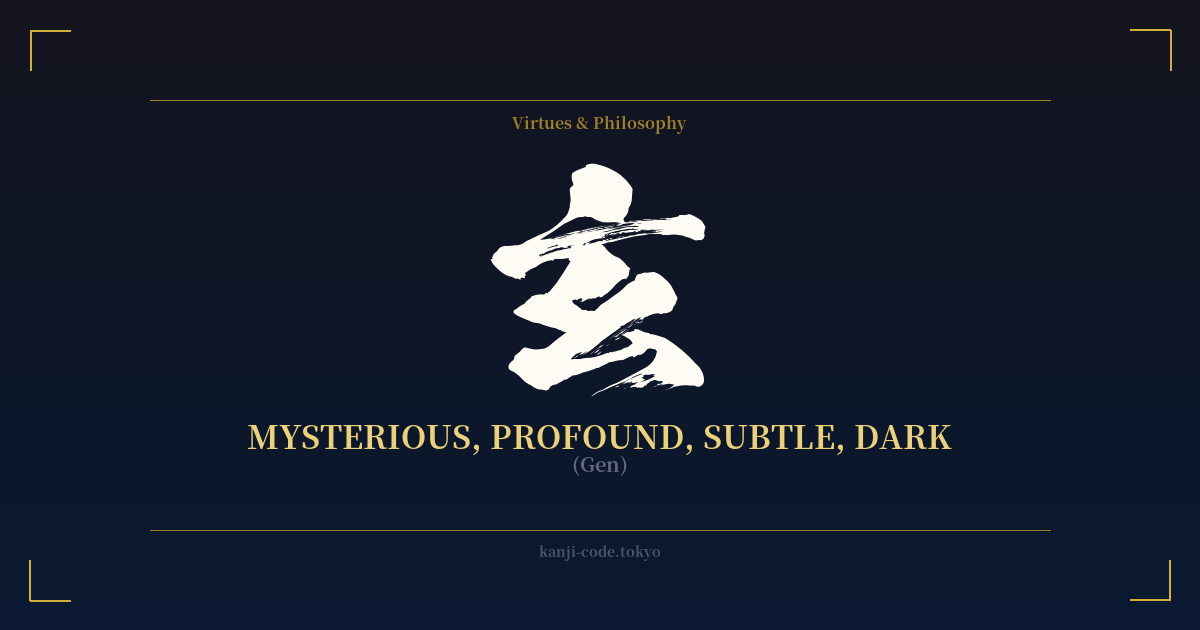
✍️ 玄 (Gen) — Cultural Context
The kanji 玄 (gen) is one of the most philosophically rich characters in the Japanese language, carrying a weight that far exceeds its simple five-stroke form. Its primary meaning is not just 'dark' in a literal sense, but rather a profound, subtle, and mysterious darkness that points to the origin of all things.
Historically, the character is thought to depict two strands of silk being twisted together, dyed a deep, almost black color. This isn't the darkness of evil or absence, but the darkness of the deep ocean, the vast cosmos, or a truth that lies beyond human comprehension. It represents the unseeable, the unknowable, and the fundamental source of existence.
This concept is central to Taoism, where the Chinese philosopher Laozi used the character (xuán in Mandarin) repeatedly in the Tao Te Ching. He described the Tao as '玄之又玄' (gen no mata gen), the 'mystery of mysteries' or 'profundity within profundity.' For Taoists, 玄 is the gateway to understanding the fundamental nature of the universe—a reality that is subtle, silent, and can only be intuited, not explained.
When these ideas flowed into Japan, they were seamlessly integrated into Zen Buddhism and Japanese aesthetics. In Zen, 玄 points to the deep, non-verbal understanding that comes from meditation and direct experience. It is the quiet truth found in a single moment, a truth that words can only hint at.
This philosophical underpinning gave rise to the Japanese aesthetic principle of 'yūgen' (幽玄), which combines 玄 with the character for 'faint' or 'dim.' Yūgen describes a profound, mysterious beauty that is hinted at rather than explicitly stated. It’s the feeling of watching the sun disappear behind a flower-clad hill, or seeing a ship vanish behind a distant island. It is the beauty of the unseen and the imagined, a core value in traditional arts like Noh theater, poetry, and ink wash painting.
Today, while 玄 appears in some words like 玄人 (kurōto), meaning 'expert' or 'professional,' its primary identity remains deeply philosophical. It is a character for those who appreciate subtlety over spectacle, depth over surface, and the quiet beauty of the unknown.
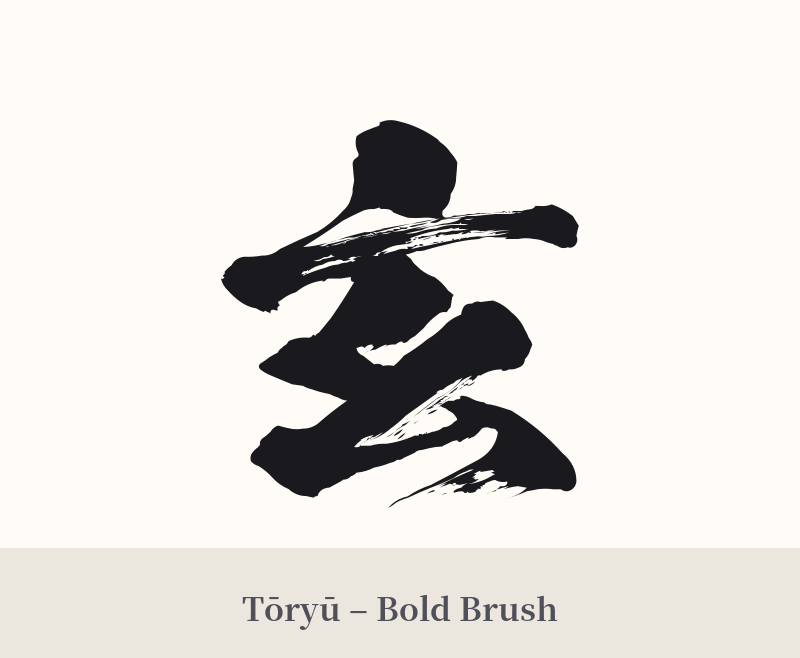
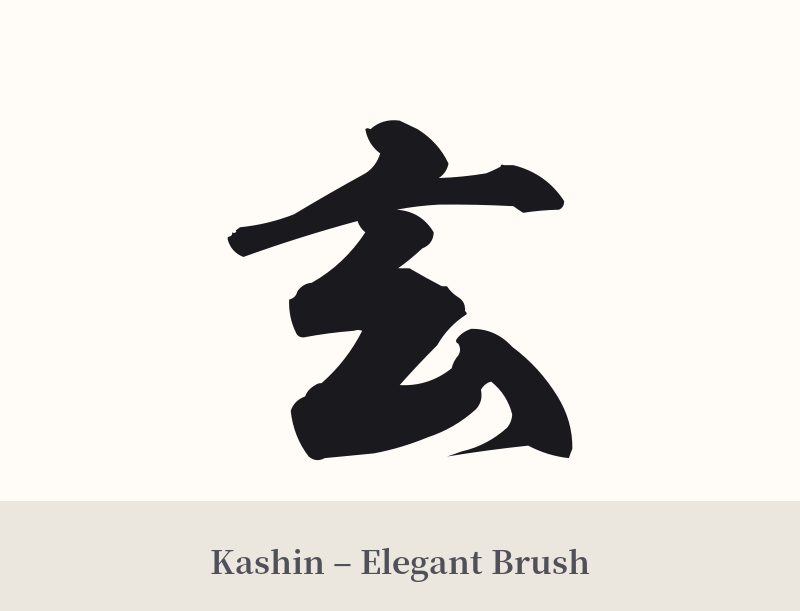
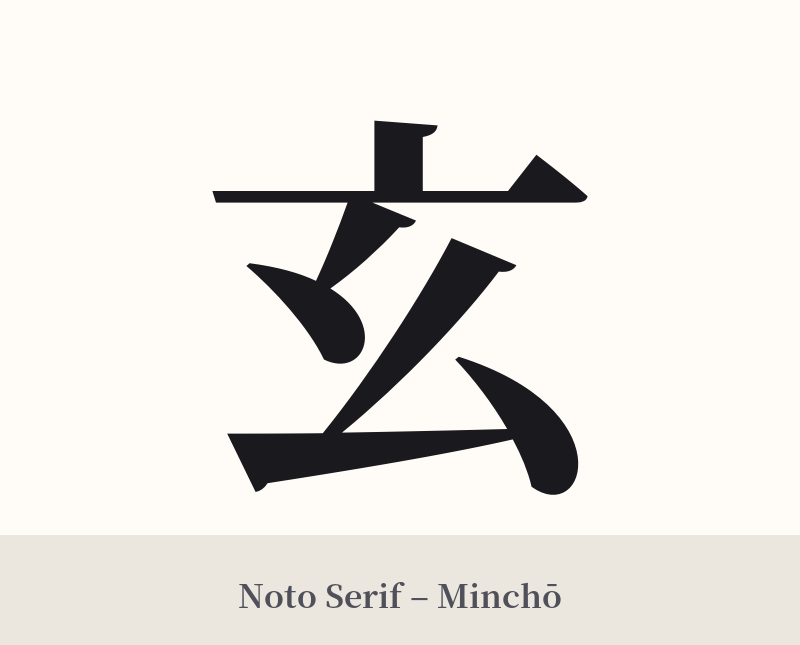
🖌️ Font Styles for 玄
The same kanji can look dramatically different depending on the calligraphy style. Choose a font that matches the mood you want for your tattoo or design.
🎨 Tattoo Suitability
📐 Tattoo Design Guide
The kanji 玄 offers wonderful versatility for a tattoo due to its elegant simplicity.
– Placement: Its small, balanced shape works well in subtle locations like the inner wrist, behind the ear, on the ankle, or the nape of the neck. For a more prominent statement, it can be placed on the forearm or as a central element on the chest or back, where its minimalist form can command space.
– Font Style: A classic, crisp Kaisho (block) script will emphasize its architectural balance and ancient feel. For a more fluid and organic look, consider a Gyōsho (semi-cursive) or Sōsho (cursive) style, which can enhance the feeling of 'mystery' and 'flow.' A minimalist, sans-serif style can give it a very modern and clean interpretation.
– Visual Tips: Because of its simplicity, 玄 is a perfect candidate to be integrated into a larger piece. It looks stunning placed within an Ensō (Zen circle) to represent the universe contained within the void. It can also be subtly incorporated into a landscape tattoo, perhaps as a mark on a stone in a misty mountain scene, symbolizing the profound nature within all things.
Comments