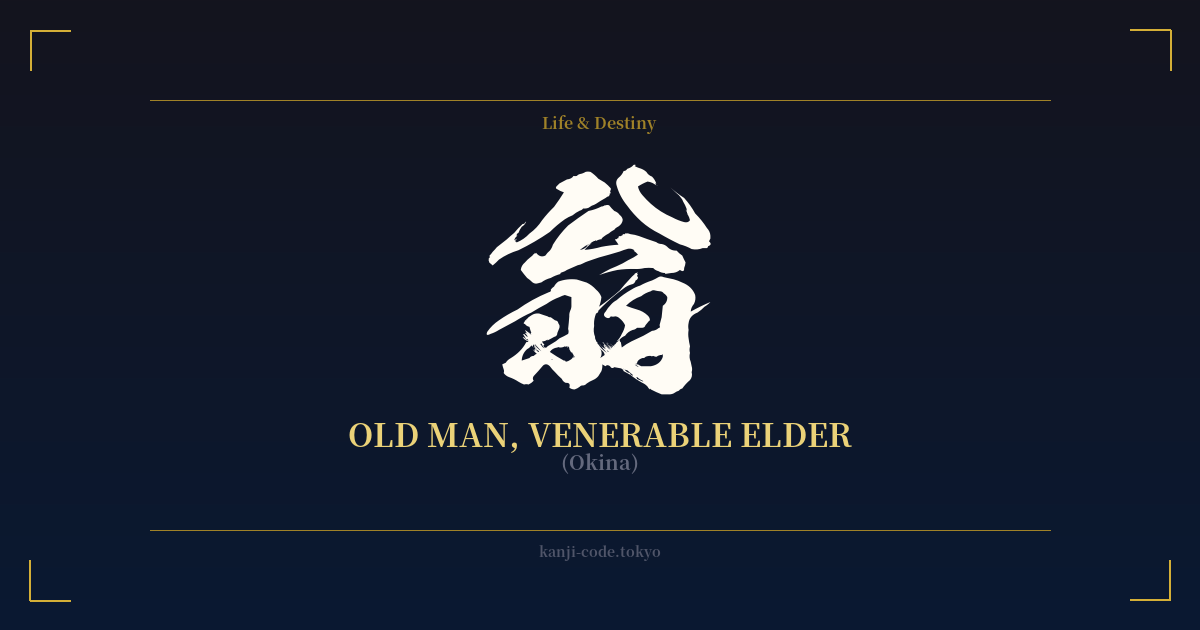
✍️ 翁 (Okina) — Cultural Context
The kanji 翁 (Okina) carries a weight and reverence far beyond its simple translation of 'old man.' It doesn't just denote age; it signifies a life rich with experience, wisdom, and a respected status within the community. Unlike the more neutral term 老人 (rōjin), which simply means an elderly person, 翁 evokes an image of a benevolent patriarch, a sage, or even a figure touched by the divine.
The most significant cultural touchstone for 翁 is Japanese Noh theater. 'Okina' is the name of a unique performance that is considered more of a sacred ritual than a play. It predates the standard Noh repertoire and is performed on special occasions to pray for peace, prosperity, and bountiful harvests. The actor wears a distinctive mask known as the Okina-men (翁面), which has a gentle, smiling expression with a separate, hinged jaw. This mask is treated as a sacred object, representing a deity who brings blessings and longevity.
This connection transforms the kanji from a mere descriptor into a symbol of divine benevolence and ancient tradition. To see the character 翁 is to immediately think of this powerful, god-like figure from the stage, a symbol of a peaceful and prosperous world.
The character also appears prominently in one of Japan's oldest and most beloved folktales, 'The Tale of the Bamboo Cutter' (竹取物語, Taketori Monogatari). The story begins with an old, childless bamboo cutter named 'Taketori no Okina' (竹取の翁) who discovers a tiny, shining baby inside a bamboo stalk—the celestial Princess Kaguya. Here, 翁 establishes the character as a humble, kind, and worthy figure chosen for a miraculous event.
From an etymological perspective, the character itself is fascinating. It's composed of the radicals 公 (kō, meaning 'public' or 'fair') on top and 羽 (hane, meaning 'feathers' or 'wings') on the bottom. One poetic interpretation suggests it depicts an old man with long, white eyebrows and a beard so flowing they resemble feathers, a visual mark of his great age and wisdom. This imagery reinforces the sense of a distinguished and venerable figure, whose life has given him a unique and respected perspective.
🖌️ Font Styles for 翁
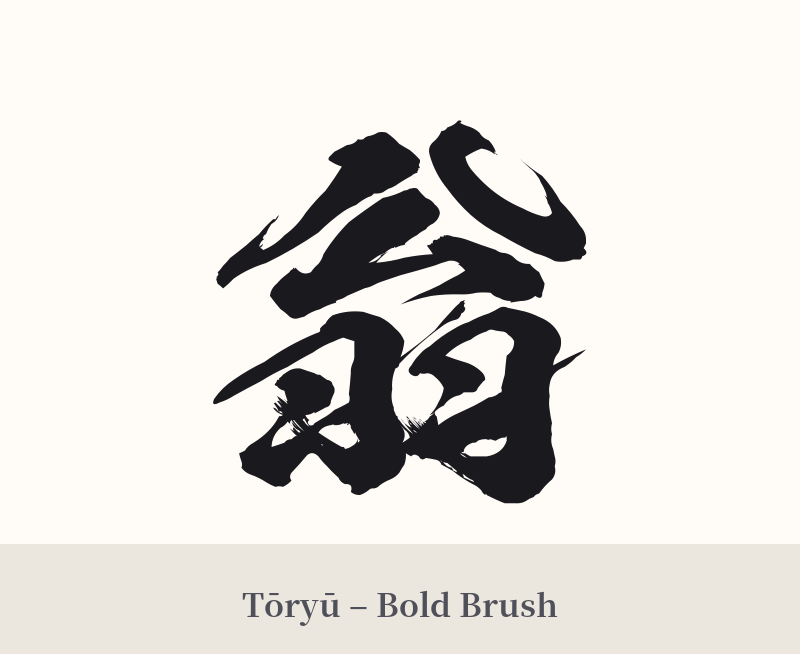
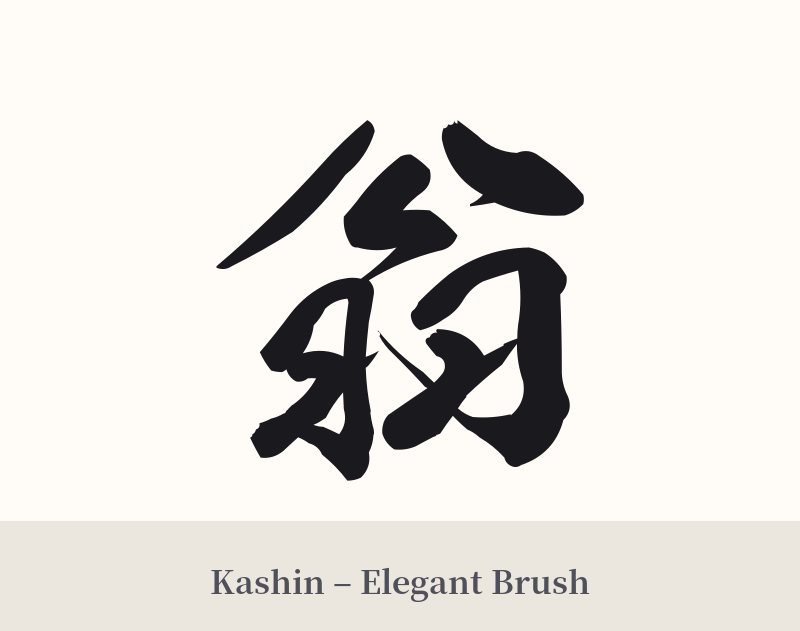
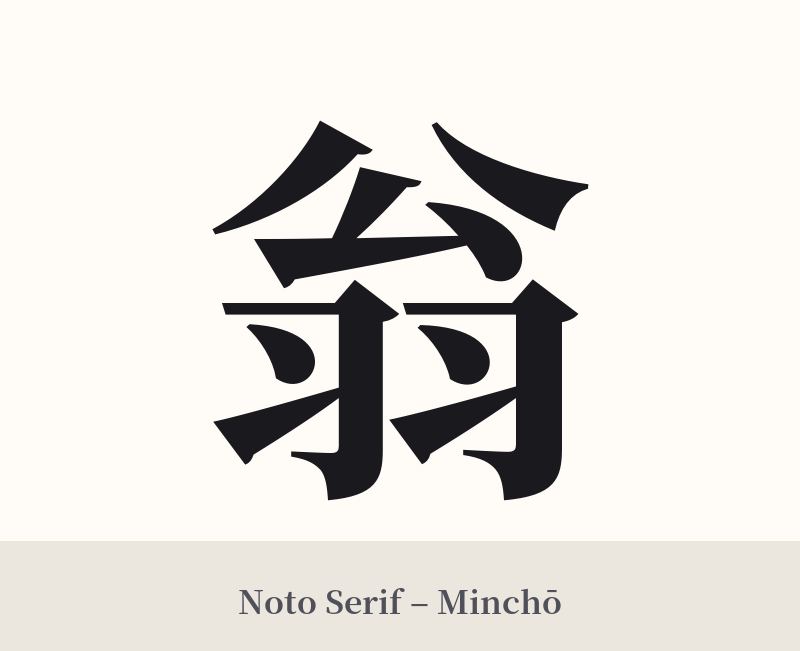
The same kanji can look dramatically different depending on the calligraphy style. Choose a font that matches the mood you want for your tattoo or design.
🎨 Tattoo Suitability
📐 Tattoo Design Guide
A tattoo of 翁 (Okina) is a statement of respect for tradition, wisdom, and age. The design should reflect this dignity.
– Placement: This character works well on a forearm, calf, or the back of the shoulder. These areas provide a flat, visible canvas that allows the character's balanced structure to be appreciated. For a more private and personal tattoo, the chest or ribs are also good options.
– Font Style: A traditional calligraphy style (shodō) is highly recommended. A dynamic, brush-stroke effect can emphasize its historical roots and artistic spirit. For a more modern take, a clean and crisp Mincho-style font can highlight the character's architectural form.
– Visual Tips: Consider incorporating elements related to its cultural context. A subtle background of bamboo stalks can allude to 'The Tale of the Bamboo Cutter.' Alternatively, you could design the kanji to be integrated with a stylized representation of the iconic Okina Noh mask. The key is to maintain clarity and not overcrowd the central character.
Comments