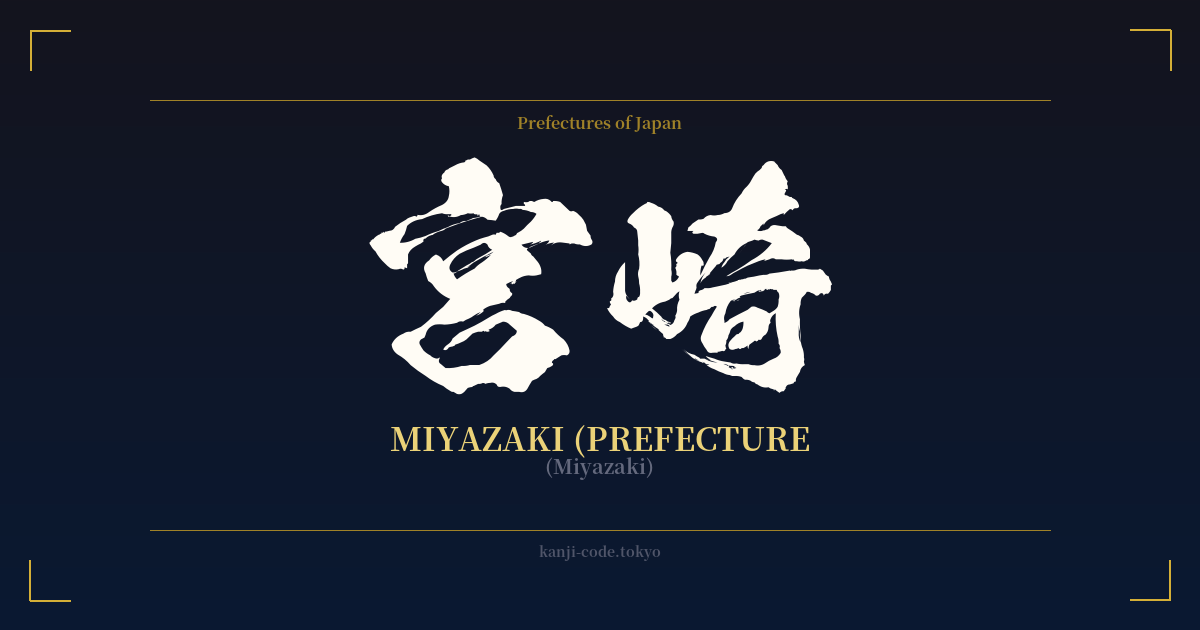
✍️ 宮崎 (Miyazaki) — Cultural Context
The word 宮崎 (Miyazaki) carries a weight that spans from Japan's most ancient myths to the heights of modern global pop culture. Composed of the kanji for 'shrine' or 'palace' (宮) and 'promontory' or 'cape' (崎), its literal translation is 'shrine promontory.' This poetic name evokes an image of a sacred piece of land jutting into the sea, a place where the divine and the natural world meet.
This imagery is perfectly embodied by Miyazaki Prefecture, located on the southeastern coast of Japan's Kyushu island. The region is steeped in Japanese mythology and is often called the 'land of myths.' According to the ancient texts of the Kojiki and Nihon Shoki, this area was the stage for many foundational events in Shinto lore. It is said to be the home of Ninigi-no-Mikoto, grandson of the sun goddess Amaterasu, who descended from the heavens to rule the earth. Consequently, Miyazaki is considered the ancestral home of Japan's first emperor, Jimmu.
This mythological heritage is woven into the landscape itself. The prefecture is dotted with important shrines like Miyazaki Jingū, dedicated to Emperor Jimmu, and Udo Jingū, a unique shrine built inside a cave on a cliff overlooking the ocean. The dramatic, rugged coastline and lush forests reinforce the feeling of a primordial, sacred land, making the name 'shrine promontory' feel deeply appropriate.
Beyond its geographical and mythological identity, 宮崎 is a common Japanese surname. It has gained worldwide recognition largely through one man: Hayao Miyazaki, the legendary co-founder of Studio Ghibli. His name has become synonymous with masterful animation, profound storytelling, and a deep reverence for nature, childhood, and pacifism. For millions around the world, the word 'Miyazaki' no longer just signifies a place; it evokes the enchanting worlds of 'My Neighbor Totoro,' 'Spirited Away,' and 'Princess Mononoke.'
This dual identity makes the kanji 宮崎 incredibly layered. It represents both the ancient, mythological soul of Japan and the modern, creative spirit that has captured the world's imagination. It is a bridge between the sacred capes where gods once walked and the animated celluloid where new myths are born.
🖌️ Font Styles for 宮崎
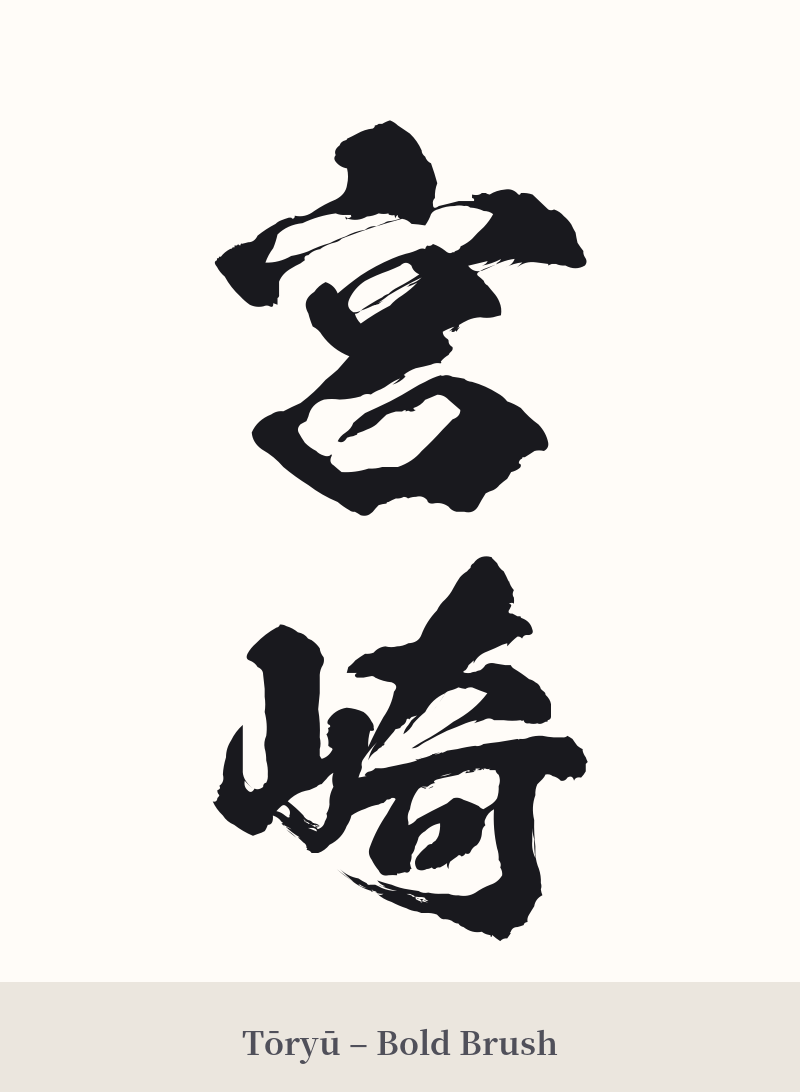
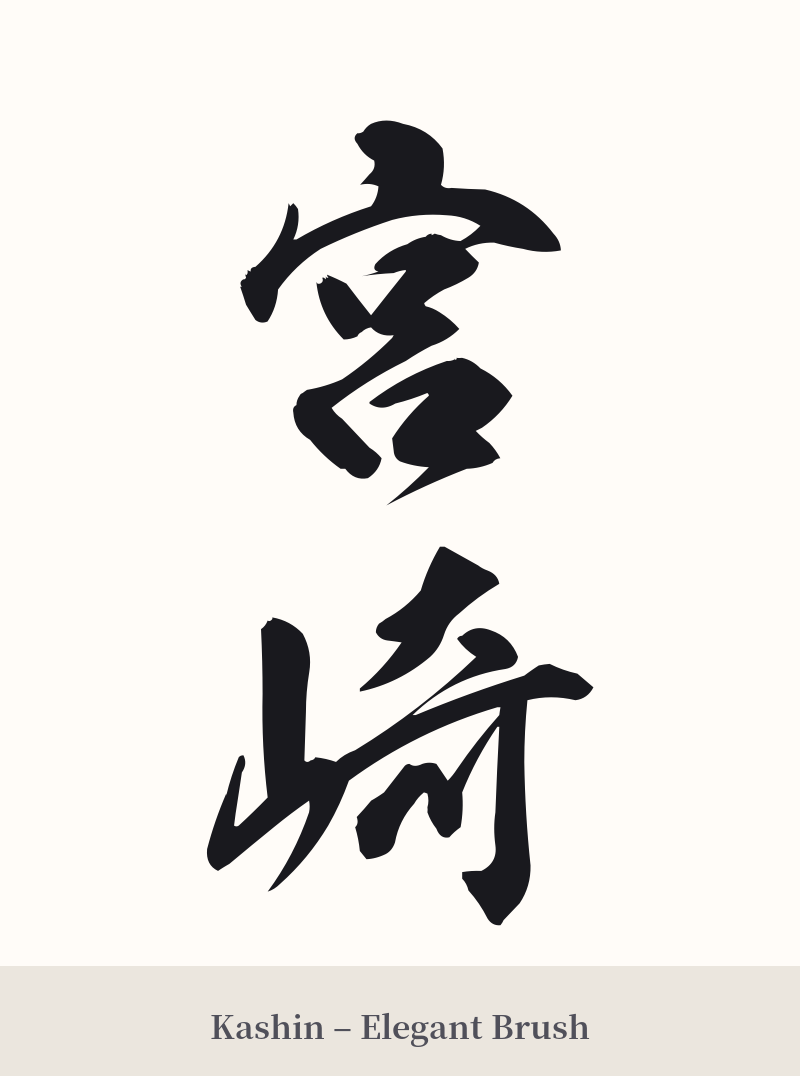
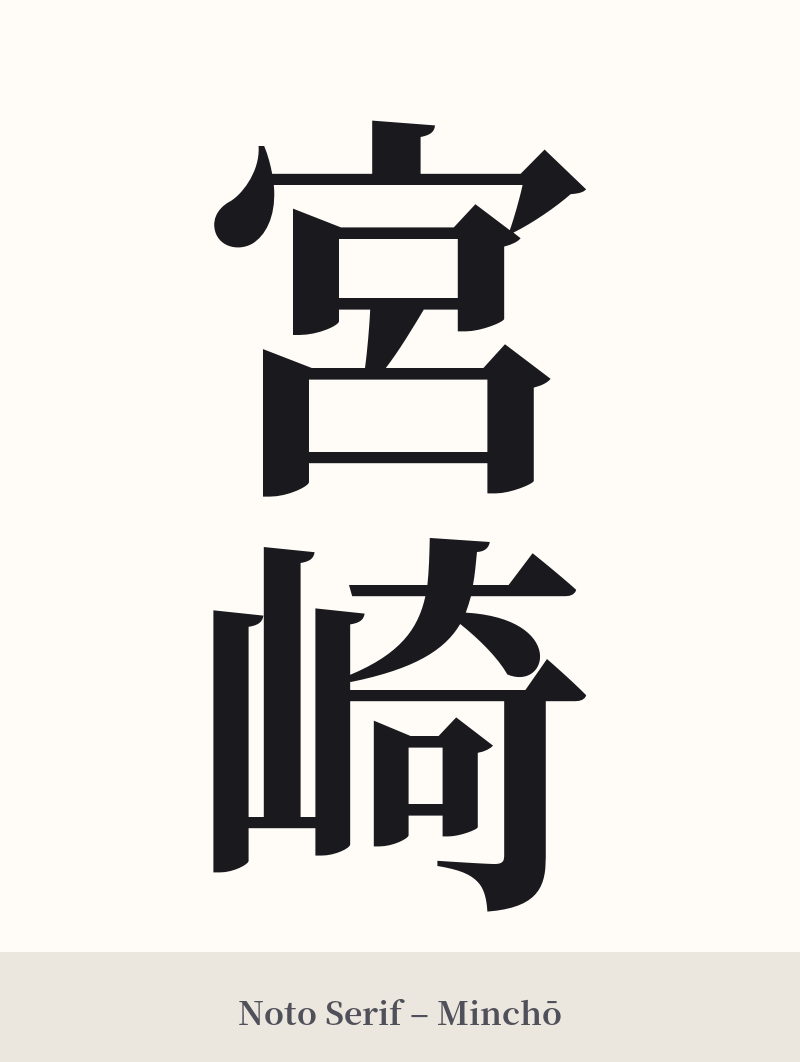
The same kanji can look dramatically different depending on the calligraphy style. Choose a font that matches the mood you want for your tattoo or design.
🎨 Tattoo Suitability
📐 Tattoo Design Guide
When designing a tattoo for 宮崎, the primary choice is between a personal homage and a broader aesthetic statement. The two characters have a balanced visual flow, working well both horizontally (宮崎) and vertically.
– Placement: For a vertical arrangement, the inner forearm, calf, or along the spine are excellent choices, allowing the characters to flow downwards. A horizontal design fits well on the chest, back of the neck, or across the wrist.
– Font Style: A traditional, semi-cursive script like Gyosho can emphasize the mythological and historical roots of the name, giving it an elegant and timeless feel. Conversely, a clean and crisp Mincho or Kaisho font can feel more modern and might be a better fit if the connection is to the contemporary work of Hayao Miyazaki.
– Visual Accompaniments: Consider pairing the kanji with imagery that reflects your intended meaning. If honoring Miyazaki Prefecture, you could incorporate waves, sun motifs, or elements of the torii gate. If it's a tribute to Studio Ghibli, a subtle silhouette of a beloved character like Totoro or a Kodama (tree spirit) could be integrated into the design, making the reference clear without being overly direct.
Comments