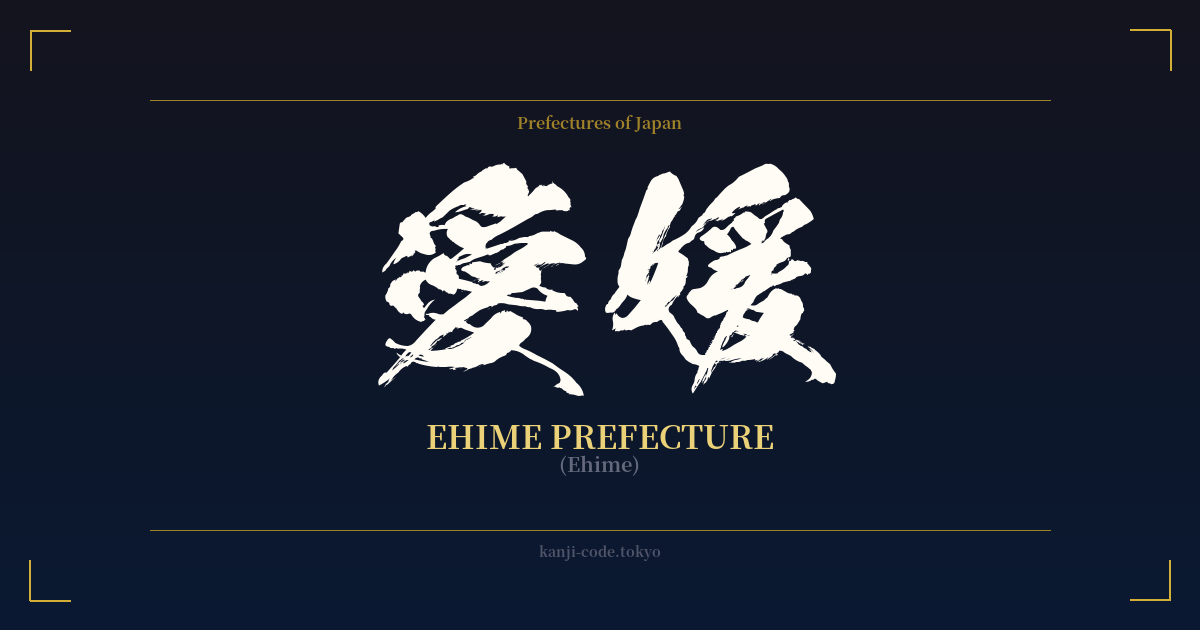
✍️ 愛媛 (Ehime) — Cultural Context
The name 愛媛 (Ehime) is far more than just a label on a map; it's a name steeped in the mists of Japanese mythology. Its origins trace back to the Kojiki, Japan's oldest extant chronicle, completed in the early 8th century. In the book's creation myths, the island of Shikoku is said to have four faces, each personified by a deity. The face corresponding to modern-day Ehime was named Ehime-no-mikoto, which translates to 'the lovely princess' or 'beautiful maiden.'
This poetic naming set the tone for the region's identity. The characters themselves—愛 (ai) for 'love' and 媛 (hime) for 'princess' or 'beautiful woman'—combine to create a name that evokes grace, beauty, and a gentle spirit. This is a stark contrast to other regional names that might be derived from geographical features or historical clans. The choice of 'Ehime' was a deliberate act of personification, imbuing the land with a sense of feminine elegance and charm that persists to this day.
Modern Ehime Prefecture lives up to its name's gentle image. It is famously known as the 'Citrus Kingdom' of Japan, producing an abundance of mikan (mandarin oranges) and other citrus fruits. The mild climate of the Seto Inland Sea contributes to this agricultural bounty. Beyond its orchards, Ehime is home to Dōgo Onsen, one of Japan's oldest and most famous hot springs, mentioned even in the Man'yōshū poetry anthology. The main bathhouse, a stunning multi-tiered wooden structure, is said to have inspired the bathhouse in Studio Ghibli's beloved film 'Spirited Away.'
Thus, the name 愛媛 is a beautiful encapsulation of the region's character: a land of mythological origins, natural beauty, and warm hospitality. It speaks not of power or conflict, but of a gentle, nurturing beauty—the 'lovely princess' of Shikoku Island.
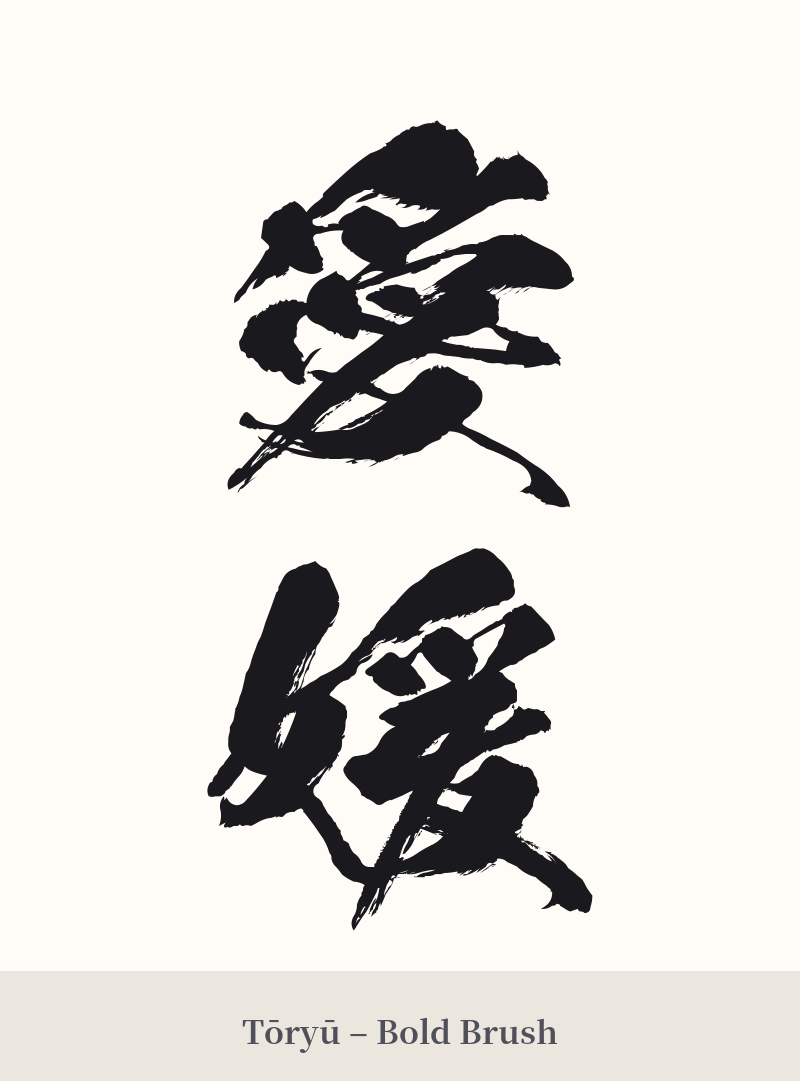
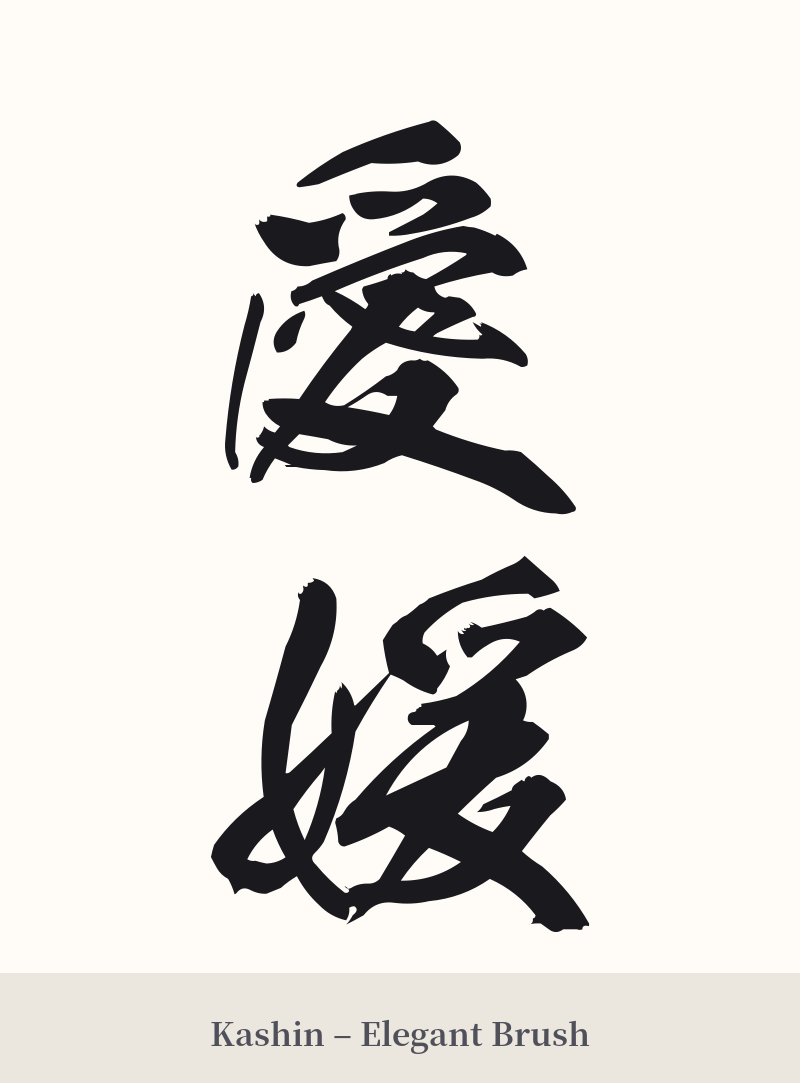
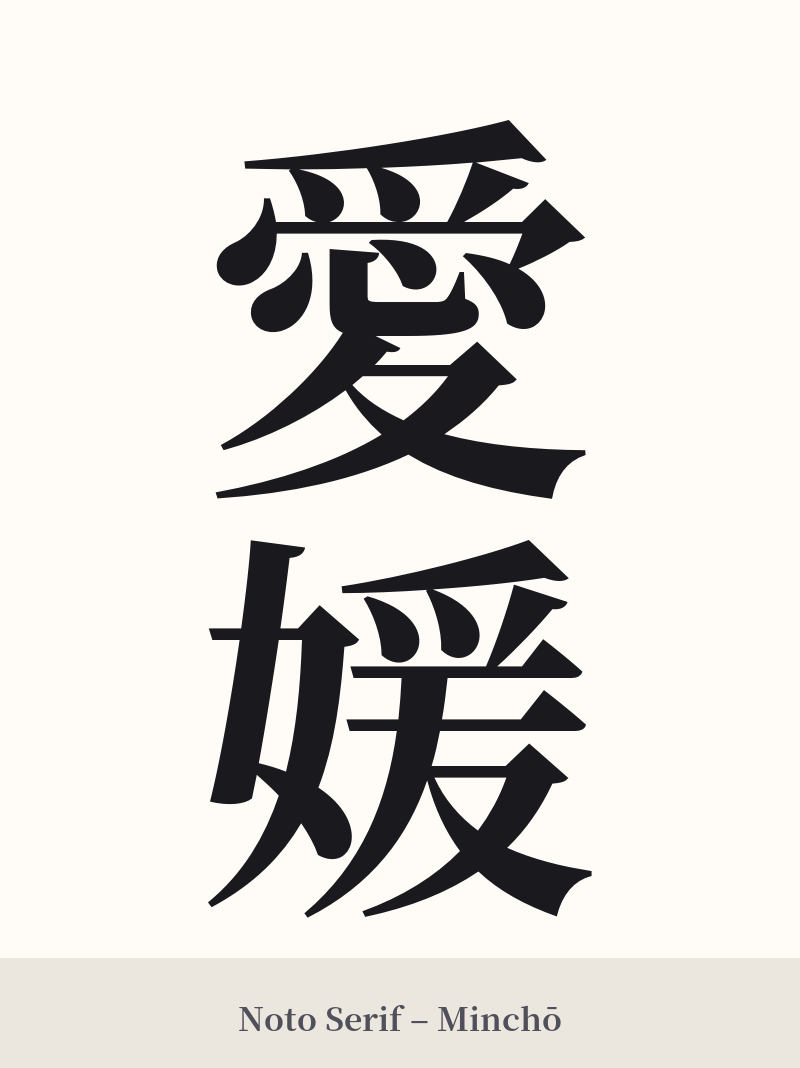
🖌️ Font Styles for 愛媛
The same kanji can look dramatically different depending on the calligraphy style. Choose a font that matches the mood you want for your tattoo or design.
🎨 Tattoo Suitability
📐 Tattoo Design Guide
For those with a deep personal connection to Ehime who choose to get this tattoo, design choices should honor its elegant and specific nature.
– Placement: A vertical orientation is traditional and suits the flow of the characters. Consider the forearm, the side of the calf, or along the ribs. A horizontal placement on the upper back or collarbone could also work. – Style: An elegant, flowing script is highly recommended. A semi-cursive Gyosho or a classic Mincho font would complement the 'princess' nuance of the name. Avoid overly blocky or aggressive fonts, as they would clash with the inherent meaning. – Visual Elements: To add context and avoid the simple 'love princess' misinterpretation, consider incorporating iconic elements from Ehime. A small, stylized mikan (mandarin orange) or a few citrus blossoms could be woven into the design. Alternatively, subtle wave patterns could represent the Seto Inland Sea.
Comments