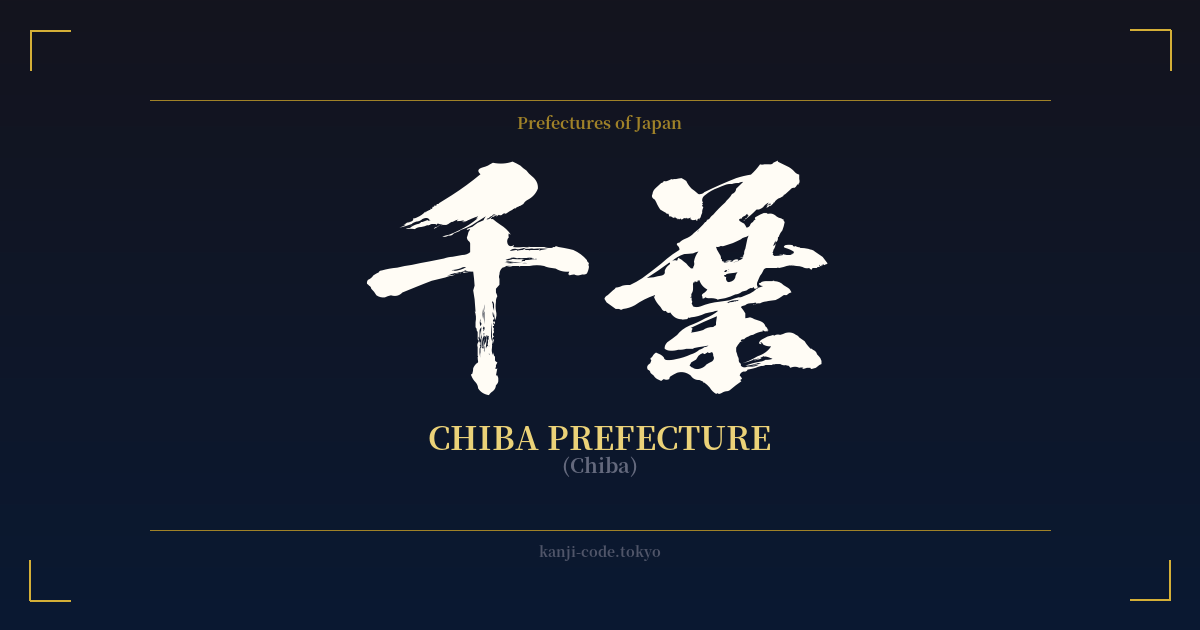
✍️ 千葉 (Chiba) — Cultural Context
The kanji 千葉 (Chiba) translates literally to "Thousand Leaves," a name that evokes a sense of natural abundance and verdant landscapes. While poetic, this term is almost exclusively known as the name of Chiba Prefecture, a large and populous region located just east of Tokyo on Japan's main island of Honshu.
The name's origin is tied to the Chiba clan (千葉氏), a powerful family of samurai who dominated the Shimōsa Province (an area that largely corresponds to modern-day northern Chiba) from the 12th to the 16th century. The clan's influence was immense, and their name became permanently attached to the land they ruled. The name itself, "Thousand Leaves," is thought to have been adopted by the clan from a location within their domain, likely a place renowned for its lush foliage.
Today, Chiba is a prefecture of contrasts. On one hand, it is a vital part of the Greater Tokyo Area, hosting Narita International Airport (成田国際空港), Japan's primary international gateway. This makes Chiba the first point of contact with Japan for millions of visitors. Its western and northern regions are heavily urbanized and industrialized, serving as a bedroom community for Tokyo and a hub for manufacturing and shipping.
Yet, this modern facade belies a deeper, more rustic identity. The Bōsō Peninsula, which forms the majority of the prefecture's landmass, is known for its rugged coastline, sandy beaches, and thriving agricultural industry. Chiba is famous for its peanuts, pears, and a wide array of vegetables. The coastal areas are a haven for surfers and beachgoers escaping the city, offering a glimpse of a slower, more nature-oriented lifestyle.
This duality is at the heart of Chiba's character. It is simultaneously the home of Tokyo Disneyland and ancient Buddhist temples. It is a land of sprawling factories and protected natural parks. Therefore, the kanji 千葉 represents not just a place on a map, but this complex blend of the ancient and the hyper-modern, the man-made and the natural.
🖌️ Font Styles for 千葉
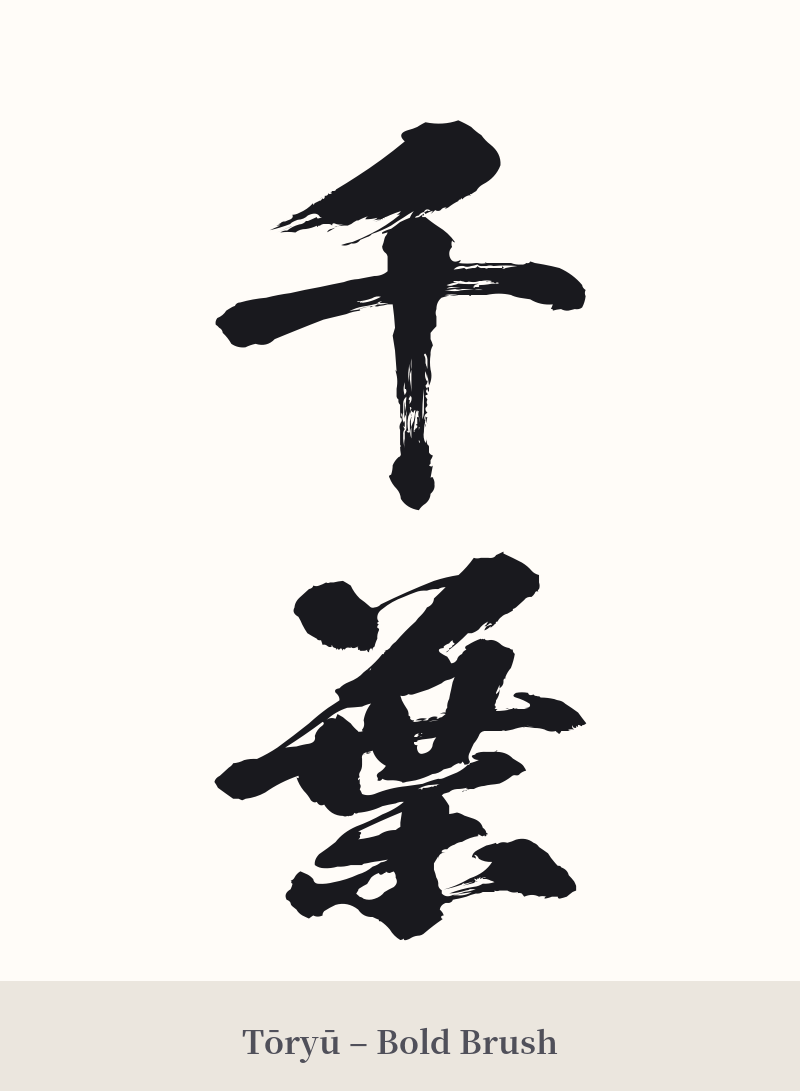
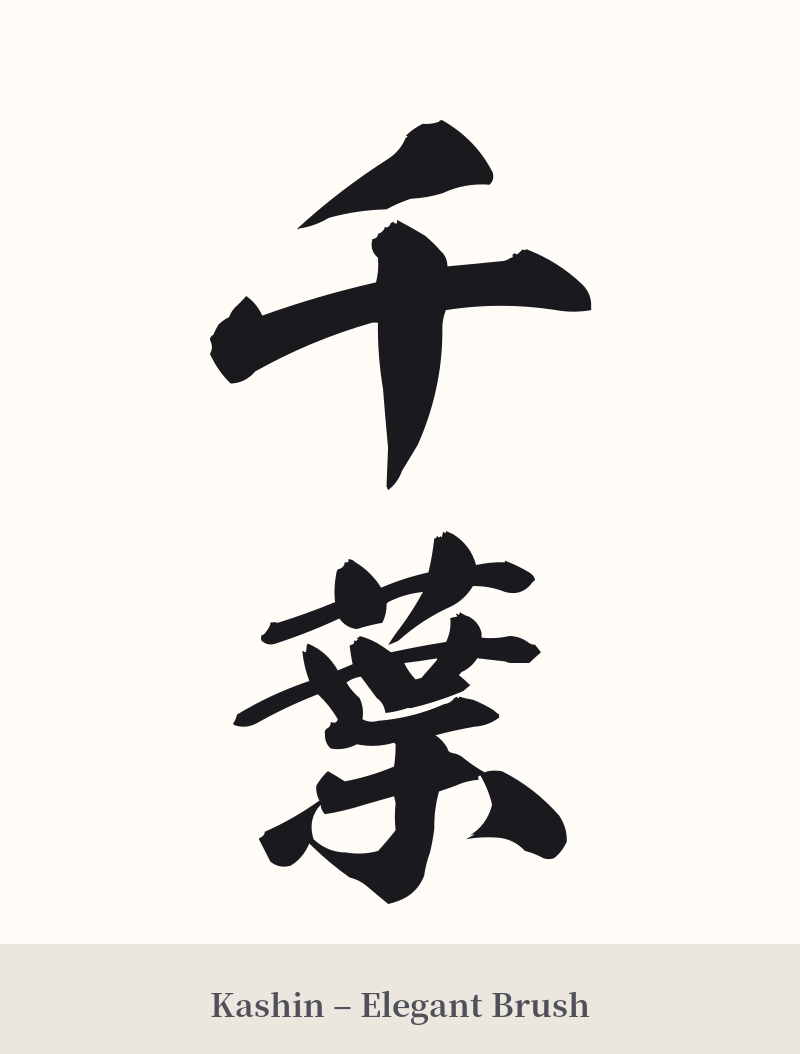
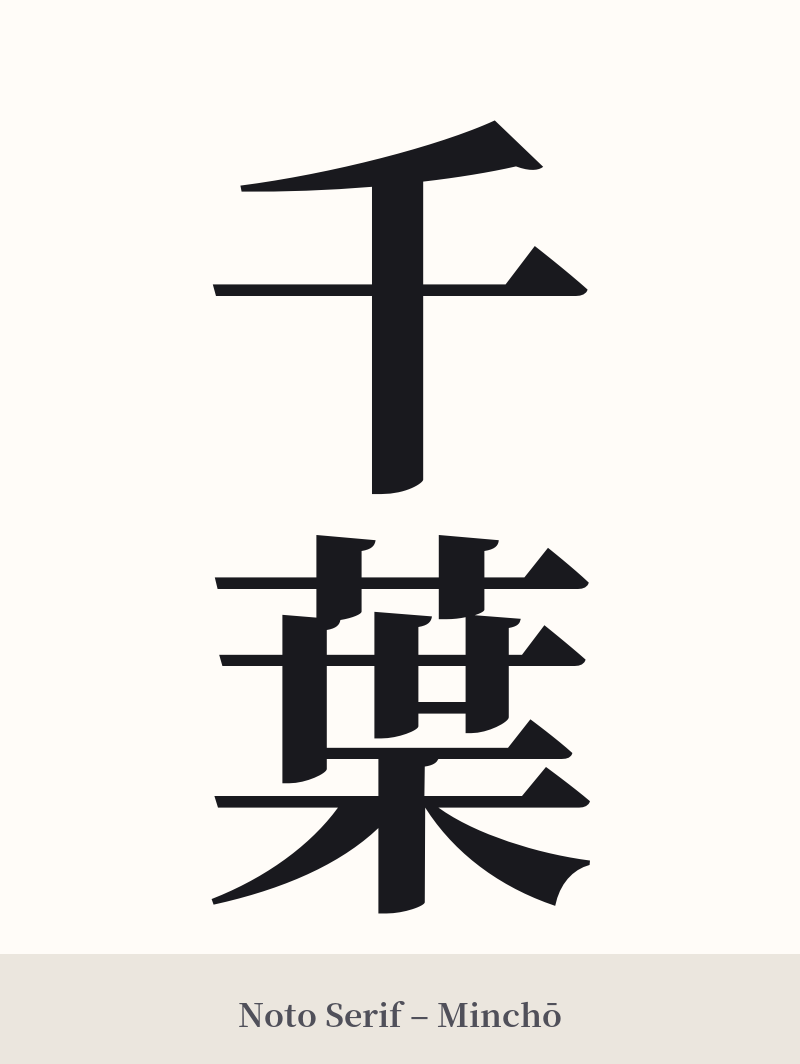
The same kanji can look dramatically different depending on the calligraphy style. Choose a font that matches the mood you want for your tattoo or design.
🎨 Tattoo Suitability
📐 Tattoo Design Guide
For a tattoo of 千葉, the design choices can reflect the duality of the prefecture itself.
– Placement: A vertical arrangement on the forearm, calf, or along the spine can look very classic. A horizontal layout works well across the chest, upper back, or biceps.
– Font Style: A bold, traditional calligraphy script (like Gyosho or Sosho) can emphasize the historical connection to the Chiba samurai clan. For a more modern feel reflecting Chiba's urban side, a crisp, clean Mincho or Gothic font would be effective.
– Visual Tips: To add more personal meaning beyond the place name, consider integrating other elements. You could frame the kanji with stylized leaves to play on the literal "Thousand Leaves" meaning. Alternatively, incorporating waves could represent the Bōsō Peninsula's coastline, a popular surfing destination.
Comments