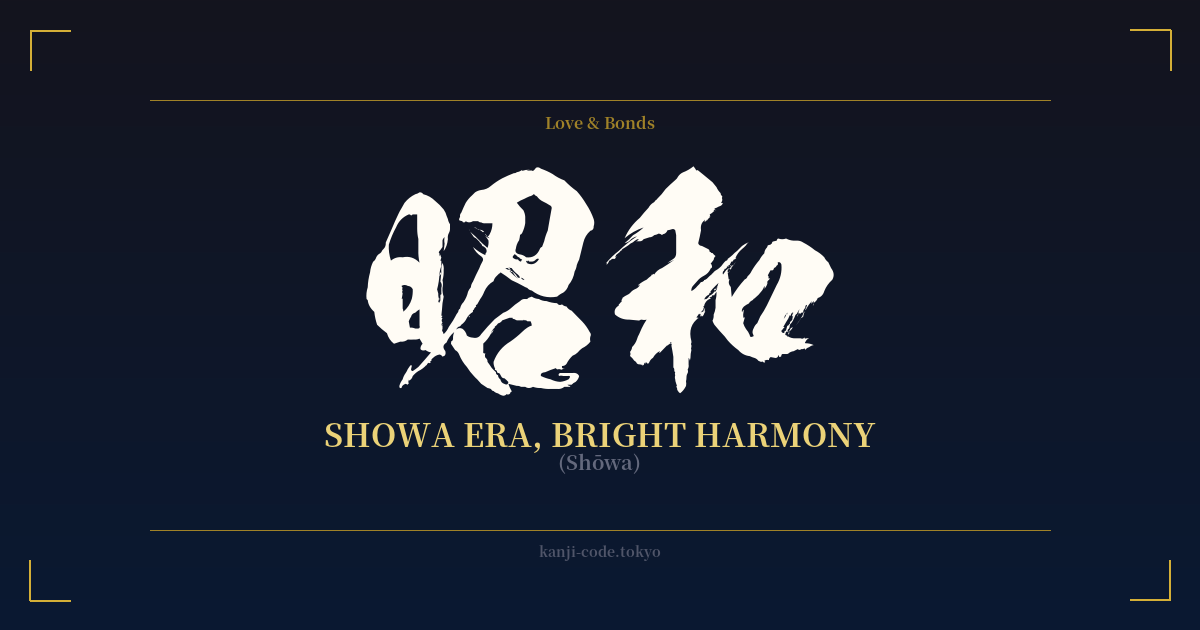
✍️ 昭和 (Shōwa) — Cultural Context
The word 昭和 (Shōwa) carries a weight and nostalgia in Japan that is difficult to overstate. On the surface, its characters translate to "Bright Harmony," a hopeful and poetic combination. Yet, its primary identity is as the name of the era of Emperor Hirohito's reign, a period spanning from December 25, 1926, to January 7, 1989. This long and tumultuous stretch of history defines modern Japan, making Shōwa a term loaded with dualities.
The era is dramatically split into two distinct parts. The early Shōwa period is marked by the rise of aggressive militarism, invasion of neighboring countries, and the devastation of World War II. This was a dark and violent time that ended with Japan's surrender and the complete destruction of many of its cities. It represents a period of immense suffering, both inflicted and endured.
In stark contrast, the post-war Shōwa period is seen as a near-miraculous story of rebirth and success. From the ashes of war, Japan rebuilt itself with astonishing speed, leading to an unprecedented economic boom. This latter half of the Shōwa era is what many Japanese now refer to with nostalgia, a phenomenon known as "Shōwa Retro" (昭和レトロ, Shōwa retoro). This nostalgia evokes images of a simpler, more optimistic time: the first bullet trains, the 1964 Tokyo Olympics, the rise of iconic anime like Astro Boy, a thriving cityscape filled with neon lights, and the distinctive sounds of city pop music.
The name "Shōwa" itself was chosen from the ancient Chinese classic, the Book of Documents. The selected passage reads, 「百姓昭明、協和萬邦」 which translates to "The people were enlightened, and the ten thousand countries were harmonized." The name was intended to usher in an age of peace and cooperation, a goal that stands in tragic irony to the events of the early era but perhaps found its fulfillment in the post-war decades.
Today, Shōwa represents this entire spectrum of experience—from catastrophic failure to triumphant success, from global conflict to domestic peace. It is a symbol of Japan's resilience, its capacity for radical transformation, and a cherished aesthetic that continues to influence fashion, art, and culture.
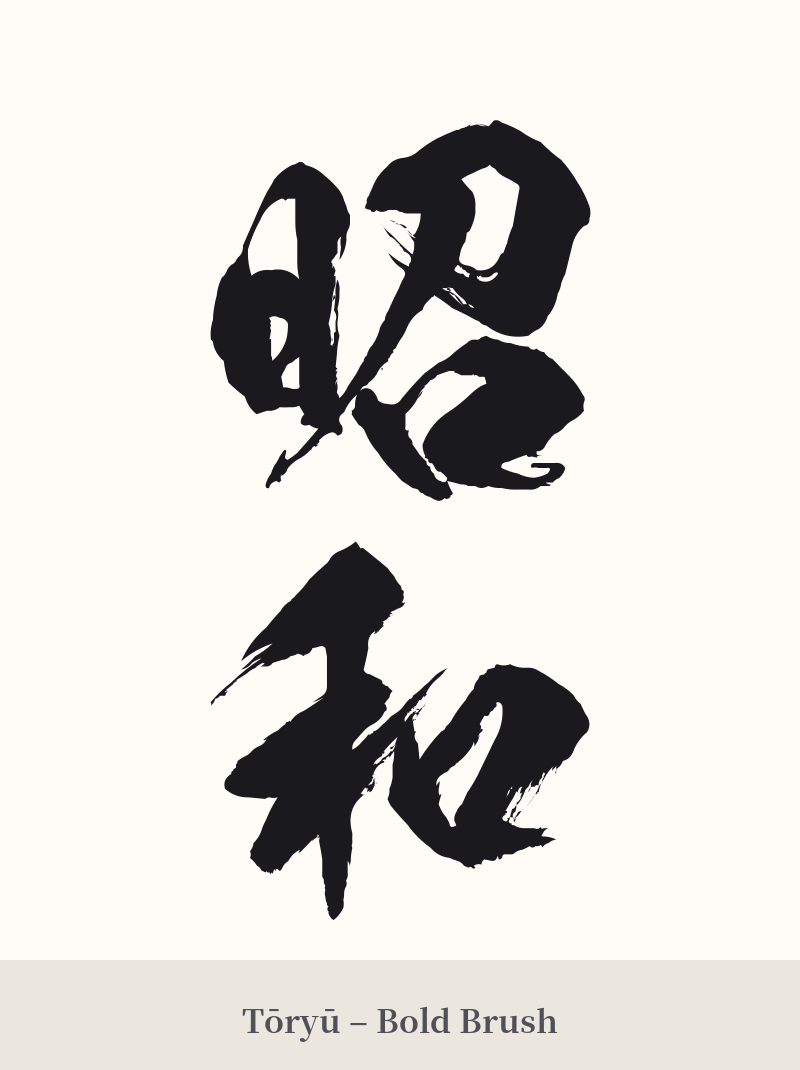
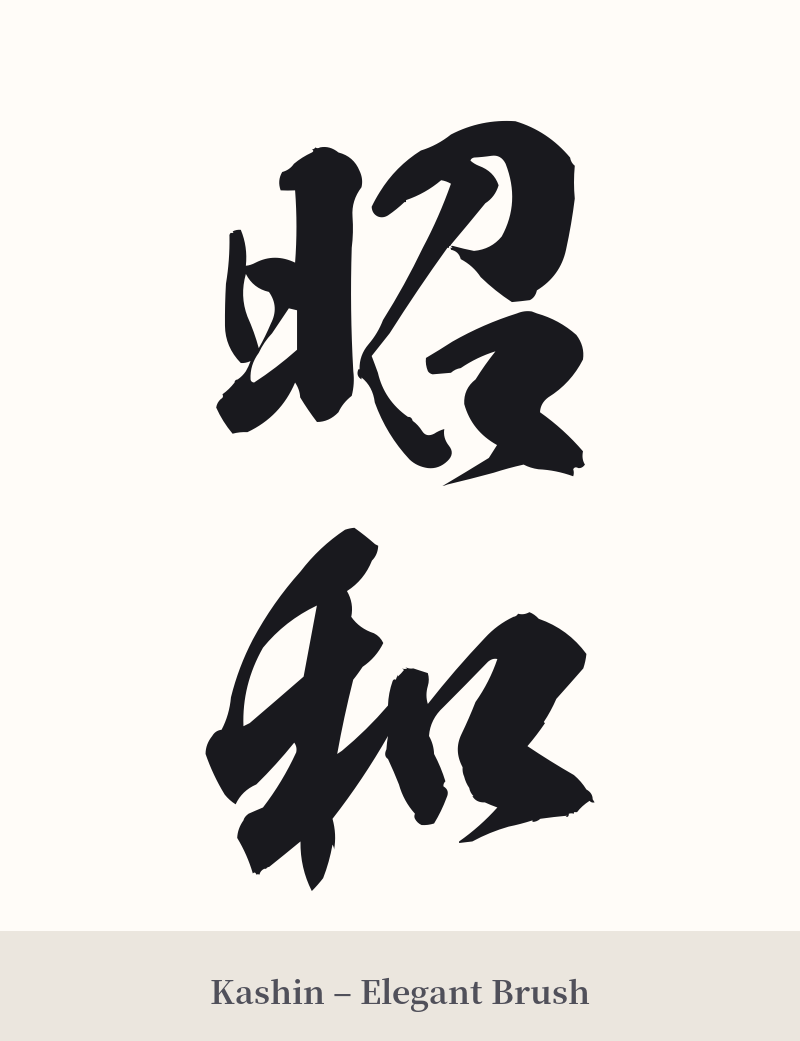
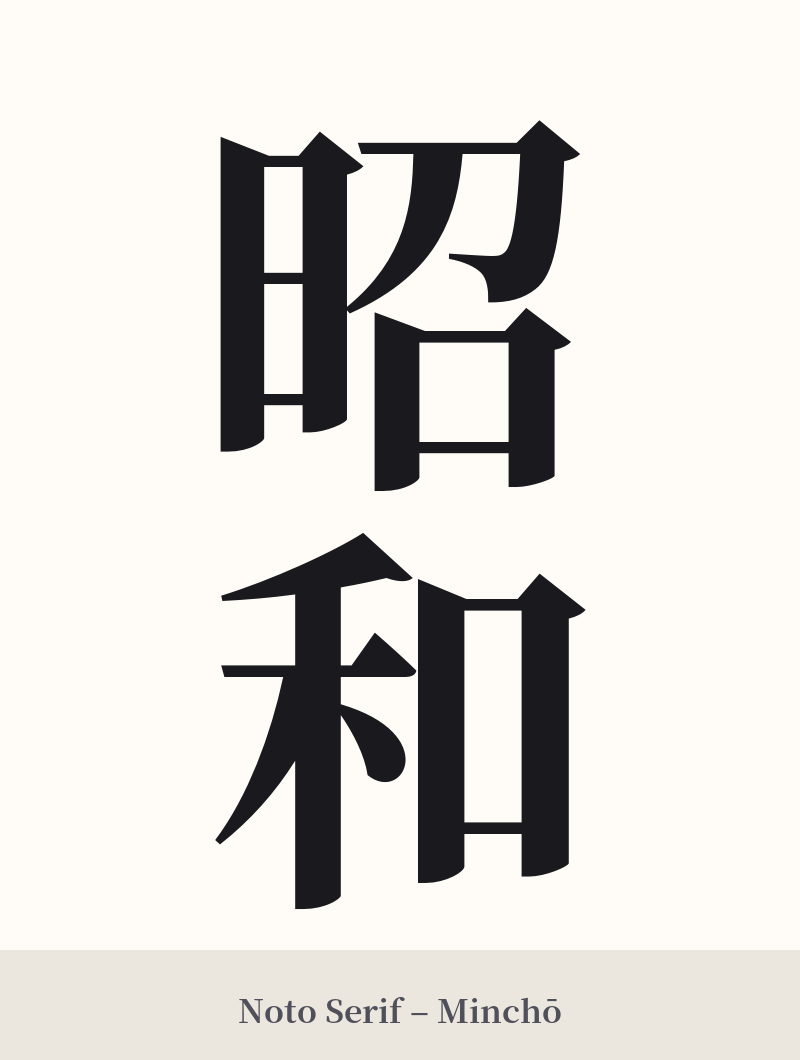
🖌️ Font Styles for 昭和
The same kanji can look dramatically different depending on the calligraphy style. Choose a font that matches the mood you want for your tattoo or design.
🎨 Tattoo Suitability
📐 Tattoo Design Guide
A tattoo of 昭和 (Shōwa) is a nod to a specific and powerful period of history, and the design can reflect its different facets.
– Placement: A vertical alignment is traditional and works well on the forearm, calf, or along the spine. A horizontal alignment is more modern and fits nicely across the chest, back of the shoulders, or inner bicep.
– Font Style: The choice of font is crucial for conveying the intended nuance. A bold, blocky Mincho or Gothic font can evoke the industrial and economic power of the late Shōwa period. A flowing, semi-cursive script (Gyosho) can lend a more historical, classic feel. For a "Shōwa Retro" vibe, consider a stylized, slightly rounded font reminiscent of 1970s or 80s advertising.
– Visual Embellishments: To add context, you could frame the kanji with elements symbolic of the era. Cherry blossoms can represent the transience of time and the theme of rebirth. Geometric patterns inspired by mid-century design could highlight the era's modernism. However, be cautious with imagery like the rising sun, as it can be tied to the controversial imperial flag.
Comments