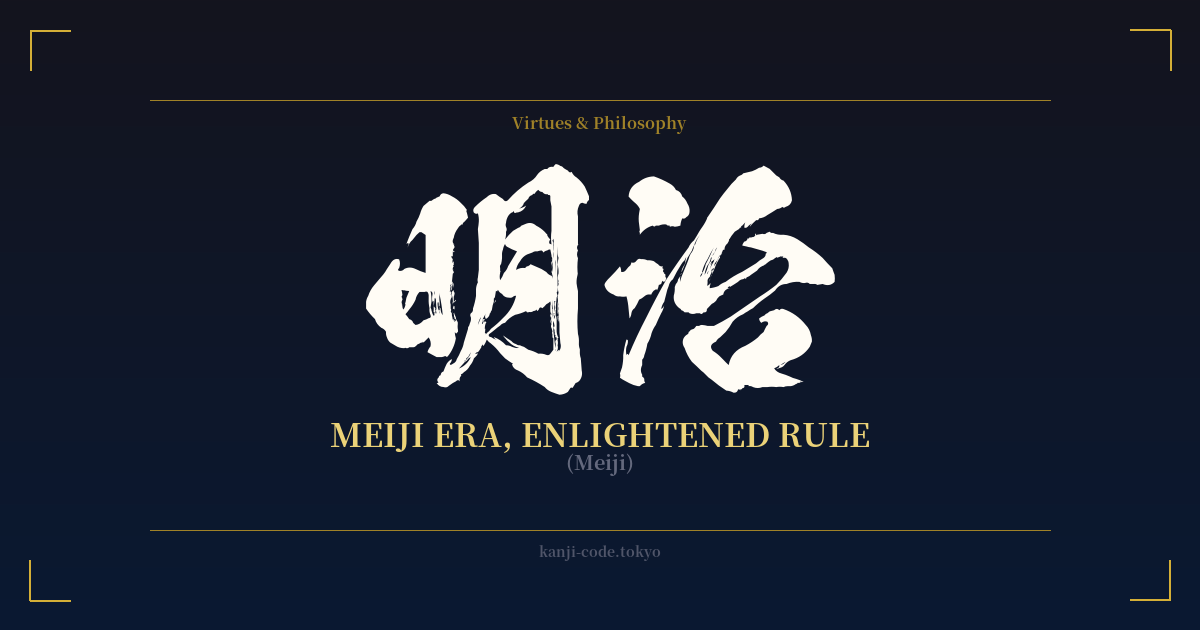
✍️ 明治 (Meiji) — Cultural Context
The word 明治 (Meiji) translates to 'Enlightened Rule' and is the name given to one of the most transformative periods in Japanese history. This era, lasting from 1868 to 1912 under Emperor Meiji, marks Japan's dramatic leap from a reclusive feudal society into a modern, industrialized world power. It is a name synonymous with radical change, ambition, and the complex dance between tradition and modernity.
Before the Meiji Restoration (明治維新, Meiji Ishin), Japan was under the control of the Tokugawa shogunate, a military government that had enforced over 250 years of isolationist policies. The arrival of American Commodore Matthew Perry's 'Black Ships' in 1853 forcibly opened Japan to foreign trade, triggering a period of intense internal turmoil. This crisis culminated in the overthrow of the shogun and the restoration of direct imperial rule, a pivotal moment that set the stage for a national reinvention.
The slogan of the era was 富国強兵 (Fukoku Kyōhei), 'Enrich the country, strengthen the military.' The new Meiji government embarked on a breathtakingly rapid campaign of modernization. Feudal domains were abolished, the samurai class was dissolved, and a national army was established. The government sent missions abroad to study Western science, technology, politics, and legal systems, selectively adopting what they believed would benefit Japan.
This period saw the introduction of railways, telegraph lines, a national postal service, and a Western-style education system. The ethos was perfectly captured by the phrase 和魂洋才 (Wakon Yōsai), meaning 'Japanese spirit, Western techniques.' The goal was not to become a cultural copy of the West, but to harness its power to protect and strengthen Japan's own sovereignty and identity. This delicate balance is at the heart of the Meiji ideal.
However, this rapid change was not without its costs. The dissolution of the samurai class led to rebellions, and the drive for industrialization created new social strains. Furthermore, the success of the Meiji project also planted the seeds for Japan's later imperial ambitions. Today, the word 明治 evokes a powerful sense of national pride and nostalgia for a time of great purpose and progress. It represents the courage to embrace change, the wisdom to learn from others, and the determination to forge a new destiny.
🖌️ Font Styles for 明治
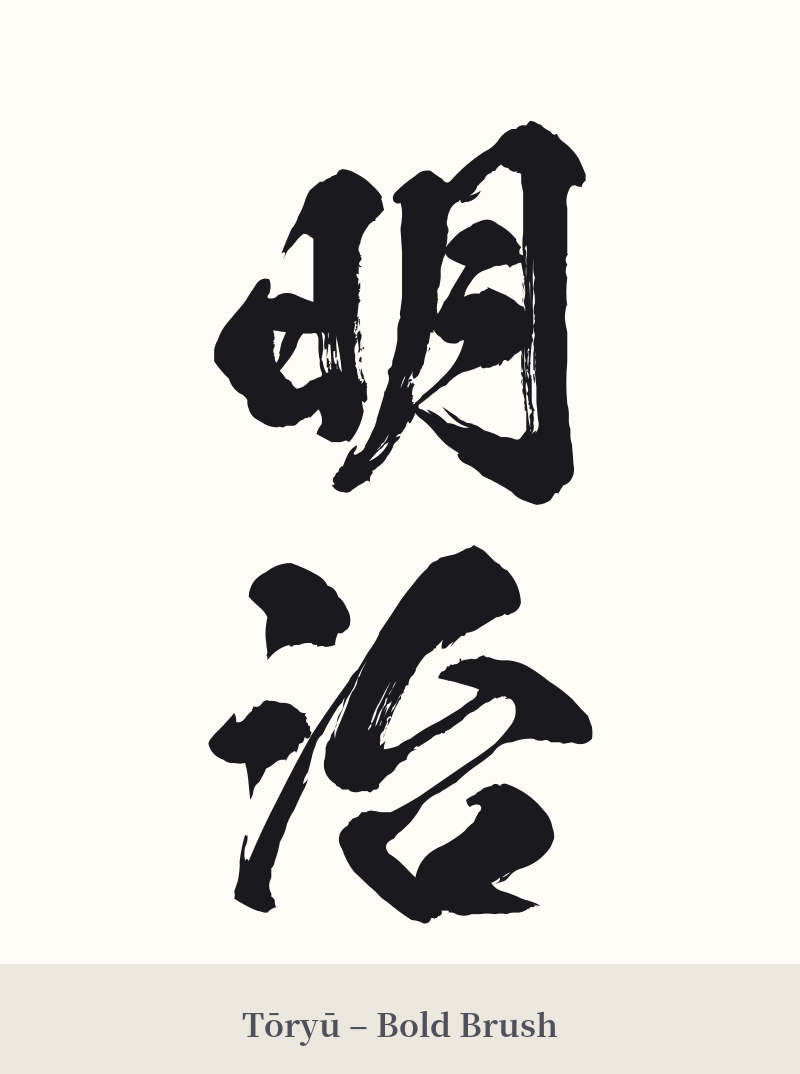
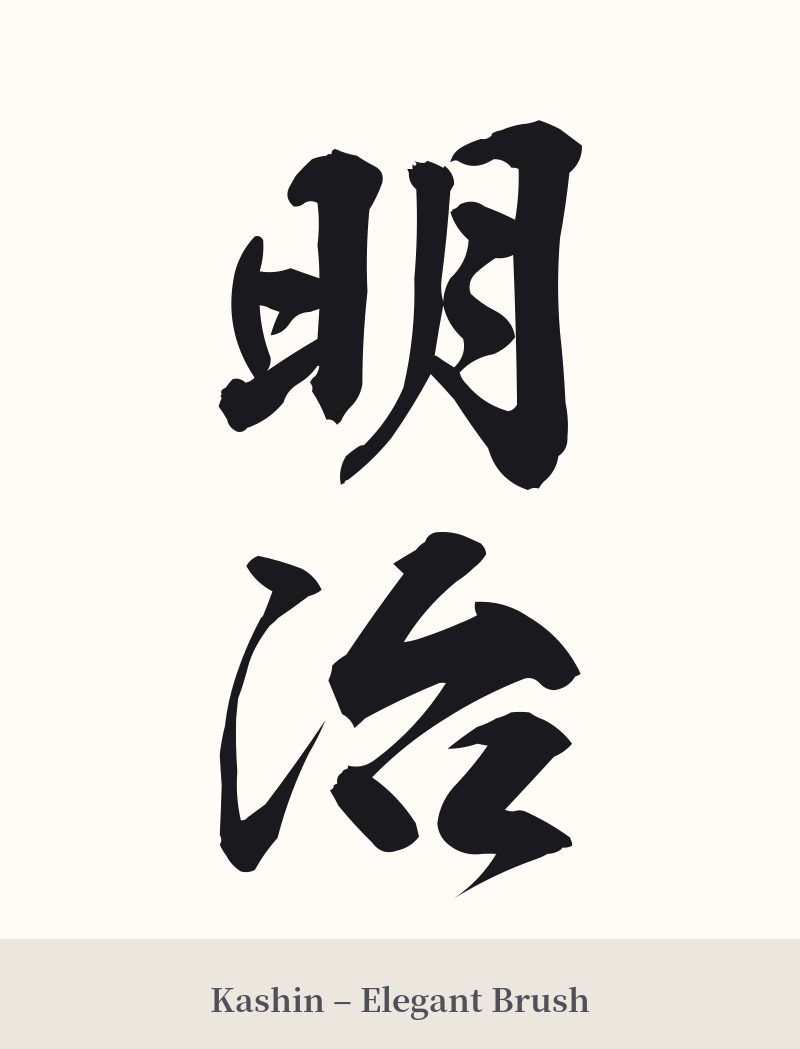
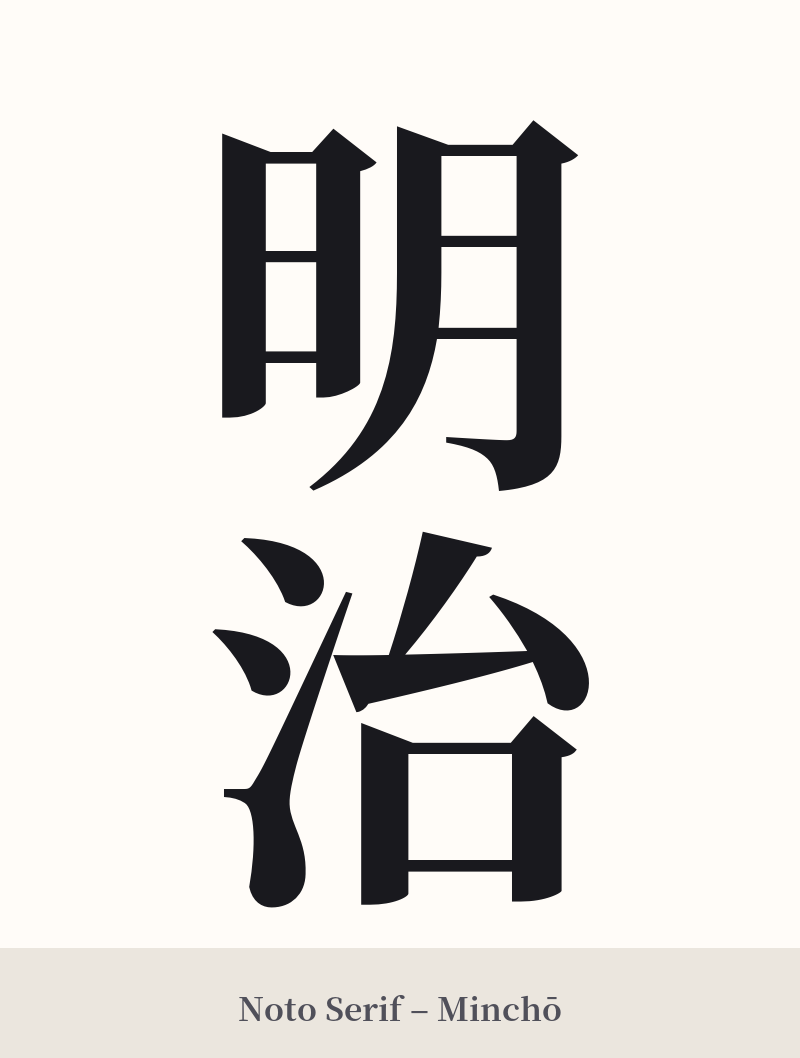
The same kanji can look dramatically different depending on the calligraphy style. Choose a font that matches the mood you want for your tattoo or design.
🎨 Tattoo Suitability
📐 Tattoo Design Guide
A tattoo of 明治 (Meiji) is a statement of appreciation for history, transformation, and ambition. The two characters offer a balanced and classic look.
– Placement: Vertical alignment is the most traditional and aesthetically pleasing orientation for this two-character compound. It works exceptionally well on the forearm, the back of the calf, or along the spine. A horizontal placement can also be effective across the chest or on the upper back.
– Font Style: The choice of script can dramatically alter the feel. A Kaisho (block) script provides a strong, formal, and clear look, emphasizing the 'rule' and 'order' aspect. For a more fluid and artistic feel that evokes the dynamic changes of the era, Gyosho (semi-cursive) is an excellent choice. A Mincho style, similar to a serif font, can give a nod to the print and intellectual culture of the period.
– Visual Tips: The characters 明治 are strong enough to stand alone without additional imagery. Adding other elements can risk cluttering the design. If you do wish to add something, consider a very subtle and small element, like a single cherry blossom petal or a stylized chrysanthemum, the symbol of the Emperor.
Comments